
Last updated September 23, 2026
Seasonal Insulation Care for Glendale: Year-Round Homeowner’s Guide
Most Glendale homeowners treat attic insulation as install-and-forget. That works in climates with stable loads, but Glendale’s building envelopes face a June-through-September heat period that can compress settled fiberglass by 15 to 25 percent, followed by marine-layer moisture events that start in November and peak through February. We’ve inspected attics in the Rossmoyne Hills where summer heat had reduced effective R-value from R-38 to near R-25 before the homeowner noticed any comfort change. In this guide and our The Complete Guide to Insulation in Glendale, you’ll learn why insulation care here follows a two-inspection rhythm tied to our actual climate, not a generic quarterly calendar, and how to document what you find so the next owner or inspector has a usable history.
Quick Answer
Glendale homeowners should inspect attic insulation twice yearly: once in October, after summer heat stress has compressed settled material, and again in March, before the cooling season begins and after winter moisture events have passed. Each inspection targets different failure modes - depth loss and vent channel disruption in fall; rodent nesting, moisture staining, and duct separation in spring. A simple two-column log - like the one detailed in our Attic Insulation Maintenance Checklist for Glendale Homeowners - recording date, conditions found, and action taken creates a maintenance history that protects resale value and prevents emergency repairs.
Table of Contents
- Why Glendale’s Climate Demands a Different Schedule
- The October Post-Summer Inspection: What Heat Stress Leaves Behind
- The March Pre-Summer Inspection: Winter’s Hidden Damage
- Marine-Layer Moisture: Glendale’s Unique Attic Humidity Pattern
- Santa Ana Winds and Pest Pressure: The Two Seasonal Dislodgers
- Building Your Seasonal Log: A Two-Column Maintenance Record
- Material-Specific Care for Glendale Homes
- Common Mistakes to Avoid
- When to Call a Professional
- Frequently Asked Questions
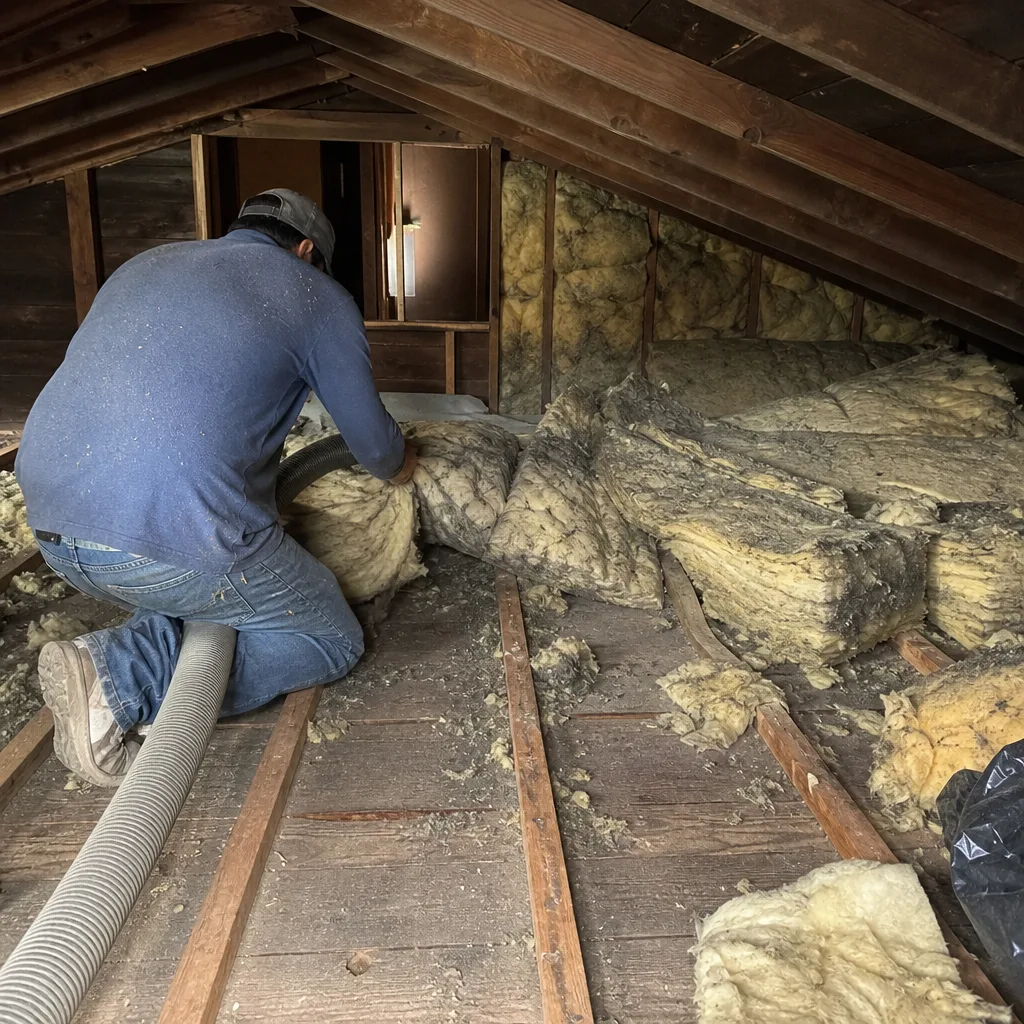 Before
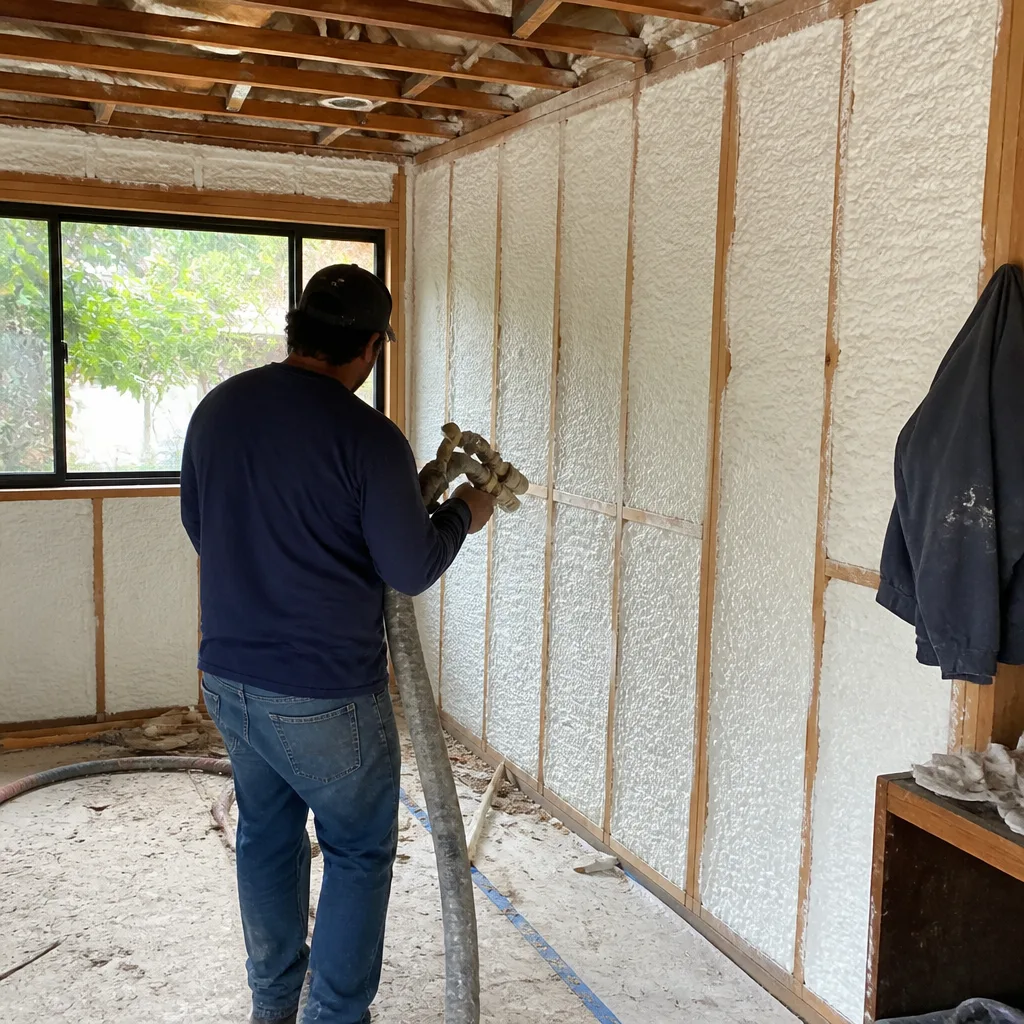 After
AfterWhy Glendale’s Climate Demands a Different Schedule
Standard home-maintenance calendars assume four equal seasons. Glendale doesn’t have them. Our load profile splits into three distinct periods: a four-month high-heat window from June through September when attic temperatures regularly exceed 140°F, a mild-cold period from December through February with occasional rain and persistent marine-layer influence, and two transition zones - April-May and October-November - where conditions shift rapidly and moisture dynamics change.
This matters for insulation because each period stresses different components. Summer’s thermal expansion-contraction cycles loosen batt friction-fits and compress loose-fill settled density. Winter’s cooler sheathing temperatures create condensation potential when warm interior air reaches the underside of roof decking. The transitions between these periods are when problems become visible - or when preventive action can stop them from developing.
We’ve completed home energy audits in neighborhoods from Adams Hill to Verdugo Woodlands where the homeowner’s complaint was “the house never feels right in October” or “our ducts suddenly can’t keep up in April.” In nearly every case, the insulation had failed during the previous season’s stress, but the conditioned space buffered the effect until the next transition exposed it. A March inspection catches winter damage before you’re paying summer peak rates for cooling. An October inspection catches summer compression before you’re running heat against a leaky envelope.
The two-inspection model also aligns with Glendale’s actual weather patterns. October typically delivers the first sustained cool-down after summer, making attic access tolerable for the first time in months. March sits before Santa Ana wind season intensifies and before cooling loads begin in earnest. These are practical windows, not arbitrary dates.
The October Post-Summer Inspection: What Heat Stress Leaves Behind
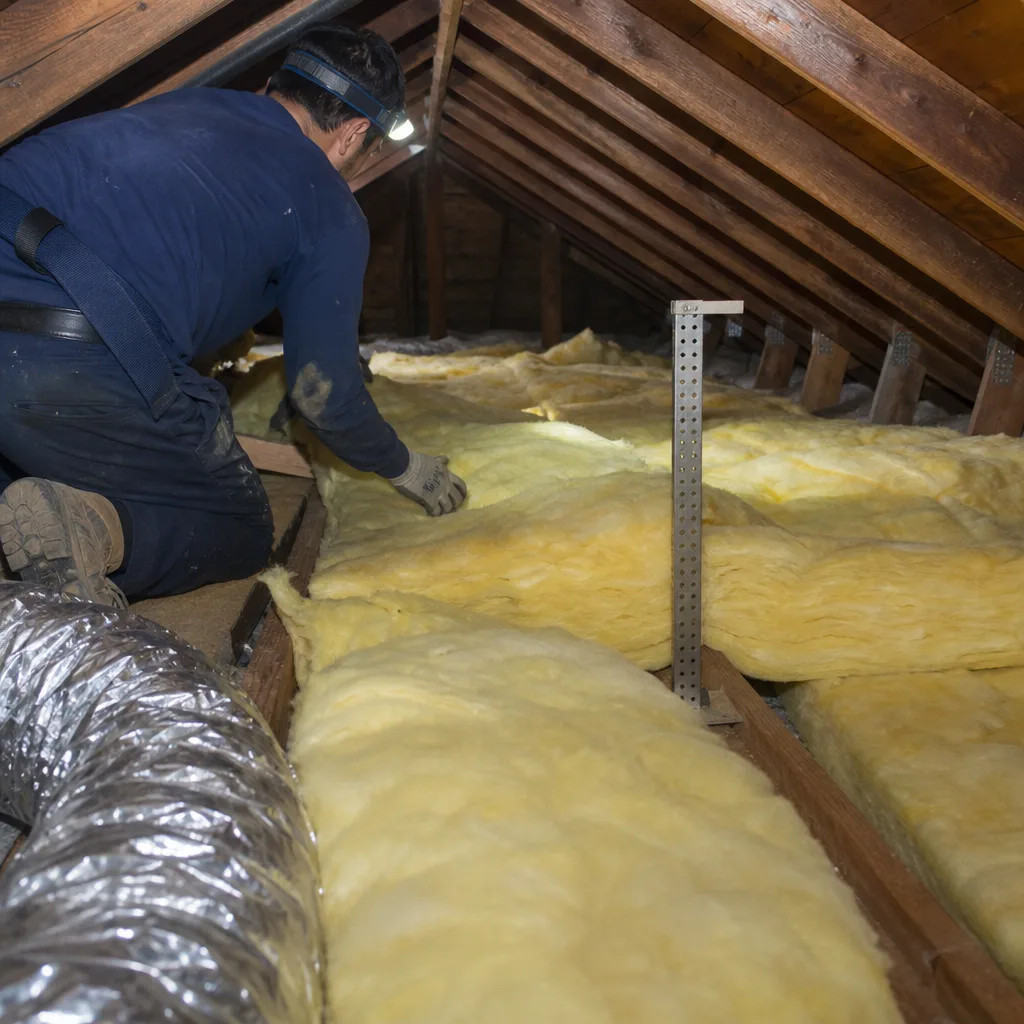
October is the month Glendale homeowners should inspect their attic. After four months of daily attic temperatures above 130°F, settled insulation has undergone thermal cycling that loosens, compresses, and displaces material. This is not gradual aging - it’s acute seasonal damage that happens every summer and compounds if unaddressed.
Here’s what to check, in order of priority:
- Measure settled depth against marked joists or original installation records. Blown-in fiberglass or cellulose loses 15 to 25 percent of its settled depth after the first few heat seasons in Glendale’s attic environment. If your attic was originally blown to R-38 at 14 inches and now measures 10 to 11 inches, you’ve lost effective thermal resistance regardless of whether the material looks intact.
- Inspect batt sections near roofline penetrations - vents, flues, electrical masts. Summer expansion-contraction cycles break the friction-fit that holds batts against top plates and penetration surrounds. Gaps as small as 1/2 inch at these junctions create thermal bypasses that can negate the insulation value of entire bay sections. In the Glenoaks Canyon area, we’ve found original 1970s batts still in place but shifted 3 to 4 inches off plates, creating continuous air paths.
- Verify vent channel integrity at eaves. Soffit vents in Glendale homes often become blocked by insulation displacement or by debris from Santa Ana wind events that precede the October inspection. Blocked soffit vents kill the convective airflow that keeps roof decking cool and dry. Look for baffles - the cardboard or foam channels that maintain airflow paths - that have collapsed, been displaced by insulation, or were never installed.
- Check for UV degradation on any exposed insulation surfaces. If your attic has gable vents or other openings that admit direct sunlight, fiberglass batts and some foam products degrade from ultraviolet exposure. This shows as yellowing, surface powdering, or brittle texture.
- Photograph everything before you disturb it. Your October documentation establishes the baseline for comparison next March and creates evidence if you need to file a warranty claim or document condition for a future sale.
What you do with findings depends on severity. Depth loss under 20 percent without displacement can often be addressed by adding loose-fill to restore design R-value. Displaced batts or failed air barriers require more intervention - typically removal and replacement with proper air sealing of top plates, can lights, and penetrations before new material goes in. Attic Insulation in Glendale covers the full replacement process we follow when October inspection reveals significant degradation.
One pattern we’ve observed in the Somerset Ranch area: homes built between 1985 and 2005 with original loose-fill fiberglass often show the most dramatic October depth loss. The product formulations from that era settled more aggressively under thermal cycling than modern materials from Johns Manville or Knauf, which use improved fiber binders.
The March Pre-Summer Inspection: Winter’s Hidden Damage
The March inspection serves a different purpose. Winter in Glendale is mild by national standards, but December-through-February rain events and persistent marine-layer humidity create conditions that don’t exist in summer. This inspection targets moisture, biological activity, and mechanical system integrity - problems that develop slowly and announce themselves only when cooling loads begin.
- Check for rodent nesting and droppings. Roof rats and mice are active in Glendale attics from November through March, when cooler outside temperatures drive them to seek warmer spaces. Look for nesting material - shredded paper, insulation, plant debris - concentrated near heat sources like recessed light housings or duct plenums. Droppings indicate active infestation that requires removal, sanitization, and rodent-proofing before any insulation work proceeds. We’ve found fresh nesting in March inspections of homes that appeared clean in October, particularly in the hillside neighborhoods bordering the Angeles National Forest where wildlife pressure is higher.
- Inspect for moisture staining on roof decking and rafter surfaces. December-January rain events in Glendale are intermittent but can be intense. Any roof leak, even one that self-seals, leaves water marks on wood surfaces. Look for darkening, mineral staining, or mold growth - particularly at valleys, around chimneys, and near any roof penetration. Moisture-stained insulation must be removed; it cannot be dried in place without mold risk.
- Verify HVAC duct connection integrity. Flexible duct connections to plenums and register boots are secured with draw bands that loosen from thermal cycling. Winter’s cooler temperatures make the flexible duct material contract, stressing these connections. A disconnected supply duct in an unconditioned attic dumps heated or cooled air into the wrong space and pressurizes the attic, displacing loose-fill insulation. Check every connection point for gaps, collapsed sections, or failed tape.
- Test attic humidity with a simple hygrometer. March readings should be within 10 percent of outdoor relative humidity. Higher readings indicate moisture sources - duct leaks, roof leaks, or air leakage from conditioned space carrying humidity into the attic.
- Compare your October photos to current conditions. Any change in insulation distribution, new staining, or shifted material should be documented with dated photos.
The March inspection is also the right time to evaluate whether your insulation can handle the coming summer load. If you found significant issues in October and deferred action, March is your last practical window before cooling season begins. Crawl Space Encapsulation & Vapor Barrier in Glendale addresses the ground-contact side of the envelope, which interacts with attic performance in ways many homeowners don’t anticipate.
Marine-Layer Moisture: Glendale’s Unique Attic Humidity Pattern
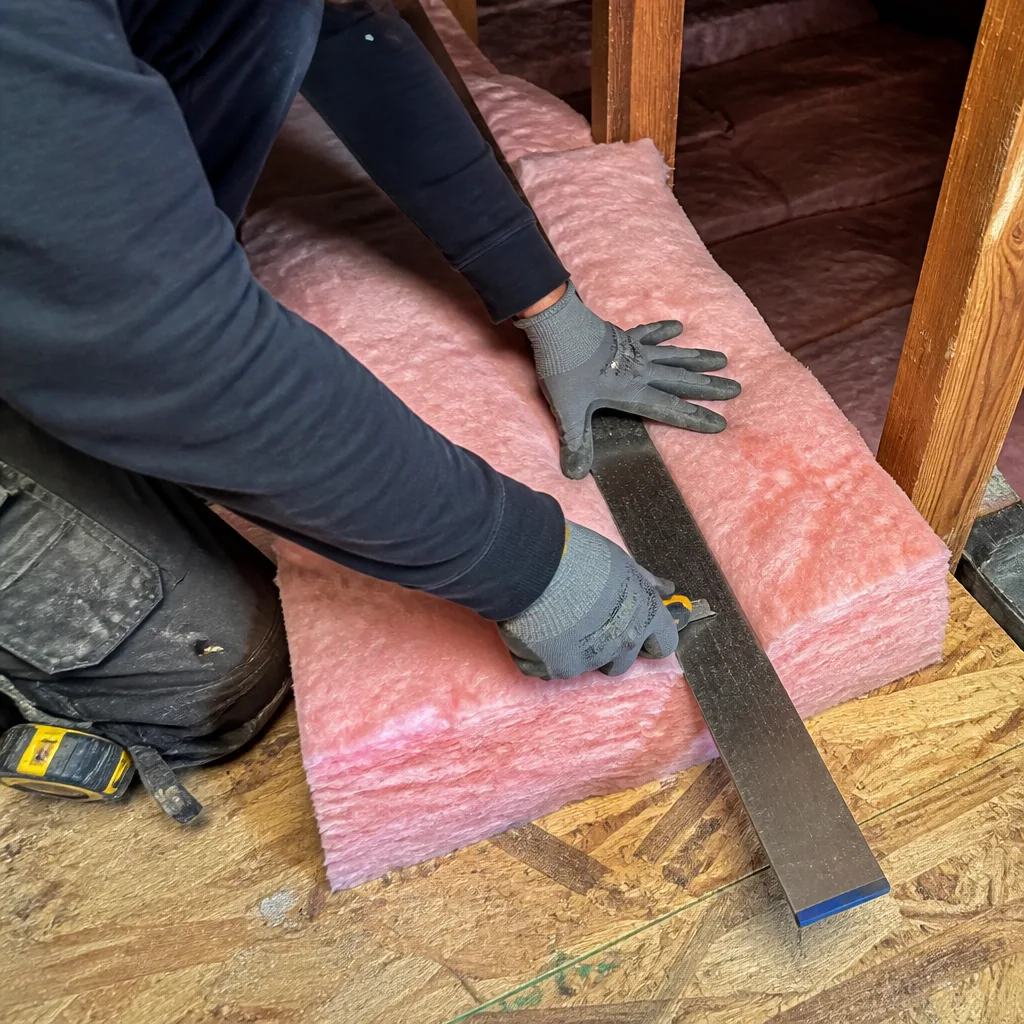
Glendale’s geography creates a moisture pattern that inland valley cities don’t experience. The marine layer - cool, saturated air from the Pacific - pushes through the Cahuenga Pass and settles into the San Fernando Valley, reaching Glendale’s western and southern neighborhoods regularly from May through early July and again in October through November. This isn’t rain; it’s persistent high humidity at moderate temperatures, and it affects attic sheathing differently than direct precipitation.
Here’s the mechanism: when marine-layer air enters an attic through vents, the roof decking - which has been cooling overnight - can drop below the dew point of that air. Condensation forms on the underside of sheathing, typically in early morning hours, then evaporates as temperatures rise. This daily wet-dry cycle doesn’t produce the dramatic staining of a roof leak, but it can elevate wood moisture content to levels that support mold growth and degrade certain insulation types over time.
For Glendale homeowners, this means two specific precautions:
- Measure sheathing moisture before adding insulation. A simple pin-type moisture meter should read below 16 percent at multiple points across the attic deck. Readings above 19 percent indicate active moisture cycling that needs source identification before you bury the sheathing under additional material. We’ve measured 22 percent moisture in May inspections of homes near the Glendale Freeway corridor, where marine-layer intrusion is most pronounced.
- Avoid vapor-impermeable retrofits on the attic floor without understanding the whole assembly. Adding a polyethylene vapor barrier or closed-cell spray foam directly to the underside of roof decking can trap marine-layer moisture against wood surfaces. The correct approach depends on whether your attic is vented or unvented, and whether the roof assembly can dry to the exterior. Spray Foam Insulation in Glendale details the conditioned-attic approach we use when converting vented spaces, which eliminates marine-layer entry entirely.
Homes in the Chevy Chase Canyon and Glenwood areas, at higher elevation and closer to the pass, experience more frequent marine-layer events than those in the flatlands near Colorado Boulevard. If you’re in these neighborhoods, your March inspection should include particular attention to any north-facing roof sections that stay cooler longer in morning hours.
Rockwool mineral wool handles intermittent moisture exposure better than fiberglass or cellulose, which is why we specify it for certain Glendale retrofit applications where marine-layer intrusion can’t be fully eliminated through ventilation improvements alone. It doesn’t support mold growth and maintains dimensional stability through wet-dry cycles.
Santa Ana Winds and Pest Pressure: The Two Seasonal Dislodgers
Two forces actively displace or compress insulation in Glendale attics: Santa Ana wind events and seasonal pest activity. Understanding their timing and effects helps you interpret what you find during inspections.
Santa Ana Wind Events
These dry, high-velocity winds typically occur from October through March, with peak frequency in December and January. They pressurize attic cavities through gable vents, ridge vents, and any opening in the envelope. The pressure differential across the attic floor can lift loose-fill fiberglass, shift batt sections, and drive fine particles through ceiling penetrations into conditioned space. We’ve documented attics in the Montrose Verdugo City area where a single December Santa Ana event redistributed half the loose-fill from one side of the attic to the other, creating bare spots over bedrooms that the homeowner experienced as sudden cold zones.
The damage pattern is distinctive: material piles against leeward walls or roof slopes, scoured areas near windward vents, and fine dust accumulation on horizontal surfaces below ceiling penetrations. If your October inspection finds uneven distribution that wasn’t present in March, Santa Ana displacement is the likely cause.
Prevention focuses on vent design and wind baffles. Turbine vents and uncovered gable louvers are particularly vulnerable. We often recommend replacing these with low-profile ridge vent systems that present less surface area to directional wind pressure.
Pest Activity Peaks
Roof rat breeding peaks in Glendale from March through May, with secondary activity in September through November. Squirrel nesting is most common in late winter. Both species seek attic spaces for denning, and both destroy insulation in the process - compressing it for nesting material, contaminating it with urine and feces, and creating access paths that become thermal bypasses.
The telltale signs differ by species. Rats create compact nests of shredded material, typically 6 to 8 inches in diameter, near heat sources. They travel along rafter tops and leave dark rub marks on vertical surfaces. Squirrels bring in external nesting material - leaves, twigs, stripped bark - and create larger, messier constructions, often near gable ends or soffit access points.
Spring pest pressure makes the March inspection critical. Nesting established over winter will be occupied and expanding by March; catching it before breeding peaks reduces population and damage. Any pest finding requires complete removal of contaminated insulation, sanitization of surfaces, and rodent-proofing of access points before new material is installed. We do not recommend adding insulation over contaminated substrate - the odor persists and attracts reinfestation.
Building Your Seasonal Log: A Two-Column Maintenance Record
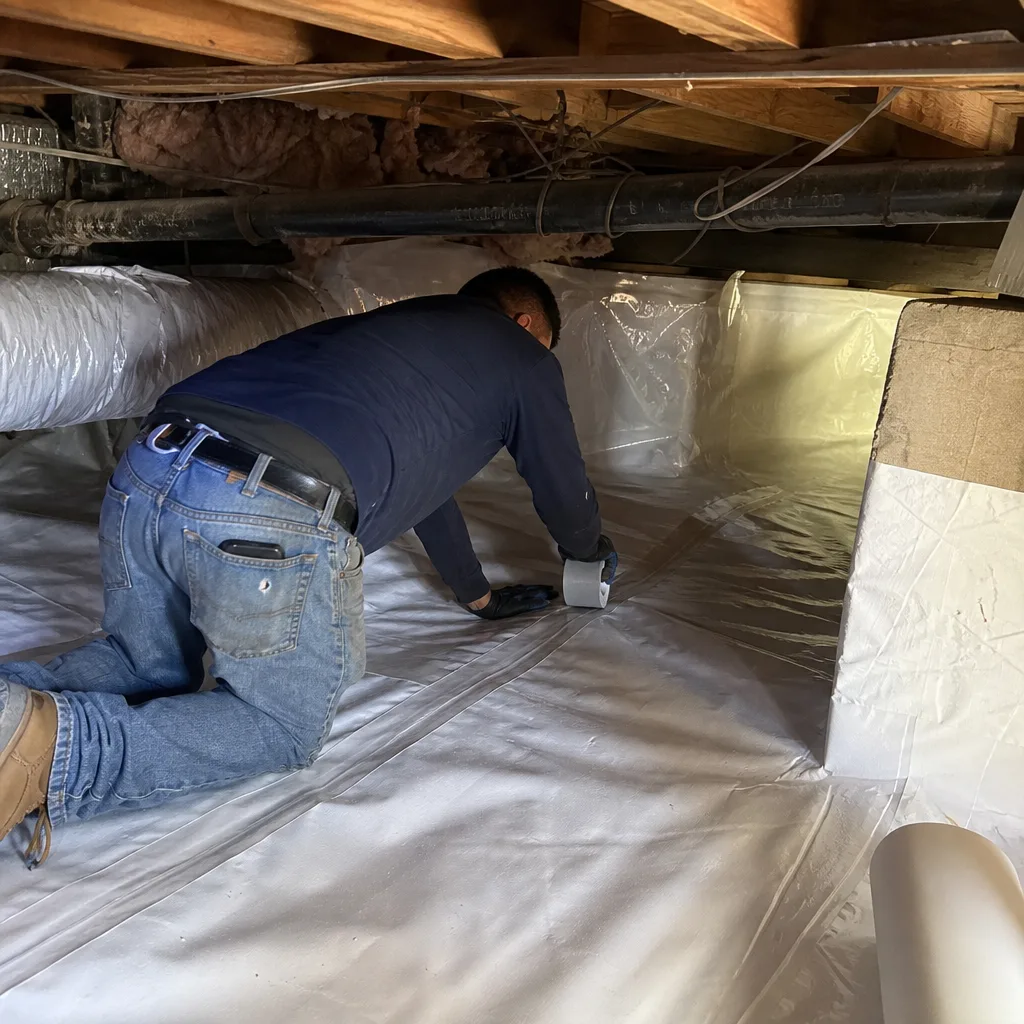
The most useful thing you can create from your inspection routine is a documented history. Future buyers, home inspectors, and your future self need to know what was found and what was done, not just that “the attic was checked.” We recommend a simple two-column format that becomes part of your home’s maintenance file.
| Date & Conditions Found | Action Taken or Contractor Contacted |
|---|---|
| Oct 15, 2024 - Settled depth 9.5″ (originally 14″), batts shifted 3″ off top plates at north gable, soffit baffles collapsed at bays 3-4 and 7-8, photos taken | Contacted Topside Attic Insulation Glendale for air sealing and top-off estimate; received written scope and price Oct 18 |
| Mar 12, 2025 - Depth restored to 14″ post-work, no new displacement, minor droppings near HVAC plenum (5-10 pellets), moisture meter 14% sheathing, duct connections secure | Set two snap traps, sealed 1/4″ gap at flue penetration with steel wool, scheduled follow-up trap check in 7 days |
This format serves multiple purposes. For resale, it demonstrates proactive maintenance to buyers and inspectors. For warranty claims, it establishes timeline and condition. For your own decision-making, it prevents the “didn’t we just deal with this?” confusion that accumulates over years of homeownership.
Store the log digitally with dated photos, but keep a printed copy with your home’s other maintenance records. We’ve encountered situations where digital files were inaccessible during a real estate transaction, and the paper record saved the sale.
Material-Specific Care for Glendale Homes
Different insulation materials age differently in Glendale’s climate. Your inspection priorities should adjust based on what’s installed.
Loose-Fill Fiberglass
The most common attic insulation in Glendale homes built from 1970 through 2010. It settles continuously, with accelerated loss in the first three heat seasons. Modern products from Johns Manville and Knauf use longer fibers and improved binders that resist settlement better than formulations from the 1990s and 2000s. Check for uniform distribution - this material shifts easily from wind, foot traffic during service work, and pest activity. Look for “pillowing” over joists where material has blown or been dragged, leaving valleys between framing members.
Loose-Fill Cellulose
Denser than fiberglass and more resistant to wind displacement, but vulnerable to moisture. The boric acid fire retardant is also a mold inhibitor, but sustained moisture exposure can overwhelm this protection. In Glendale, cellulose performs well in vented attics with good roof integrity, but we don’t recommend it for homes with chronic minor roof leaks or significant marine-layer exposure. Check for clumping, darkening, or musty odor - any of these indicates moisture history requiring removal.
Batt Insulation (Fiberglass or Mineral Wool)
Friction-fit batts depend on contact with framing members and adjacent materials. Summer thermal cycling in Glendale loosens these contacts over time. Rockwool mineral wool batts maintain their dimensional stability better than fiberglass through temperature swings and aren’t attractive to pests. Inspect batt ends at top plates and partition walls - these are the first friction fits to fail.
Spray Foam (Open-Cell and Closed-Cell)
When properly applied, spray foam doesn’t settle or shift. Inspection focuses on application quality: complete coverage without voids, proper thickness at edges and penetrations, and no degradation from UV exposure if applied to exposed surfaces. In Glendale, closed-cell foam on roof decking in conditioned attics must be thick enough to prevent condensation on its interior surface during marine-layer events - typically 3 inches minimum for the R-value and vapor control needed in our climate zone.
Radiant Barriers
Common in Glendale as retrofit products, typically foil-faced sheets or spray-applied coatings. Check for dust accumulation on reflective surfaces, which eliminates performance. Foil sheets can detach from rafters in Santa Ana wind events. The March inspection should include verification that all sheets remain taut and properly fastened.
Common Mistakes to Avoid
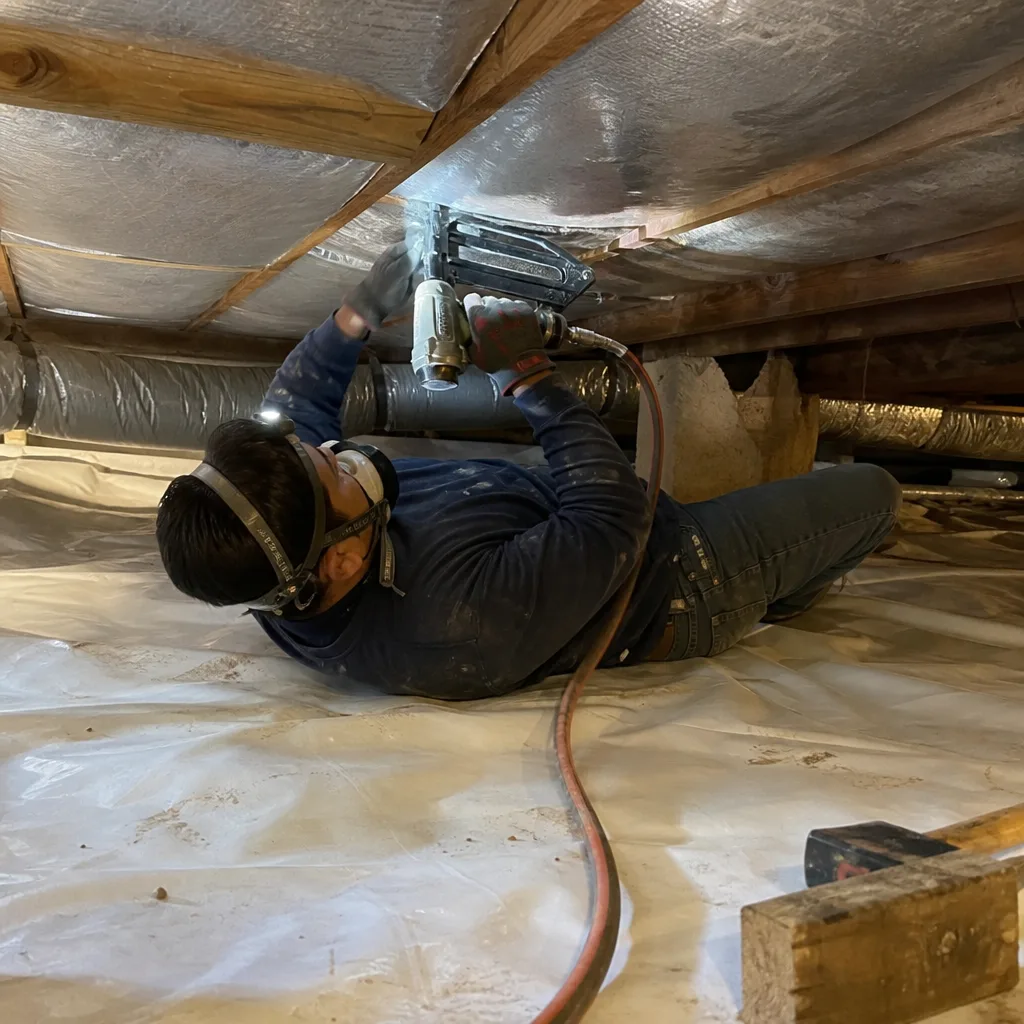
- Inspecting only in comfortable weather. Waiting for a mild day in April or May misses both the October and March windows. By April, summer cooling loads have begun and any winter damage is already costing you money.
- Adding insulation over unsealed air leaks. This is the most common error we correct in Glendale homes. Blowing new material over leaky top plates, can lights, and chimney chases simply hides the problem and can create moisture traps. Air sealing must precede insulation addition - a principle we treat as non-negotiable on every job.
- Ignoring soffit vent blockages. Many homeowners focus on ridge vents and ignore the intake side. Blocked soffit vents create stagnant attic air that amplifies summer heat and winter moisture. The fix is usually simple - pull back insulation, reinstall baffles, clear debris - but the consequences of neglect include premature shingle failure and ice dam conditions on north slopes during unusual cold snaps.
- Using interior humidity as proxy for attic conditions. Your thermostat’s humidity reading tells you nothing about attic moisture. Sheathing moisture content and attic relative humidity are independent variables that require direct measurement. We’ve seen dry interiors with attic humidity at mold-supporting levels from duct leaks alone.
- Documenting with memory instead of records. “I think we had it checked a couple years ago” is worthless for warranty claims, resale, or diagnostic comparison. The two-column log takes ten minutes and saves hours of uncertainty.
- DIY removal of vermiculite or unknown vintage material. Vermiculite insulation in pre-1990 Glendale homes may contain asbestos. Disturbing it without testing and proper abatement creates health and legal liability. If your home was built before 1990 and you haven’t identified the insulation type, stop and test before proceeding.
- Treating pest contamination as a cleaning problem. Vacuuming droppings and adding fresh insulation over the residue doesn’t eliminate odor trails that attract reinfestation or the biohazard that contaminated material represents. Proper remediation requires removal, sanitization, and physical exclusion before new material installation.
When to Call a Professional
Some conditions require trained assessment beyond homeowner inspection. Call for professional evaluation if you find moisture staining that covers more than a single rafter bay, any pest infestation with active nesting, insulation depth loss exceeding 30 percent of original specification, or if your home was built before 1990 and contains unidentified insulation material. Any of these conditions involve safety, health, or building-science complexity that benefits from documented assessment.
We also recommend professional involvement - see our DIY vs Professional Insulation: The Glendale Homeowner’s Decision Guide - when you’re considering adding insulation to an existing assembly. Matching new material to old, verifying adequate ventilation after addition, and ensuring air sealing is complete before burial are all steps that affect long-term performance and moisture safety.
Topside Attic Insulation Glendale home - we’re a Glendale-based contractor operating under The Haven Standard since 2016. Every job begins with a written price and scope before any work starts, and closes with a Documented Photo Record. On applicable jobs, we provide before-and-after blower-door readings so you can verify the air-sealing result in a single pressurization number. If your inspection reveals conditions you’re not equipped to address, we offer free estimates throughout Glendale. Call (213) 474-3828 to schedule.
Frequently Asked Questions
Most attic insulation jobs in Glendale homes between 1,200 and 2,400 square feet run between $2,800 and $6,500 for complete air sealing and loose-fill or batt installation to current code R-values. Spray foam in a conditioned attic typically ranges from $8,500 to $15,000 depending on roof complexity and thickness. These ranges assume accessible attics with standard framing; steep pitches, extensive remediation, or custom access solutions add cost. We provide a written price before any work starts - no exceptions - and offer a Free Second Opinion on any competing written estimate. Call (213) 474-3828 for a specific quote; estimates are free.
You can, but only after verifying three conditions: the existing material is dry and uncontaminated, the attic floor is properly air sealed, and the added material is compatible with what’s in place. In our experience inspecting Glendale homes, fewer than 20 percent of attics meet all three conditions without some remediation first. Adding material over wet, contaminated, or leaky assemblies hides problems and often makes them worse. We remove and replace when any of the three conditions fails.
Properly installed and protected insulation should last 20 to 30 years, but “properly protected” is the critical qualifier. In Glendale, insulation that has survived without moisture damage, pest contamination, or significant compression can remain effective for decades. Material that has experienced any of these stressors may need partial or complete replacement much sooner. Your seasonal inspection log is the best guide - documented degradation drives replacement timing, not calendar age alone.
A blower-door test is a pressurization measurement that shows, in one number, how much air your building envelope is losing. We run the test before and after air sealing on applicable jobs so homeowners can verify the performance change they paid for. For seasonal inspection purposes, you don’t need a blower-door test every year, but we recommend one if you’re experiencing comfort complaints you can’t explain, if you’re planning significant envelope work, or if you want baseline documentation before and after insulation upgrades.
Permit requirements depend on scope. Adding insulation to existing attic floor assemblies typically does not require a permit in Glendale. Changing insulation type, modifying roof ventilation, or converting a vented attic to a conditioned assembly does require permits and plan review. We handle permit applications as part of our scope when they’re required, and we never start work without confirming compliance. If a contractor suggests skipping permits for work that clearly requires them, that’s a red flag.
This is a classic Glendale pattern we diagnose regularly. By September, attic insulation that was marginal in June has been degraded by four months of peak thermal cycling. The attic thermal mass is at its annual maximum, and evening cooling doesn’t penetrate enough to discharge it before the next day begins. Meanwhile, homeowners turn off or reduce cooling based on outdoor comfort, but the attic continues to radiate heat into conditioned space until late evening. An October inspection typically reveals the insulation compression or displacement that created this condition, and restoration before the next summer prevents recurrence.
The Bottom Line
Glendale’s insulation care isn’t a quarterly checklist - it’s a twice-yearly rhythm timed to our actual climate stressors. Inspect in October, after summer heat has done its damage and before marine-layer moisture arrives. Inspect again in March, after winter’s moisture events and pest activity and before cooling loads begin. Document everything in a two-column log. Address findings before the next season’s load begins. And never add insulation over an unsealed, leaky, or contaminated assembly. The homeowners who follow this schedule avoid the emergency calls and comfort complaints that dominate our summer service queue. For more guides & resources on keeping your attic performing year-round, explore our blog. Those who don’t call us in July, when the fix costs more and the attic is miserable to work in.
Written by Wes Okafor, Owner at Topside Attic Insulation Glendale, serving Glendale since 2016.