
Attic Insulation Top-Up in Glendale, CA
An attic insulation top-up adds new blown-in material over your existing insulation to bring it up to the R-value your Glendale home actually needs – typically R-38 to R-60 for our climate zone. Most top-ups in the area run between $900 and $2,400 depending on attic square footage and current depth, and the work is usually completed in a single day. If your heating and cooling bills have been creeping up or your rooms never quite settle at the thermostat setting, the attic is almost always the first place to look.
At Topside Attic Insulation Glendale, we’ve been doing this work since 2016 – 9,000+ homes sealed and insulated across the San Fernando Valley and the foothill communities, every one with a written price before work started and a documented photo record when we left. Wes Okafor built this company around one principle that still holds: you never put new insulation over an unsealed attic floor. Air sealing of top plates, recessed can lights, and pipe and wire penetrations happens first, in writing, before a single bag of material goes up the ladder. That sequencing isn’t optional here – it’s how every job under home is structured. If you want the full picture of what we cover, the Attic Insulation in Glendale page lays out the complete service. Ready to schedule a free estimate? Call us at (213) 474-3828 – a live person picks up, no voicemail loop.
When You Need Attic Insulation Top-Up
Glendale’s climate sits in California’s Climate Zone 9, which means hot, dry summers that push attic temperatures above 140°F and cool winters that drive heating loads higher than most homeowners expect. Existing insulation – especially the blown fiberglass or batt material that was standard in homes built before 2000 – settles and compresses over time, losing R-value without looking visibly different from the access hatch. Here are the concrete signs that a top-up is warranted:
- Existing insulation depth is below 10 inches. Current California Title 24 guidelines call for R-38 minimum in attics for Climate Zone 9, which translates to roughly 10-12 inches of blown fiberglass or 9-10 inches of cellulose. If you can see the tops of the ceiling joists, you’re almost certainly under-insulated. In Montrose and the older Chevy Chase Canyon neighborhoods, we regularly find 4-5 inches of original insulation dating to the 1960s – less than half the minimum needed today.
- Rooms on the top floor are noticeably hotter in summer or colder in winter. A second-floor bedroom that won’t cool below 78°F even with the AC running is a direct symptom of heat gain through an under-insulated ceiling plane – not an oversized unit or a refrigerant problem.
- Your gas or electric bills spiked without a change in behavior. Insulation doesn’t fail dramatically; it degrades slowly. A 20-30% increase in HVAC runtime over two or three summers usually points to envelope performance – the attic floor being the highest-impact item to address first.
- A prior insulation job was done without air sealing. This is more common than it should be. If a previous contractor blew material directly over your attic floor without first sealing the gaps at top plates, recessed lights, and electrical chases, the R-value on paper is meaningless – conditioned air is escaping through those gaps regardless of the insulation depth above them. We see this pattern frequently in homes in the Adams Hill and Verdugo Woodlands areas where spec-grade work was done during the 2010s refinance wave.
- Visible rodent activity or prior pest treatment has disturbed the insulation. Rats and squirrels – both problems in Glendale’s hillside sections near the Verdugo Mountains – compress and soil insulation, reducing its thermal performance and creating air channels that bypass it entirely. A top-up after rodent proofing and attic cleaning restores the thermal envelope.
- The home was built before 1990 and has never had an insulation assessment. Pre-1990 construction in Glendale frequently has R-11 to R-19 in the attic, installed as batts that have now settled for 30-plus years. This is particularly common in the single-story homes along Kenneth Road and the post-war streets between Brand Boulevard and Central Avenue.
Our Attic Insulation Top-Up Process
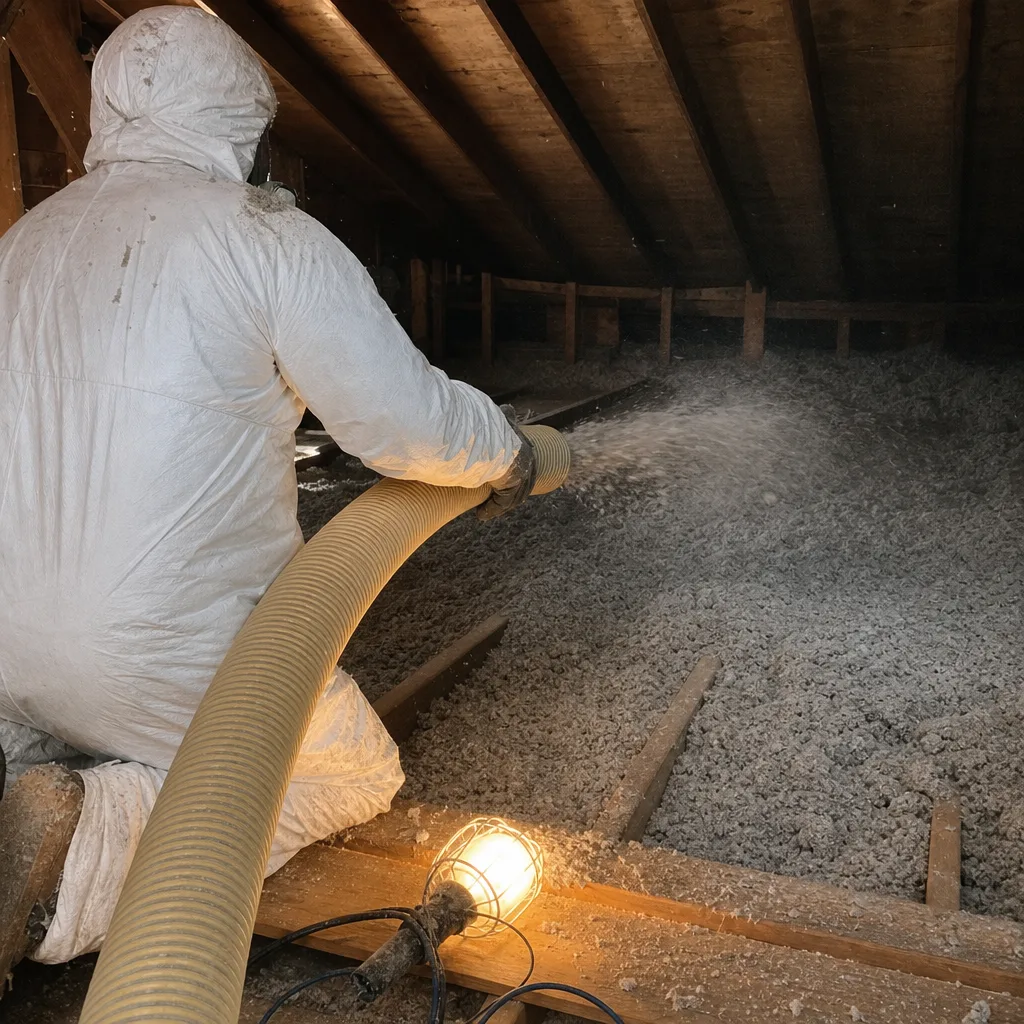
We run the same documented sequence on every top-up job. Nothing is skipped because it seems minor, and you receive the same written scope and photo record whether we’re working in a 900-square-foot bungalow in Tropico or a 2,800-square-foot split-level up in La Crescenta-Montrose.
-
Free on-site assessment and written price – before any work is scheduled.
A technician measures your attic floor area, checks existing insulation depth at multiple points, tests for moisture or pest damage, and inspects the air sealing condition of top plates, recessed fixtures, and mechanical penetrations. You receive a flat written price and a written scope before we leave. Under Haven Standard Clause 1: you see the number before anyone lifts a tool. No work is authorized until that document is signed. -
Air sealing of the attic floor – first, always.
Before any new insulation goes in, we seal every air bypass we found during the assessment. That means top-plate gaps between wall cavities and attic space (a significant source of stack-effect air loss in two-story Glendale homes), recessed can lights with foam boots or rigid covers, plumbing and electrical penetrations sealed with fire-rated caulk or foam, and HVAC duct boots where they penetrate the ceiling plane. We do not skip this step. Blowing insulation over an unsealed floor raises your R-value on paper while leaving the air leakage unchanged – a result that won’t show up until your next utility bill. We run a blower-door test – a pressurization reading that shows, in a single number, how much conditioned air your home’s envelope was losing – before and after sealing on applicable jobs, and we publish both numbers in your documentation. -
Preparation of the attic space.
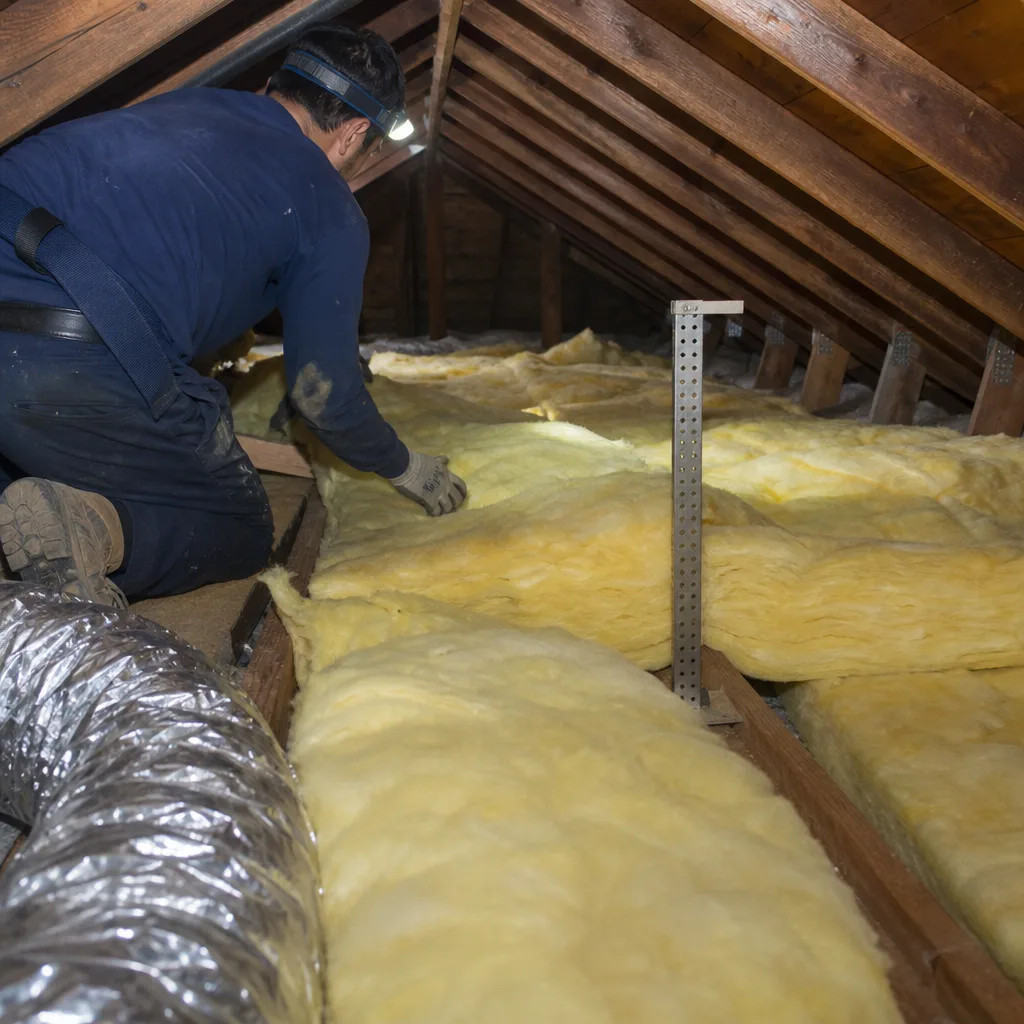
Technicians lay down walk boards to protect existing insulation and ceiling structure, confirm that attic ventilation baffles are in place at eaves so new material won’t block soffit vents, and verify that the depth guides (ruler stakes) are set to the target R-value depth for your specific material choice. Glendale’s Climate Zone 9 target is R-38 minimum; where the homeowner opts for a higher-performance result, we mark the scope accordingly. -
Blown-in insulation installation to specified depth.
We use material sourced from Owens Corning, GreenFiber, or Johns Manville depending on what best fits your attic geometry, budget, and performance target – no proprietary product lock-in. Blown fiberglass and blown cellulose both perform well in Glendale’s dry climate; we walk through the trade-offs at the assessment so you’re choosing, not guessing. Material is blown to uniform depth across the full attic floor, including hard-to-reach areas near the eaves and around mechanical equipment. -
Post-installation inspection and depth verification.
We measure finished depth at a minimum of twelve points across the attic floor to confirm consistent coverage. Any low spots are corrected before the crew leaves. This isn’t a courtesy check – it’s part of the documented record. The measurements are logged and included in your photo package. -
Documented photo record and written warranty delivered before we leave.
Every job closes with a photo record of before-condition, air sealing work, and finished insulation depth. Where a blower-door test was performed, both readings – pre-sealing and post-sealing CFM50 numbers – are included. The 365-Day Done Right Promise is on the written warranty: if it’s not right, we make it right. You have the document in hand before the truck pulls away.
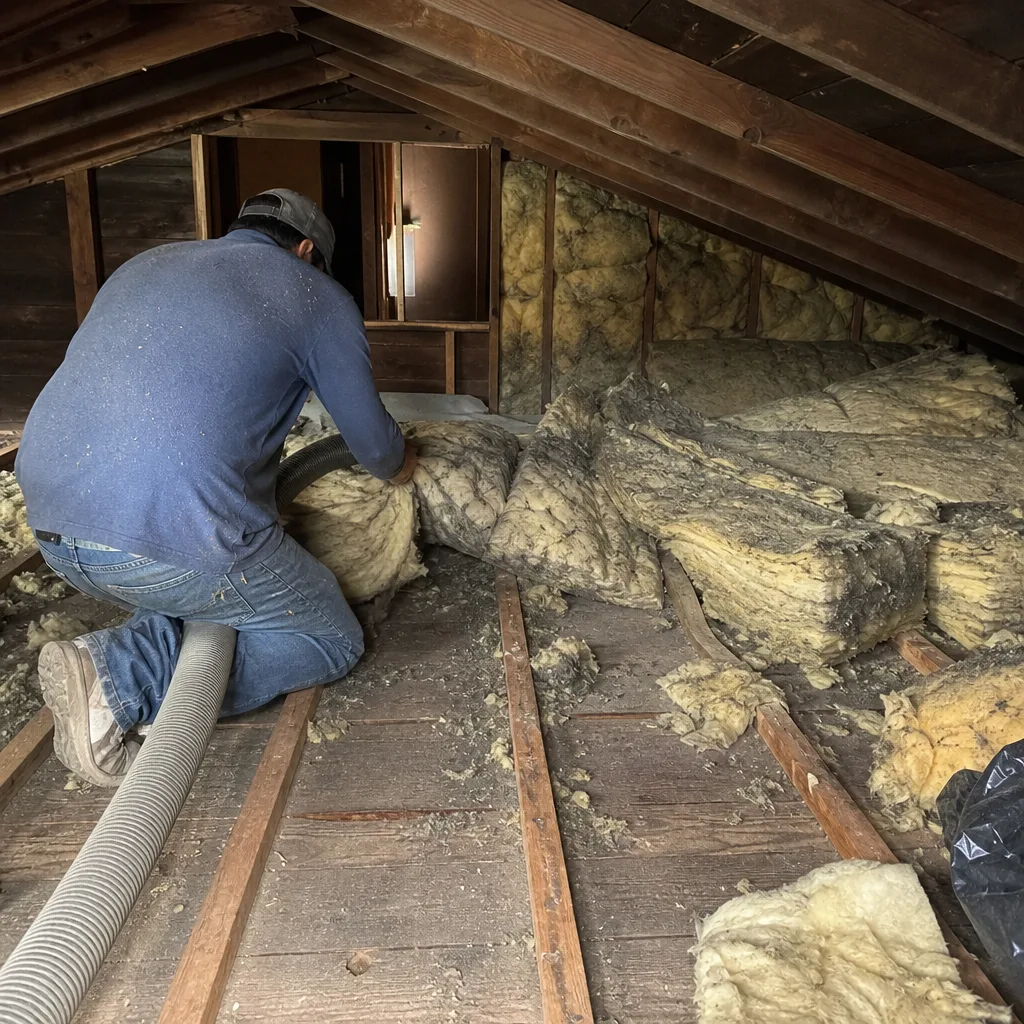 Before
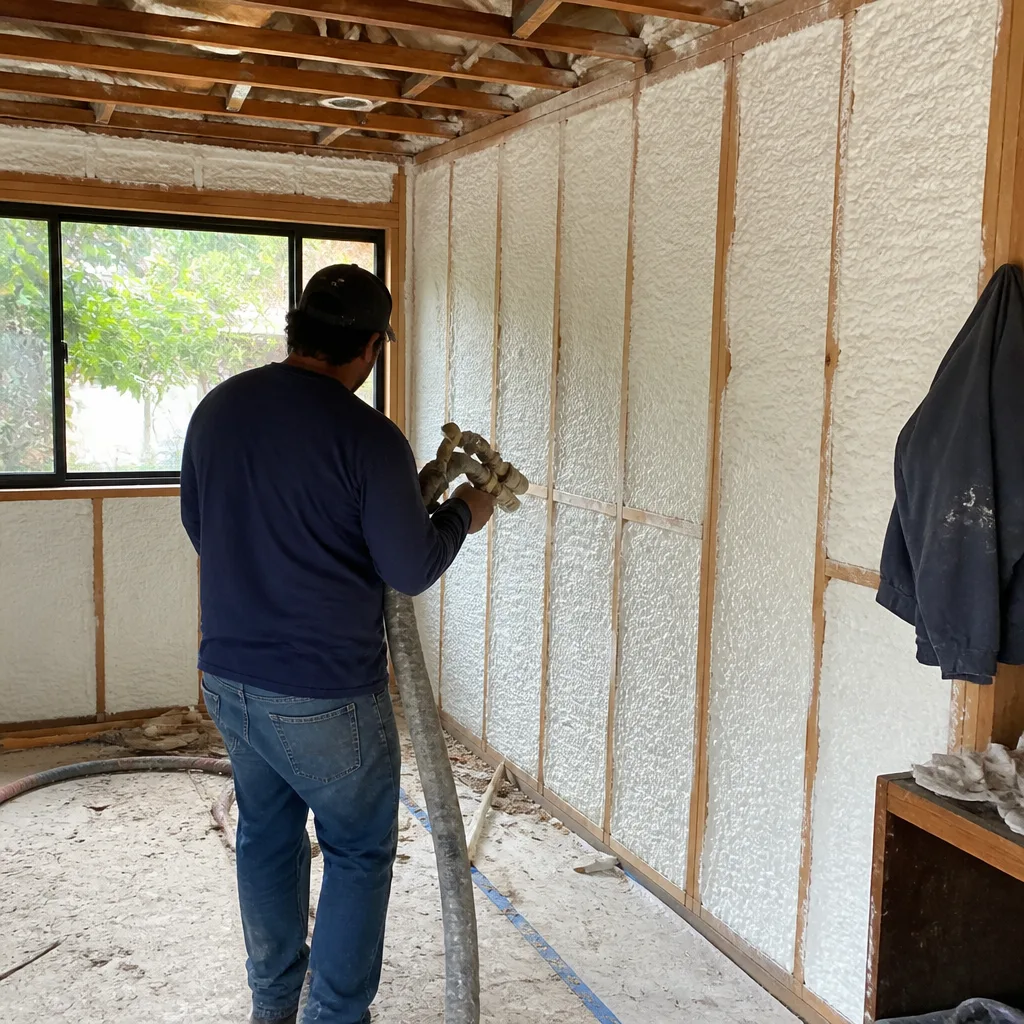 After
AfterAttic Insulation Top-Up Pricing in Glendale
Most attic insulation top-ups in Glendale run between $900 and $2,400 for a typical single-family home. The range is that wide because the three biggest cost drivers vary significantly between properties: attic floor area, how much air sealing is needed, and the starting depth of the existing insulation.
| Attic Size (sq ft) | Air Sealing Scope | Typical Price Range |
|---|---|---|
| 600-900 sq ft | Minor (few penetrations) | $900 – $1,300 |
| 600-900 sq ft | Moderate to heavy | $1,200 – $1,700 |
| 1,000-1,400 sq ft | Minor (few penetrations) | $1,300 – $1,800 |
| 1,000-1,400 sq ft | Moderate to heavy | $1,600 – $2,400 |
| 1,500+ sq ft | Varies – assessed on site | Quoted after assessment |
A few factors that move a job toward the higher end of those ranges:
- Heavy recessed lighting (a common feature in Glendale homes remodeled between 2005 and 2015) that requires individual air sealing covers on each can.
- Attic access that is difficult or restricted, requiring more labor time to move material safely.
- Prior insulation that is contaminated by rodent activity and needs partial removal before the top-up can be done correctly.
- Target R-value above R-38 – some homeowners in the hillside areas request R-49 or R-60 for maximum performance, which adds material cost but pays back in reduced HVAC runtime.
What doesn’t change: you see the exact number before anyone starts. The written price includes material, air sealing, labor, and cleanup. There are no separate line items added after the fact. If you have a competing written estimate, bring it – we will review it with you at no charge, line by line. That’s the Free Second Opinion offer, and it applies to any job in Glendale, no conditions attached.
To get a written price for your specific attic, call (213) 474-3828. The assessment is free, the number is flat, and you leave with it in writing before any work is scheduled.
FAQs – Attic Insulation Top-Up in Glendale
Can you just add insulation on top of what’s already in my attic?
Yes, in most cases – but only after the attic floor is properly air sealed first. Adding blown-in material directly over existing insulation is technically straightforward, and it’s often the most cost-effective way to bring an older home up to current R-value standards. The prerequisite is that every significant air bypass at the attic floor – top-plate gaps, recessed fixture openings, wire and pipe penetrations – is sealed before any new material goes in. Skipping that step means conditioned air keeps escaping through the same paths regardless of how many inches of insulation sit above them. We test the sealing result with a blower-door reading and include both numbers in your documentation. Call (213) 474-3828 to have us assess your attic and give you a written price.
How much does an attic insulation top-up cost in Glendale?
Most top-ups in Glendale run between $900 and $2,400 for a single-family home, depending on attic square footage and how much air sealing is needed. A 700-square-foot attic with minimal penetrations and good existing structure is at the lower end of that range; a 1,200-square-foot attic with heavy recessed lighting and a prior job that skipped air sealing sits closer to the top. You’ll have the exact flat number in writing before any work begins – that’s non-negotiable under Haven Standard Clause 1. Call (213) 474-3828 for a free on-site assessment and written price for your specific home.
What R-value does my Glendale attic need?
Glendale falls in California’s Climate Zone 9, where the Title 24 code minimum for attic insulation is R-38. In practical terms, that’s roughly 10 to 12 inches of blown fiberglass or about 9 to 10 inches of dense-pack cellulose over your attic floor. Many homeowners in Glendale’s hillside neighborhoods – particularly in areas with direct western exposure above the 900-foot elevation line – benefit from going to R-49 or R-60, which reduces peak summer heat gain through the ceiling plane and cuts HVAC runtime noticeably. We measure your existing depth at multiple points during the assessment and tell you exactly how far short of target you are, and what closing that gap will cost.
How long does an attic insulation top-up take in Glendale?
Most top-up jobs in Glendale are completed in a single day. An attic in the 600 to 900-square-foot range with moderate air sealing work typically takes four to six hours from setup to final depth check and photo documentation. Larger attics above 1,400 square feet, or jobs with heavy recessed lighting requiring individual can covers, may run closer to a full eight-hour day. We confirm the expected timeframe in the written scope before anyone starts, so you’re not waiting on an open-ended commitment.
Why Glendale Homeowners Choose Topside Attic Insulation Glendale
Glendale is a city of older housing stock – a lot of it built between the 1940s and the early 1980s, in neighborhoods like Rossmoyne, Verdugo Viejo, and the flats south of Colorado Street. Those homes were built to energy codes that bear no resemblance to what we know works today. A house that’s had two owners and one refinance remodel in 50 years has probably had insulation added at some point, but whether that work was done correctly is a different question entirely. Most of the attics we assess in Glendale fall into one of three categories: never touched, touched once without air sealing, or touched twice with materials that have since settled below useful depth.
Wes Okafor started Topside Attic Insulation Glendale to solve exactly that problem – and to solve it in a way that produces a number you can check. A blower-door reading before and after air sealing is a fact, not an opinion. The R-value depth we install to is measured and photographed at twelve or more points, not estimated. The written price you receive before work starts is the price you pay. Those aren’t marketing claims – they’re the operating structure of every job under The Haven Standard, and they’ve held since 2016 across more than 9,000 homes in this part of Southern California.
If you’ve been putting off this job because you weren’t sure who to trust or what it would actually cost, both of those questions have a direct answer: call (213) 474-3828, schedule a free on-site assessment, and walk away with a written price and a written scope before you decide anything. No pressure, no expiration date on the estimate, no voicemail – a live person answers every call.
Written by Wes Okafor, Owner at Topside Attic Insulation Glendale, serving Glendale.