
Attic Baffles & Ventilation Prep in Glendale, CA
Attic baffles are cardboard, foam, or rigid channels installed between roof rafters to keep soffit vents open after insulation is added – without them, blown-in or Attic Batt Insulation packs against the eave and blocks the airflow your roof deck depends on. In Glendale’s climate, where summer attic temperatures routinely push past 140°F in neighborhoods like Montrose and Chevy Chase Canyon, blocked soffit ventilation accelerates shingle degradation and drives up cooling loads on already-strained HVAC systems. Ventilation prep – sealing bypasses, confirming ridge and soffit vent counts, and installing baffles at every rafter bay before insulation touches the floor – is not optional groundwork; it is the groundwork.
At Topside Attic Insulation Glendale, we treat baffle installation and ventilation prep as a mandatory phase of every Attic Insulation in Glendale project. We will not blow or batt insulation over a ventilation system we haven’t inspected and documented. That sequence is non-negotiable here, and it’s been our standard since 2016. If you want to talk through what your attic’s ventilation currently looks like, call us at (213) 474-3828 – a live person picks up, no voicemail loop.
Every job is quoted in writing before any crew member lifts a tool. That’s Haven Standard Clause 1, and it applies to ventilation prep jobs just as it does to full insulation replacements. You’ll also receive a Documented Photo Record when we leave, so you can see every baffle installation and every sealed penetration rather than taking our word for it.
When You Need Attic Baffles & Ventilation Prep
Some of these signs show up on an energy bill. Others show up during an attic walk-through. Either way, they’re worth taking seriously before insulation goes in or back in.
- You’re replacing old insulation and the rafter bays have never been checked. Homes in Glendale’s older stock – particularly the 1950s and 1960s ranch-styles throughout Adams Hill and pre-war bungalows near downtown – frequently have soffit vents that were partially or fully blocked by the original insulation installation. Before adding new material, every bay needs to be confirmed open.
- Your attic insulation was added without baffles. This happens more often than it should. Blown cellulose or fiberglass packs tightly against the eave blocking, sealing off the soffit vent entirely. The attic looks well-insulated from the hatch, but the ventilation is gone.
- You’re seeing moisture staining on rafters or sheathing near the eaves. In Glendale, marine layer moisture from late spring and early summer can condense on roof sheathing when warm attic air has nowhere to exit. Staining near the eave is often the first visible indicator that airflow is restricted at the soffit.
- Your HVAC is running longer than it used to, with no clear cause. A blower-door test – a pressurization reading that shows, in one number, how much conditioned air your building envelope is losing – sometimes reveals that the attic is the culprit. So does checking whether the ventilation system is actually moving air.
- You’ve had a rodent or pest intrusion in the attic. After attic cleaning and rodent proofing, the attic floor needs to be re-insulated. That’s also the right moment to audit and correct ventilation before new insulation goes in – not after.
- Your home is losing insulation R-value faster than expected. Compressed or damp insulation loses effective R-value. If baffles weren’t installed and moist air has been cycling through the insulation near the eaves, replacement paired with proper ventilation prep is the correct fix – not simply adding more material on top.
Our Attic Baffles & Ventilation Prep Process
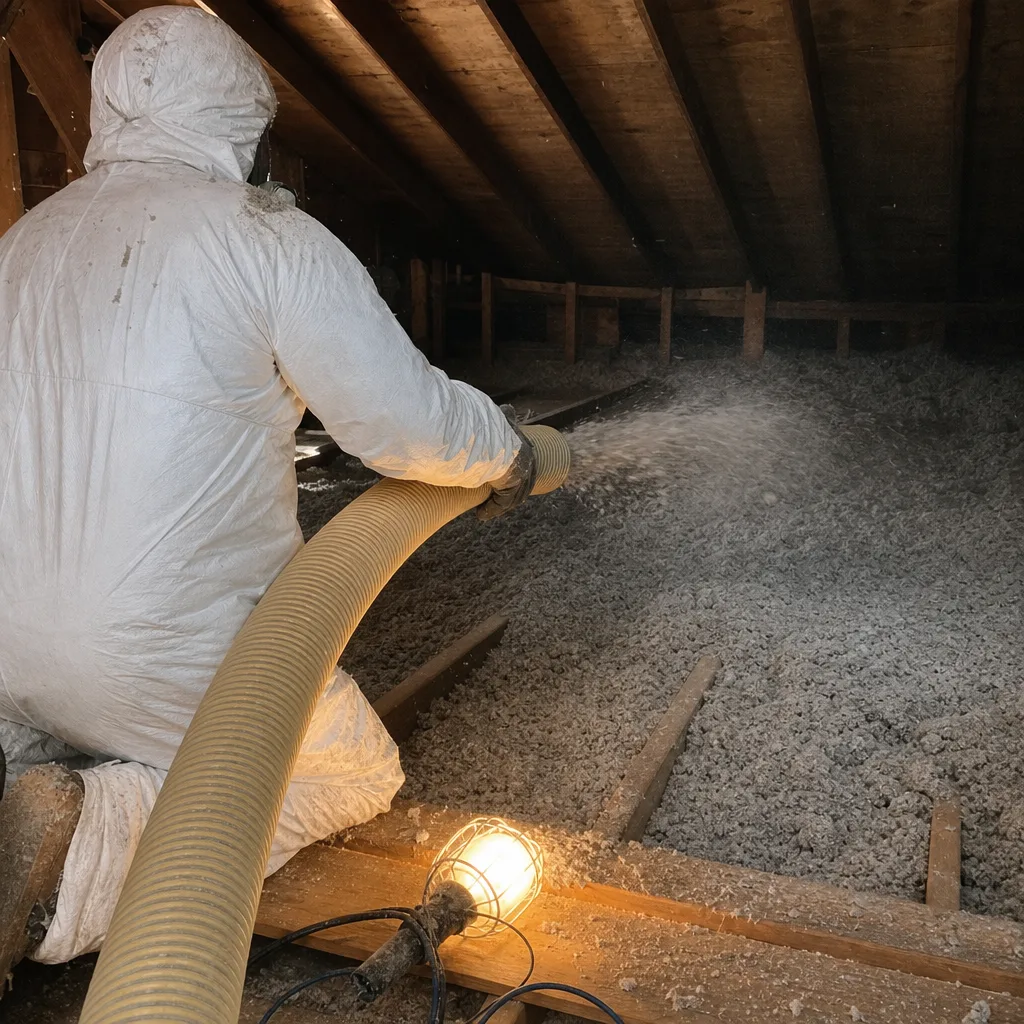
This is the sequence we follow on every job in Glendale. Nothing gets skipped to save time, because skipping any step creates a problem the next step can’t solve.
- Attic inspection and ventilation audit. Before we quote anything, a technician walks the attic with a flashlight and a measuring tape. We count existing soffit vents and ridge vents, measure rafter bay spacing, note any blocked or missing baffles, and photograph everything. In Glendale homes, particularly those with low-slope roofs common in the Verdugo Woodlands area, rafter bay depth varies significantly – we measure each section rather than assuming uniformity. The inspection findings go into your written scope, so you see exactly what we found, not a summary.
- Air sealing at top plates, can lights, and penetrations. Ventilation prep and air sealing happen together because they have to. We seal top-plate gaps, recessed light housings, and any HVAC or plumbing penetrations through the attic floor before a single baffle is installed. Under the Haven Standard, we will not install insulation over an unsealed attic floor – this step comes first, and the photo record documents every sealed penetration. On applicable jobs, we take a blower-door reading before this step so the after-sealing reading is a documented comparison, not an estimate.
- Baffle installation at every rafter bay. We install baffles – also called rafter vents or vent chutes – at each rafter bay from the eave to a point well above the planned insulation depth. In most Glendale attics, that means running baffles to at least 12 to 18 inches above the top of the finished insulation layer, maintaining a clear 1-inch channel minimum between the baffle face and the roof sheathing. We use rigid foam or heavy-gauge cardboard baffles depending on rafter bay depth and the insulation method to follow. Each baffle is mechanically fastened and sealed at the edges to prevent insulation from bypassing the channel.
- Ridge vent and exhaust vent confirmation. Soffit intake ventilation only works if there’s a corresponding exhaust path at or near the ridge. We confirm that ridge venting is unobstructed, that any existing turbine or box vents are functional, and that the net-free area of exhaust ventilation is appropriately matched to the soffit intake. California’s Title 24 ventilation requirements specify a minimum ratio of ventilated area to attic floor area – we check compliance and document it. If there’s a mismatch, we discuss the correction options with you before proceeding.
- Insulation installation – after, not before. Once baffles are set and ventilation is confirmed, insulation goes in. For most Glendale attic jobs, we work with blown-in products from manufacturers like Owens Corning or GreenFiber, selected based on the attic geometry and the R-value target. The sequence is fixed: seal first, baffle second, insulate third. We do not compress this order.
- Post-installation documentation. Every baffle installation is photographed before insulation covers it. You receive the Documented Photo Record – before and after images of the attic floor, the baffle installation, the sealed penetrations, and the finished insulation surface – along with your written warranty and any blower-door readings taken during the job. You’ll know exactly what was done and where.
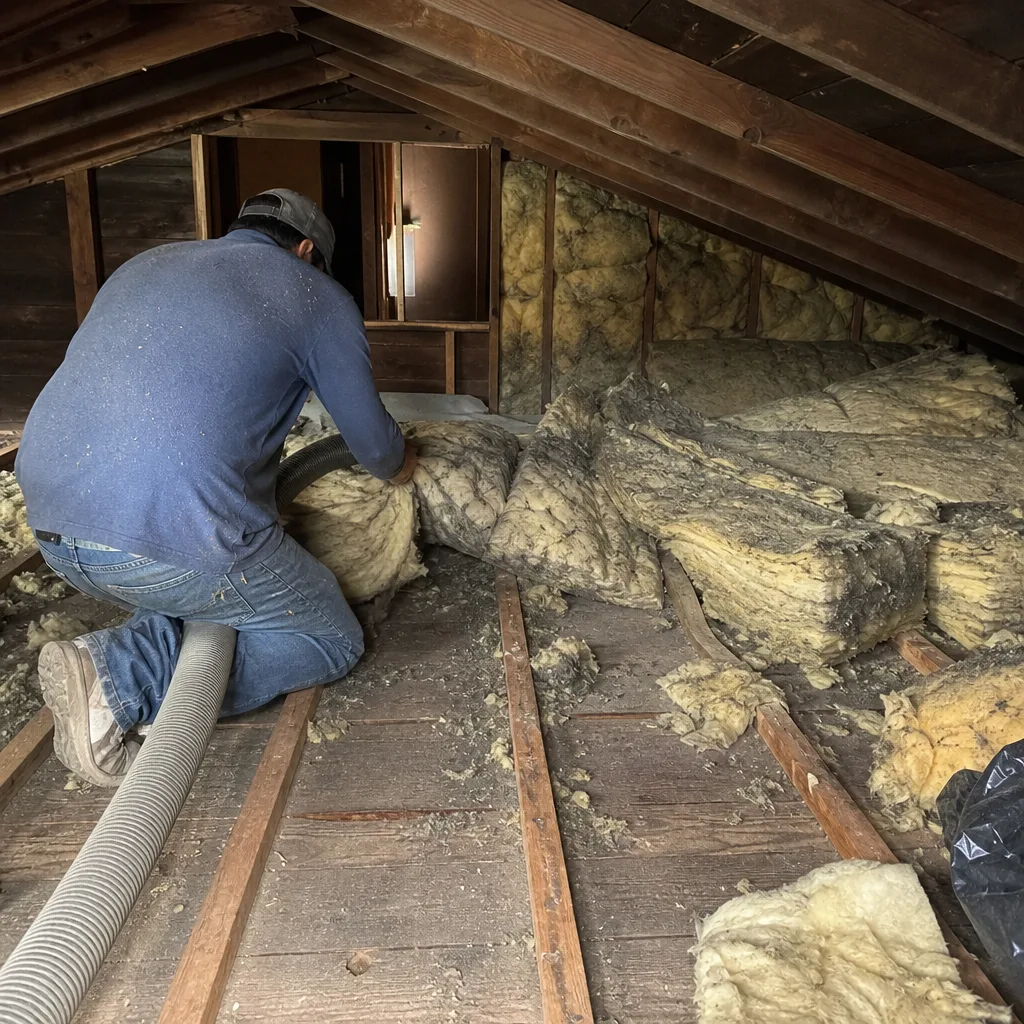 Before
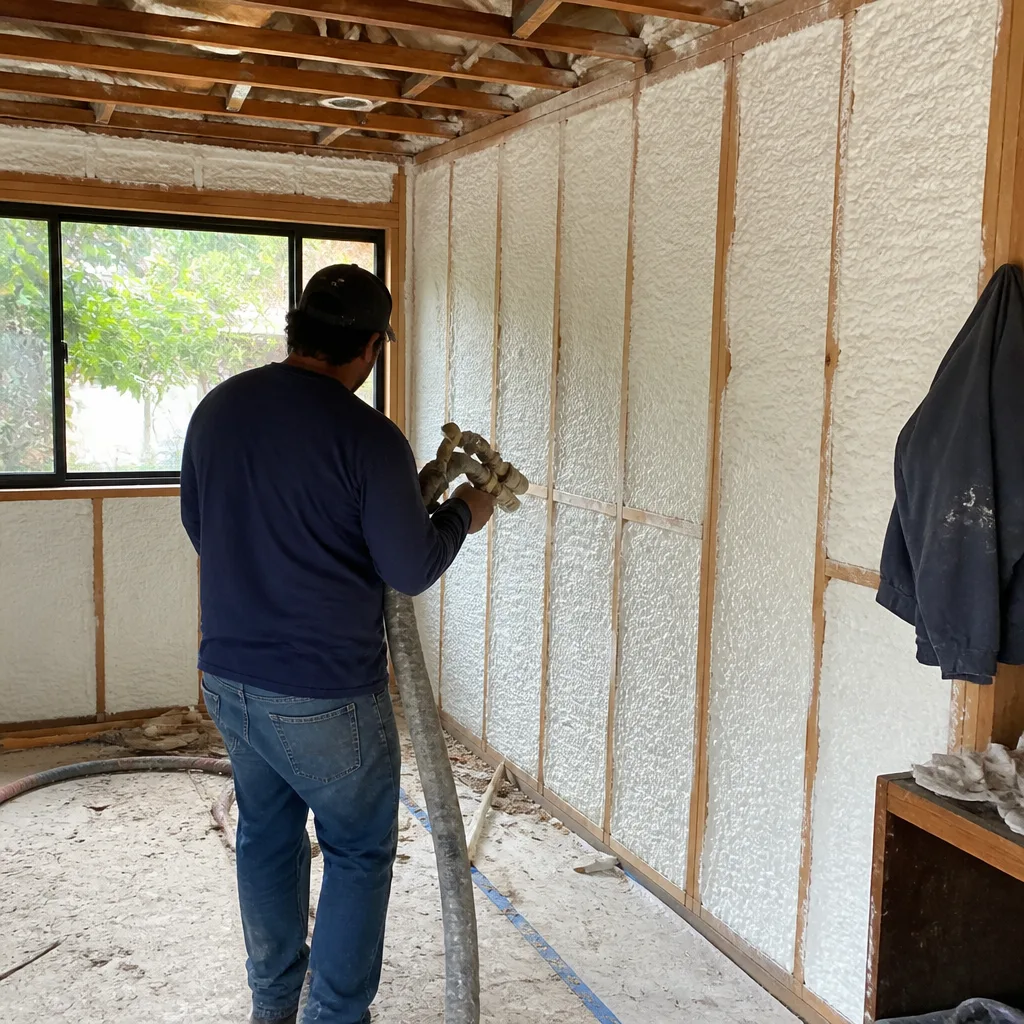 After
AfterAttic Baffles & Ventilation Prep Pricing in Glendale
Baffle installation and ventilation prep in Glendale typically runs between $350 and $950 when performed as a standalone service, depending on attic size, rafter bay count, and how much corrective work is required. When this service is bundled with Attic Insulation services – which is the more common scenario – the ventilation prep cost is included in the project scope rather than quoted as a separate line item.
Here’s what moves the number in either direction:
- Attic square footage: Most Glendale single-family homes run between 900 and 1,800 square feet of attic floor. A smaller attic with straightforward rafter bay access costs less to baffle than a larger one with multiple roof planes and varying pitch.
- Existing blockage: If baffles need to be installed into rafter bays that are already packed with old insulation, that material needs to be cleared first. Insulation removal in Glendale typically adds $0.75 to $1.50 per square foot to the project total.
- Ventilation corrections: If the existing ridge or exhaust ventilation is undersized or obstructed, correcting it adds to the scope. We price corrections separately and specifically – not as a round number added to the estimate.
- Access difficulty: Low-clearance attics common in some Montrose and La Crescenta-area homes with shallow roof pitches take longer to work in. We factor that in rather than surprising you after the fact.
- Air sealing depth: Homes with high can-light counts or numerous penetrations require more sealing labor. A 1980s Glendale home with recessed lighting throughout the living areas typically has 15 to 30 fixtures that each need individual attention.
Under Haven Standard Clause 1, you receive a written price with a flat scope before any work starts – no estimates that grow after the crew is already in the attic. If you have a written estimate from another contractor, we offer a free second opinion: bring the document and we’ll read it with you, line by line, and tell you what we see.
To get a written price for Attic Insulation Near Me in Glendale, CA, call (213) 474-3828. We’ll schedule an inspection, walk the attic, and put a number in writing before you decide anything.
FAQs – Attic Baffles & Ventilation Prep
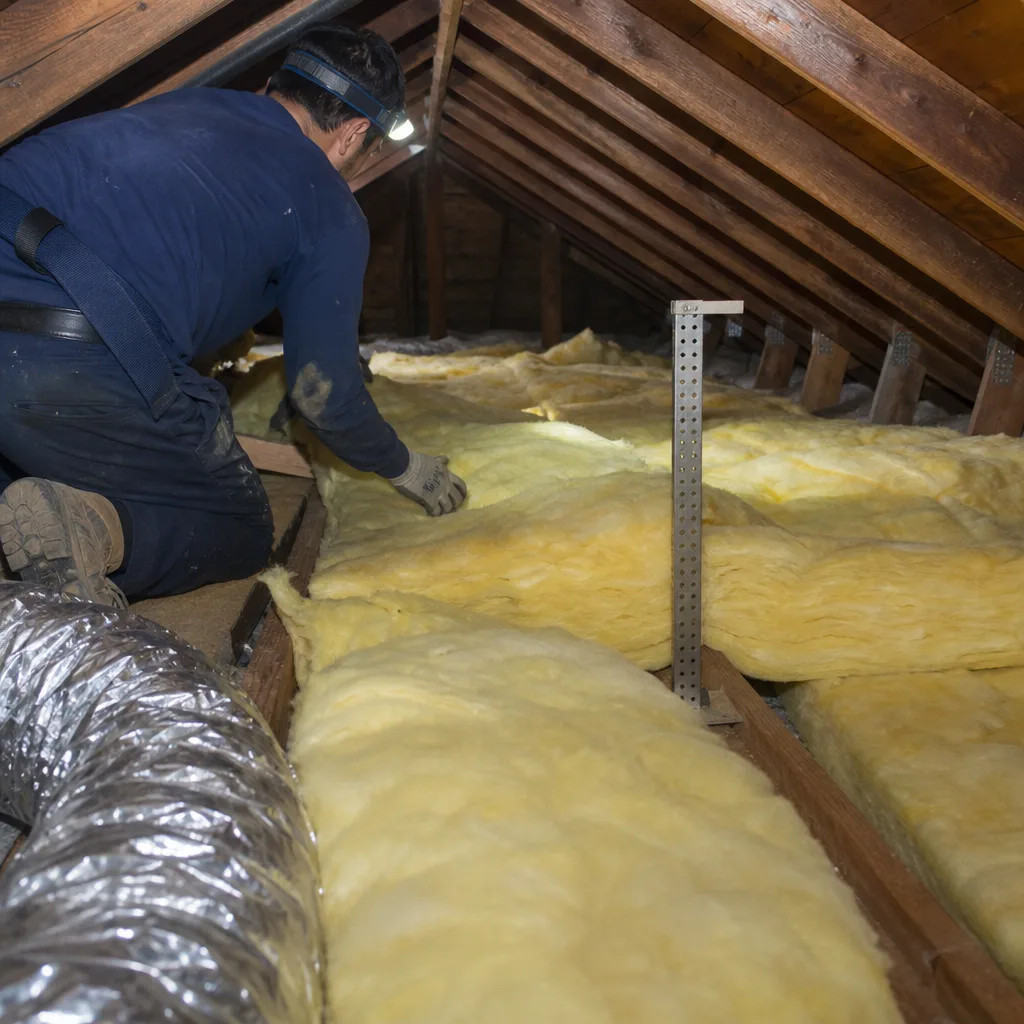
What are attic baffles and do I actually need them?
Attic baffles are channels – usually rigid foam or heavy cardboard – installed in the space between roof rafters to keep a clear airflow path from the soffit vent to the ridge vent after insulation is added. You need them any time blown-in or batt insulation will be installed at or near the eave, because without baffles the insulation simply fills the rafter bay and blocks the soffit vent entirely. In Glendale, where attics reach extreme summer temperatures and the roof deck needs continuous airflow to stay within a reasonable temperature range, blocked soffit vents aren’t a minor issue – they shorten shingle life and increase cooling loads measurably. If your attic currently has no baffles, adding them before re-insulating is not optional from our standpoint. Call (213) 474-3828 to have an inspection scheduled and documented.
Can baffles be installed if insulation is already in the attic?
Yes, but it requires clearing the insulation from the rafter bays near the eaves before the baffles can be set properly. On jobs in Glendale where we’ve found blocked soffit vents under existing insulation – this is a regular finding in Adams Hill and the Grandview neighborhood – we remove the material from the affected bays, install baffles, confirm the soffit vents are open, seal the air leaks at the top plate, and then re-insulate. The insulation removal adds to the project cost, but installing a baffle on top of packed insulation doesn’t accomplish anything. The soffit vent has to be physically clear, and we photograph it to confirm that before we close the job.
Does California’s Title 24 require attic baffles?
Title 24, California’s building energy code, specifies minimum attic ventilation ratios – typically 1 square foot of net-free ventilation area per 150 square feet of attic floor area – and requires that ventilation remain unobstructed after insulation is installed. Baffles are the standard method of meeting that requirement at the eave. On permitted projects in Glendale, the City of Glendale’s Building and Safety Division will expect to see the ventilation design documented. Even on projects that don’t require a permit – most like-for-like insulation replacements – we document the ventilation condition because it’s part of the written scope you receive at the end of the job.
How long does the ventilation prep and baffle installation take?
For a typical Glendale single-family home, baffle installation and ventilation prep – including air sealing – takes between three and six hours when performed alongside a full insulation project. Standalone ventilation prep on an attic that already has accessible rafter bays usually takes two to four hours. Homes with difficult access, steep interior pitches, or heavy existing insulation blocking the eaves take longer; we factor that into the written scope rather than billing hourly overages at the end of the day. The Documented Photo Record is completed before the crew leaves, so you’re not waiting for documentation to arrive later.
Why Attic Ventilation Prep Matters More in Glendale Than Most Places Realize
Glendale sits in a basin flanked by the San Gabriel Mountains to the north and the Verdugo Hills to the northeast. That geography shapes its climate in ways that directly affect attic performance. During the summer months, the city regularly experiences the kind of superheated afternoons where attic temperatures without adequate ventilation can hit 140°F to 150°F. At those temperatures, unventilated roof sheathing degrades faster, and any insulation packed against a blocked soffit vent stays damp from the seasonal marine layer intrusion that comes off the coast in May and June.
We’ve inspected attics in Rossmoyne, in the Tropico neighborhood, and up in La Crescenta where the older housing stock has a mix of gable vents and ridge vents installed across several renovation eras – and the ventilation system often makes no sense as a unified design. Gable vents on opposing walls can short-circuit ridge ventilation, moving air horizontally across the top of the attic rather than pulling it up from the soffit and out through the ridge. When we find that condition, we document it, explain the airflow mechanics in plain terms, and let you decide how to address it with a written price for each option in hand.
That kind of diagnostic work is part of what separates ventilation prep done properly from baffle installation done quickly. Blowing in Johns Manville fiberglass over a ventilation system that doesn’t actually function the way the installer assumed it does is a documented failure mode we see regularly in Glendale’s older housing stock. The fix is straightforward – but it has to happen before the insulation goes in, not after.
Since 2016, Topside Attic Insulation Glendale has completed this process across more than 9,000 homes, every one of them with a written price before work started and a documented record when the crew left. The 365-Day Done Right Promise applies to ventilation prep and baffle installation just as it does to every other service: if something isn’t right within a year of the job closing, we make it right. That’s in writing, not just a phrase on a page.
If you’re planning an attic insulation project – or you’ve been told your existing insulation is underperforming and aren’t sure why – the place to start is the home page or a call to (213) 474-3828. We’ll inspect the attic, document what’s there, and put a written price in front of you before we ask you to decide anything.
Written by Wes Okafor, Owner at Topside Attic Insulation Glendale, serving Glendale.