
Last updated September 23, 2026
Insulation Warning Signs: A Glendale Homeowner’s Reference Guide
A $40 monthly increase on a July Edison bill is the most common first symptom of insulation failure in Glendale, but it’s also the last symptom homeowners think to connect to their attic. By the time they do, depth is often down 30 percent. This complete guide to insulation in Glendale separates the warning signs into two categories - thermal symptoms you feel and physical symptoms you can see or smell - so you can describe what you’re observing accurately before any contractor arrives. Whether you live in a 1920s bungalow in Rossmoyne or a 1980s tract home in Glenoaks Canyon, the signs follow predictable patterns once you know what to look for.
Quick Answer
Insulation failure in a Glendale home shows up as either thermal symptoms (rooms that run 8°F+ above thermostat setpoint, HVAC cycles stretching past 20 minutes, or cooling bills rising year-over-year) or physical symptoms (visible joists in the attic, light leaking through eaves, dark staining on insulation, musty or ammonia odors). The two categories point to different problems: thermal symptoms usually mean insufficient depth or failed air sealing, while physical symptoms often indicate moisture intrusion, rodent activity, or deteriorating material that may need removal before replacement.
Table of Contents
- Thermal Symptoms: What Your Thermostat and Bills Are Telling You
- Physical Warning Signs Visible From the Attic Hatch
- Odor-Based Warnings in Glendale’s Older Housing Stock
- Depth Loss vs. Contamination: Two Different Scopes, Two Different Costs
- How to Document a Warning Sign Before Calling a Contractor
- How Glendale’s Climate and Building Age Affect Insulation Failure
- Common Mistakes to Avoid
- When to Call a Professional
- Frequently Asked Questions
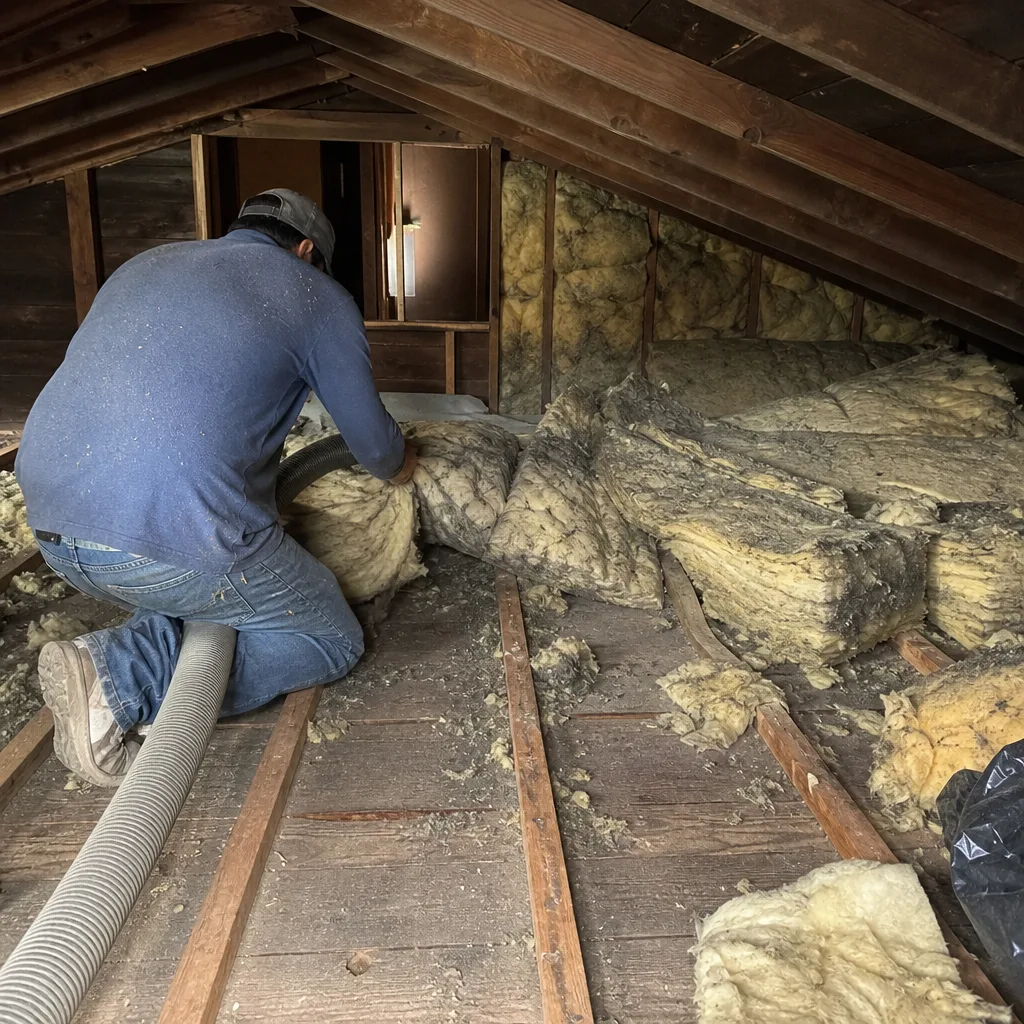 Before
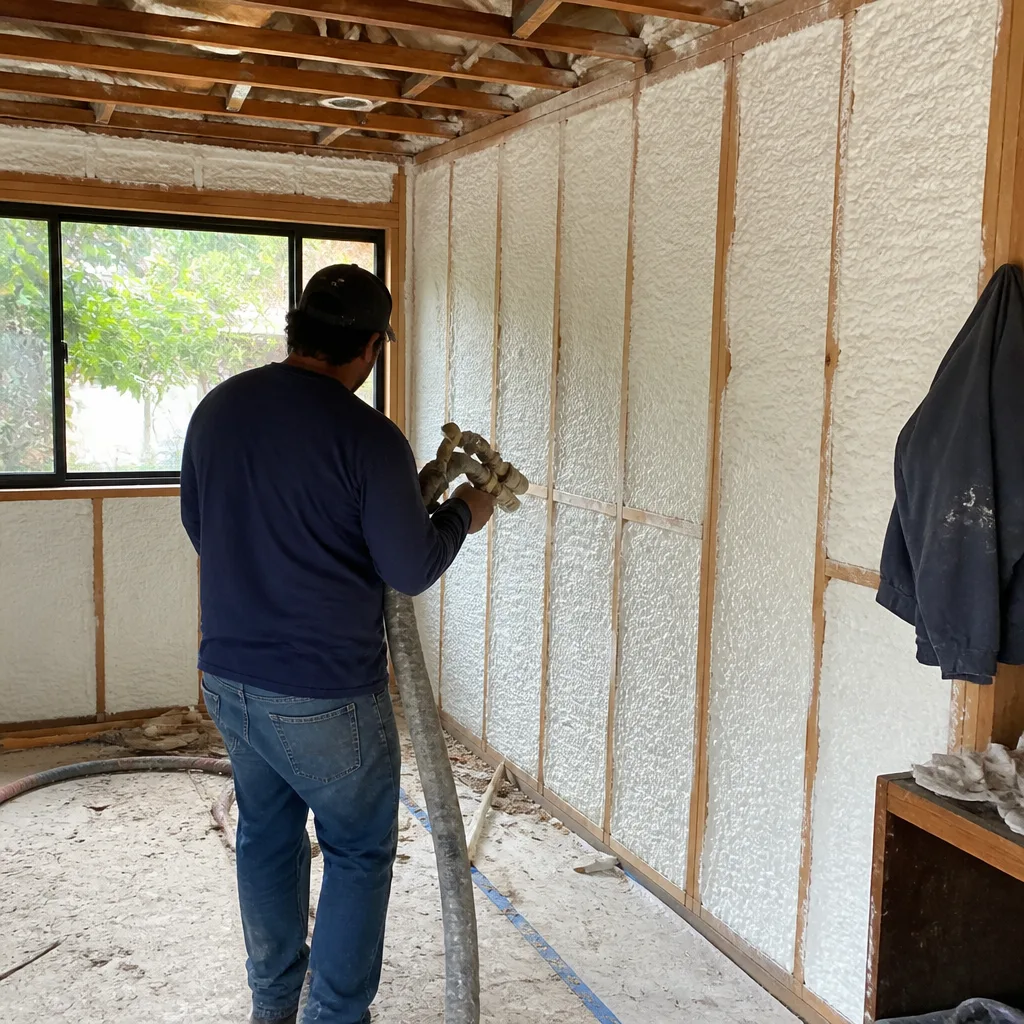 After
AfterThermal Symptoms: What Your Thermostat and Bills Are Telling You
Most Glendale homeowners notice insulation problems through their wallets before they notice them through their senses. The thermal symptoms are measurable, trackable, and often the earliest reliable indicators that something in the building envelope has degraded.
Room-to-Room Temperature Variation of 8°F or More
We regularly find that a bedroom or home office in a Glendale home reads 8°F to 14°F above the thermostat setpoint while the living room sits at target. This isn’t a duct problem, though many homeowners assume it is. When insulation depth drops below R-30 in the attic - the minimum effective level for our climate zone - the ceiling becomes a radiant heat source. The room below overheats because the attic above it is reaching 140°F to 160°F in July, and that heat radiates downward faster than the HVAC can counter it.
In neighborhoods like Adams Hill, where many homes have original 1950s ceiling cavities with limited depth, we’ve measured attic floor temperatures of 155°F while the conditioned space below struggled to stay below 82°F. The homeowner had already spent $2,800 on a larger air conditioner that didn’t solve the problem because the issue was heat gain, not cooling capacity.
HVAC Runtimes Extending Past 20 Minutes Per Cycle
In mild weather - say, a 78°F day in late May - a properly sealed and insulated Glendale home should see cooling cycles of 8 to 12 minutes. When we see runtimes stretching past 20 minutes, or systems that never reach setpoint and simply run continuously, the building envelope is usually the culprit. The HVAC is sized correctly; it’s just fighting a thermal load it wasn’t designed to handle.
Here’s how to check this yourself:
- Pick a day when the outdoor high is between 75°F and 82°F - mild enough that the system isn’t fighting extreme heat.
- Set your thermostat to 76°F and note the time when the compressor kicks on.
- Time how long it runs before shutting off. If it’s more than 20 minutes, or if it doesn’t shut off at all, your insulation or air sealing (or both) has likely failed.
- Check multiple rooms with a basic thermometer. A 6°F or greater spread between the coolest and warmest room points to attic insulation as the primary suspect.
Year-Over-Year Bill Increases Without Usage Change
Edison’s rate structure has changed, so some bill increase is expected. But a cooling bill that jumps 20% or more year-over-year, during a summer with similar weather, indicates the home is working harder to maintain the same temperature. We pull utility bills on every home energy audit we perform in Glendale, and the pattern is consistent: the homes with the steepest bill spikes are the ones where insulation depth has compressed, shifted, or been disturbed by prior work (roofing, electrical, pest activity).
One homeowner in Verdugo Woodlands brought us three years of bills showing a steady $35 to $55 monthly climb. The attic had original blown cellulose from 1987, compacted to less than 4 inches in most areas. After removal, air sealing, and replacement with new blown-in insulation to R-38, her July 2023 bill came in $62 below her July 2022 bill - on a hotter month.
Physical Warning Signs Visible From the Attic Hatch
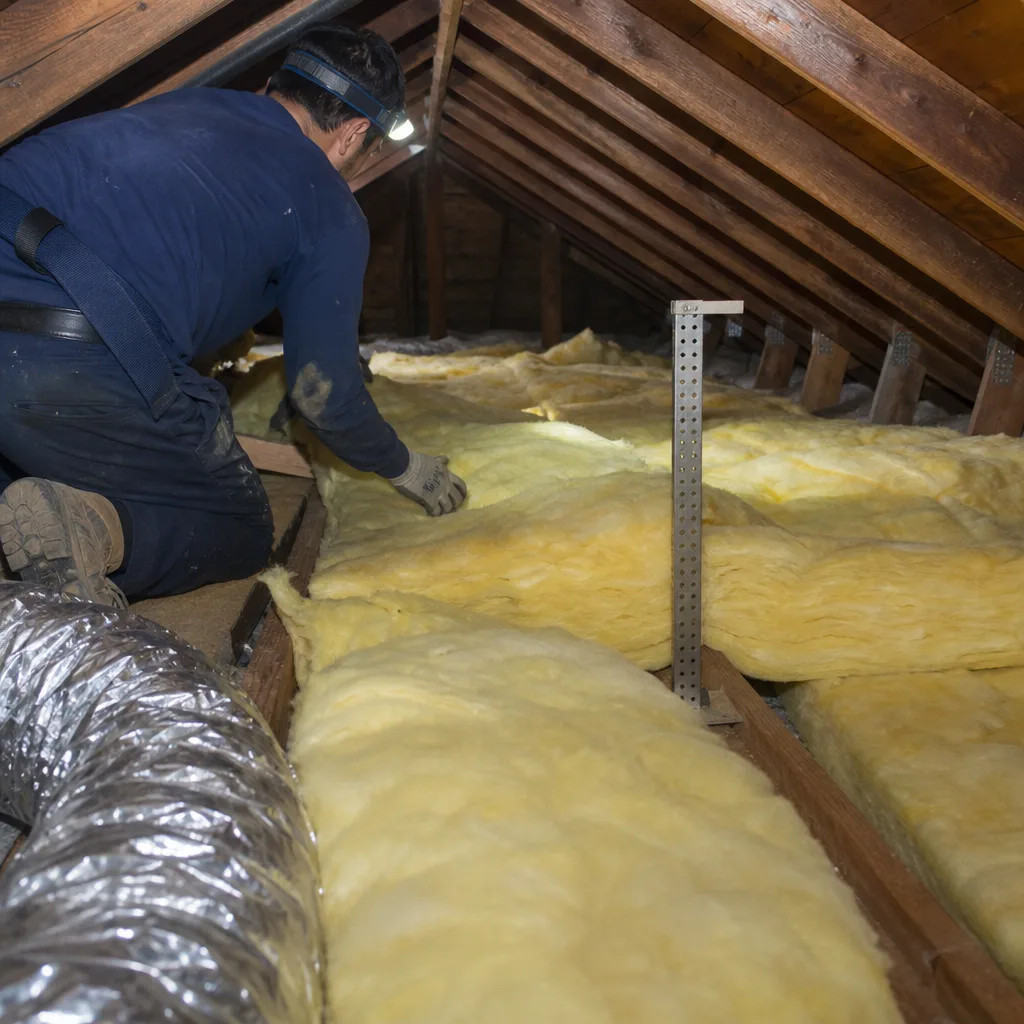
You don’t need to crawl through your attic to spot serious problems. Several critical warning signs are visible from the hatch with a flashlight, and documenting them gives a contractor enough information for a preliminary assessment.
Visible Joists: The Ruler Test
Standard joists in Glendale homes are 2×6 or 2×8 lumber, meaning they stand 5.5 or 7.25 inches tall. If you can see the full height of the joists - the top edge is clearly visible above the insulation - your depth is almost certainly below R-11. That’s roughly equivalent to having no functional insulation at all in our climate.
Effective insulation in Glendale’s Climate Zone 9 should sit at R-38 to R-49 in the attic, which translates to 12 to 15 inches of blown fiberglass or 10 to 13 inches of blown cellulose. When you can see joists, you’re looking at a thermal performance level that predates modern energy codes by decades.
Light Visible Through Eaves
From the attic hatch, look toward where the roof meets the exterior walls. If you see daylight streaming through - even pinpricks - you have unsealed eave vents or, worse, gaps where the top plate of the wall isn’t sealed to the drywall below. This is both an insulation problem and an air sealing problem. The light is air, and air carries moisture, dust, and attic heat directly into your conditioned space.
In Glendale’s older neighborhoods, particularly those with original California bungalows, we’ve found eave vents that were never properly baffled during prior insulation work. The insulation installer simply blew material toward the eave, blocking ventilation and creating a condensation trap, or left a 6-inch gap that functions as an open window year-round.
Dark Staining on Insulation Surfaces
Insulation that looks gray, blackened, or streaked - particularly in patterns that follow framing members - indicates air movement through the material. This is filtration staining: conditioned air from below is leaking through gaps in the ceiling, carrying dust and particulates that deposit on the insulation fibers. The insulation isn’t necessarily wet or contaminated; it’s acting as an air filter, which means it’s also ineffective as a thermal barrier.
We’ve photographed this pattern extensively in Glendale’s 1960s and 1970s ranch homes, where recessed can lights and bathroom fan housings create major leakage paths. The insulation around these penetrations turns nearly black within a few years while the surrounding material stays lighter. It’s a map of your air leaks, written in dust.
Sagging or Displaced Batts
Fiberglass batts that have fallen away from the ceiling, bunched up against framing, or slid out of place have lost their R-value entirely. A batt only works when it’s in full contact with the surface it’s meant to insulate. A 6-inch batt compressed to 3 inches performs like a 3-inch batt. A batt hanging in mid-air performs like nothing.
This is common in attics where wiring or ductwork work has disturbed original installations. We’ve found batts stuffed into eave corners by electricians who needed access, or pushed aside by HVAC technicians and never replaced. The homeowner sees a fully insulated attic; what they actually have is patchy coverage with major thermal bridges.
Odor-Based Warnings in Glendale’s Older Housing Stock
Smell is the most underutilized diagnostic tool in home maintenance, and in Glendale’s housing stock - where 40% of homes were built before 1960 - it’s often the first indicator of a problem that visual inspection misses.
Musty or Earthy Smell: Moisture Intrusion
A musty odor that intensifies in the afternoon, particularly on the second floor or in rooms below the attic, usually indicates moisture accumulation at the roof deck. In Glendale, this pattern peaks in late summer when morning marine layer moisture gets trapped against the underside of roof sheathing that lacks adequate ventilation or when bathroom exhaust fans vent into the attic rather than through the roof.
The insulation becomes a moisture reservoir. Cellulose, in particular, will hold 20% to 30% moisture by weight before feeling wet to the touch. By the time you smell it, mold growth has likely begun on the insulation surface or the ceiling drywall below. This is not a “add more insulation” scenario. This is a “remove, remediate, and rebuild” scenario, and the scope difference matters significantly for cost.
Ammonia or Sharp Urine Odor: Active Rodent Presence
Glendale’s hillside neighborhoods - Chevy Chase Canyon, Glenoaks Canyon, the areas backing up to the Verdugo Mountains - have active roof rat and squirrel populations. When these animals establish nests in attics, their urine saturates insulation material. The ammonia smell is unmistakable and often detectable from the hatch before you enter.
Rodent-contaminated insulation cannot be left in place. The urine contains proteins that trigger allergic responses, and the scent marks attract subsequent infestations. We’ve removed insulation in Glendale homes where three layers of blown material had been added over decades, each layer harboring urine from successive rodent colonies. The homeowners had no idea; they simply knew the attic “smelled funny sometimes.”
Chemical or Sweet-Sour Smell: Deteriorating Older Products
Some insulation products installed in the 1970s and 1980s - particularly certain formaldehyde-based binders in early fiberglass batts and some urea-formaldehyde foam installations - off-gas as they age. The smell is often described as chemical, sweet, or like old library paste. It’s most noticeable on hot days when attic temperatures accelerate the breakdown.
We don’t encounter this frequently, but when we do, it’s always in Glendale’s mid-century stock. The material isn’t necessarily hazardous at current exposure levels, but it’s a sign that the insulation has reached end of life and is degrading rather than performing. Replacement with modern materials - Owens Corning, CertainTeed, or GreenFiber blown products - eliminates both the odor and the performance loss.
Depth Loss vs. Contamination: Two Different Scopes, Two Different Costs
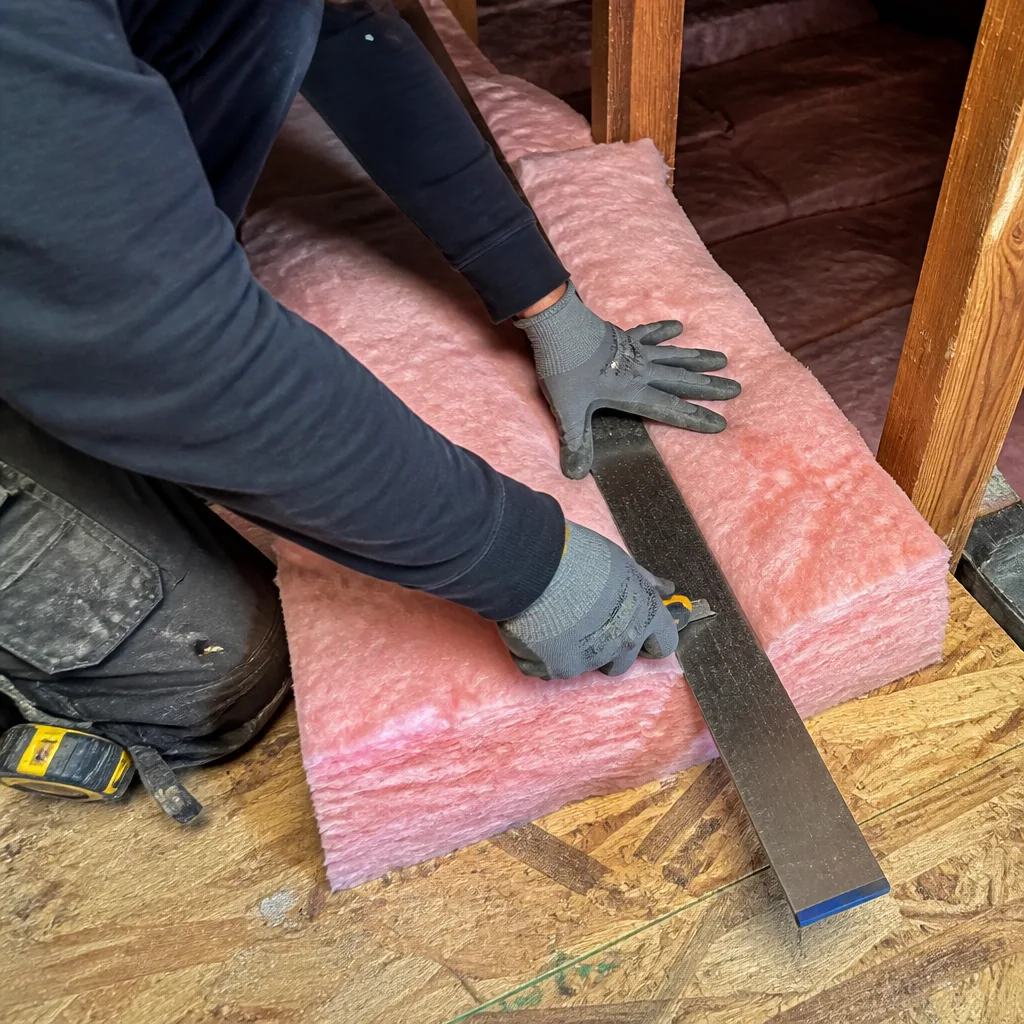
This distinction is where many Glendale homeowners get surprised by estimates. Not every insulation problem is solved by adding material. Some problems require removing what’s there first, and the cost difference is substantial.
When Adding Material Is Appropriate
Depth loss from natural settling, compression from foot traffic during prior work, or original under-installation can be addressed by adding new material on top. The existing insulation is clean, dry, and uncontaminated; it simply isn’t thick enough. In these cases, we air seal first - top plates, can lights, penetrations, and the attic access itself - then blow new material to achieve R-38 or R-49.
Most attic insulation in Glendale falls into this category. The existing material is old but functional; the home needs more of it, properly sealed. A typical scope runs one to two days, and the homeowner receives before-and-after blower-door numbers showing the air-sealing improvement.
When Removal Is Required First
Contamination from rodent urine, mold growth from moisture intrusion, or fire/smoke damage makes existing insulation a hazardous material that must be removed before any new work begins. This adds a full day of labor, disposal fees, and often the need for personal protective equipment and containment.
The cost multiplier is typically 1.5x to 2.5x compared to adding over existing material. But skipping removal to save money creates a worse problem: new insulation installed over contaminated old insulation traps the odor, moisture, and allergen sources against the ceiling, where they continue to affect indoor air quality.
We make this determination during our initial assessment, and we document it with photos. Under Haven Standard Clause 1, the written scope specifies whether we’re adding over or removing first, and the written price reflects that scope exactly. No homeowner should discover mid-project that their “insulation addition” has become an “insulation removal and replacement.”
The Blower-Door Test as Decision Tool
Our blower-door test - a pressurization reading that shows, in one number, how much air your building envelope is losing - helps distinguish between these scenarios. A reading above 3,500 CFM50 in a 2,000-square-foot Glendale home indicates significant leakage that air sealing alone may address, even with marginal insulation depth. A reading below 2,500 CFM50 with severe thermal symptoms points to insulation depth or distribution as the primary issue.
We’ve had Glendale homeowners request insulation removal based on odor concerns, only to find that the blower-door reading was 4,800 CFM50 and the real problem was a disconnected bathroom exhaust dumping moist air into the attic. The insulation was stained but not contaminated; the fix was a $400 vent correction and air sealing, not a $4,000 removal. The test prevents unnecessary work.
How to Document a Warning Sign Before Calling a Contractor
The quality of your preliminary assessment determines the accuracy of the estimate you receive. We’ve refined this over 9,000+ homes, and three pieces of information let us give a meaningful preliminary scope before we arrive.
- One photo from the attic hatch with a ruler visible. Lay a yardstick or measuring tape on the insulation surface, extending from the hatch frame down into the material. Take the photo with flash, showing both the ruler and the general condition of the insulation. This gives us depth, material type, and visible contamination in one image.
- One photo of the relevant utility bill spike. Not the whole bill; just the usage graph or the year-over-year comparison that shows the increase. Edison’s online portal makes this easy to screenshot. We want to see kWh usage, not just dollar amounts, because rates change but usage patterns tell the thermal story.
- The date the symptom was first noticed. “Started in July 2023” is different from “noticed last week.” Rapid onset suggests an acute failure - a disconnected duct, a new roof leak, a pest intrusion. Gradual onset suggests chronic degradation - settling, compression, slow moisture accumulation. The timeline shapes our diagnostic approach.
With these three items, we can typically tell a Glendale homeowner whether they’re looking at an addition scope, a removal-and-replacement scope, or something else entirely (HVAC issue, duct leakage, roof ventilation problem) before we schedule a site visit. This saves everyone time and prevents the “we won’t know until we look” uncertainty that dominates too many contractor interactions.
Every visit we make includes a Documented Photo Record - photos of what we found, what we did, and what the finished work looks like. You receive this record as part of the job documentation, not as an add-on or upon request.
How Glendale’s Climate and Building Age Affect Insulation Failure
Glendale sits in a unique thermal position. We’re close enough to the coast to get marine layer influence, but far enough inland to see 100°F+ days regularly. The Verdugo Mountains block some afternoon cooling, and the urban heat island effect from the 134 and downtown density raises nighttime temperatures compared to outlying areas. This combination creates specific insulation stress patterns.
Diurnal Temperature Swings
A 30°F swing between daytime high and nighttime low is common in Glendale from May through October. This thermal cycling causes attic materials to expand and contract daily. Over decades, this movement breaks down air seals, shifts blown material away from eaves, and creates gaps in batt installations that didn’t exist when originally installed.
We’ve found that homes in the hills - Chevy Chase, Glenoaks Canyon, Whiting Woods - experience more severe cycling due to greater exposure and faster radiative cooling at night. Their insulation failures tend to be more about air seal degradation than depth loss. The material is still there; it’s just not sealed to anything.
Earthquake Era Construction
Many Glendale homes were built or heavily modified after the 1971 Sylmar earthquake. The construction quality in this era was variable, and we’ve found numerous attics where the ceiling drywall wasn’t fully sealed to the top plates, or where framing shifts created gaps that were never addressed. These homes often test poorly on blower-door readings even when insulation depth appears adequate.
Prior Energy Upgrade Programs
Glendale participated in several regional energy efficiency programs in the 2000s and early 2010s. Some of this work was well executed; some was rushed to meet program deadlines. We’ve found attics where insulation was blown over unsealed can lights (fire hazard), where eave vents were blocked (moisture trap), or where the attic access was never weatherstripped (massive air leak). The warning signs in these homes often trace directly to the quality of prior work.
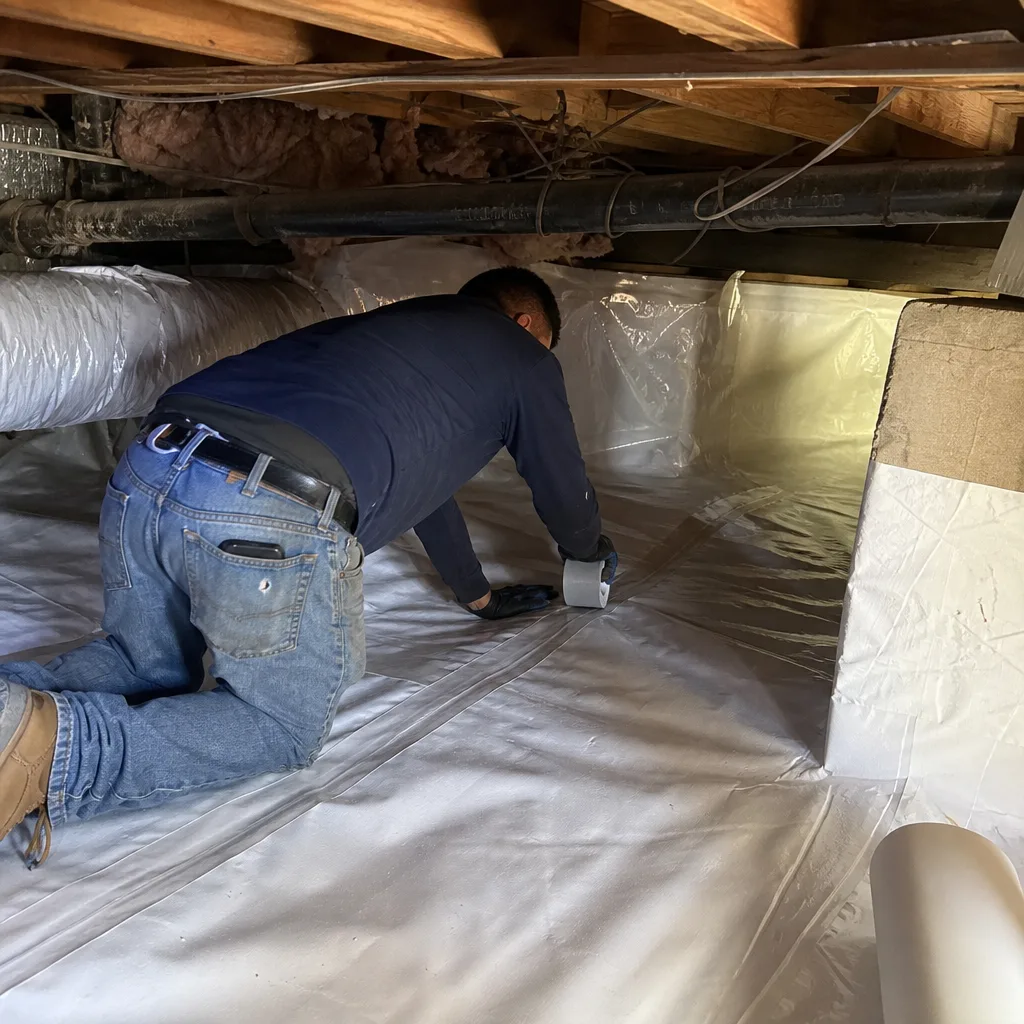
For homes with crawl space encapsulation and vapor barrier needs, the same diagnostic rigor applies. A damp crawl space affects the whole building envelope, and the symptoms - musty first-floor odors, hardwood floor cupping, elevated humidity readings - overlap with attic insulation failure.
Common Mistakes to Avoid
- Assuming new insulation fixes everything without air sealing first. In Glendale’s climate, unsealed insulation performs like a sweater with holes in a windstorm. We never blow insulation over an unsealed attic floor; the air sealing of top plates, can lights, and penetrations is completed before any insulation is added.
- Adding insulation over rodent-contaminated material. The odor doesn’t go away; it gets buried. Worse, new insulation compresses the contaminated layer, increasing the concentration of urine proteins against the ceiling. Removal first, always, when contamination is present.
- Ignoring the attic access itself. A pull-down stair or scuttle hole that isn’t weatherstripped and insulated can leak as much air as a 2-square-foot hole in the wall. We’ve measured 400+ CFM50 through attic accesses alone in Glendale homes.
- Trusting visual depth without checking distribution. Insulation that averages R-30 but is R-10 over the master bedroom and R-50 over the garage creates the same comfort complaint as uniformly thin insulation. We map depth at multiple points, not just the hatch.
- Waiting for a roof replacement to address insulation. Roofing contractors are not insulation contractors. The coordination rarely happens well, and we’ve found numerous Glendale attics where roofing nails punctured vapor barriers, flashing details created moisture traps, or the roofing crew simply walked insulation flat without restoring it.
- Buying into “radiant barrier paint” or spray-on reflective coatings. These products have negligible effect in attic floors and are not substitutes for adequate insulation depth. The Federal Trade Commission has issued enforcement actions against companies making exaggerated claims for these products.
When to Call a Professional
Call for assessment when thermal symptoms persist after basic HVAC maintenance, when any odor is detectable from the attic hatch, or when you can see joists from the hatch. These are not DIY evaluation scenarios; the safety risks (electrical, structural, respiratory) outweigh any savings from self-diagnosis. For ongoing education, explore our more guides & resources.
Topside Attic Insulation Glendale offers free estimates in Glendale - call (213) 474-3828. Every estimate includes a written scope and written price before any work starts, under Haven Standard Clause 1. We also provide a Free Second Opinion on any written estimate from another contractor; bring us their scope and we’ll review it with you, line by line.
For spray foam insulation in Glendale, the evaluation criteria differ slightly - we assess substrate condition, moisture history, and ventilation compatibility before recommending open-cell or closed-cell products from Icynene, Demilec, or other manufacturers we work with.
Frequently Asked Questions
Most attic insulation jobs in a typical Glendale home run between $2,800 and $5,500 for adding material over existing, clean insulation with air sealing included. Removal and replacement of contaminated material typically runs $4,500 to $8,500 depending on attic square footage, accessibility, and disposal requirements. Call (213) 474-3828 for an exact quote - estimates are free, and we provide a written price before any work starts.
Only if the existing material is clean, dry, and uncontaminated. We verify this during assessment. If you can see joists, smell any odor, or know there was prior rodent activity, removal is required first. Adding over contaminated material traps the problem against your ceiling and creates indoor air quality issues.
Blown fiberglass and cellulose last 20 to 30 years when properly installed and undisturbed. But in Glendale’s thermal cycling environment, air seals fail faster than insulation degrades. A 25-year-old installation with intact air sealing often outperforms a 10-year-old installation with failed seals. The blower-door test reveals which scenario you have.
An energy audit is diagnostic - it identifies where and how your home is losing energy, using blower-door testing, infrared imaging, and combustion safety checks. An insulation estimate is prescriptive - it specifies what work to do and what it costs. We can perform either; many Glendale homeowners start with an audit when symptoms are unclear, then move to a scoped estimate once the problem is identified.
Heat rises, and in Glendale’s climate, attic temperatures regularly exceed 140°F. Without adequate insulation depth and air sealing at the attic floor, that heat radiates downward through the ceiling. The upstairs is closer to the heat source and has more ceiling exposure relative to floor area. Proper attic insulation to R-38 or R-49, with complete air sealing, typically reduces this differential to 2°F to 3°F.
For standard blown-in installation, no - the work is contained to the attic and exterior. For removal of contaminated material, we may recommend vacating for the removal day due to dust generation, though we use HEPA containment and negative air pressure. We’ll specify this in the written scope if it applies to your job.
The Bottom Line
Insulation failure in Glendale announces itself through bills, temperatures, smells, and visible attic conditions. The key is reading the right signal for the right problem: thermal symptoms point to depth and air sealing, while physical symptoms point to contamination and removal. Document what you see with a photo, a bill, and a date, and you’ll get a faster, more accurate assessment. Don’t add material over contamination, don’t insulate without sealing first, and don’t assume that what looks like an insulation problem actually is one - the blower-door test cuts through guesswork with a single number. Since 2016, we’ve sealed and insulated 9,000+ homes, every one with a written price before work started and a documented record when we left. The Haven Standard applies to every Glendale home we enter.
Written by Wes Okafor, Owner at Topside Attic Insulation Glendale, serving Glendale since 2016.