
Last updated September 23, 2026
Insulation Cost Breakdown: The Glendale Homeowner’s Reference for 2026
The lowest insulation bid in Glendale typically excludes three things that determine whether the job performs: penetration sealing ($300-$600 of labor), a post-install blower-door test ($150-$250), and the permit fee ($85-$175 at the City of Glendale). None of these appear as line items in a one-number quote, which is why two bids for “R-38 attic insulation” can land $2,000 apart and both look reasonable at first glance. In this guide, we’ll reconstruct what a Glendale insulation job actually costs by assigning dollar ranges to each line item - materials, air sealing, testing, permits, and rebates - so you can compare bids as equals and know what you’re walking away with. For more guides & resources on home insulation, visit our blog.
Quick Answer
Most complete attic insulation jobs in Glendale run between $2,200 and $4,800 for a 1,500 square foot home, with the final price determined by whether air sealing, blower-door testing, and permits are included in scope rather than by material choice alone. A bid under $1,500 for the same footprint typically omits one or more of these performance-critical steps. The only way to compare quotes accurately is to demand a written, itemized scope that separates material, labor, sealing, testing, and permit costs.
Table of Contents
- Glendale Market Ranges: What Insulation Costs in 2026
- Material Costs by Type: Price Per Square Foot
- Air Sealing Labor: The Hidden Cost That Determines Performance
- Permits, HERS, and City of Glendale Requirements
- SoCalGas and SCE Utility Rebates for 2026
- How to Compare Two Written Bids Side by Side
- Common Mistakes to Avoid
- When to Call a Professional
- Frequently Asked Questions
- The Bottom Line
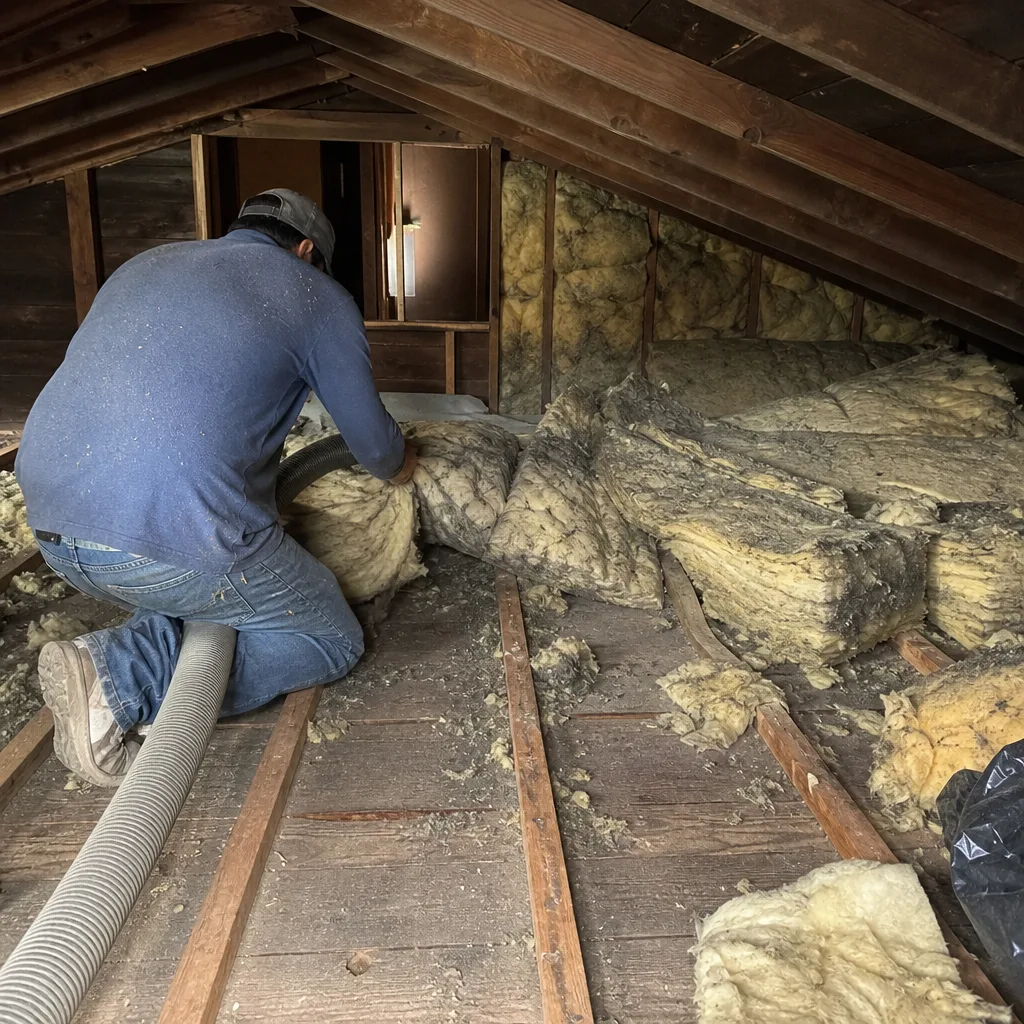 Before
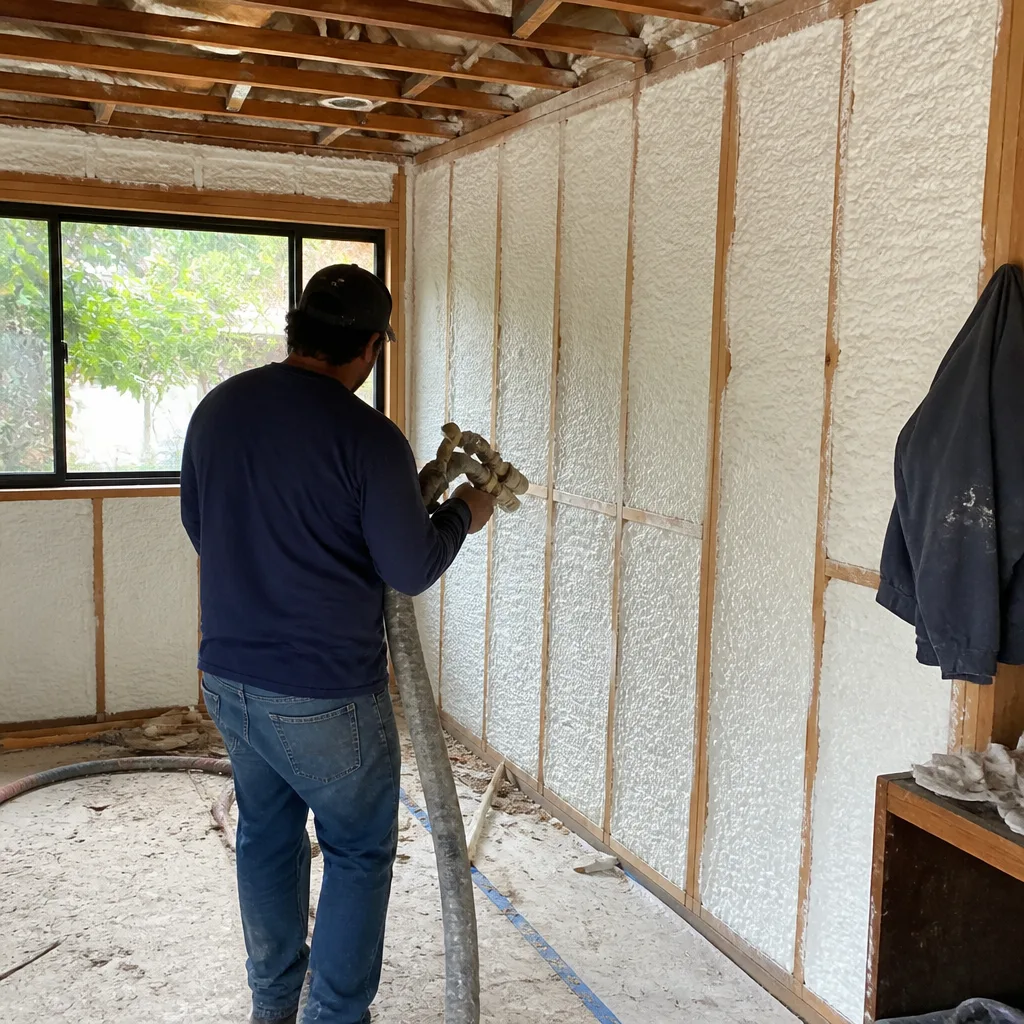 After
AfterGlendale Market Ranges: What Insulation Costs in 2026
We’ve sealed and insulated over 9,000 homes since 2016, and the Glendale market has settled into predictable ranges - but only when you control for scope. A “basic” attic top-off with blown-in fiberglass, no air sealing, no testing, no permit, runs $800-$1,400 for 1,500 square feet. That same footprint, done to performance standard with full air sealing, blower-door verification, and permit compliance, lands at $2,800-$4,200.
The gap isn’t markup. It’s work that was either performed or skipped.
Here’s how the full-project range breaks down for typical Glendale homes:
| Home Size (sq ft) | Basic Top-Off (No Sealing/Test) | Performance Standard (Sealed, Tested, Permitted) |
|---|---|---|
| 1,000 | $600-$1,100 | $2,200-$3,400 |
| 1,500 | $800-$1,400 | $2,800-$4,200 |
| 2,000 | $1,100-$1,800 | $3,600-$5,400 |
| 2,500 | $1,400-$2,200 | $4,400-$6,500 |
These ranges reflect 2026 Glendale labor rates, which run higher than the Inland Empire but below Santa Monica or Beverly Hills. Access matters too. Homes in the hills above Brand Boulevard - Chevy Chase Canyon, Whiting Woods, Glenoaks Canyon - often require longer hose runs, scaffolding, or specialized equipment for steep roof pitches, adding 10-20% to labor hours. Flat-roofed homes in the Rossmoyne or Adams Hill areas present their own challenges: limited attic clearance means crews work in confined spaces, and vapor barrier installation becomes more labor-intensive.
Climate Zone 9 - Glendale’s designation under Title 24 - requires minimum R-38 in attics for new construction and major renovations. Many Glendale homes built between 1940 and 1980 carry R-11 to R-19, so a full upgrade to R-38 typically requires 10-14 inches of blown material or a hybrid approach with existing insulation removal.
We publish before-and-after blower-door numbers on every applicable job so homeowners can verify performance in a single figure. A typical unsealed Glendale attic tests at 3,500-5,500 CFM50 - meaning that many cubic feet of conditioned air escape per minute at 50 Pascals of pressure. After proper air sealing and insulation, we regularly see 1,800-2,800 CFM50. The homeowner receives both numbers in writing, with the photo record, before we leave.
Material Costs by Type: Price Per Square Foot
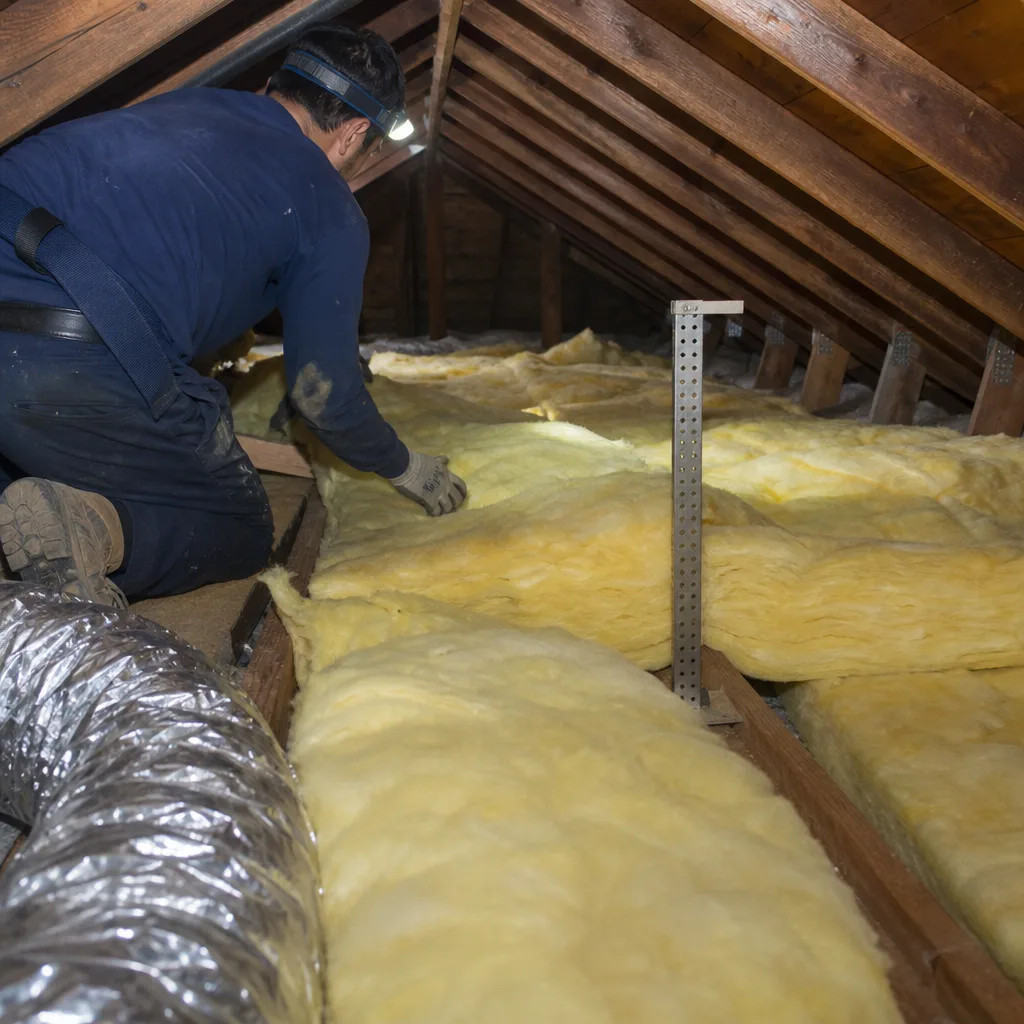
Material selection drives 25-35% of total project cost, but in Glendale’s 2026 market, the installed price per square foot varies more by contractor overhead and access difficulty than by brand name. We source from Owens Corning, Johns Manville, Knauf, Rockwool, and other manufacturers with no proprietary lock-in, so pricing reflects actual material cost plus labor rather than exclusive distribution markups.
Here are the installed ranges we’re seeing across Glendale bids this year:
| Material | Installed Cost Per Sq Ft | Typical R-Value Per Inch | Best Application |
|---|---|---|---|
| Blown-in fiberglass | $0.45-$0.65 | R-2.5 to R-3.7 | Attic top-offs, open blow |
| Blown-in cellulose | $0.50-$0.70 | R-3.2 to R-3.8 | Attic floors, dense-pack walls |
| Open-cell spray foam | $1.20-$1.60 | R-3.5 to R-3.7 | Cathedral ceilings, rim joists |
| Closed-cell spray foam | $2.80-$3.50 | R-6.0 to R-7.0 | Crawl spaces, metal buildings, moisture barriers |
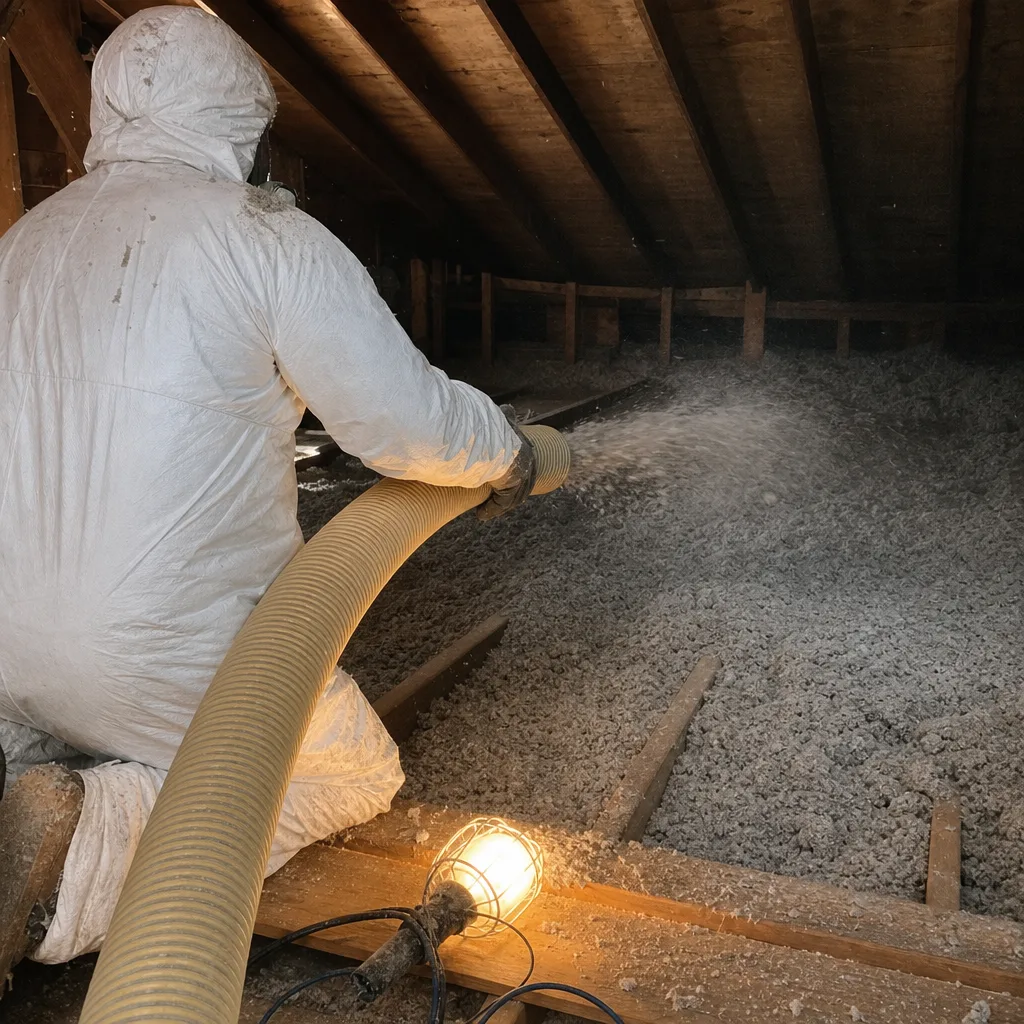
Blown-in fiberglass - the most common choice for Glendale attics - runs lower in material cost but requires greater depth to hit R-38. A 1,500 square foot attic needs roughly 57 bags of Owens Corning ProPink L77 at R-38, or about 42 bags of Johns Manville Climate Pro at similar density. Cellulose, typically GreenFiber or Nu-Wool, compacts slightly better and achieves the same R-value in less depth, but material cost runs 10-15% higher per square foot.
Spray foam applications in Glendale concentrate in specific scenarios: open-cell for cathedral ceilings in Mid-Century Modern homes near Verdugo Woodlands, where roof decking is exposed and ventilation is limited; closed-cell for crawl space encapsulation in older homes near downtown Glendale with dirt-floor crawl spaces and chronic moisture issues. Closed-cell’s moisture resistance and structural rigidity justify the premium in these applications, but we rarely recommend it for standard attic floors where blown-in performs equivalently at half the cost.
Rockwool - mineral wool batts or loose-fill - sees increasing use in Glendale for fire-prone hillside zones and homes requiring enhanced sound attenuation along the 134 freeway corridor. Installed cost runs comparable to cellulose, but availability is tighter and lead times longer.
Material cost is only one variable. The same Owens Corning fiberglass installed in a wide-open San Fernando Valley tract attic runs toward the low end of the range. In a Glendale hills home with a 12/12 pitch, recessed lighting throughout, and a maze of HVAC ductwork, labor hours double and the per-square-foot price shifts toward the high end.
Air Sealing Labor: The Hidden Cost That Determines Performance
This is where most bids diverge, and where most homeowners lose money without knowing it. A contractor can blow R-38 fiberglass over an unsealed attic floor in four hours. Sealing every penetration first takes another six to ten hours. The insulation looks identical from the hatch. The performance difference is measurable and significant.
We won’t blow insulation over an unsealed attic floor. It’s not an upsell; it’s a prerequisite. The Haven Standard requires it, and our blower-door numbers prove why. In a typical 1,500 square foot Glendale attic, here’s what air sealing actually involves:
- Top plate sealing: The junction where interior walls meet the attic floor - a continuous gap in most homes, often totaling 80-120 linear feet. Sealed with fire-rated expanding foam and caulk. Material: 8-12 cans of Dow Fireblock or equivalent at $8-$12/can. Labor: 2.5-4 hours.
- Recessed can light enclosures: IC-rated fixtures still leak; non-IC fixtures require protective covers (Tenmat or similar) before insulation contact. A typical Glendale home has 12-20 can lights. Material: $15-$25 per enclosure. Labor: 3-5 hours.
- Plumbing and electrical penetrations: Every pipe, wire, and conduit entering the attic creates a breach. Sealed with fire-rated foam, mastic, or rigid foam board cut to fit. Material: $40-$80. Labor: 1.5-2.5 hours.
- Chase sealing: Chimney chases, duct chases, and balloon framing cavities create vertical air highways. Sealed with sheet metal, fire-stop caulk, and rigid foam. Material: $60-$120. Labor: 2-3 hours.
- Duct boot and register sealing: HVAC duct connections to ceiling registers often pull conditioned air directly into the attic. Sealed with mastic, not tape. Material: $30-$50. Labor: 1-2 hours.
Total air sealing scope for a typical Glendale attic: $300-$600 in materials and labor, depending on complexity. A bid that omits this line item is not equivalent to one that includes it, even if both promise “R-38 attic insulation.”
The blower-door test - a pressurization reading that shows, in one number, how much air your building envelope is losing - costs $150-$250 as a standalone service in Glendale. We include it on applicable jobs because without it, there’s no documentation that the sealing worked. A homeowner in Adams Hill received a $1,200 attic insulation quote from another contractor in January 2026, then hired us for $3,400 after we walked her through the scope difference. Her pre-work blower-door reading was 4,800 CFM50. Post-work: 2,200 CFM50. She received both numbers, the photo record, and the written warranty before we left.
Permits, HERS, and City of Glendale Requirements
Permit requirements catch Glendale homeowners by surprise because they vary by project type and because not all contractors pull them. For full details, see our guide on Insulation Permits, Codes & Inspections in CA: What You Need to Know. The City of Glendale Building Division charges permit fees based on project valuation, with a minimum for insulation-only work.
Here’s the 2026 structure:
- Attic insulation-only permit (no electrical/mechanical): $85-$125 base fee, plus plan check if required. Most simple attic jobs fall here.
- Insulation with air sealing (mechanical ventilation modification): $125-$175. Triggered when bathroom fans, kitchen exhaust, or attic ventilation is altered.
- HERS verification: $150-$300 third-party fee, required for projects claiming Title 24 compliance or utility rebates. A HERS rater - a certified independent inspector - verifies insulation depth, air sealing quality, and ventilation adequacy.
- Re-inspection fee: $75-$100 if the initial inspection fails and must be rescheduled.
HERS verification is the cost that surprises homeowners most often. It’s not a city fee; it’s a third-party requirement for rebate eligibility and for certain compliance paths under Title 24, Part 6. In Glendale’s Climate Zone 9, any project receiving SoCalGas or SCE rebates must include HERS verification of the final installation. Some contractors absorb this into their bid. Others add it later, or skip it and leave the homeowner ineligible for rebates they expected.
We pull permits on every job that requires them and include HERS verification in the written scope when rebates are involved. The homeowner receives the permit number, inspection schedule, and HERS rater contact before work starts. Under Haven Standard: Have it in writing.
Glendale’s hillside fire zones - Foothill, Crescenta Highlands, parts of Chevy Chase Canyon - carry additional requirements for ignition-resistant materials and ember-resistant vents. These don’t typically affect attic insulation directly, but they do affect ventilation strategy and may require consultation with the Glendale Fire Department’s Wildland Urban Interface unit. We’ve coordinated these consultations for homeowners in the hills; the permit process adds 3-5 business days but prevents costly rework.
SoCalGas and SCE Utility Rebates for 2026
Utility rebates reduce out-of-pocket cost significantly, but the 2026 programs require specific R-value thresholds, verified installation, and in most cases, pre-approval before work begins. The key programs for Glendale homeowners:
| Program | R-Value Tier | Rebate Amount | Requirements |
|---|---|---|---|
| SoCalGas Energy Savings Assistance | R-0 to R-11 upgraded to R-38 | $0.70-$1.10/sq ft | Income-qualified or area-qualified; HERS verification |
| SoCalGas Residential Retrofit | R-11 to R-19 upgraded to R-38 | $0.40-$0.65/sq ft | Pre-approval required; contractor must be program-participating; HERS verification |
| SCE Home Energy Upgrade | R-30 or above with comprehensive air sealing | $300-$600 flat | Must include blower-door improvement of 15%+; HERS verification |
| Combined SoCalGas/SCE (Home Upgrade) | R-38 with whole-house air sealing | $1,500-$3,000 flat | Comprehensive package; pre-approval; HERS; may require additional measures |
The flat-dollar rebates are more predictable than the per-square-foot calculations, which depend on verified installed depth and coverage area. A 1,500 square foot attic upgrading from R-19 to R-38 might qualify for $600-$975 through SoCalGas Residential Retrofit, or $300-$600 through SCE if air sealing achieves the 15% blower-door improvement threshold.
Critical detail: pre-approval. Most 2026 programs require application before work starts, with a program-approved contractor and specified scope. A homeowner who completes work first and applies retroactively is typically denied. We handle pre-approval paperwork as part of our standard process when rebates are discussed during the initial estimate.
The Home Upgrade program - the combined SoCalGas/SCE offering - provides the largest rebates but requires the most documentation. Homeowners in Glendale’s older neighborhoods, particularly the 1920s-1950s stock in Rossmoyne, Adams Hill, and Tropico, often qualify for the high end of the range because their baseline efficiency is low and improvement potential is high. We’ve seen $2,800 rebates on $5,200 jobs in these areas, cutting net cost nearly in half.
How to Compare Two Written Bids Side by Side
The only valid comparison is line-item to line-item. Here’s a normalized format we recommend for any Glendale homeowner evaluating multiple quotes:
| Line Item | Contractor A | Contractor B |
|---|---|---|
| Material type and brand | Blown-in fiberglass, Owens Corning | Blown-in fiberglass, unspecified |
| Installed R-value and depth | R-38 at 14 inches | R-38 (depth not specified) |
| Square footage covered | 1,500 sq ft | 1,500 sq ft |
| Air sealing scope | Top plates, can lights, penetrations, duct boots | “Seal attic as needed” |
| Air sealing cost | $480 | Not itemized |
| Blower-door test | Pre and post: $200 | Not included |
| Permit | $110 (pulled by contractor) | “Homeowner responsibility” |
| HERS verification | $225 (if rebate claimed) | Not mentioned |
| Material cost | $875 | $920 |
| Labor cost | $1,640 | $1,380 |
| Total | $3,325 | $2,300 |
The $1,025 difference is not savings. It’s scope omission. Contractor B’s “seal attic as needed” provides no measurable standard, no verification, and no documentation. If the homeowner later applies for rebates, they discover HERS was never discussed and the permit was never pulled.
We provide a written, itemized bid on every job - flat price, written scope, written warranty before anyone lifts a tool. Haven Standard Clause 1. We also offer a Free Second Opinion on any written estimate: bring us a competing quote and we’ll read it with you, line by line, no obligation.
Key questions to ask any contractor presenting a one-number bid:
- What specific penetrations are included in air sealing, and what materials will be used?
- Will a blower-door test be performed before and after, and will I receive the CFM50 readings in writing?
- Is the permit included, and what is the permit number?
- Is HERS verification included if I claim rebates?
- What documentation will I receive when the crew leaves?
A contractor who cannot answer these specifically - with numbers, brands, and documentation commitments - is not offering an equivalent scope at a lower price. They’re offering a different job entirely.
Common Mistakes to Avoid
- Comparing one-number bids as equals. A $1,800 quote and a $3,400 quote for “attic insulation” are almost certainly different scopes. Demand line-item breakdowns before making any decision.
- Skipping air sealing to save money. In Glendale’s Climate Zone 9, unsealed insulation performs 30-50% below rated R-value due to wind washing and thermal bypass. We’ve removed improperly installed insulation in homes near Glenoaks Boulevard where the homeowner paid twice: once for the initial job, again for us to do it correctly.
- Assuming rebates apply retroactively. SoCalGas and SCE require pre-approval for most 2026 programs. Complete work first, apply after, and you typically receive nothing.
- Ignoring permit requirements for “simple” jobs. The City of Glendale requires permits for insulation work that alters ventilation or exceeds replacement-in-kind scope. Unpermitted work can complicate future sales and void insurance claims if moisture damage occurs.
- Choosing spray foam for applications where blown-in suffices. Closed-cell spray foam at $3.00/sq ft in a standard vented attic is rarely cost-effective compared to blown-in at $0.55/sq ft with proper air sealing. We recommend spray foam only for specific applications: unvented cathedral ceilings, crawl spaces with moisture issues, and metal building envelopes.
- Neglecting to verify contractor documentation. Ask for the written warranty, the photo record commitment, and the blower-door protocol before signing. A verbal promise of “we’ll make it right” is not a warranty.
- Focusing on material brand over installation quality. Owens Corning and Johns Manville both manufacture excellent fiberglass. The difference in performance comes from installation depth, air sealing completeness, and verification - not from the logo on the bag.
When to Call a Professional
Call when you cannot verify the condition of your existing insulation, when your energy bills spike without explanation, or when you’re evaluating bids that span more than $1,500 for the same described work. Our Insulation Warning Signs: A Glendale Homeowner’s Reference Guide covers additional red flags to watch for. In Glendale’s older housing stock, we regularly find compressed or moisture-damaged insulation in attics that haven’t been accessed in decades, particularly in the pre-1940 homes near downtown and the 1960s-1970s tracts near the Galleria.
Topside Attic Insulation Glendale offers free estimates in Glendale - call (213) 474-3828. Every estimate includes a written, itemized scope with no obligation. We arrive on schedule, you get a named technician and a text when they’re on the way. Background-checked, uniformed technicians. Calls answered by a live person, 24/7.
Frequently Asked Questions
Most complete attic insulation jobs in Glendale run $2,200-$4,800 for a 1,500 square foot home, with the final price determined by whether air sealing, blower-door testing, and permits are included. A basic top-off without these elements runs $800-$1,400 but performs significantly below its rated R-value. Call (213) 474-3828 for a written, itemized estimate - free, with no obligation.
Repair - adding new material over old - costs 40-60% less than full removal and replacement, but only if the existing insulation is dry, uncompressed, and free of rodent contamination. In Glendale’s hillside homes, we often find moisture-compacted insulation from roof leaks; in flat-roofed homes near downtown, rodent activity is common. We assess this during our initial inspection and document findings with photos. Call (213) 474-3828 and we’ll show you what we found.
No - and any contractor who can is skipping steps that matter. We provide a written price during the initial visit, but scheduling requires permit application (when needed), material ordering, and crew assignment. Typical lead time in Glendale is 5-10 business days for standard attic work, 2-3 weeks for spray foam or crawl space encapsulation. Rush scheduling is available for emergency situations, such as insulation removal after water damage.
Climate Zone 9 requires R-38 minimum in attics for new construction and major renovations under Title 24, Part 6. Many existing Glendale homes perform at R-11 to R-19. A full upgrade to R-38 typically requires 10-14 inches of blown material. We measure existing depth during our inspection and specify the additional material needed in our written scope.
Yes, if the work alters ventilation, exceeds replacement-in-kind scope, or is part of a larger renovation. The City of Glendale charges $85-$175 for insulation-related permits. We pull permits on all jobs that require them and include the fee in our written price. The homeowner receives the permit number and inspection schedule before work starts.
Demand a blower-door test - a pressurization reading that shows, in one number, how much air your building envelope is losing - performed before and after the work. We publish these numbers on every applicable job: a typical unsealed Glendale attic reads 3,500-5,500 CFM50, and we regularly achieve 1,800-2,800 CFM50 after proper sealing. You receive both readings in writing, with the photo record, before we leave. No number, no verification.
The Bottom Line
Insulation cost in Glendale is not mysterious; it’s scope-dependent. The material is the smallest variable. What separates a $2,000 job from a $4,000 job is air sealing labor, blower-door verification, permit compliance, and documentation - the elements that determine whether the insulation actually performs. Demand a written, itemized bid. Compare line items, not bottom lines. Verify that rebates are pre-approved, not promised retroactively. And ask for the documentation you’ll receive when the crew leaves: the photos, the blower-door readings, the written warranty. That’s what the job actually costs. Everything else is just a number on paper.
Written by Wes Okafor, Owner at Topside Attic Insulation Glendale, serving Glendale since 2016.