
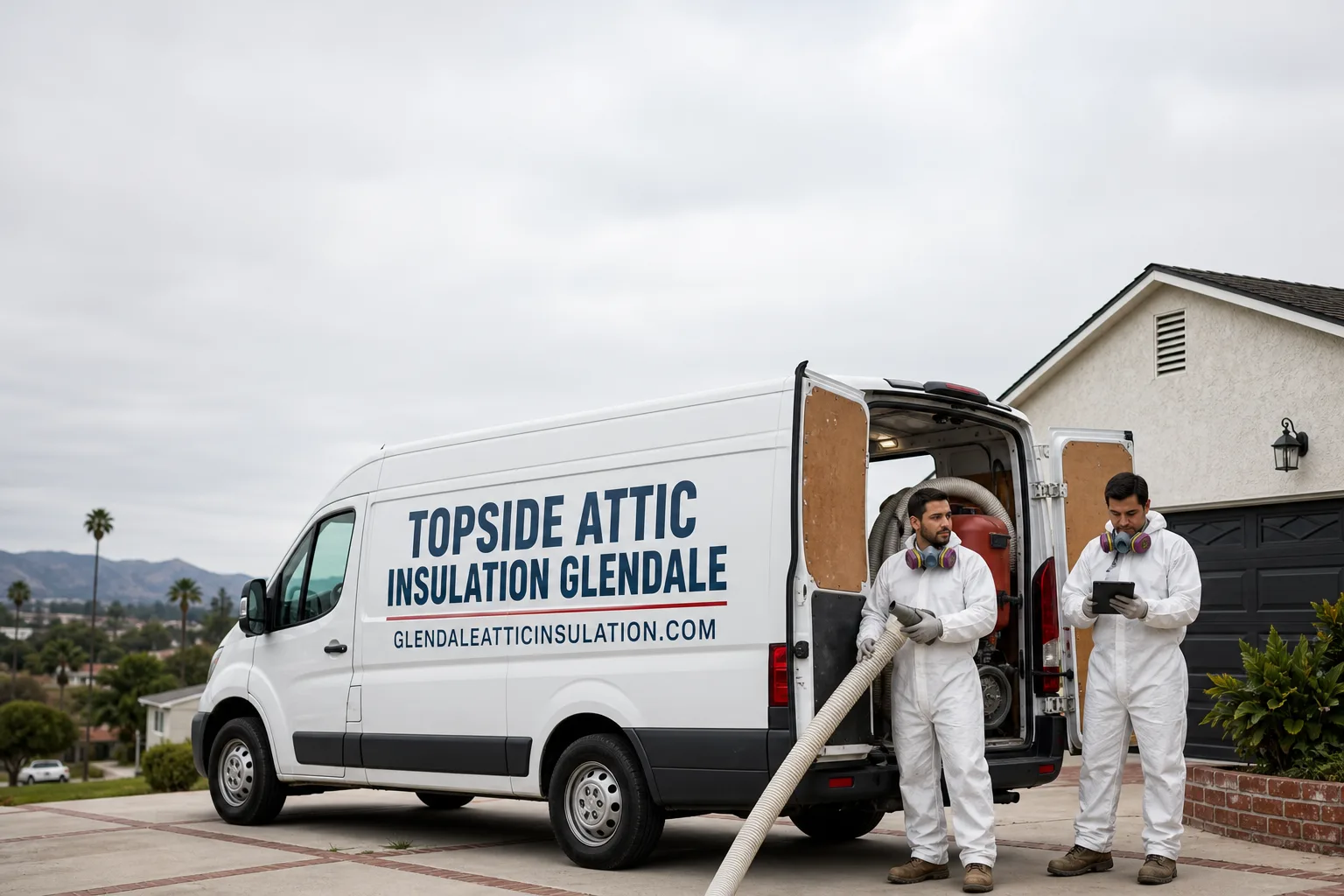
How Much Does Attic Insulation Cost in Glendale?
Attic Insulation Near Me in Glendale, CA typically costs between $1,800 and $4,200 for a standard single-story home, with most jobs landing around $2,400 to $3,000 when air sealing is included. Homes in the Verdugo Mountains foothills or Montecito Park neighborhoods with older, vaulted ceilings or cathedral sections can run higher – sometimes $4,500 to $6,000 – because the geometry adds labor time and material volume. The ranges below reflect what we actually see in the Glendale market in 2026, not national averages copied from a trade publication.
Attic Insulation Cost Breakdown (2026)
Most homeowners want a number before they want an explanation. Here is a line-item look at what different scopes cost in Glendale right now, followed by the variables that move those numbers.
| Scope of Work | Typical Glendale Price Range (2026) | Notes |
|---|---|---|
| Blown-in fiberglass or cellulose (attic only, no sealing) | $1,400 – $2,200 | R-30 to R-38 depth; 1,000-1,500 sq ft attic floor |
| Attic air sealing + blown-in insulation (standard scope) | $2,200 – $3,400 | Top plates, can lights, penetrations sealed before insulation |
| Insulation removal + re-insulation (fiberglass or cellulose) | $2,800 – $4,800 | Older homes in Rossmoyne or Adams Hill often need this |
| Spray foam (open-cell, attic floor or rafter bays) | $3,200 – $6,500 | Higher R-value per inch; adds structural rigidity to rafter bays |
| Radiant barrier installation (foil, attic rafters) | $900 – $1,800 | Glendale summers justify this; reduces radiant heat gain meaningfully |
| Radiant barrier + blown-in insulation (combined) | $2,400 – $4,200 | Common approach in Woodbury, Verdugo Woodlands, and Chevy Chase Canyon |
| Attic cleaning and rodent proofing (before insulation) | $600 – $1,800 | Necessary when existing insulation is contaminated; adds to total |
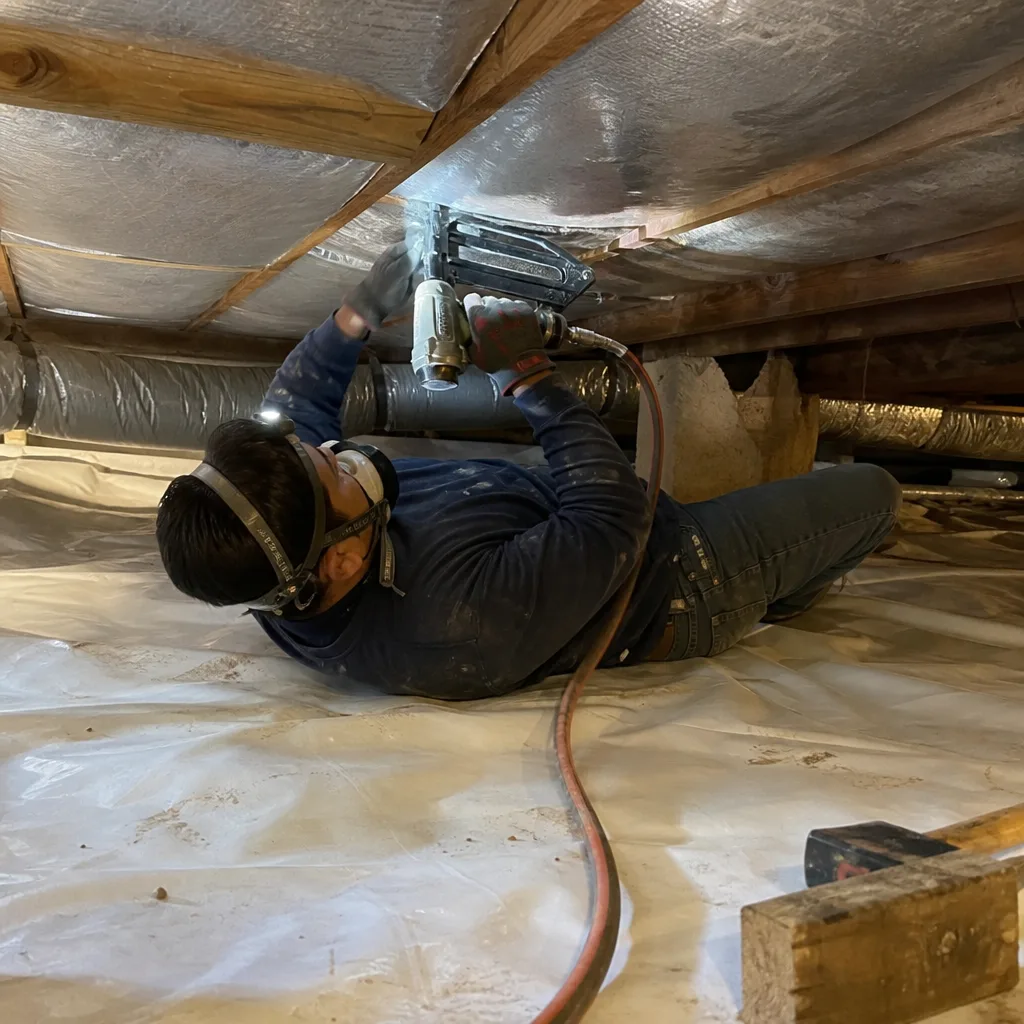
| Crawl space vapor barrier (add-on scope) | $1,200 – $2,400 | Relevant to older Glendale homes with raised foundations |
A few things drive jobs toward the high end of those ranges in Glendale specifically. The city has a large stock of homes built between 1930 and 1965 – concentrated in neighborhoods like Kenneth Village, Brockmont, and the streets around Glenoaks Canyon – and those homes almost always have degraded batts, rodent activity in the existing insulation, or both. When the existing material has to come out before anything new goes in, the job cost roughly doubles compared to a simple Attic Insulation Top-Up on clean insulation. Attic access is the other Glendale-specific factor: the smaller hatch openings common in postwar construction add labor time because technicians can’t move equipment as efficiently.
At Envelope Insulation Co., operating as Attic Insulation in Glendale under the Topside name, we price jobs with a written scope before any work starts – that is Haven Standard Clause 1, not a feature we advertise selectively. The number you see on paper before the crew arrives is the number on the invoice when they leave.
What Affects Attic Insulation Pricing in Glendale
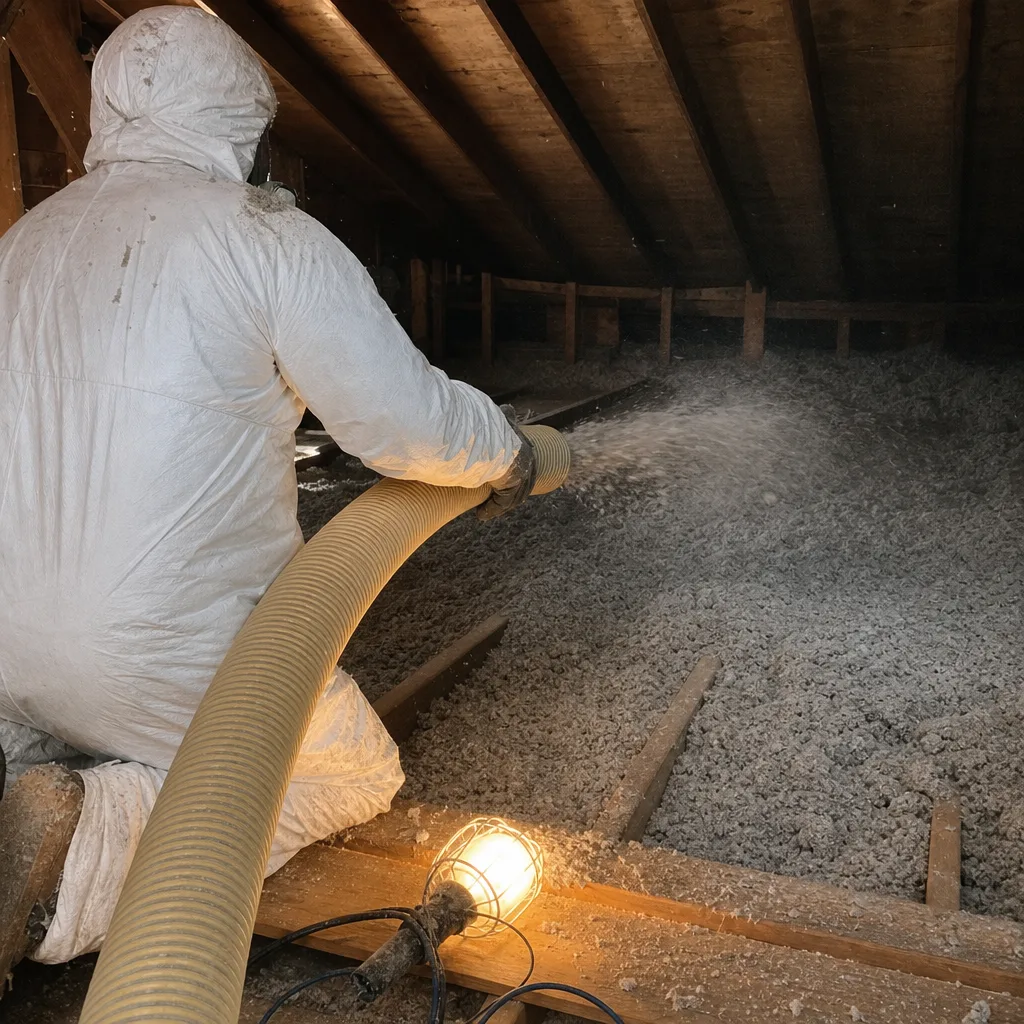
Six factors account for most of the price variation we see across Glendale jobs. None of them are mysterious, and knowing them in advance helps you read any estimate you receive – including ours.
- Attic square footage and geometry. A flat-ceiling ranch home in Sparr Heights with 1,200 square feet of accessible attic floor costs less to insulate than a 1960s split-level in the Verdugo Woodlands with multiple ceiling heights, knee walls, and a partial cathedral section. Labor follows geometry, not just square footage.
- Existing insulation condition. If what’s up there is degraded, rodent-contaminated, or water-damaged – common in Glendale homes that haven’t been touched since the 1980s – removal is the first step. That adds $600 to $1,800 before new material goes in. In our experience working across Glendale since 2016, roughly one in three older-stock homes needs at least partial removal before re-insulation makes sense.
- Air sealing scope. Blowing insulation over an unsealed attic floor is something we won’t do. Top plates, recessed can lights, and plumbing or electrical penetrations need to be sealed with foam or caulk first, or the new insulation moves conditioned air through the same gaps it always did. The sealing step adds $400 to $900 to a typical Glendale job, but a blower-door test – a pressurization reading that shows, in one number, how much air the building envelope is losing – will confirm what that step actually accomplished. We publish those before-and-after numbers on every applicable job.
- Material choice. Blown-in fiberglass and blown-in cellulose (GreenFiber and Knauf are two brands we source) cost less per installed R-value than open-cell spray foam (Icynene, Demilec). Spray foam makes sense in specific situations – unvented rafter bays, tight knee walls, situations where vapor control matters as much as thermal resistance – but it’s not the right call for every attic, and we’ll tell you which applies before the quote goes on paper.
- Target R-value. California Title 24 sets minimum insulation requirements, and Glendale’s Climate Zone 10 classification calls for R-38 in attic assemblies for new construction and major renovations. Older homes often have R-11 or R-19 batts that were code-compliant in 1972 but leave substantial energy on the table today. Getting from R-19 to R-49 – a level many energy-conscious Glendale homeowners now target – requires more material and more labor than a simple code-compliance top-up.
- Access difficulty and attic height. Standard attic hatches in Glendale’s mid-century housing stock are often 22 by 30 inches. Equipment moves slowly through openings that size, and in attics with less than 24 inches of clearance near the eaves – common in homes built on the steeper lots in Chevy Chase Canyon or Brand Park adjacent streets – hand-placement work replaces machine work for a portion of the job. That shows up in labor hours, which shows up in price.
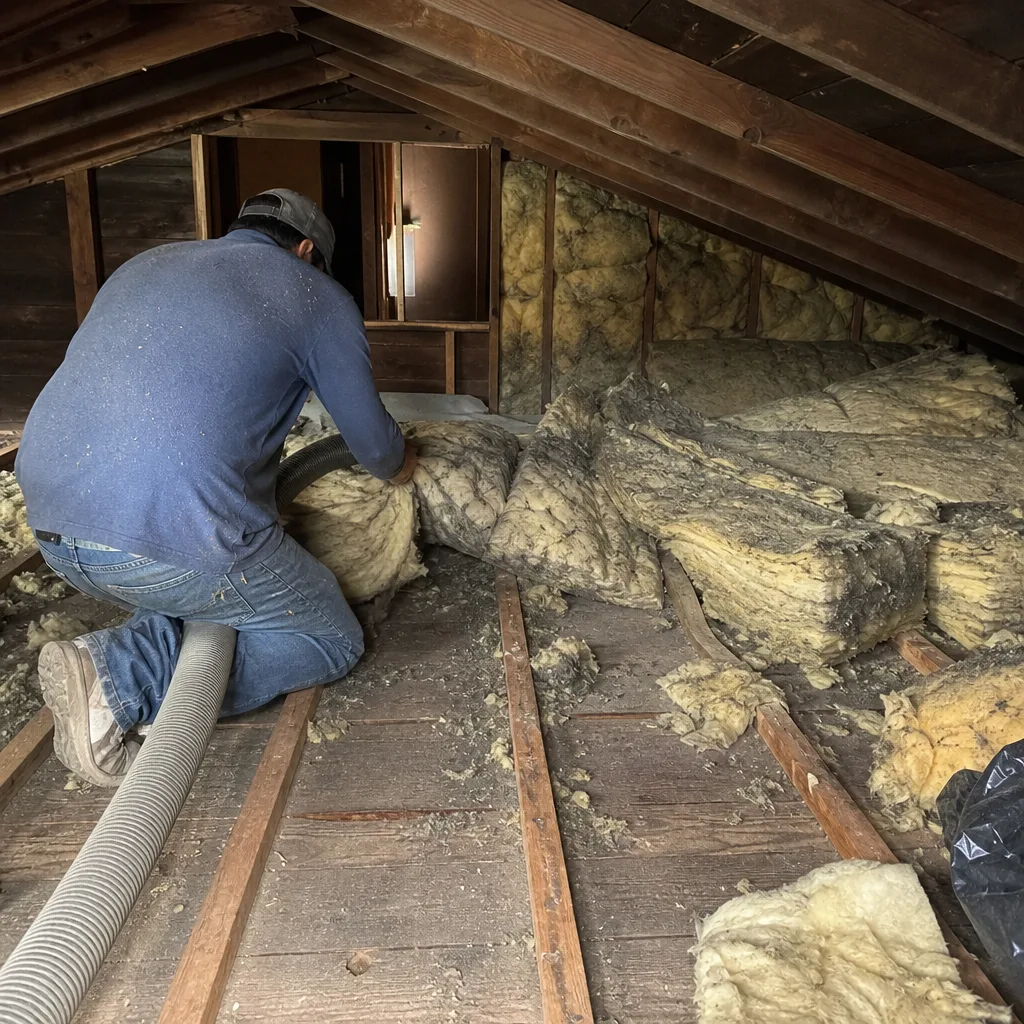 Before
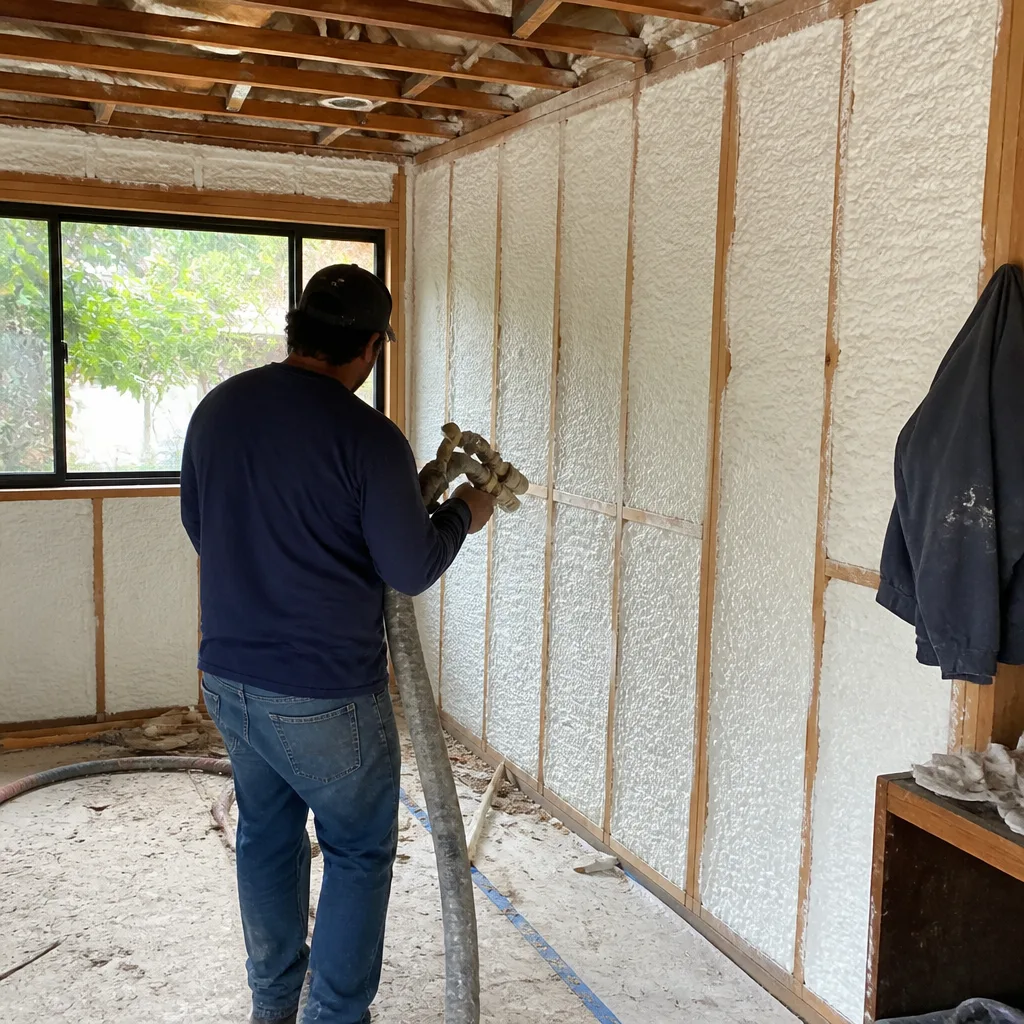 After
AfterGlendale’s Climate and Why It Changes the Insulation Math
Glendale sits in California Climate Zone 10, which means it runs hotter than coastal Los Angeles but doesn’t face the extreme cold of the Antelope Valley communities to the north. Summer afternoons regularly push into the mid-90s, and the urban heat island effect in the denser parts of the city – around Brand Boulevard, the Americana corridor, and downtown – adds a few degrees on top of that. Attic temperatures in those conditions routinely exceed 140 degrees Fahrenheit, which means the thermal load pressing down through your ceiling assembly is real.
That’s the case for a radiant barrier alongside blown-in insulation rather than insulation alone. A radiant barrier – foil sheeting stapled to the underside of the rafters – reflects radiant heat before it conducts into the insulation layer. In Glendale, summer after summer, we see that combination outperform insulation-only installs on the cooling side of the energy bill. The Verdugo Mountains to the north also channel warm, dry Santa Ana winds through the city in fall and winter, which means air sealing isn’t just a summer concern – it’s a year-round performance factor.
Homes in the hills above Glenoaks Canyon and Brockmont face a slightly different challenge: they’re on steeper terrain, attic configurations are more complex, and the wind exposure is higher. Those factors together make thorough air sealing more important, not less, even though the occupants might assume a hillside breeze is “free cooling.” It isn’t. Uncontrolled infiltration – air moving through gaps in the building envelope rather than through a thermostat-managed system – carries humidity, allergens, and heat wherever it goes.
How to Save on Attic Insulation in Glendale
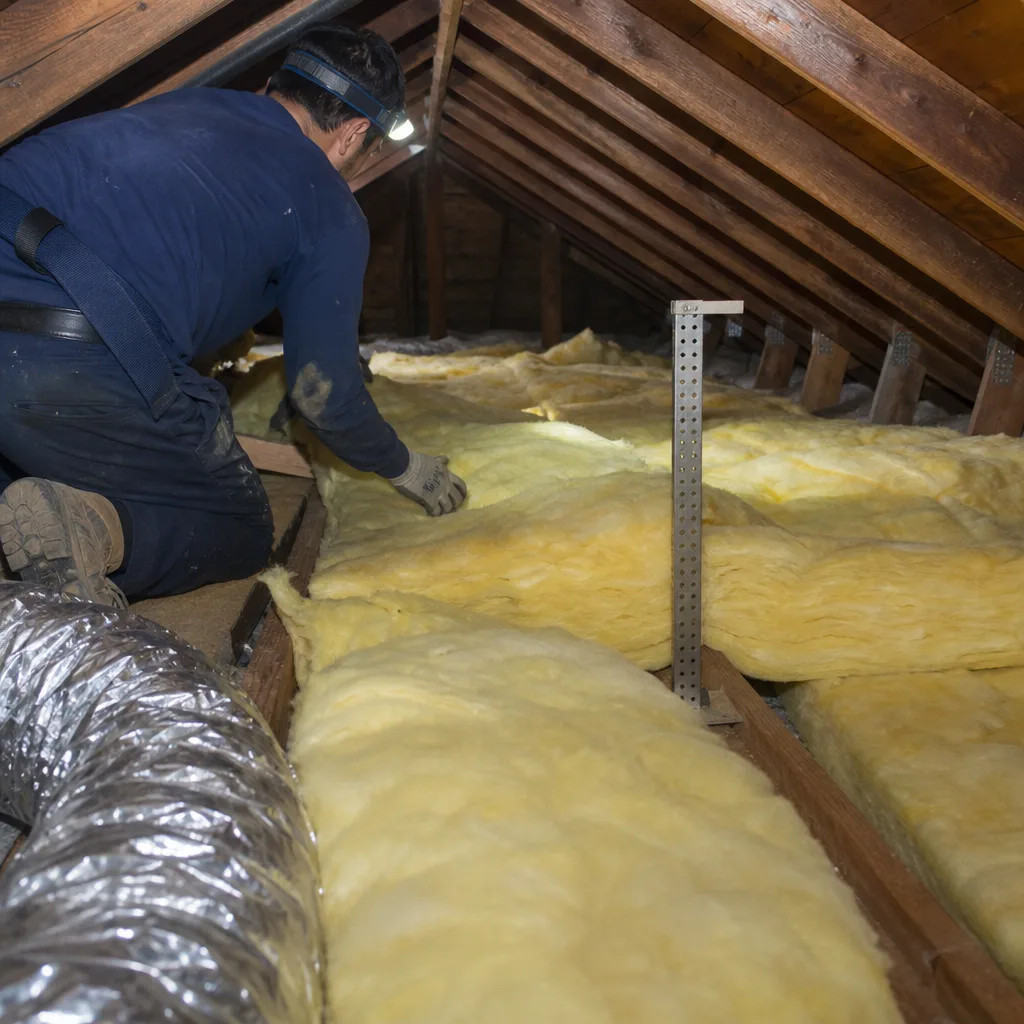
There are four ways to spend less on attic insulation without making decisions you’ll regret at the next energy bill.
Check for utility rebates before you sign anything. Southern California Edison and SoCalGas both run rebate programs for attic insulation and air sealing upgrades in Glendale. In 2025 and into 2026, SCE’s residential rebate for attic insulation ran as high as $250 to $400 depending on R-value achieved and home size. Those numbers shift quarterly, so ask your contractor to check current program availability as part of the quoting process – we do this as standard when pricing jobs in Glendale.
Bundle air sealing and insulation in one visit. Scheduling air sealing and blown-in insulation as separate jobs costs more in combined mobilization time than doing them together. The air sealing step takes two to four hours on a typical Glendale attic, and the blown-in work follows immediately after on the same visit. Separating them because one quote seemed lower than the other is how homeowners end up paying more total.
Get a second opinion on any written estimate. We offer a free second opinion on any written estimate, which means you can bring us a competing quote and we’ll read through it with you – line by line – before you commit to anything. That review often surfaces scope gaps: jobs priced without an air sealing line item, jobs that don’t specify the material brand or density, or jobs where removal costs are buried rather than itemized.
Don’t skip the removal conversation if the existing insulation is old. It seems counterintuitive, but Attic Insulation Replacement instead of insulating over degraded or contaminated material can prevent trapped moisture and accelerate the deterioration of the attic structure. Glendale homes from the 1940s and 1950s that still have the original fiberglass batts – common in the older sections of Adams Hill and Verdugo Woodlands – often need those batts out before anything new goes in. Skipping that step to save $800 now can cost several thousand dollars in structural repair later.
To get a written price specific to your Glendale home – with a named technician, a documented scope, and before-and-after blower-door numbers on the air sealing portion – call us at (213) 474-3828. Estimates are free, and a live person answers that number every time.
What You Should Expect to Receive at the End of a Job
This is worth spelling out because it varies more than pricing does. At Envelope Insulation Co., every completed job in Glendale includes three things the homeowner walks away with: a written scope showing what was done and to what specification, a documented photo record of the attic before and after the work, and – on jobs that included air sealing – before-and-after blower-door numbers showing the actual change in the home’s air leakage rate.
That last item is the one most Glendale homeowners haven’t seen before. A blower-door test pressurizes the house and measures how much air moves through gaps in the building envelope at a standard reference pressure. The result is expressed in CFM50 – cubic feet per minute at 50 Pascals of pressure – and it gives you a single number that summarizes the building envelope’s performance. A home that tested at 3,800 CFM50 before sealing and 1,900 CFM50 after has, in concrete terms, half the air leakage it started with. That’s not a feeling or a claim – it’s a measurement you can verify.
We also cover every completed job under the 365-Day Done Right Promise: if something isn’t right within a year of the work date, we make it right. That commitment is backed by the written scope and written warranty delivered before the crew starts – not after, not on request, but as a standard part of how a job opens. That’s the Haven Standard, and it applies to every job we do in Glendale.
Insulation Materials We Use in Glendale
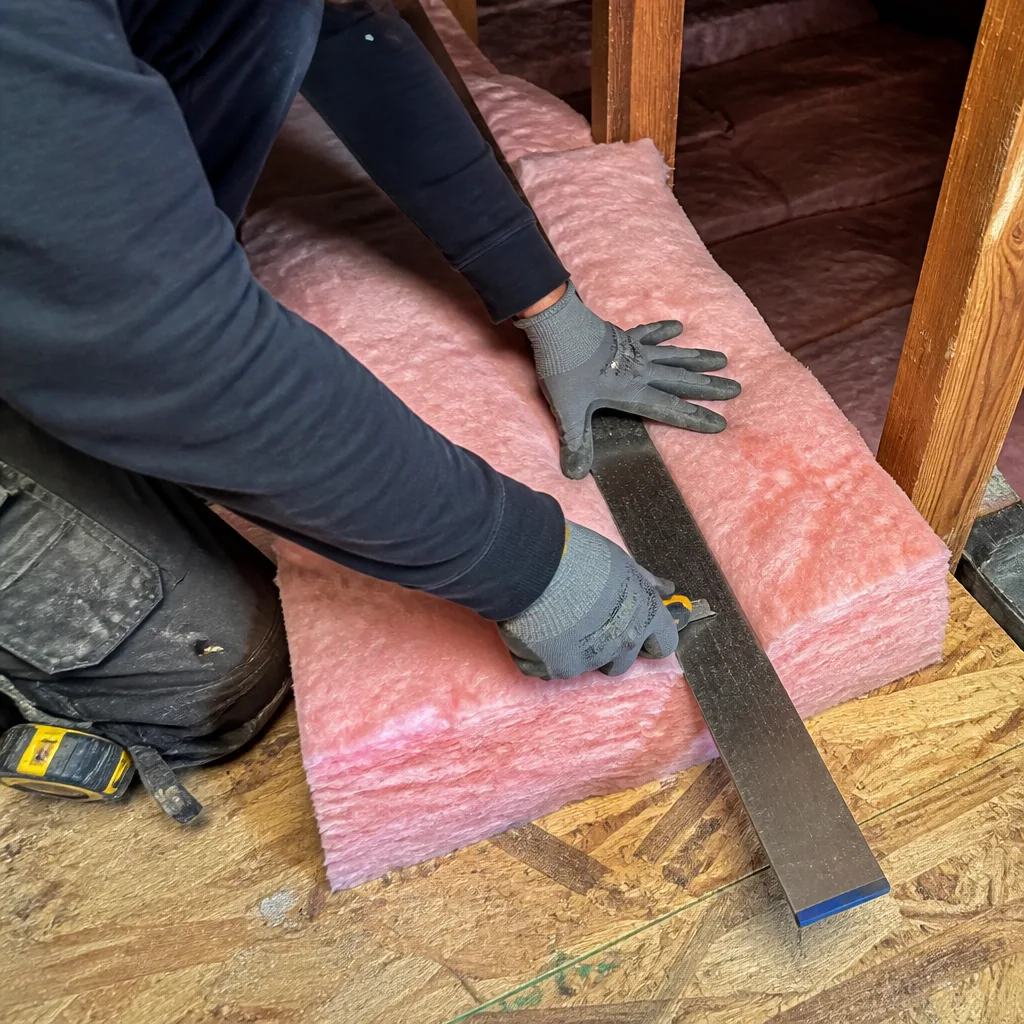
We source from Owens Corning, Johns Manville, Knauf, Rockwool, CertainTeed, Icynene, Demilec, and GreenFiber. That list isn’t there to look impressive – it’s there because material choice should follow what the job actually needs, not what a contractor has an exclusive supply agreement to push. Blown-in cellulose from GreenFiber makes sense for one set of conditions; open-cell spray foam from Icynene or Demilec makes sense for another; Rockwool batts are the right call in specific fire-risk or acoustic situations.
When we quote a Glendale job, the written scope names the material, the brand, the density target, and the R-value depth we’re installing to. If those details aren’t in the quote you’re comparing us to, that’s worth asking about before you sign.
Insulation R-Value Requirements for Glendale Homes
Glendale falls in California’s Climate Zone 10. Title 24 currently requires R-38 minimum for attic insulation in new construction and qualifying renovations, but many energy-performance-minded homeowners in Glendale are upgrading to R-49 or R-60 – particularly in older homes where the starting point is R-11 or lower. The difference in annual energy cost between R-19 and R-49 in a Glendale home with central air is meaningful, especially through the June-through-September cooling season when attic temperatures run highest.
We’ll measure the existing R-value during the initial assessment and tell you where you’re starting from before the quote goes on paper. If your attic already has R-30 and your ceiling is well-sealed, a top-up to R-49 may be the most cost-efficient move. If your attic has R-11 batts from 1958 and three generations of rodent activity, the conversation starts somewhere different.
The Air Sealing Requirement – Why We Won’t Skip It
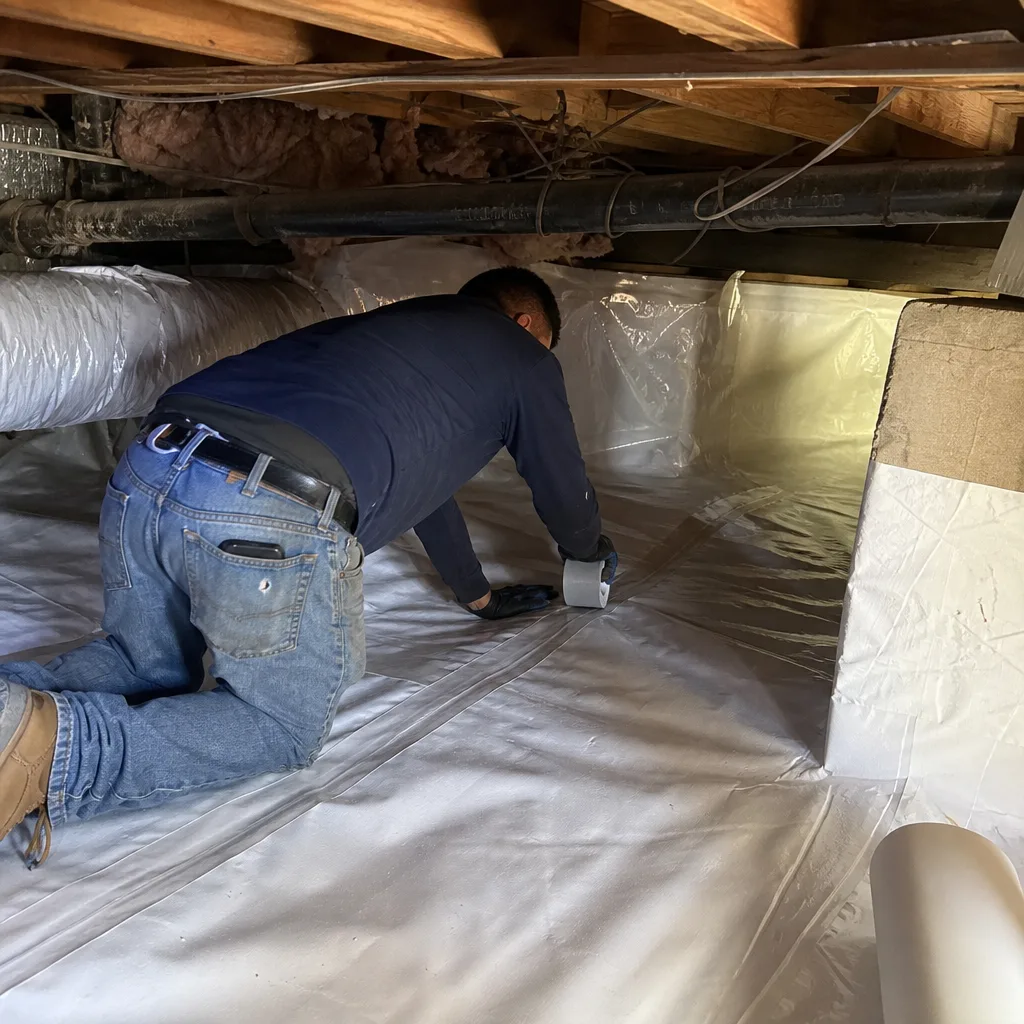
We’re the only insulation contractor operating in Glendale that treats air sealing as a hard prerequisite rather than an optional line item. That’s not a marketing position – it reflects a straightforward physical reality. Blown-in insulation slows conductive heat transfer through solid materials. It does not stop convective air movement through gaps. If the top plates, recessed lights, plumbing penetrations, and electrical chases in your attic floor are open – and in most Glendale homes built before 1980, they are – warm attic air will continue to move into your living space regardless of how much insulation sits on top of those gaps.
In the Montecito Park neighborhood, where we see a lot of 1950s and early 1960s ranch homes with open-web truss construction, the number of unsealed penetrations in a typical attic floor can exceed 40 individual gaps. Sealing those before insulating is a two-to-four-hour step. Skipping it means the insulation performs at a fraction of its rated value from day one.
The blower-door numbers we publish on every applicable job are the evidence that the sealing step did what it was supposed to do. A homeowner in Glendale who calls us for a quote and asks to see examples of before-and-after readings from jobs in the city will get them. That’s not a claim we make and ask you to trust – it’s a record you can look at.
FAQs – Attic Insulation Cost in Glendale
How much does attic insulation cost in Glendale, CA in 2026?
Most Glendale our Attic Insulation services jobs run between $1,800 and $4,200 for a standard single-story home when air sealing is included – which it should be. Homes with degraded existing insulation that needs removal first, or homes with complex geometry like cathedral sections or tight knee walls, can reach $4,500 to $6,000. A basic blown-in-only job with no sealing component and clean existing insulation can come in under $1,600, but that scope is rarely the right one for Glendale’s older housing stock. Call (213) 474-3828 for a written price specific to your address – estimates are free.
Is it cheaper to repair or replace existing attic insulation in Glendale?
Adding blown-in material on top of existing insulation costs $1,400 to $2,200 for a typical Glendale attic floor; full removal and replacement runs $2,800 to $4,800. The cheaper option is only actually cheaper if the existing insulation is structurally intact, dry, and free of contamination. In Glendale homes built before 1975, we find that roughly one in three need at least partial removal – and insulating over contaminated or moisture-damaged material can accelerate attic structural damage. We’ll tell you which category your home falls into during the initial assessment, before any price is put on paper.
Does Glendale require a permit for attic insulation?
In most cases, adding blown-in insulation to an existing attic does not require a Glendale building permit. However, work that involves attic structural changes, spray foam in unvented rafter bays, or significant electrical modifications around recessed lights may trigger permit requirements. We check applicability during the quoting process and will flag it in the written scope if a permit is needed. California Title 24 compliance documentation – showing the R-value installed – is always included in the job record we leave with you.
How long does attic insulation installation take in Glendale?
A standard blown-in insulation job with air sealing on a 1,200-to-1,800-square-foot Glendale attic takes four to seven hours from setup to cleanup. Jobs that include insulation removal first add two to four hours. Spray foam applications, which require cure time between passes, can take a full day or require a second visit. On every job, the written scope includes a time estimate so you know before the crew arrives how long the attic will be in use.
Can attic insulation lower my energy bills in Glendale?
Yes – and the reduction is measurable, not theoretical. Glendale’s Climate Zone 10 classification means cooling loads dominate from late May through September, with attic temperatures exceeding 140 degrees on summer afternoons. Upgrading from R-19 (common in 1960s-era homes in the Verdugo Woodlands and Adams Hill areas) to R-49 with air sealing completed first typically reduces cooling energy consumption by 15 to 25 percent in Glendale homes with central air. The before-and-after blower-door readings we publish on air-sealed jobs give you a direct measure of envelope improvement – not an estimate of what you might save, but a documented number showing what changed.
What insulation material is best for Glendale’s climate?
For most Glendale attics – flat-ceiling construction with accessible floor space – blown-in fiberglass or cellulose at R-38 to R-49 combined with a radiant barrier on the rafter undersides is the most cost-effective combination for the climate. The radiant barrier handles the intense summer radiant heat load; the blown-in layer handles conductive transfer through the ceiling assembly. Open-cell spray foam makes sense in unvented attic configurations – common in some of the hillside homes in Chevy Chase Canyon – where standard blown-in installation isn’t practical and vapor control is a factor. The written scope we provide before any work starts will name the material, the brand, and the R-value being installed.
About This Pricing Guide
Wes Okafor leads Envelope Insulation Co., which has operated independently under The Haven Standard since 2016. Since that time, the company has sealed and insulated more than 9,000 homes across the Los Angeles area – every one with a written price before work started and a documented photo record when the crew left. The pricing on this page reflects actual job costs in the Glendale market as of 2026 and is updated when local material costs or labor rates shift materially. For a written price on your specific home, visit our home or call the number below.
We offer a free second opinion on any written estimate you’ve already received – bring it to us and we’ll review it line by line before you commit to anything.
Written by Wes Okafor, Owner at Envelope Insulation Co. (Topside Attic Insulation Glendale), serving Glendale, CA since 2016. Pricing reflects the Glendale market as of 2026. Topside Attic Insulation Glendale offers free estimates – call (213) 474-3828.
What Our Customers Say
"Crawl space encapsulation done properly. Photographs of the vapour barrier at every seam, and the damp smell in the hallway is gone."
- Ainsley P."They air-sealed the attic floor before insulating and showed me the blower-door number before and after. The upstairs is finally the same temperature as downstairs."
- Marisol D."Turned up on time, protected the hallway, and the written scope matched what was actually done."
- Bruno S.