
Attic Batt Insulation in Glendale, CA
Attic batt insulation is pre-cut fiberglass or mineral wool insulation fitted between the joists and rafters of your attic – delivering a controlled, uniform thermal layer that reduces heat transfer between your living space and the roof deck above it. In Glendale, where attic temperatures routinely exceed 150°F through July and August, that thermal layer is doing real work every day. Most Attic Insulation services in a Glendale home run between $1,400 and $3,800, depending on attic square footage, current R-value, and whether old material needs to come out first. Call (213) 474-3828 for a written price before any work starts – that is not a courtesy we offer on request; it is how every job here begins.
Batt insulation makes the most sense in attics with clear, accessible joist bays and no major air-sealing deficiencies already addressed. That last part matters: we will never install batt insulation over an attic floor that has not been air-sealed first. Top plates, can light penetrations, HVAC boot gaps, and plumbing chases all need to be sealed with foam or caulk before any batt goes in – otherwise you are insulating around a sieve, and the R-value on the bag label means very little in the real world. This is the core of how we work under the Haven Standard, and it separates a documented performance result from a cosmetic install.
If you are comparing options for your attic, the parent page for Attic Insulation in Glendale covers the full range of insulation types – blown-in, spray foam, and batt – with guidance on which situations call for which material. This page focuses specifically on batt installation: what it costs, how the install goes, and what questions come up most often from Glendale homeowners.
When You Need Attic Batt Insulation
- Your attic has flat, accessible joist bays with little existing insulation. Homes built in Glendale between the 1940s and early 1980s – common in the Rossmoyne, Verdugo Woodlands, and Adams Hill neighborhoods – were often insulated to R-11 or R-13, well below California’s current Title 24 recommendation of R-38 for Climate Zone 9. Batt insulation added on top of existing material, or used as a base layer before a blown-in top coat, brings those homes into current standard efficiently.
- Your cooling bills spike sharply in June and hold high through September. If your HVAC is running nearly continuously during Glendale summers and the thermostat still reads 78°F or above in the late afternoon, inadequate attic insulation is one of the first places to look. A blower-door test – a pressurization reading that tells you, in one number, how much conditioned air your building envelope is losing – often points directly to the attic.
- You are finishing or remodeling an attic space. When framing is exposed and joist bays are open, batt insulation goes in faster and cleaner than blown-in and does not require the same containment. Owens Corning EcoTouch batts or Johns Manville products sized to standard 16-inch or 24-inch on-center framing drop in without modification on most Glendale tract homes from this era.
- You have removed old, degraded, or pest-contaminated insulation. Attic cleanup and rodent proofing often leaves a bare attic floor. Batt insulation, properly staged after air sealing, is a controlled way to rebuild the thermal layer to the correct depth for R-38 or R-49 without overfilling and compressing material against the roof deck.
- A home energy audit or HERS rating flagged the attic as the primary heat gain source. If you received a written energy audit report and the attic shows up as the largest load contributor, batt insulation – combined with documented air sealing – is the most direct intervention before moving to HVAC upgrades.
- Your current insulation is uneven, settled, or showing gaps over interior walls. In attics disturbed by HVAC work, electrical upgrades, or rodent activity, batt insulation can be used to fill voids and re-establish a consistent depth that loose-fill cannot provide without a full re-blow.
Our Attic Batt Insulation Process
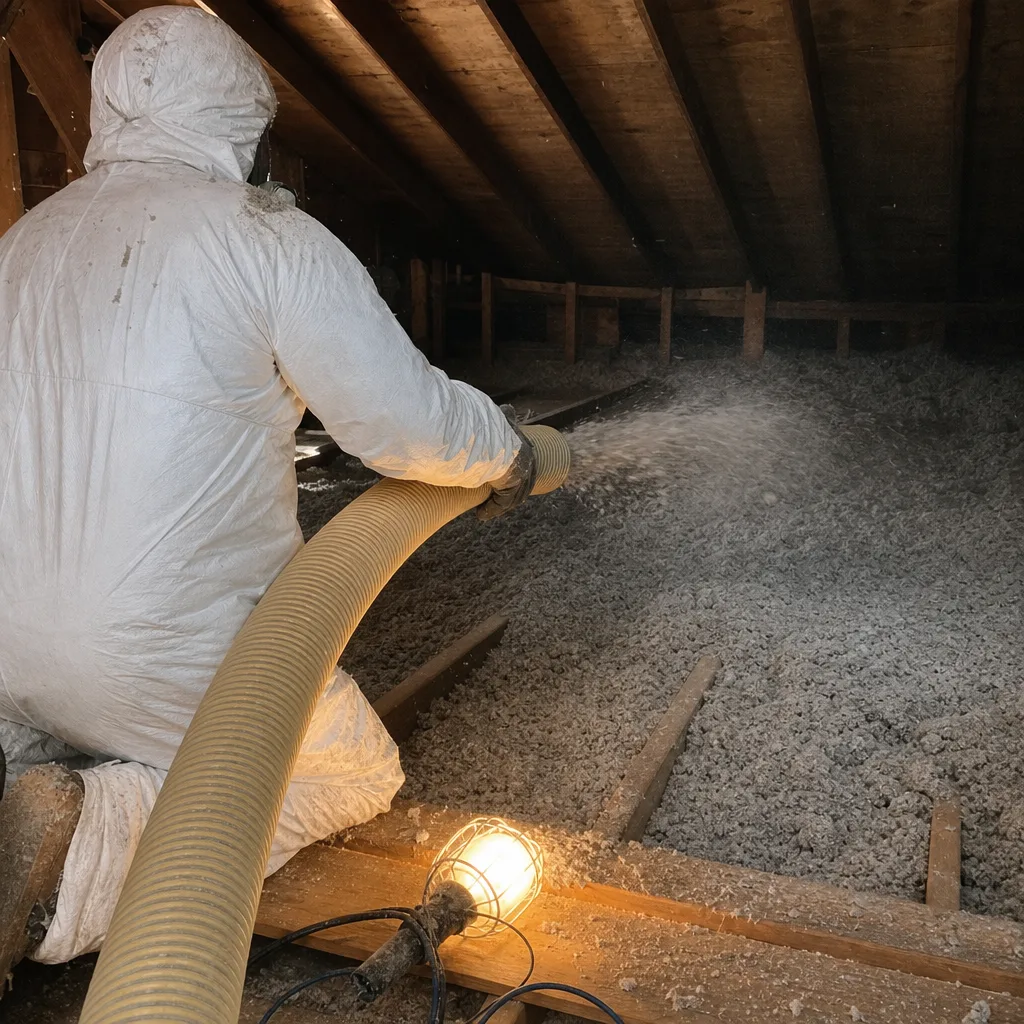
- Written scope and price before anything else. Under Haven Standard Clause 1, a flat written price and written scope arrive before the crew does. You will know the exact material, the target R-value, the attic square footage being addressed, and what air sealing work is included – in writing, signed off, before a single batt is touched. No verbal estimates that change at invoice.
- Blower-door baseline reading (on applicable jobs). Before we open the attic hatch, we set up the blower-door fan in a doorway and pressurize the house to -50 Pascals. The meter gives us a CFM50 number – that is the volume of air per minute leaking out of your building envelope. In Glendale homes we test regularly, pre-sealing readings in the 2,800 to 5,500 CFM50 range are common, depending on age and prior work. That number goes into your job record.
- Attic air sealing – completed before insulation starts. Top plates between the attic and conditioned space below, recessed can lights (which can leak the equivalent of a small open window apiece), HVAC boot gaps, electrical and plumbing penetrations – all sealed with two-component spray foam or code-compliant fire caulk. This step is not optional and is not an upsell. We will not proceed to batt installation until it is done. After sealing, we run the blower door again. The CFM50 number drops – typically 30% to 55% in homes that have not been previously sealed. Both numbers go into your job record and the photo documentation.
- Batt selection and staging. Material is selected to meet California Title 24 requirements for Climate Zone 9 – typically R-38 or R-49 for attic floors, depending on your specific permit requirements and the home’s framing depth. Owens Corning and Johns Manville batts are cut to bay width and staged at the attic hatch. We do not leave excess material in the attic or compress batts to fit a shallower bay than specified – compression reduces effective R-value and is a common failure point in rushed installs.
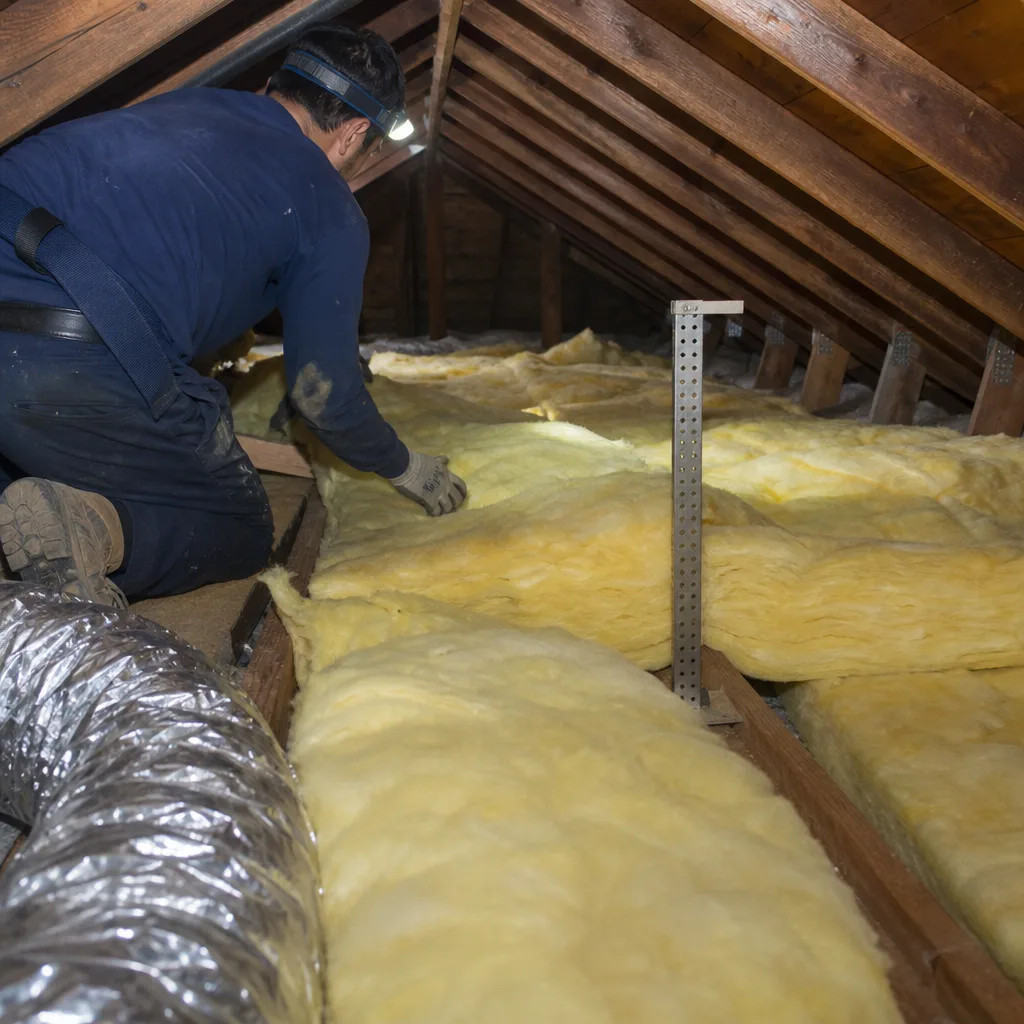
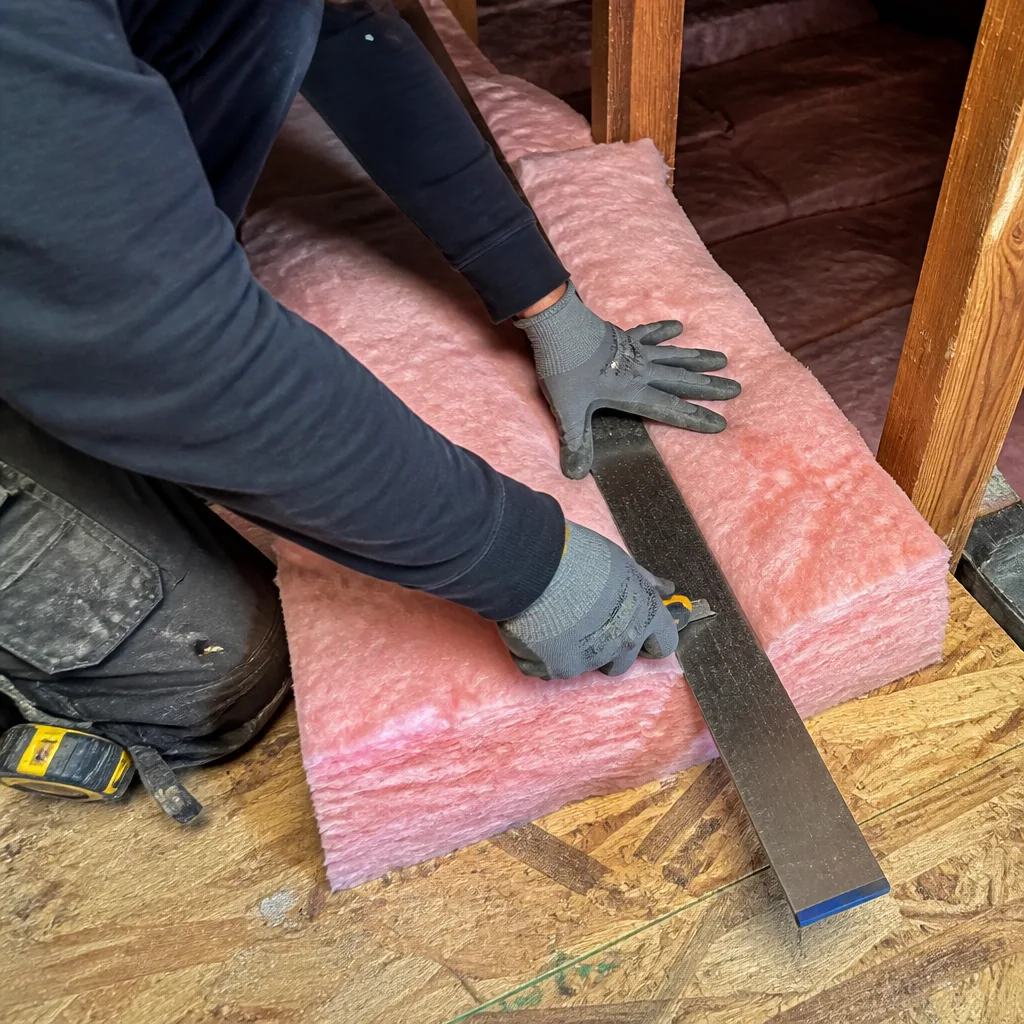
- Installation, depth verification, and vapor-facing direction check. Batts are placed with the kraft facing oriented correctly for Glendale’s Climate Zone 9 – facing down toward the conditioned space on attic-floor applications. Depth is measured at multiple points across the attic with a calibrated ruler, and any gaps or compressions are corrected before we move on. Joist bays at gable ends and over exterior walls – spots commonly missed – are specifically checked.
- Documented photo record and written close-out. Before leaving, the technician photographs the sealed penetrations, the installed batts at representative bays, and the depth measurements. Those photos, the pre- and post-blower-door numbers, and the written warranty under the 365-Day Done Right Promise are handed to you – not emailed on request, not available if you follow up. Included. Every job. If anything is not right within 365 days, we make it right.
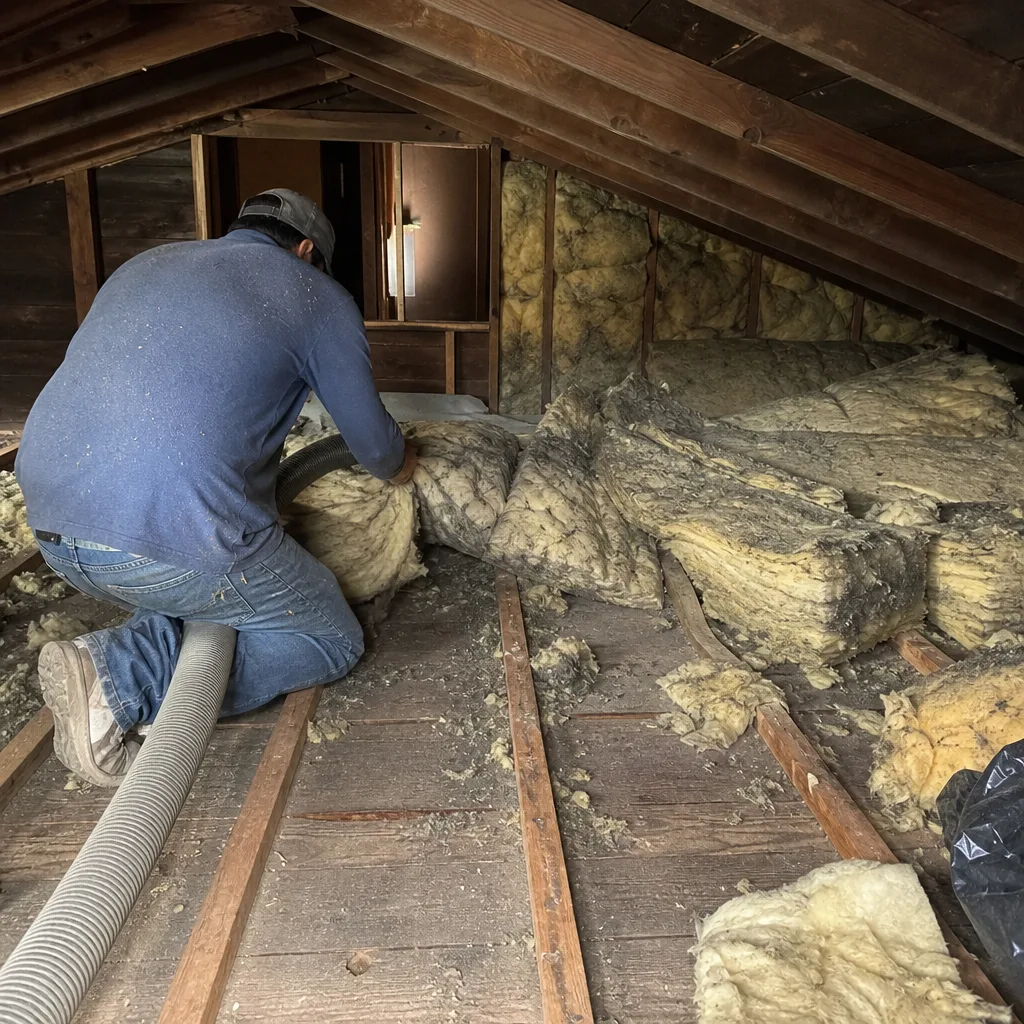 Before
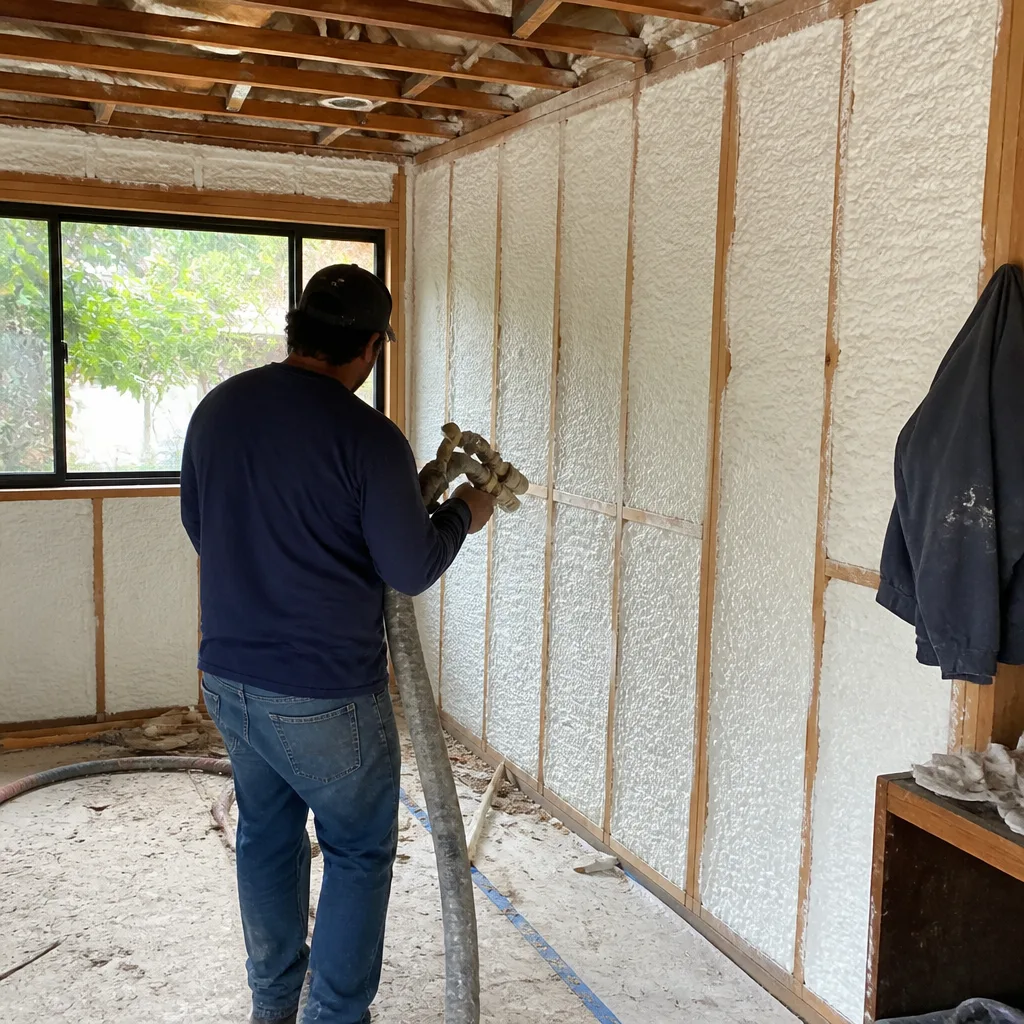 After
AfterAttic Batt Insulation Pricing in Glendale
Attic batt insulation in Glendale typically runs between $1,400 and $3,800 for a standard single-story home with an attic floor area between 800 and 1,800 square feet. That range covers material, labor, air sealing of penetrations, and the documented photo record. It does not include Attic Insulation Replacement – if old material is present and needs to come out, that is scoped and priced separately in writing before work begins.
| Scope | Typical Glendale Price Range |
|---|---|
| Small attic, 800-1,000 sq ft, top-up to R-38 with air sealing | $1,400 – $1,900 |
| Mid-size attic, 1,000-1,400 sq ft, full replacement to R-38 | $1,900 – $2,600 |
| Larger attic, 1,400-1,800 sq ft, full replacement to R-49 | $2,600 – $3,800 |
| Insulation removal (per 1,000 sq ft, before re-install) | $600 – $1,100 |
| Blower-door test with before/after documentation (stand-alone) | $250 – $400 |
A few factors move the number within those ranges:
- Attic access and clearance. Glendale has a significant number of older hillside homes in areas like Glenoaks Canyon and Chevy Chase where the attic has limited crawl height or a single, offset access hatch. Tight access adds labor time and affects the per-square-foot cost.
- Volume of air sealing required. A 1960s home with dozens of unsealed can lights and open top plates takes longer to seal properly than a 2010-era home where some sealing was done during a prior remodel. The written scope will itemize this.
- Target R-value. R-38 uses less material than R-49. California Title 24 compliance requirements for the specific permit pulled on your project determine the minimum; we will tell you in writing which applies.
- Existing insulation condition. If old fiberglass batt is intact, unfaced, and at the correct depth, we may be able to add a perpendicular layer rather than a full removal. If the existing material is wet, compressed, or contaminated, removal is the right call – and that is documented in the written scope before you decide.
Bring us any written estimate you have already received. Under Haven Standard, the Free Second Opinion is not a sales conversation – we read the competing scope with you and tell you what it includes, what it does not, and where the numbers land relative to what we would charge for the same work. Call (213) 474-3828 to schedule that conversation or to request your written price.
FAQs – Attic Batt Insulation
How long does attic batt insulation last in Glendale’s climate?
Properly installed fiberglass batt insulation – from manufacturers like Owens Corning or Johns Manville – maintains its rated R-value for 20 to 30 years under normal attic conditions. Glendale’s dry heat is actually easier on fiberglass than a humid coastal climate would be, because moisture is the primary cause of batt degradation. The two conditions that shorten lifespan here are attic condensation from an unsealed HVAC system and rodent activity, both of which we check for and document during the initial assessment. Batts that have been compressed by foot traffic or disturbed by prior HVAC or electrical work may have lost 20% or more of their effective R-value even if they look intact – a depth measurement tells the real story.
Is batt insulation or blown-in insulation better for my Glendale attic?
Batt insulation is generally the better fit when joist bays are clean, accessible, and standard-spaced – common in Glendale homes built before 1990. Blown-in insulation, typically fiberglass or cellulose, fills irregular spaces and gets around obstructions more easily and is often the right call in attics with complex framing, multiple HVAC runs, or when adding a second layer over existing batts. Some Glendale jobs use both: batts as a base layer cut to joist depth, then a blown-in top coat to reach R-49 without requiring deeper framing. The parent page for Attic Insulation in Glendale walks through that comparison in more detail. We write both options into the scope if the attic could reasonably use either approach, so you can compare.
Do I need a permit for attic batt insulation in Glendale?
In most cases, adding or replacing Attic Insulation Near Me in Glendale, CA does not require a building permit as a standalone project, but California Title 24 compliance is still required – and that is a documentation standard, not just a suggestion. When insulation work is part of a larger remodel that does pull a permit, the insulation must meet the R-value minimums documented on the plans. We note in every written scope whether a permit is required for the specific scope of work on your job, and we do not rely on the homeowner to determine that. If a permit is required, that is in writing before work starts.
Can you install batt insulation without air sealing first?
We do not – and we would not recommend any contractor who does. Air sealing of top plates, can lights, and penetrations has to come first because batt insulation does not stop air movement, only slows heat transfer. An unsealed attic floor allows conditioned air to escape through gaps that a batt laid on top of will not close. A home that gets batt insulation without prior air sealing often sees minimal improvement in cooling costs because the air leakage overwhelms the thermal benefit of the added R-value. We seal first, then insulate – in that order – on every job. The blower-door readings before and after sealing are documented so you can see exactly what the sealing work did before the batts go in.
Key Takeaways
- Attic batt insulation in Glendale typically costs $1,400 to $3,800 for most single-story homes, with a written price provided before any work starts.
- Air sealing – top plates, can lights, penetrations – is completed before any batt installation. This is not optional and is not an upsell.
- Before-and-after blower-door readings are documented on every applicable job so you can verify the air-sealing result, not just take our word for it.
- Owens Corning and Johns Manville batts are installed to California Title 24 R-value requirements for Glendale’s Climate Zone 9 – typically R-38 or R-49.
- Every job closes with a Documented Photo Record, written warranty under the 365-Day Done Right Promise, and both blower-door numbers on file.
- We have sealed and insulated 9,000+ homes since 2016 – every one with a written price before the work started.
Get a Written Price for Your Glendale Attic
If you are ready to find out How Much Does Attic Insulation Cost? (2026 Price Guide) - Glendale, CA for your specific home in Glendale – not a range from a website, but a flat written number with a written scope – call (213) 474-3828. A live person answers, any time. Wes Okafor and the team at Topside Attic Insulation Glendale will schedule an assessment, measure your attic, run the blower-door baseline, and hand you a written price before any decision is made. No pressure, no verbal estimates that shift at invoice. If you have a competing written estimate, bring it – we will read it with you under our Free Second Opinion offer and tell you what it does and does not include. That conversation costs you nothing.
Glendale homeowners in Montecito Park, Verdugo Woodlands, Adams Hill, Rossmoyne, and the Foothill areas near Glenoaks Canyon have been through this process with us since 2016. The documentation is the same on every job, in every neighborhood. You should know what leaving looks like before we arrive – and with Envelope Insulation Co., you always do.
Written by Wes Okafor, Owner at Topside Attic Insulation Glendale, serving Glendale.