
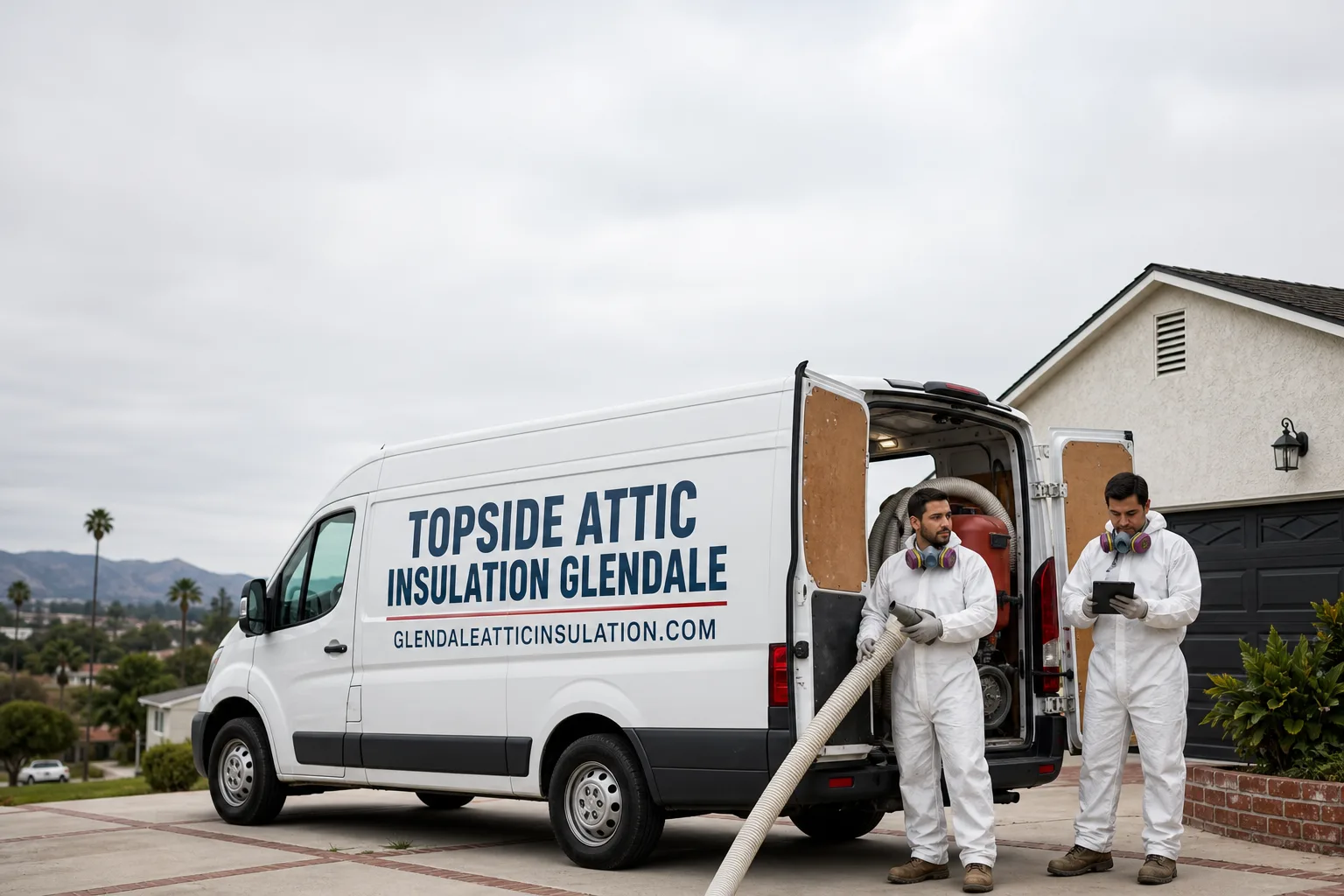
Fast, Reliable Blown-In Insulation Across San Gabriel
Blown-in insulation in San Gabriel typically runs $1.80-$3.20 per square foot for attic work and $2.50-$4.50 per square foot for dense-pack wall insulation, with most jobs completed in one day. We’re Envelope Insulation Co., and our crews work San Gabriel regularly - from the blocks near the San Gabriel Mission district out to the Las Tunas Drive corridor and the residential streets north of Valley Boulevard. Dispatch and scheduling run through our Los Angeles office, but the technicians who arrive at your door know this city’s housing stock: the 1940s stucco bungalows with no wall insulation, the 1960s ranch homes with compressed attic batts, the piecemeal additions that left thermal envelopes patchwork and uneven. If your bedroom runs 10°F hotter than the rest of the house in August, we can explain why and fix it. Call (213) 474-3828 - a live person answers, 24/7.
Why Topside Attic Insulation Glendale Is San Gabriel’s Preferred Blown-In Insulation Company
We’ve sealed and insulated over 9,000 homes since 2016, and a significant share of them sit right here in the San Gabriel Valley. San Gabriel homeowners find us because they read reviews carefully - they check the three-star write-ups as closely as the five-stars - and our documentation policy means every customer walks away with a written scope, a written price, and a Documented Photo Record of what got done. No exceptions.
Our response time to San Gabriel is same-day or next-day for most calls, and we don’t start work until you’ve seen a flat, written price. That’s Haven Standard Clause 1. We also publish before-and-after blower-door numbers on every applicable job - a pressurization reading that shows, in one figure, how much conditioned air your home was losing before and after the work. For a city where summer attic temperatures can exceed 150°F, that number matters more than it would in a beach town.
Our technicians are background-checked, uniformed, and named before they arrive. You’ll get a text when they’re on the way. Under Haven Standard: Arrive on schedule, you get a named technician and a text when they are on the way.
Our Blown-In Insulation Services in San Gabriel
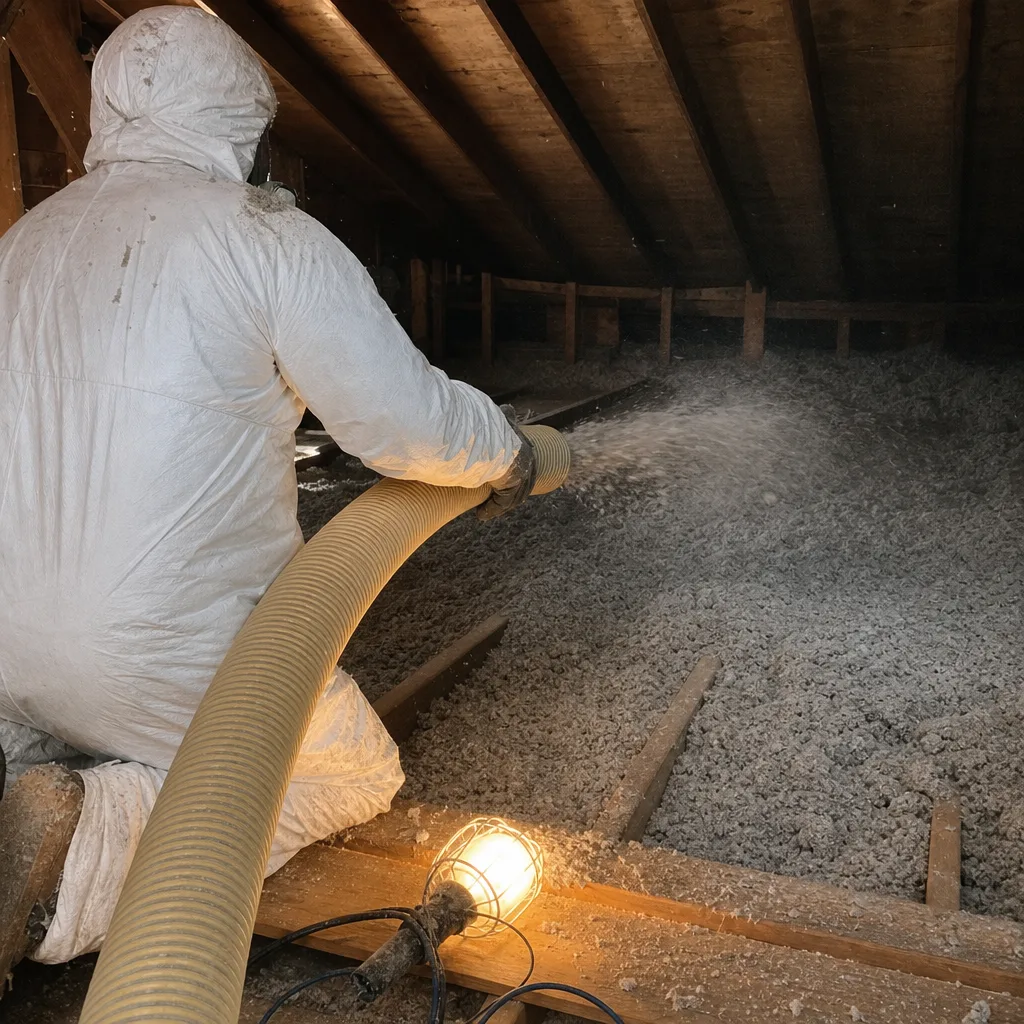
Blown-In Cellulose
We use GreenFiber cellulose on many San Gabriel jobs - it’s treated with borate for fire and pest resistance, and it packs well into the irregular joist bays common in pre-Title 24 homes. Cellulose performs particularly well in San Gabriel’s climate because it handles the extreme delta between 150°F attic peaks and conditioned interior air without the settling problems that plagued older formulations. For a typical 1,200-square-foot attic in a San Gabriel ranch home, we’re usually blowing to R-38 or R-49, which means 10-14 inches of settled depth depending on your target and existing conditions.
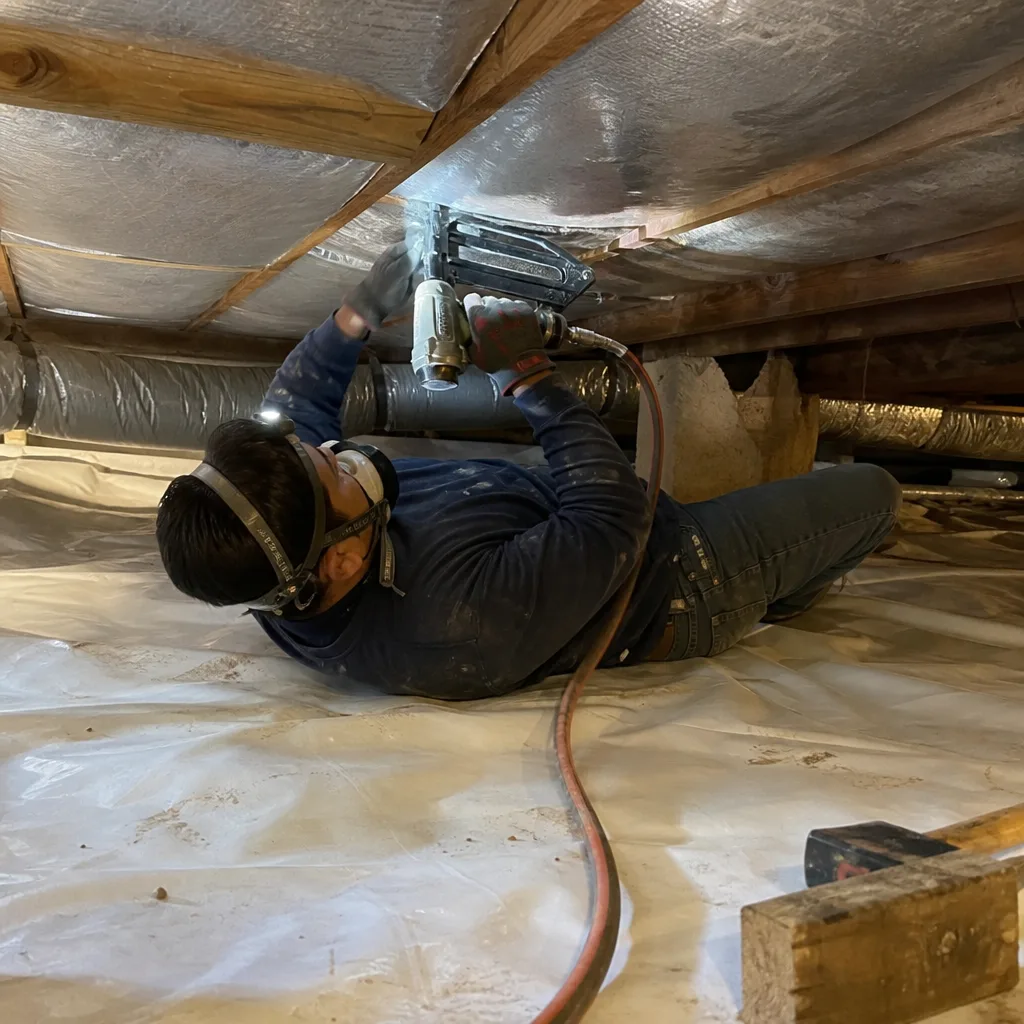
Blown-In Fiberglass
Owens Corning and Johns Manville fiberglass loose-fill works well for San Gabriel homeowners who need faster install times or have moisture-managed attics where cellulose isn’t the right fit. Fiberglass doesn’t absorb humidity the way organic materials can, which matters in older San Gabriel homes where bathroom vents still dump into attic spaces or where roof ventilation was retrofitted imperfectly. We size the blower to the material spec - fiberglass needs higher air velocity than cellulose - and we never blow over an unsealed attic floor. Sealed first, then insulated. In that order.
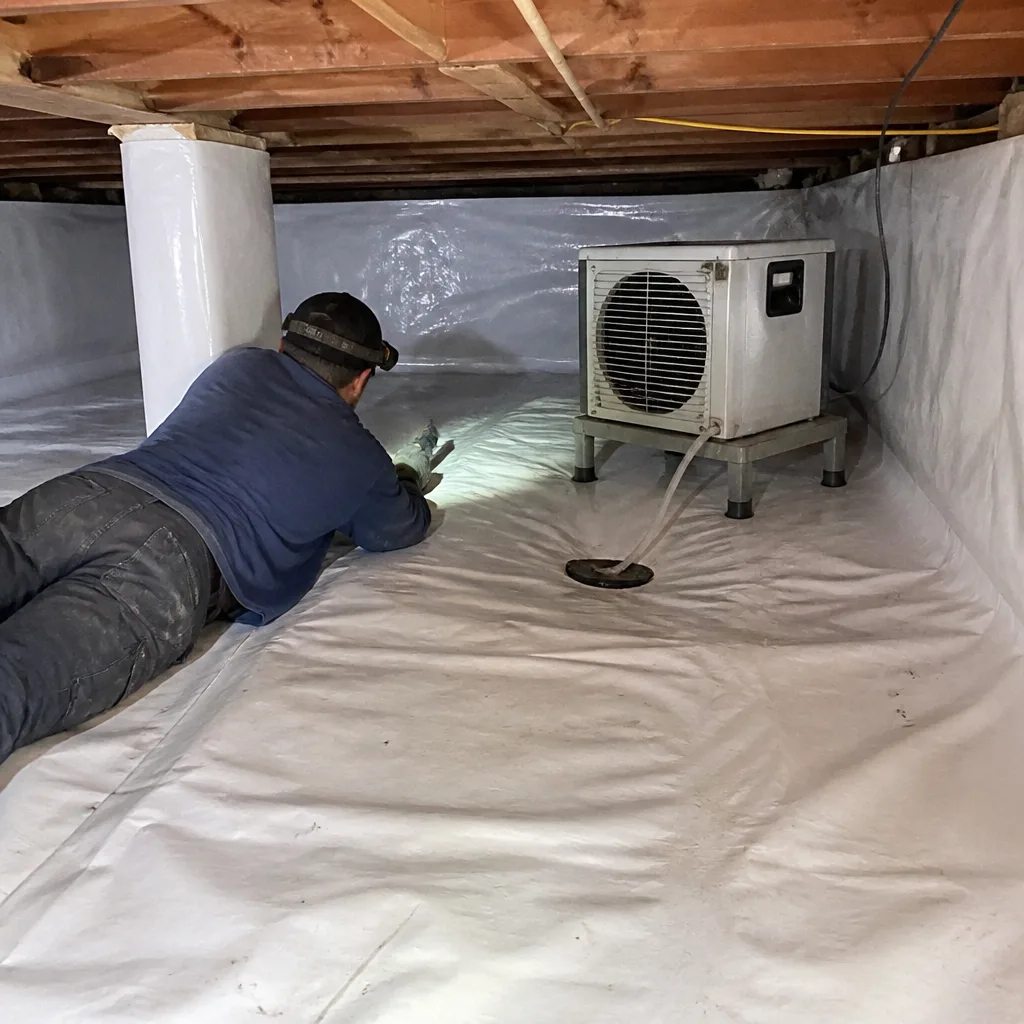
Dense-Pack Wall Insulation
This is where our San Gabriel work gets specific. San Gabriel’s 1940s-1960s stucco bungalows and ranch homes were built before California’s Title 24 energy code with zero wall-cavity insulation, and because the San Gabriel Mountains trap radiant heat, attics here can exceed 150°F - about 15-20°F hotter than coastal LA. This makes dense-pack wall insulation and blown-in attic top-ups unusually high-ROI here compared to nearby beach cities.
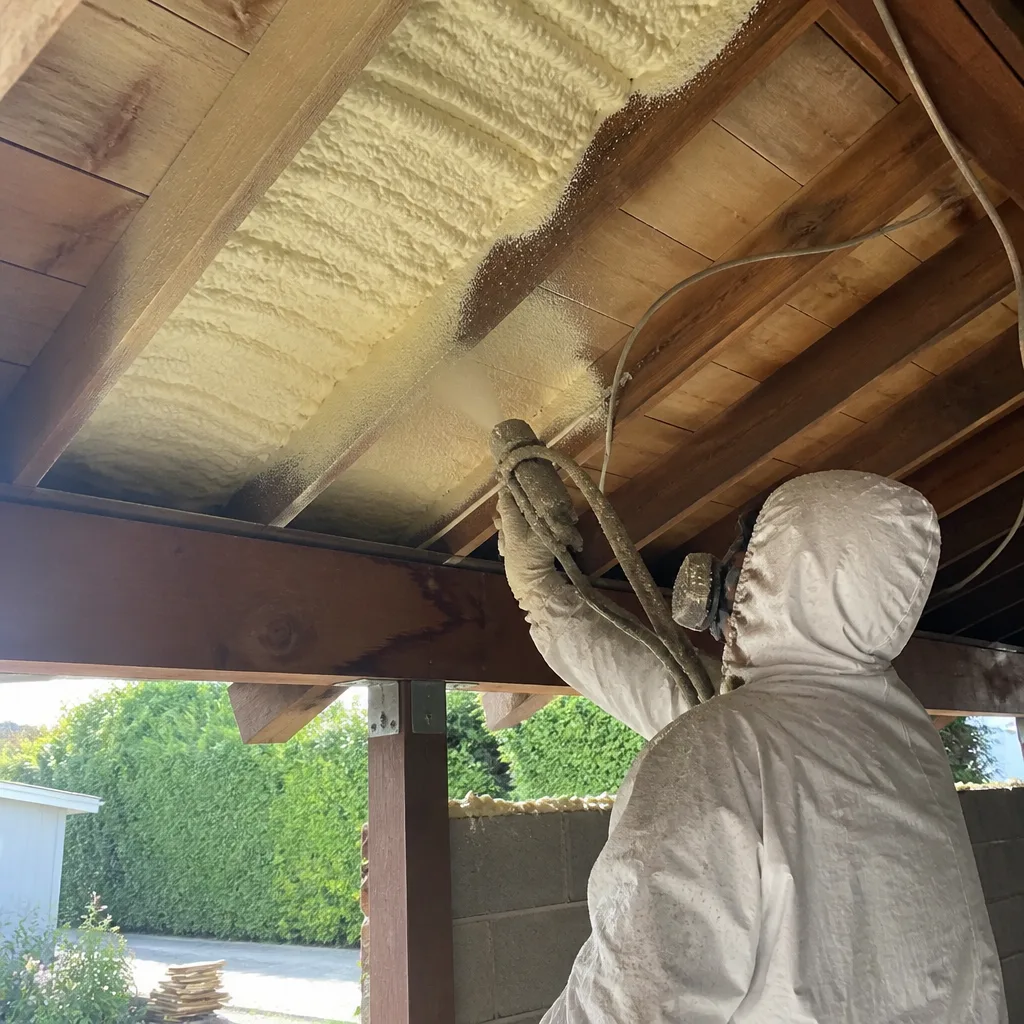
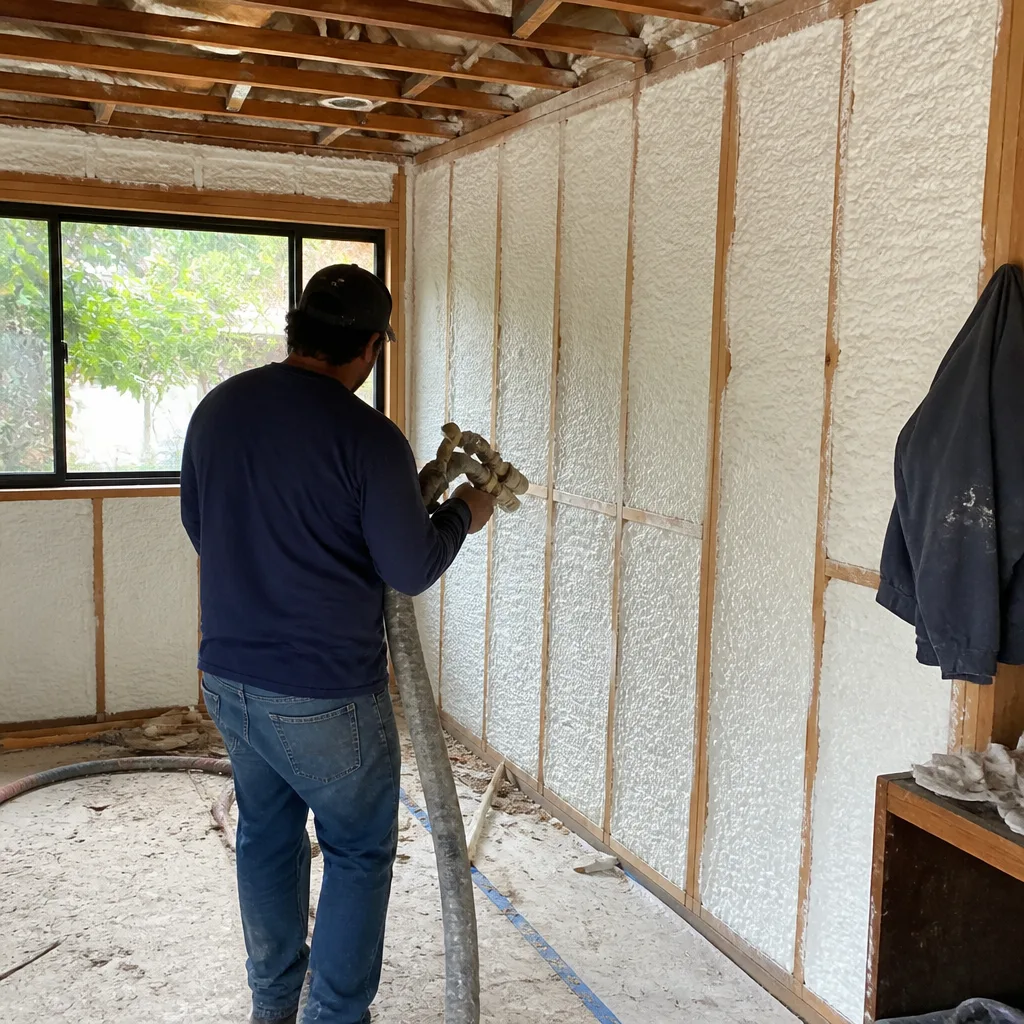
On a 1950s stucco ranch just off Las Tunas Drive near the San Gabriel Mission district, our crew found a 1980s rear room addition where the drywall had been nailed directly against the original exterior stucco with no insulation in the new framing cavity. We blew dense-pack cellulose into that empty cavity and topped up the attic to R-49 with GreenFiber, and the homeowner told us the back bedroom finally stopped running 12°F hotter than the rest of the house in August. Dense-pack means we blow at 3.5-4.0 pounds per cubic foot - dense enough that the material won’t settle, but not so dense that we bulge the drywall. It requires drilling access holes, either from the exterior through stucco or from the interior, then patching to match. We document every cavity with photos.
Blown-In Top-Up
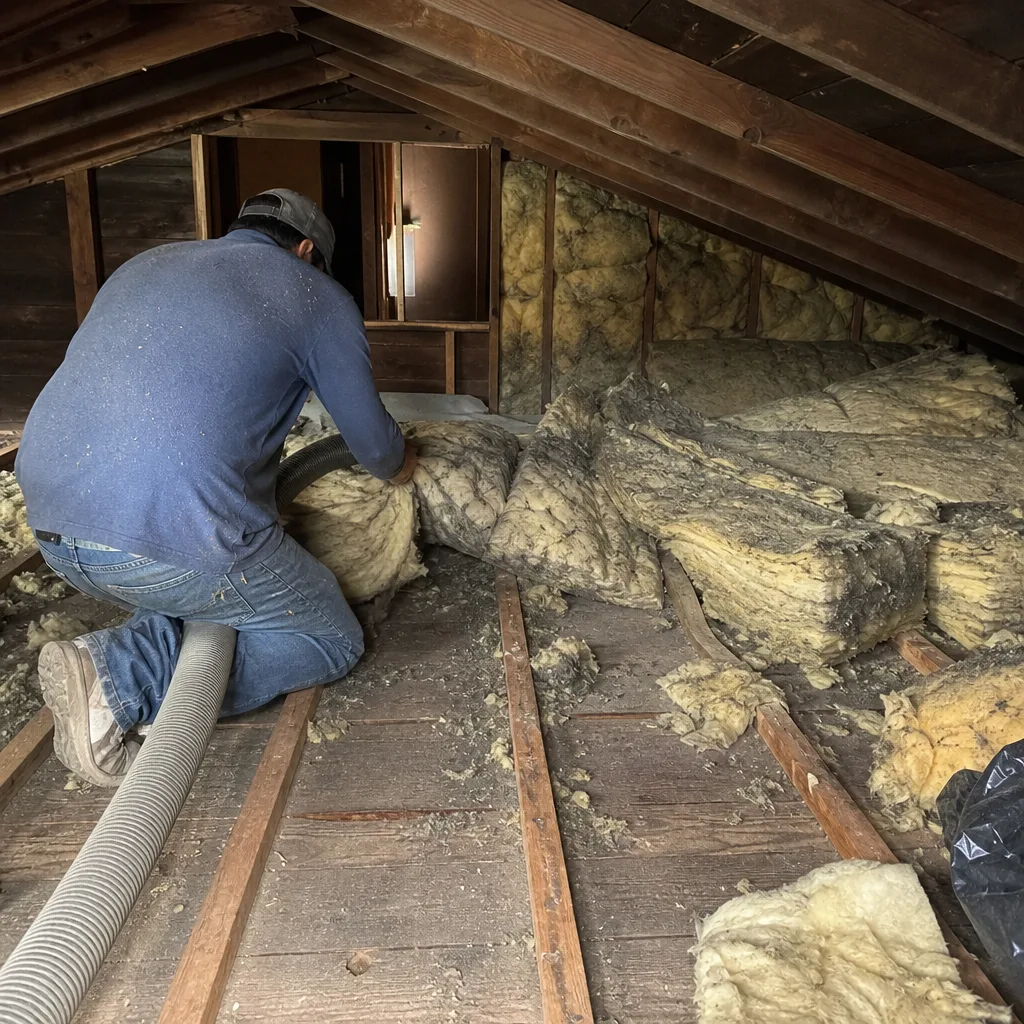
Many San Gabriel attics already have some insulation - usually original batts from the 1970s or 1980s, compressed and drifted away from the eaves. A blown-in top-up brings the entire attic to uniform depth without removing what’s there, assuming the existing material isn’t contaminated. We air-seal first: top plates, can lights, plumbing and electrical penetrations, chimney chases. Then we blow. The result is even coverage from ridge to eave, which matters enormously in San Gabriel because the sun bakes your roof from 10 AM to 6 PM through much of the year, and under-insulated eaves are where the heat gain is most acute.
Our Blown-In Insulation team treats every attic as a system, not a commodity install.
What happens when you call
- 1
A real person answersNo phone trees - you reach a local pro.
- 2
You get an upfront price rangeHonest numbers before anyone is dispatched.
- 3
A background-checked tech heads outLicensed & insured, dispatched right away.
- 4
You approve before work beginsNothing starts until you say go.
 Before
 After
AfterTrusted Brands We Service in San Gabriel
We source materials from Owens Corning, Johns Manville, Knauf, Rockwool, CertainTeed, Icynene, Demilec, and GreenFiber - no proprietary product lock-in. For San Gabriel jobs, we typically stock GreenFiber cellulose, Owens Corning fiberglass loose-fill, and Demilec open-cell foam for hybrid applications where blown-in needs supplementing at rim joists or kneewalls. This means no waiting on special orders for standard jobs. If your home needs a specific material for compatibility with existing insulation or for fire-rating requirements in certain San Gabriel zones, we specify it in the written scope before anyone lifts a tool.
Common Blown-In Insulation Problems We See in San Gabriel Homes
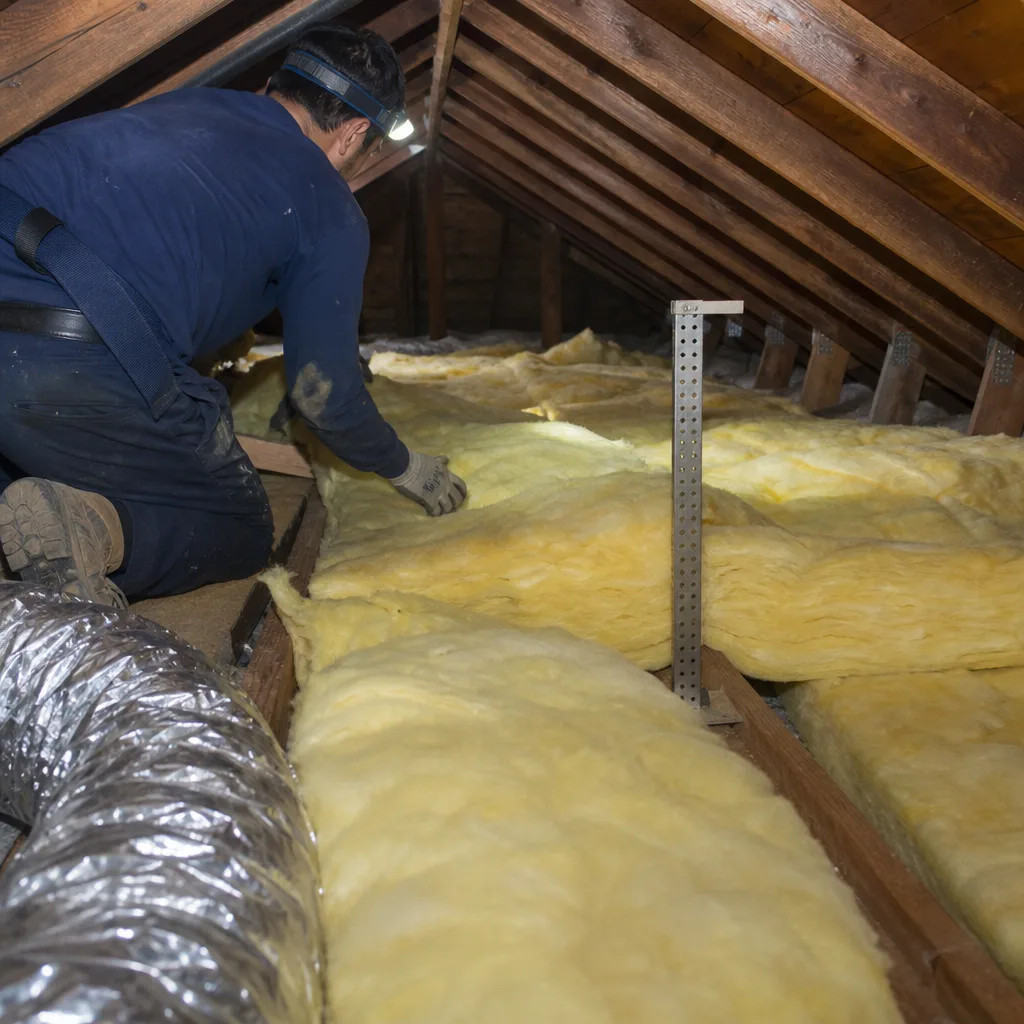
- Uninsulated wall cavities in pre-Title 24 stucco bungalows. On blocks near the San Gabriel Mission district, uninsulated wall cavities let 100-105°F inland heat radiate straight through the plaster, so rooms stay hot even after an attic top-up. The fix is dense-pack wall insulation, but you can’t diagnose it from the attic - we check outlet boxes and drill test holes to confirm cavity depth and condition.
- Empty framing cavities behind 1970s-80s additions. Piecemeal room expansions and enclosed patio/garage conversions common in multigenerational Asian-American households here often left the new framing cavity empty behind drywall, creating 10-15°F room-to-room temperature swings that puzzle homeowners. We find this on Las Tunas Drive corridor homes regularly.
- Compressed, drifted attic insulation in low-slope 1940s-1970s roofs. Attic insulation in these low-slope 1940s-1970s attics compresses, gets disturbed by HVAC or electrical work, and drifts away from the eave - leaving the perimeter of the ceiling under-insulated right where the sun bakes it hardest. A top-up without air sealing just drifts again; we seal first.
- Retrofit challenges in homes with multiple unpermitted additions. San Gabriel’s large multigenerational households have added rooms and converted garages piecemeal over decades, creating irregular, patchwork thermal envelopes that are far more common here than in newer or coastal LA suburbs. We map each cavity individually and adjust our approach room by room.
Pricing for Blown-In Insulation in San Gabriel, CA
Most attic blown-in jobs in San Gabriel run $1,800-$3,800 for a typical 1,200-1,800 square foot home, depending on target R-value and whether air sealing is needed. Dense-pack wall insulation runs $2.50-$4.50 per square foot of wall area, so a 1,000-square-foot wall section runs $2,500-$4,500. Blown-in top-ups where existing insulation is salvageable start around $1,200-$2,200. These ranges reflect San Gabriel’s inland climate premium - the extreme heat load means we often specify higher R-values than coastal contractors would, and the older housing stock means more air-sealing labor.
What moves the number: attic accessibility (some San Gabriel ranches have scuttle holes that require ladder work), existing insulation condition, whether we need to drill interior or exterior for wall access, and the extent of air sealing required. We don’t do “it depends” without giving you the actual range first. You’ll get a Written Price Before Any Work Starts - flat, itemized, no hourly mystery. And we offer a Free Second Opinion on any written estimate: bring us a competing quote and we’ll read it with you. Call (213) 474-3828 for scheduling.
We Also Serve Cities Near San Gabriel
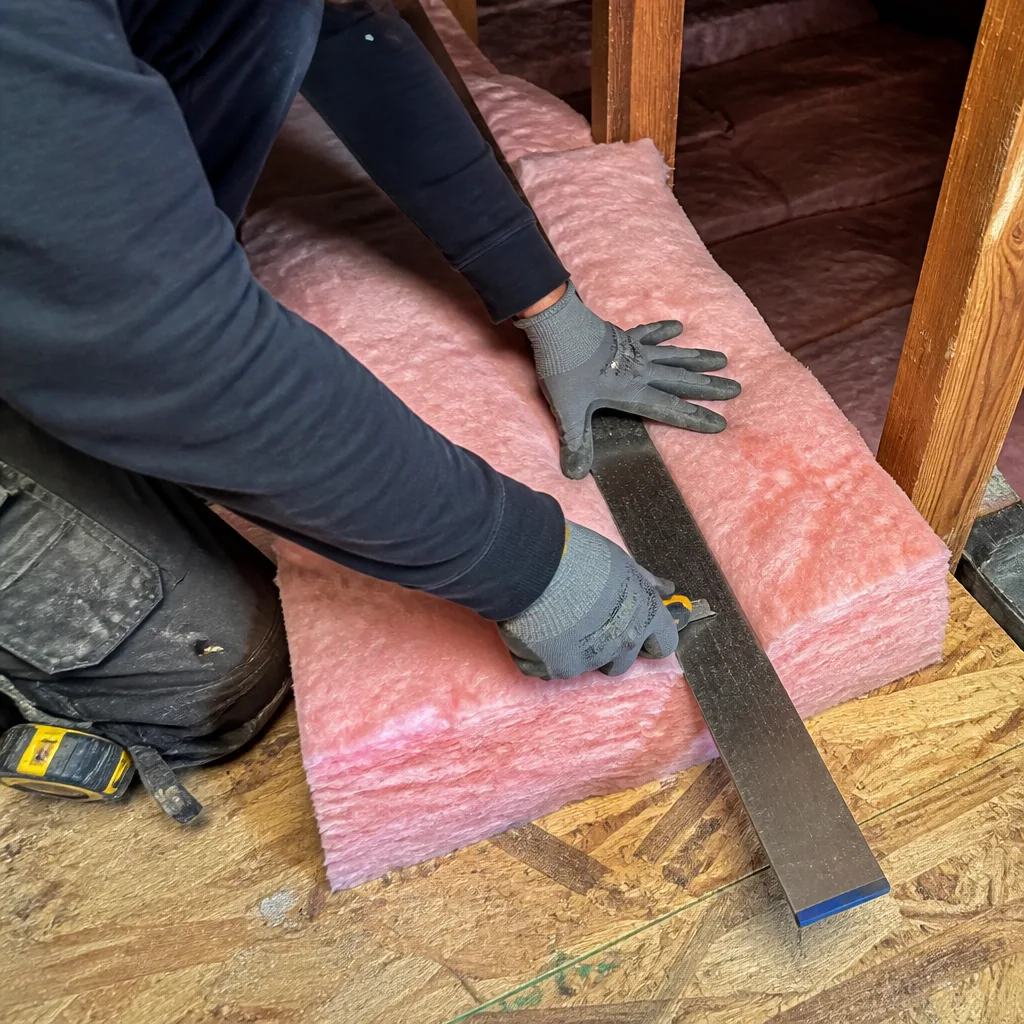
Our crews work throughout the San Gabriel Valley and beyond. If you’re in San Gabriel or nearby - Alhambra, Pasadena, El Monte, or South Pasadena - we run the same process: written price first, documented record at completion, before-and-after blower-door numbers where applicable. Same live-answer phone line, same 365-Day Done Right Promise.
Serving San Gabriel, CA - Our Local Coverage Area
We’re based in the San Gabriel area and know this community well. Use the map below to see our service coverage - if you’re nearby, we can almost certainly help.
FAQs - Blown-In Insulation in San Gabriel
Yes, if the temperature swing is caused by an empty wall cavity or missing attic insulation over that room, which we find frequently in San Gabriel’s piecemeal additions. We verify with thermal imaging and test holes before recommending dense-pack wall insulation or a targeted attic top-up. Call (213) 474-3828 - estimates are free, and we’ll show you the photos of what we find.
Yes - 1940s-1960s wood-frame stucco homes in San Gabriel have standard 2×4 or 2×6 stud cavities, just empty ones. We confirm depth and check for obstructions like fire blocking or old knob-and-tube wiring before drilling. If the cavity is accessible, we can dense-pack it. If wiring needs remediation first, we note that in the written scope and price it separately - no surprises.
It matters enormously - San Gabriel’s inland position in the San Gabriel Valley heat basin means summer highs 15-20°F above coastal LA, and attic temperatures can exceed 150°F versus 120-130°F at the beach. The same R-38 attic that performs adequately in Santa Monica is working harder here, which is why we often specify R-49 for San Gabriel homes and emphasize air sealing to prevent that superheated air from leaking into conditioned space.
Yes. We encounter this regularly in San Gabriel’s multigenerational households. We map each addition’s framing, insulation status, and thermal boundaries individually, then treat each zone with the appropriate material and technique. The documentation you receive - photos, blower-door readings, written scope - reflects exactly what each section received. No averaging, no guessing.
Cellulose usually wins for San Gabriel’s pre-Title 24 homes because it air-seals slightly better at installation density and handles the extreme temperature swings of inland attics well. Fiberglass is preferable where moisture management is uncertain or where faster install times matter. We specify the material in the written scope based on what we find during assessment, not as a default. Both perform well when installed over a sealed attic floor.
Ready to stop losing conditioned air to a 150°F attic? Call (213) 474-3828. A live person will answer, schedule your free estimate, and you’ll have a written price before anyone starts work. Under The Haven Standard since 2016: flat price, written scope, written warranty, documented record - every time.
Written by Wes Okafor, Owner at Envelope Insulation Co., serving San Gabriel and the San Gabriel Valley since 2016.