
How Much Does Radiant Barrier Installation Cost in Glendale?
Radiant barrier installation in Glendale, CA typically runs between $1,400 and $3,200 for a single-story home with a standard attic footprint, with most jobs landing around $1,800 to $2,400 once attic access, stapling pattern, and any necessary decking clearance are factored in. Homes in Glendale’s hillside neighborhoods – Chevy Chase Canyon, Verdugo Woodlands, La Crescenta-Montrose border areas – often trend toward the higher end because irregular attic geometry adds labor time. You’ll see the price in writing before anyone enters your attic.
Radiant Barrier Installation Cost Breakdown (2026)
Radiant barrier is priced by square footage of attic floor area, not by the square footage of your home’s living space. A 1,800-square-foot single-story ranch in Glendale might have a 1,600 sq ft attic footprint; a two-story home of the same size might only require radiant barrier over 900 sq ft of attic floor. That distinction changes the quote significantly.
Below are the line-item ranges we see in the Glendale market for 2026. These reflect foil-faced radiant barrier sheet material (the most effective type for our climate) installed by a crew that first verifies attic ventilation is adequate – because a radiant barrier in a poorly ventilated attic can actually trap heat rather than redirect it.
| Line Item | Typical Range (Glendale, 2026) | Notes |
|---|---|---|
| Radiant barrier material (foil-faced sheet) | $0.28 – $0.55 per sq ft of attic floor | Single-sided vs. double-sided reflective; perforated vs. solid (perforated preferred for hot-dry climates) |
| Labor – standard attic (flat ceiling, good access) | $0.65 – $1.10 per sq ft | Staple-up method to rafters; most common installation in Glendale’s post-1960 housing stock |
| Labor – complex attic (low pitch, hip roof, multiple HVAC units) | $1.10 – $1.85 per sq ft | Chevy Chase Canyon and Montecito Hills homes frequently fall here |
| Attic inspection and ventilation verification | Included with written estimate | Radiant barrier only performs when soffit-to-ridge airflow is adequate; we document what we find |
| Ventilation correction (if required before installation) | $180 – $650 add-on | Adding soffit baffles or a ridge vent; priced separately on the written scope |
| Combined radiant barrier + attic air sealing | $2,200 – $4,800 for most Glendale homes | Air sealing top plates and penetrations before the barrier goes in; this is how the work is sequenced under the Haven Standard |
| Radiant barrier alone (no air sealing) – small attic under 1,000 sq ft | $1,100 – $1,700 | Condos in Glendale’s downtown core near Brand Boulevard often fall here |
| Radiant barrier alone – 1,000 to 1,800 sq ft attic | $1,400 – $2,600 | Typical single-family range for central Glendale, Adams Hill, Glenoaks Canyon |
| Radiant barrier alone – 1,800+ sq ft attic | $2,400 – $3,800+ | Larger homes in Crescenta Valley and upper Verdugo Hills territory |
One thing worth saying plainly: the cheapest radiant barrier quote you’ll find in Glendale is almost always omitting the ventilation check or using a spray-on “radiant barrier paint” product that the Department of Energy has documented as significantly less effective than foil-faced sheet material. Spray-on products cost less upfront and underperform for the life of the roof. We don’t install them.
Under Haven Standard Clause 1, you receive a flat, written price with a written scope before anyone lifts a tool. No hourly billing, no per-rafter surprises added after the crew is already in your attic.
What Affects Radiant Barrier Installation Pricing in Glendale
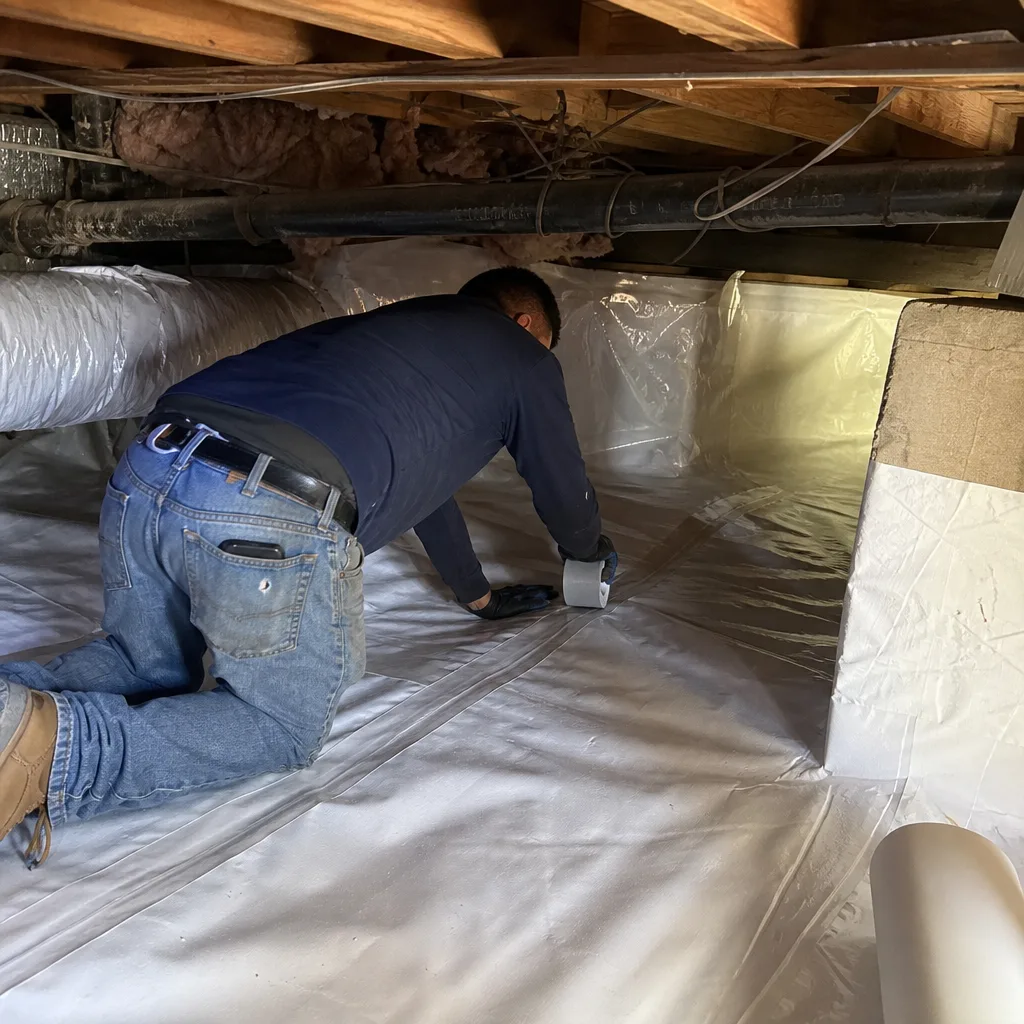
- Attic square footage and pitch. This is the single largest variable. A low-slope roof (common on Glendale’s mid-century modern homes near Pacific Avenue and Chevy Chase Drive) forces crew members to work in tight clearances, which slows the job and raises labor cost. Steep-pitched roofs over Verdugo Hills homes are the opposite problem – more linear footage of rafter, more material needed, more time to staple.
- Number of penetrations and obstructions. HVAC ducts, recessed lighting cans, gas flue pipes, and roof vents all require the foil to be cut, fitted, and sealed around them. An attic with four ceiling fans and two HVAC air handlers – typical in Glendale’s larger 1970s homes – takes meaningfully longer than an open, unobstructed space. We document every penetration in the photo record we leave with you at the end of the job.
- Existing insulation condition. Radiant barrier is installed against the underside of the roof deck (rafters), not on the attic floor, so it can usually go in regardless of what’s below it. The exception: if existing blown-in insulation has migrated and is blocking soffit vents, we address that first. Blocked soffits and a radiant barrier together create a heat trap. In Adams Hill and older Rossmoyne homes we frequently find cellulose that has shifted over decades and is sitting against the eaves.
- Ventilation adequacy. Glendale’s City Building and Safety Division doesn’t specifically mandate a ventilation-to-floor-area ratio for radiant barrier installation permits (radiant barrier typically doesn’t require a standalone permit here, though you should confirm with the city for your specific project), but physics does: the California Energy Commission recommends a minimum 1:150 net free ventilation area to attic floor ratio. Homes that fall short need additional soffit baffles or a passive ridge vent before the barrier goes in. We measure and tell you in the written estimate rather than discovering it on install day.
- Combining services. Pairing radiant barrier with attic air sealing – sealing top plates, can light penetrations, plumbing chases – almost always costs less than scheduling them separately, and it’s the correct installation sequence. Air leaks waste more energy than radiant heat gain in most Glendale homes; doing both in one mobilization is the right call technically and the better value financially. The combined price for most Glendale single-family homes runs $2,200 to $4,800.
- Access conditions. A standard 22×30-inch attic hatch in a hallway ceiling allows a full crew. An attic accessed only through a knee wall in a converted garage – which we see regularly in Glendale’s hillside custom homes – takes longer and raises labor cost. We note access type during the estimate visit so there are no surprises in the scope.
- Glendale’s summer heat load. This is relevant to pricing indirectly: because Glendale sits in a basin that regularly records July and August temperatures 8 to 12 degrees higher than coastal Los Angeles, the heat load against roof decks here is substantial. That thermal context makes proper installation – full coverage, no gaps at eaves, correct stapling tension so the foil doesn’t sag and lose its air gap – worth paying for. A radiant barrier with a two-inch gap at every rafter bay loses most of its reflective benefit because radiant heat travels by line of sight. We inspect for that before we leave.
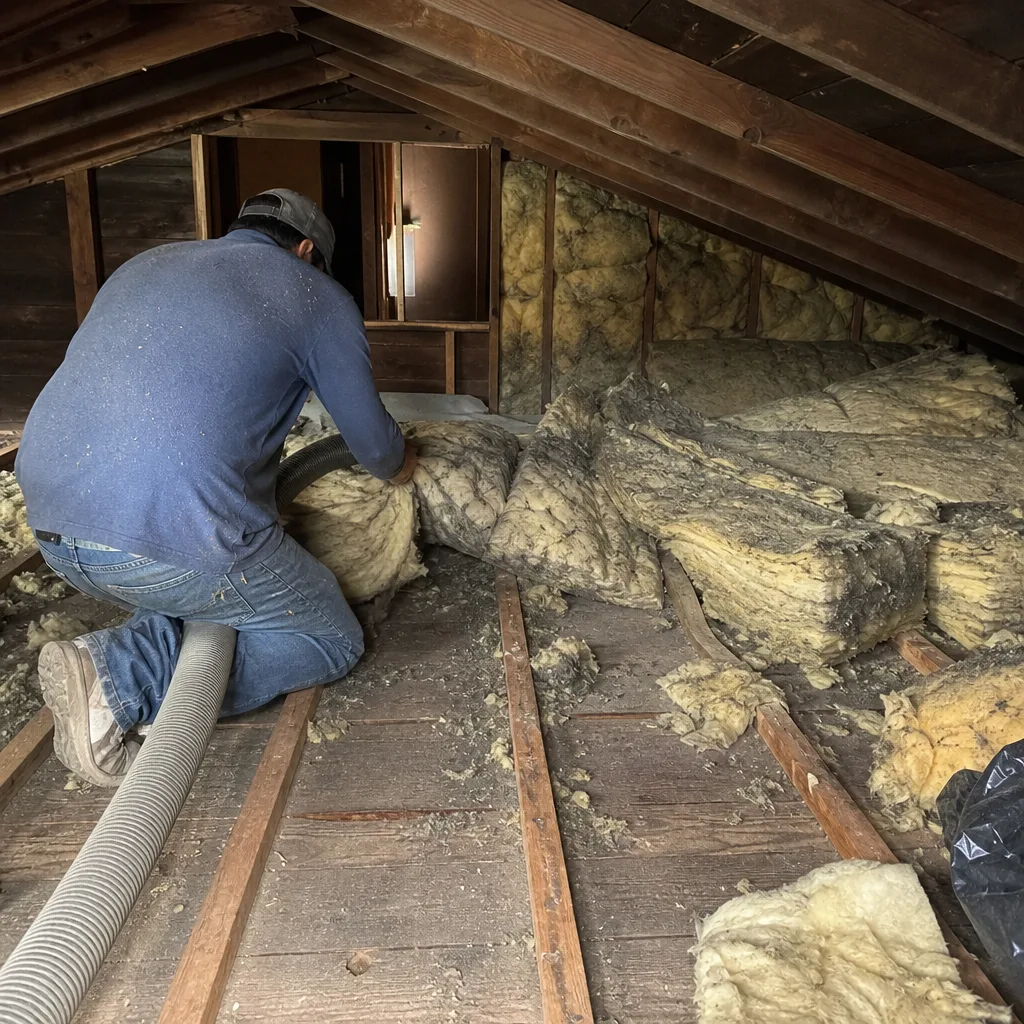 Before
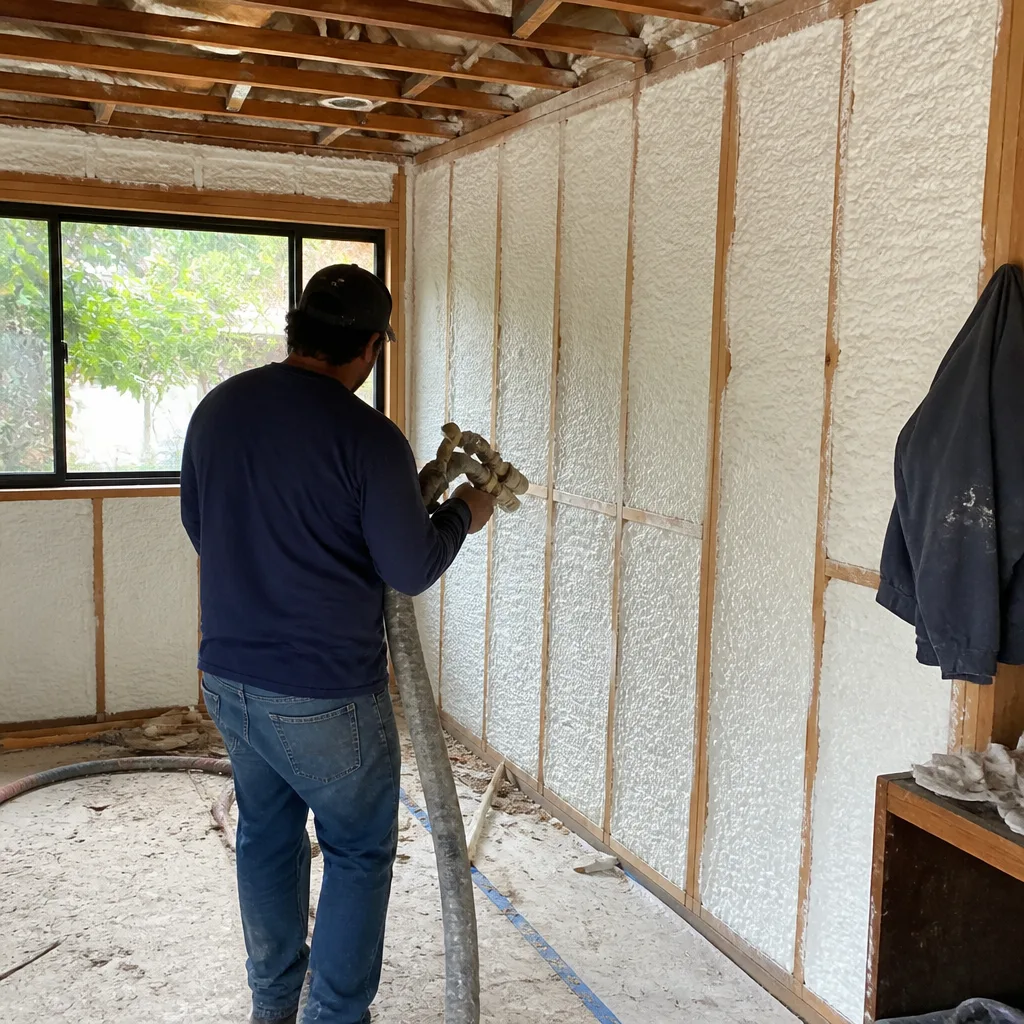 After
AfterHow to Save on Radiant Barrier Installation
The most direct way to reduce the cost is to combine the radiant barrier with whatever else the attic needs in a single visit. Every mobilization – getting a crew to your home, setting up equipment, covering flooring and furniture below the attic hatch – has a fixed cost. If you’ve been told your attic insulation is below code (R-38 is the California standard for most Glendale climate zone applications), scheduling the radiant barrier and the insulation top-up together typically saves $200 to $400 compared to two separate jobs.
A few practical things to know before you schedule:
- Get a written scope before comparing quotes. A quote for “radiant barrier installation” that doesn’t specify material type (perforated foil-faced sheet vs. spray-on), coverage area in square feet, ventilation verification, and what happens if ventilation is inadequate is not a complete quote. You cannot compare it accurately against one that specifies all of those items. Bring any written estimate to us and we’ll read it with you – that’s the Free Second Opinion included as part of how we work.
- Check for utility rebates. Southern California Edison and the Los Angeles Department of Water and Power (LADWP serves portions of the Glendale area) periodically offer rebates on energy efficiency improvements. The availability and amounts change; check with your utility before your install date, not after. We can tell you which improvements typically qualify at the estimate visit.
- Don’t over-solve for radiant barrier alone. In Glendale homes with very low existing attic insulation – say, R-11 or less, which we see in pre-1980 homes near Pacific-Chevy Chase and in some Tropico neighborhood properties – adding insulation will deliver a faster payback than radiant barrier alone. The correct answer is sometimes “do the insulation first, then the radiant barrier next season” rather than both at once. We’ll tell you which one moves the needle more for your specific attic.
- Timing is a minor factor. Labor is slightly more available in late fall and winter. We don’t manufacture urgency around scheduling, but if your project isn’t an emergency, November through February tends to have shorter lead times in the Glendale market.
- Ask what the written estimate includes. Under Haven Standard Clause 1, our written price includes the attic inspection, ventilation verification, material and labor for the specified coverage area, and the Documented Photo Record at job close. The 365-Day Done Right Promise applies to the completed work. Those aren’t add-ons – they’re part of the job.
For an exact written price on your Glendale home, call (213) 474-3828. Estimates are free, and you’ll have a written number before any work is scheduled.
Why the Installation Sequence Matters in Glendale’s Climate
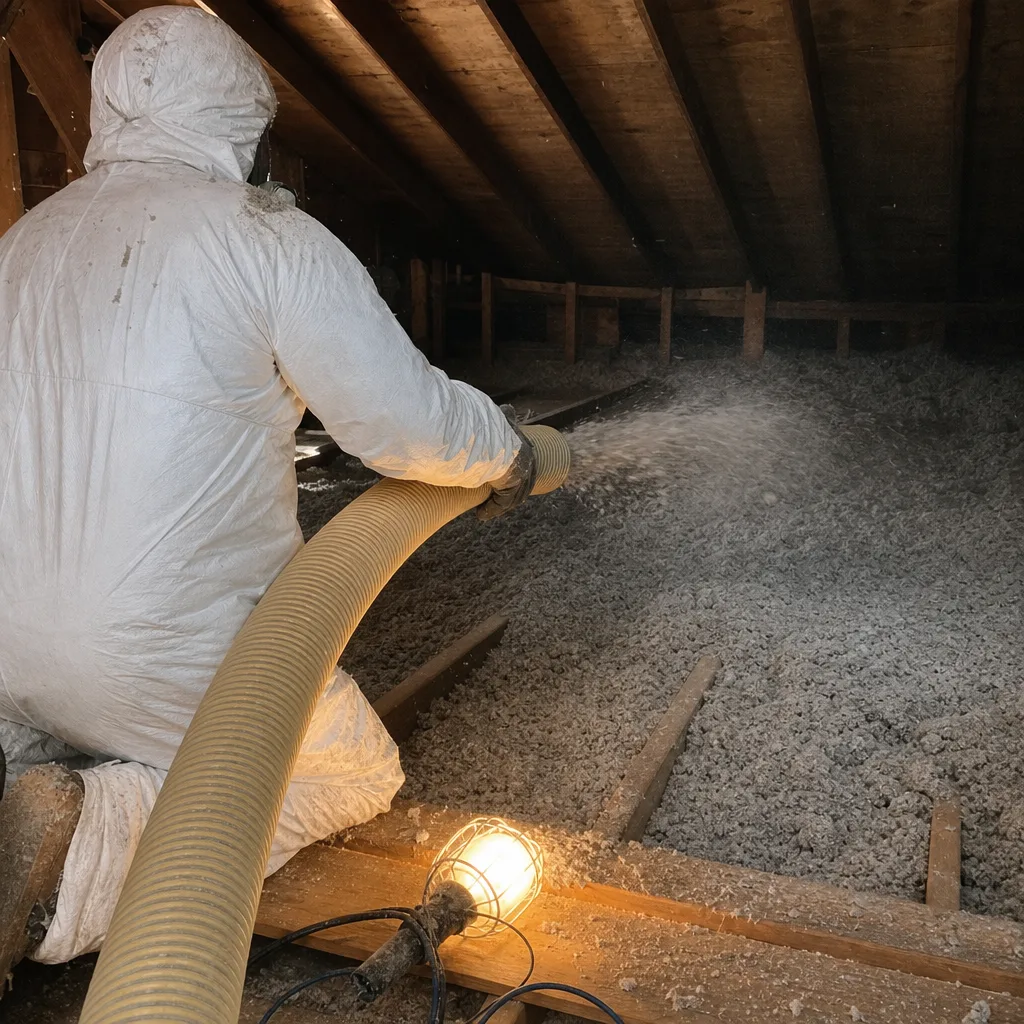
This section isn’t about cost, but it directly affects the value of what you’re spending.
Glendale sits in the western San Gabriel Valley foothills, which means it captures both the basin heat from the Los Angeles interior and occasional Santa Ana wind events that can push attic temperatures well above ambient. In July and August, attic temperatures in un-insulated or under-insulated Glendale homes regularly hit 140 to 160 degrees Fahrenheit at roof deck level. Radiant barrier works by reflecting infrared radiation before it conducts into the attic space – but only if there’s an air gap between the foil and whatever surface is below it (typically the insulation or the attic floor).
The issue we see most often in Glendale attics that have radiant barrier but aren’t performing is one of two things: the foil is sagging and touching the insulation below (eliminating the air gap and the reflective benefit), or the attic has air leaks at the top plates and electrical penetrations that are moving conditioned air into the attic faster than the barrier can address radiant gain. Sealing those leaks first is not an upsell – it’s a prerequisite. An unsealed attic floor with a beautiful radiant barrier on the rafters is still losing conditioned air through every can light and plumbing chase. We seal first. That’s the sequence, and it’s not negotiable under the way we work.
Our Radiant Barrier Installation in Glendale service page covers the installation method and material specifications in more detail if you want to go deeper on the technical side before your estimate visit.
Radiant Barrier vs. Attic Insulation: Which One First in Glendale?
The short answer: if your attic insulation is below R-30, do the insulation first. If it’s at or above R-30 and your cooling bills are still high, radiant barrier is the next logical step.
Here’s why. Insulation resists conductive heat transfer – the heat that conducts through your ceiling drywall from the hot attic above. Radiant barrier reflects radiant heat before it ever becomes conductive. They address different parts of the heat transfer problem. In Glendale’s climate, a home with R-38 insulation and no radiant barrier will still have high attic temperatures, because the foil-backed roof sheathing is absorbing solar energy and radiating it downward. A home with a radiant barrier but only R-11 insulation still has a bad conductive path.
The ideal setup is both. But if budget requires sequencing, insulation to code level first, then radiant barrier. The energy savings per dollar spent are higher on the insulation side when insulation is severely deficient. We measure and advise; we don’t sell you the most expensive combination if it’s not the right one for your situation.
From the home page you can see the full range of building-envelope services we offer in Glendale and the surrounding area – attic air sealing, blown-in insulation, crawl space encapsulation, and home energy audits are all relevant companion services depending on what the inspection turns up.
What Glendale Homeowners Should Know About the Installation Process
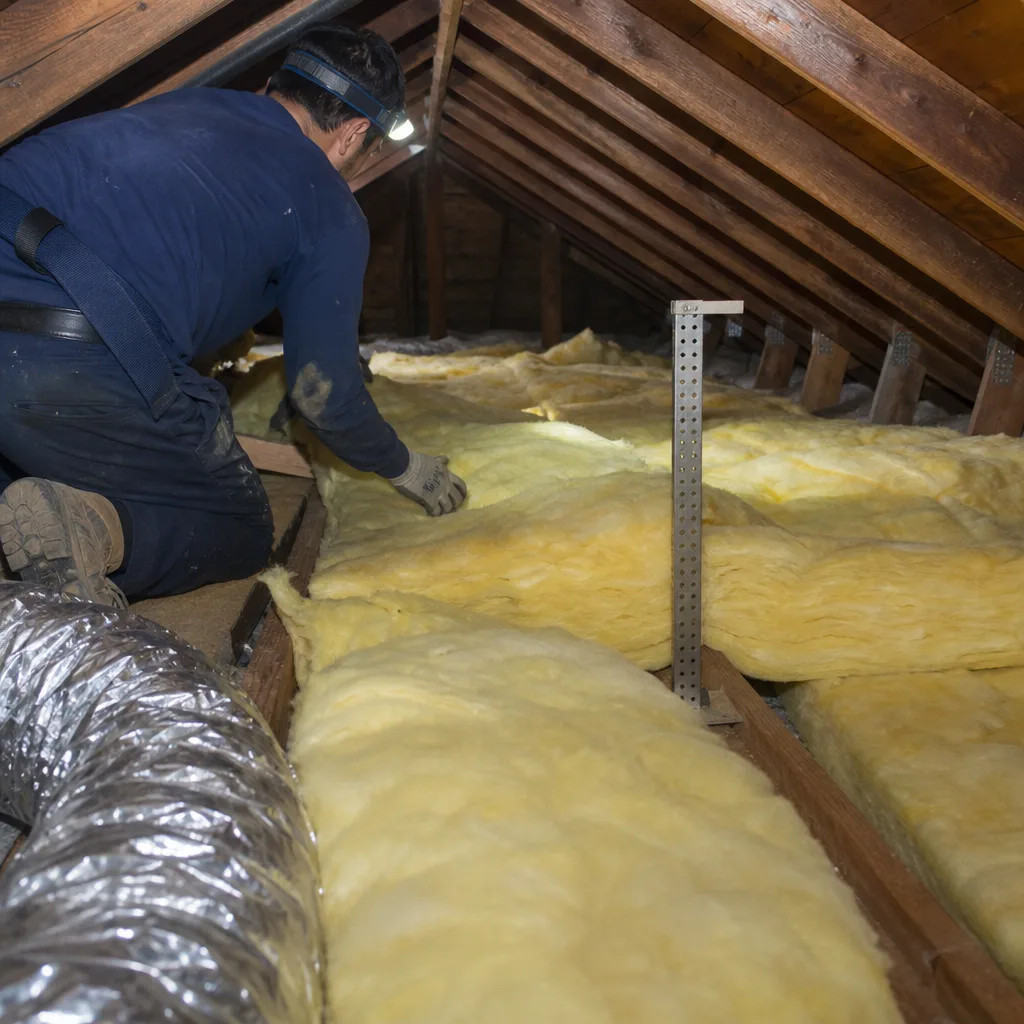
From estimate to job-close, here’s what the process looks like on a standard Glendale radiant barrier job:
- Estimate visit. A named technician comes to the home, accesses the attic, measures the square footage, documents attic access conditions, checks soffit and ridge ventilation, and notes any penetrations or obstructions. You receive a written scope and a flat price. No work is scheduled until you’ve reviewed and signed that document.
- Written price and scope review. The scope specifies material type, coverage area in square feet, any ventilation corrections needed, sequencing (air sealing, if included, happens before the barrier), and what the completed job looks like. The 365-Day Done Right Promise is part of the written warranty.
- Installation day. A background-checked, uniformed crew arrives at the named time. Under Haven Standard arrival protocol, you receive a technician name and a text when they’re on the way. For a standard 1,400 to 1,800 sq ft Glendale attic, most installations are completed in four to six hours.
- Job close and documentation. Before the crew leaves, you receive a Documented Photo Record showing pre-installation attic conditions, coverage in progress, eave and ridge treatment, and any penetrations. On jobs that include attic air sealing, before-and-after blower-door readings – a pressurization measurement that shows, in one number, how much conditioned air the home was losing – are included so you can verify the result you paid for.
9,000+ homes have been sealed and insulated since 2016, every one with a written price before work started and a documented record when the crew left. That’s not a policy we apply selectively – it’s how every job is structured.
FAQs: Radiant Barrier Installation Cost in Glendale
How much does radiant barrier installation cost in Glendale, CA in 2026?
Most Glendale single-family homes run between $1,400 and $3,200 for radiant barrier installation alone, with the majority of jobs in the $1,800 to $2,400 range. Smaller condos or townhomes in the downtown core near Brand Boulevard and Central Avenue can come in at $1,100 to $1,700. Larger homes in Verdugo Hills, Chevy Chase Canyon, or the Crescenta Valley border areas with complex attic geometry regularly reach $3,000 to $3,800 or more. Call (213) 474-3828 for a written estimate – it’s free, and you’ll have a number before anything is scheduled.
Does radiant barrier really work in Glendale’s climate?
Yes, with two conditions: the installation uses perforated foil-faced sheet material (not spray-on paint), and the attic ventilation is adequate before the barrier goes in. Glendale’s climate – hot, dry summers with July attic temperatures regularly hitting 140 to 160°F at roof deck level – is one of the better use cases for radiant barrier in California. The Department of Energy’s data on hot-dry climates shows foil-faced radiant barrier reducing radiant heat gain by 25 to 42 percent in properly installed applications. We verify ventilation and document the installation so you have proof of what was done.
Can radiant barrier be installed over existing insulation in Glendale?
Yes. Radiant barrier is installed against the underside of the roof deck – stapled to the rafters – not on or over the attic floor insulation. It doesn’t disturb existing blown-in or batt insulation below. The exception is when existing insulation has migrated against the soffit vents (common in older Glendale homes in Rossmoyne and Adams Hill), which needs to be corrected before the barrier goes in to preserve ventilation. We check for that at the estimate visit and include it in the written scope if it applies.
Is a permit required for radiant barrier installation in Glendale?
Radiant barrier installation alone typically does not require a building permit in Glendale under current City Building and Safety Division guidelines, but permit requirements can change and may vary depending on project scope – for example, if the installation is combined with HVAC work or electrical modifications. We recommend confirming with the City of Glendale’s Building and Safety Division for your specific project before work begins. We document the installation with photographs regardless of permit status, so you have a clear record of what was installed and when.
What’s the difference between radiant barrier and attic insulation – and which does my Glendale home need?
Radiant barrier reflects infrared heat before it reaches the attic space; insulation resists conductive heat transfer after it’s already in the attic. They address different mechanisms. If your attic insulation is below R-30 (which we see regularly in pre-1980 Glendale homes in Tropico and the Pelanconi Park area), adding insulation to code level will typically deliver faster energy savings per dollar than radiant barrier. If insulation is already at or above R-38 and cooling bills remain high, radiant barrier is the logical next step. The right answer for your home depends on what the attic measurement shows – we tell you both numbers at the estimate visit and let you decide what to prioritize.
How long does radiant barrier installation take in a typical Glendale home?
A standard single-story Glendale home with a 1,400 to 1,800 sq ft attic footprint and normal access conditions takes four to six hours from crew arrival to job close. Larger homes, hillside properties with low-pitch roofs, or attics with significant HVAC equipment can run eight hours or longer. We specify the scope and expected timeframe in the written estimate so you know what to plan for before the crew arrives.
Key Takeaways
- Radiant barrier installation in Glendale runs $1,400 to $3,200 for most single-family homes, with an average around $1,800 to $2,400.
- Material type matters: foil-faced perforated sheet significantly outperforms spray-on radiant barrier products in Glendale’s hot-dry climate.
- Attic ventilation must be verified before installation – a radiant barrier in a poorly ventilated attic can trap heat rather than redirect it.
- Combining radiant barrier with attic air sealing in a single visit typically saves $200 to $400 and produces a better thermal result than either service alone.
- If attic insulation is below R-30, address insulation first – the payback is faster when insulation is severely deficient.
- You receive a written price, written scope, and written warranty before any work starts. A Documented Photo Record closes every job.
- The 365-Day Done Right Promise applies to all completed work.
For a free, written estimate on Radiant Barrier Installation services at your Glendale home, call (213) 474-3828. A live person answers – no voicemail loop, no callback window measured in business days. Wes Okafor and the Envelope Insulation Co. team have been working through Glendale’s housing stock since 2016; we’ll tell you what we find in your attic, give you a written number, and let you decide what makes sense.
Pricing reflects the Glendale market as of 2026. Topside Attic Insulation Glendale offers free estimates – call (213) 474-3828.
Written by Wes Okafor, Owner at Envelope Insulation Co., serving Glendale, CA since 2016.
What Our Customers Say
"Turned up on time, protected the hallway, and the written scope matched what was actually done."
- Bruno S."The winter gas bill dropped by about a third. They had estimated a quarter, so they under-promised."
- Genevieve R."Two other companies quoted to blow more insulation on top of what was there. These were the only ones who said the existing material had to come out first, and explained why."
- Clifford E.