
Rockwool Vapor Barrier Installation: The Glendale Owner’s Guide
Rockwool vapor barrier installation in Glendale typically runs $1,800-$3,400 for an average attic, depending on square footage, existing condition, and whether we’re retrofitting over old batts or starting fresh. Most Rockwool jobs we book in Glendale are completed same-day or next-day, and we stock the full Comfortbatt, Safe’n’Sound, and AFB evo line on our trucks. Homeowners usually realize something’s wrong when they spot condensation on the underside of their roof sheathing, smell must in the insulation after our rare heavy rain, or notice their upstairs rooms won’t hold temperature even though the batt thickness looks right.
Which Rockwool Models This Applies To
Rockwool’s vapor barrier pairing isn’t one-size-fits-all. The Comfortbatt line, rated at R-23 for 2×6 walls and R-30 for 2×10 attics, needs a smart vapor retarder on the warm-in-winter side in Glendale’s mixed-dry climate, not the polyethylene sheeting you’d use in Minnesota. Safe’n’Sound, the 3-inch acoustic batt, is rarely specified with a full barrier but often gets paired with a vapor-retarding primer on basement ceilings where humidity spikes. AFB evo, the commercial semi-rigid board, ships with a factory-applied aluminum facing that serves as its own barrier, so retrofit jobs require matching tape and sealant, not a separate membrane.
To identify what you’ve got, check the ink stamp on the batt edge. Comfortbatt shows density in pounds per cubic foot, usually 1.7 pcf for residential. If there’s no facing at all, you likely have unfaced batts that were supposed to get a separate barrier that never went in, or that failed at the seams. The OEM Rockwool pairing is their own Rockwool AFB Tape for faced boards, but we also stock 3M 8067 and Dow Weathermate as compatible aftermarket options that test within the same perm rating range, 1.0-10 perms depending on the assembly. The gotcha in Glendale’s older housing stock: 1950s ranch homes near the Verdugo Woodlands often have 2×4 ceiling joists at true 3.5 inches, not modern 3.5-inch nominal, so standard-width batts compress and the barrier wrinkles at the staple line.
Signs Your Rockwool Vapor Barrier Installation Is Failing
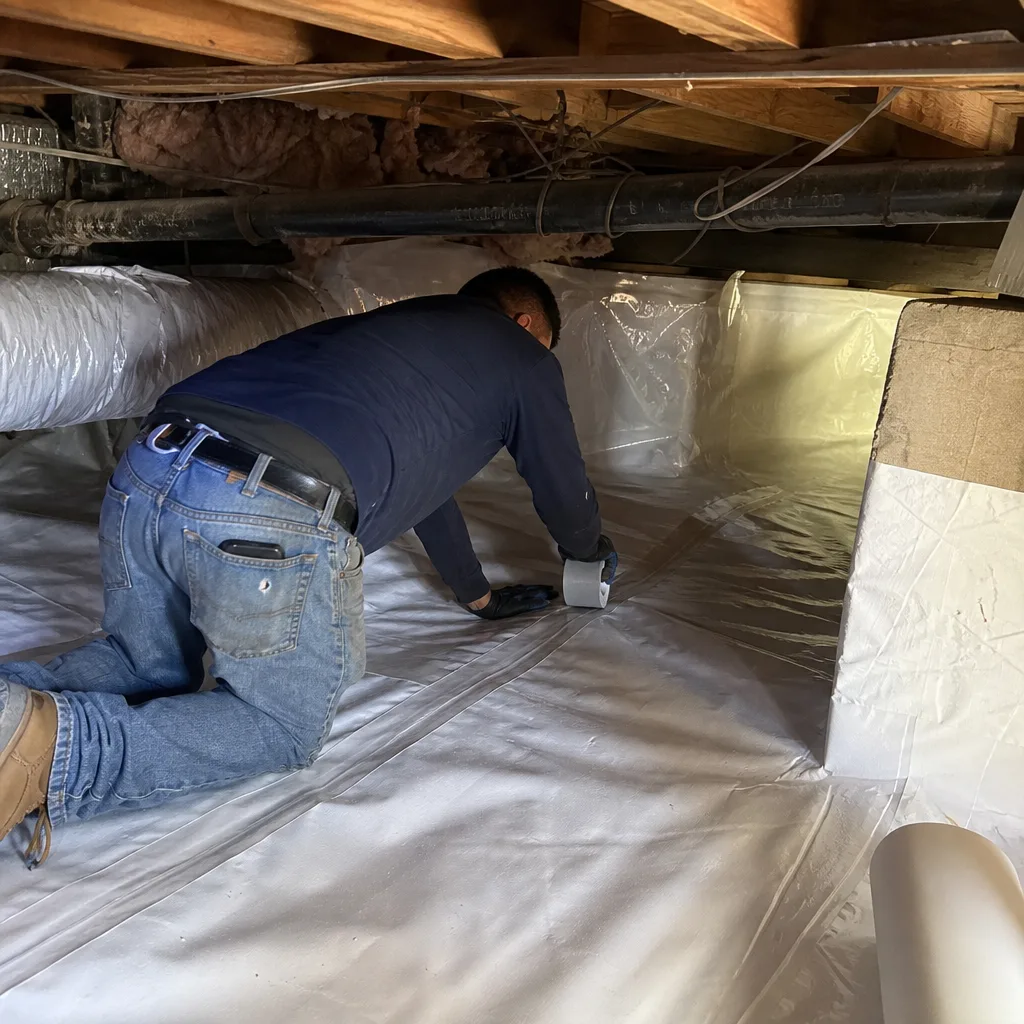
- Condensation on roof nails or sheathing. When the vapor barrier is missing, torn, or improperly lapped, warm moist interior air hits cold roof deck in winter. In Glendale, this happens most January mornings when overnight lows dip to the 40s and your heater has been running steady. The nails rust first; by the time you see staining, the Rockwool below has been wet-cycling for months.
- Musty odor that intensifies after rain. Rockwool itself is hydrophobic and won’t mold, but the organic dust and insect debris that collects on its surface will. A failed barrier lets attic air exchange with conditioned space, pulling humidity into the insulation layer where it condenses on the first cold surface it finds.
- Uneven room temperatures despite adequate R-value. The batt can read R-30 on paper and perform like R-15 if air is washing through it. We see this in Glendale’s hillside homes above Brand Park, where wind exposure creates negative pressure that pulls air right through gaps in the barrier at electrical penetrations.
- Visible gaps or sagging at the vapor barrier seams. Staples pull through polyethylene over time, especially where installers stretched it tight over uneven joist bays. Rockwool’s weight, denser than fiberglass at 1.7 pcf, accelerates this if the barrier was hung before the batts were placed.
- Ice dam evidence in rare freeze events. Glendale’s 2023 freeze caught a lot of homes with bypassed attic air. Warm air leaking past a failed barrier melts snow at the ridge; water runs down and refreezes at the eave. Rockwool without a sealed air barrier above it can’t stop this dynamic.
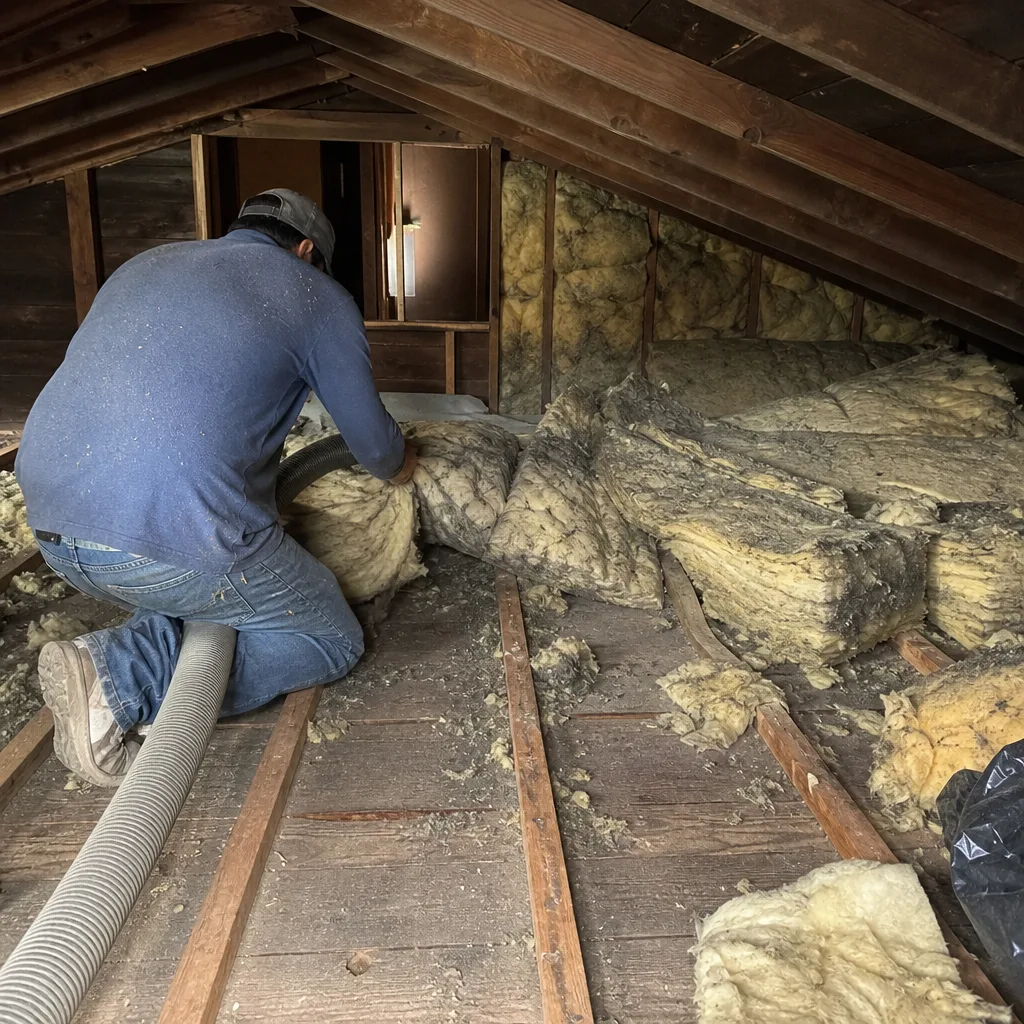 Before
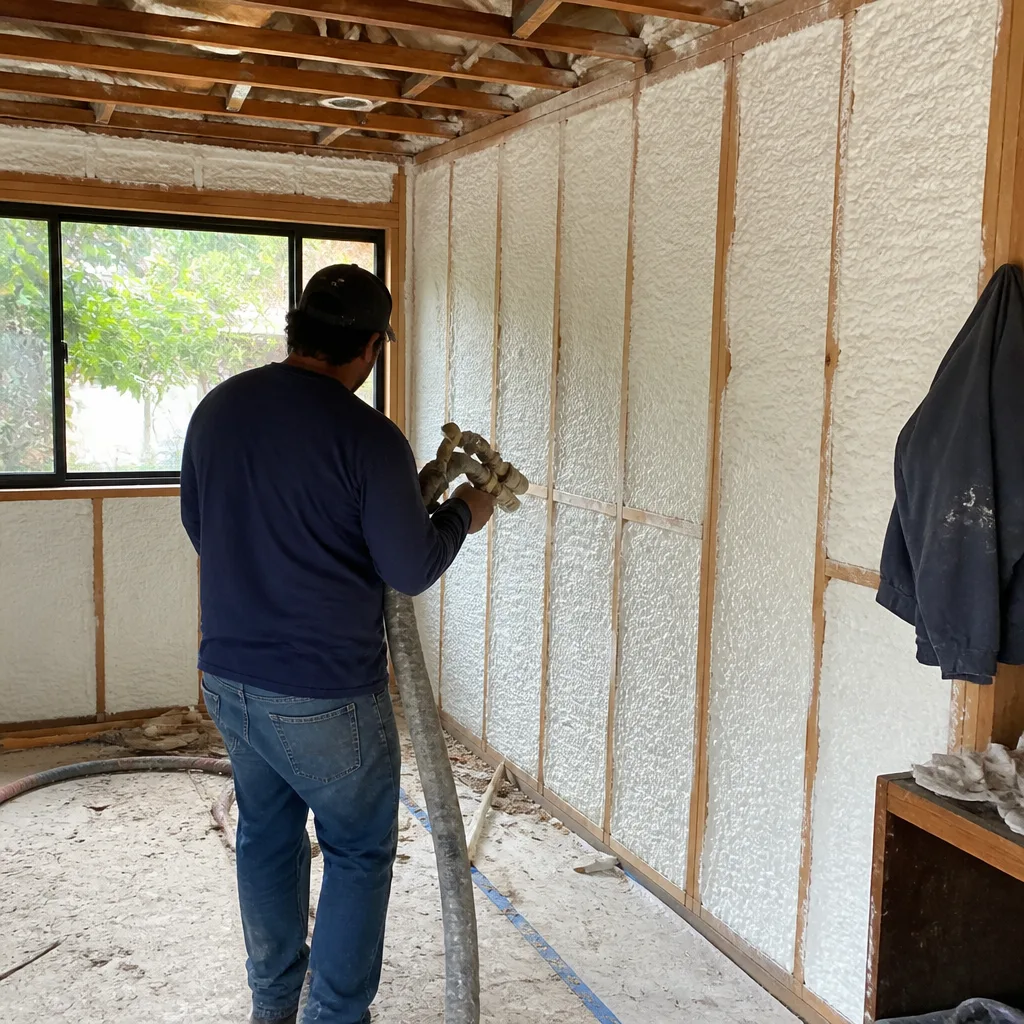 After
AfterReplacement Cost & What’s Included
Most Rockwool vapor barrier installations in Glendale fall between $1,800 and $3,400. A small, clean attic under 800 square feet with open joist bays and good access might land at the lower end. The upper end covers larger footprints, removal of degraded existing material, or repair of water-stained decking before the new barrier goes down. What drives the range: square footage, whether we’re working around stored belongings, the condition of existing Rockwool, and how many penetrations need sealing.
Our price includes removal and disposal of old barrier material if present, installation of new smart vapor retarder lapped and taped to manufacturer spec, air sealing of all top plates and penetrations with acoustic sealant and fire-rated foam where required, and re-installation or replacement of Rockwool batts to proper density. Every job closes with a Documented Photo Record and, where applicable, before-and-after blower-door numbers so you can verify the air-sealing result. Under Haven Standard Clause 1, you get a written price before any work starts, a written scope, and a written warranty. The 365-Day Done Right Promise applies to all completed work.
DIY or Call Us?
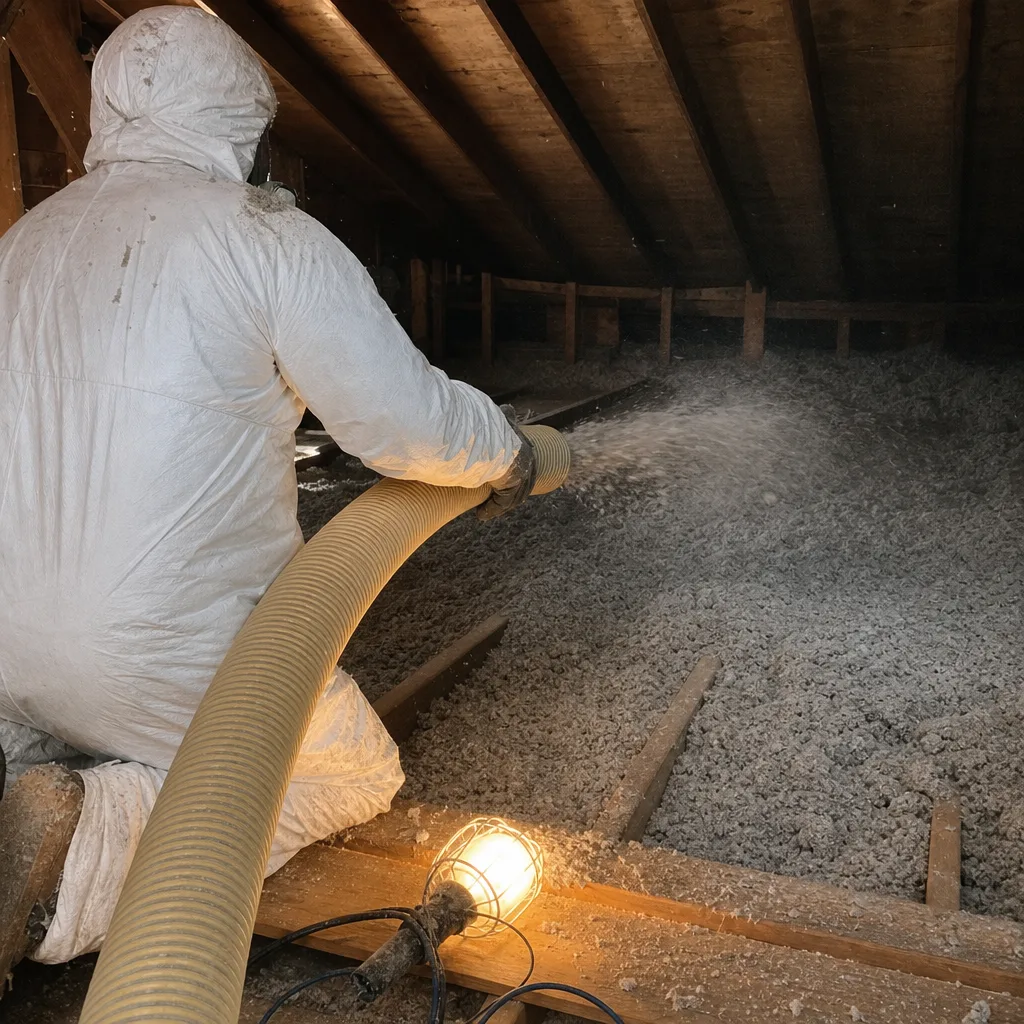
There’s a safe middle ground here. A homeowner can inspect the attic hatch for staining, check whether the existing barrier is faced or unfaced, and photograph any obvious gaps or tears. What you shouldn’t do: crawl through joist bays over a living room ceiling, disturb vermiculite or old fiberboard that might contain asbestos, or attempt to stretch and staple polyethylene across a full attic in Glendale’s summer heat, where the material goes slack and you’ll end up with wrinkles that trap condensation.
The real risk isn’t dramatic; it’s cumulative. A barrier installed with gaps at the eaves or compressed over wiring creates a moisture trap that won’t show damage for two or three years. By then the sheathing is stained and the Rockwool is carrying a load of dust that reduces its effective R-value. We carry the full Rockwool line, the compatible tapes and sealants, and the blower-door rig to prove the job worked. Call (213) 474-3828 for a free estimate and we’ll give you a written price before any work starts.
FAQs
How long does a Rockwool vapor barrier installation last?
In Glendale’s climate, a properly installed smart vapor retarder paired with sealed Rockwool batts should perform for 20-25 years. The barrier itself is rated longer, but the acoustic sealant at penetrations cures rigid and can crack from thermal cycling after two decades. We inspect these joints during any subsequent service call. Call (213) 474-3828 if you’re unsure of your installation age, estimates are free.
Can a failing vapor barrier be repaired instead of replaced?
Patching works for isolated tears smaller than a square foot if the surrounding material is still supple and the seam can be taped with compatible adhesive. Widespread sagging, brittle polyethylene, or any barrier installed before 2005 is usually worth replacing, since older formulations degrade faster in attic heat. We’ll tell you straight during a free estimate whether repair or replacement is the better spend.
How long does the installation take?
Most residential Rockwool vapor barrier installations in Glendale are completed in one day, typically 4-6 hours for attics under 1,200 square feet with clear access. Larger homes, tight crawl spaces, or jobs requiring old material removal may extend to a second day. We schedule with a named technician and text when they’re on the way, under Haven Standard.
Do you stock Rockwool vapor barrier materials?
Yes. We stock Comfortbatt, Safe’n’Sound, and AFB evo batts, plus the matching vapor retarders, tapes, and sealants on every truck. We also carry Reflectix and other brands, but Rockwool is a regular specification for our Glendale jobs. Topside Attic Insulation Glendale is an independent service provider, not affiliated with Rockwool.
Seal the bypasses first. Insulation over air leaks is just expensive noise reduction.
Topside Attic Insulation Glendale has been independently owned and operated under The Haven Standard since 2016. We’ve sealed and insulated over 9,000 homes, every one with a written price before work started and a documented record when the crew left. Wes Okafor learned the trade at Richard J. Daley College, where the curriculum put air sealing ahead of insulation before that was standard practice anywhere, and his crew has been running jobs across Glendale for years. Materials come from Owens Corning, Johns Manville, Knauf, Rockwool, CertainTeed, Icynene, Demilec, and GreenFiber. No proprietary lock-in.
Written by Wes Okafor, Owner, Topside Attic Insulation Glendale at Topside Attic Insulation Glendale, serving Glendale and nearby areas.