
Owens Corning Vapor Barrier Installation: The Glendale Owner’s Guide
Most Owens Corning vapor barrier installations in Glendale run between $1,800 and $3,400 for a complete crawl space or attic application, depending on square footage and whether we’re sealing over bare dirt or replacing a degraded existing barrier. We stock 6-mil and 10-mil reinforced polyethylene rolls compatible with Owens Corning’s complete encapsulation systems, and we can usually schedule installation within 48 hours. Homeowners typically call us after spotting condensation droplets on the barrier’s underside, catching a musty smell that worsens after rain, or noticing their fiberglass batts have begun sagging and darkening where ground moisture has wicked upward.
Which Owens Corning Models This Applies To
Owens Corning doesn’t sell vapor barrier as a standalone branded part with a model number like they do with insulation batts. What we install are compatible systems: the barrier itself is a reinforced polyethylene sheet, rated by mil thickness and permeability, that works with Owens Corning’s broader moisture management approach - typically paired with their Foamular rigid foam boards or ProPink loose-fill in crawl space and basement applications.
To identify what you need, check what’s currently down. If there’s an existing barrier, look for stamped markings in the corner folds: “6-mil,” “10-mil,” or “15-mil,” plus an ASTM E1745 Class A, B, or C rating. Class A is what we spec for Glendale’s clay-heavy soil and seasonal groundwater shifts. The wrong pairing is common: we’ve found 3-mil painter’s plastic or hardware-store sheeting installed by previous owners that tears within two seasons on the sharp aggregate used in local foundation prep. We source our reinforced barriers through the same distribution chain as Owens Corning’s certified installers, and we also stock Reflectix as an alternative radiant barrier where moisture isn’t the primary concern. Topside Attic Insulation Glendale is an independent service provider, not affiliated with Owens Corning.
Signs Your Owens Corning Vapor Barrier Installation Is Failing
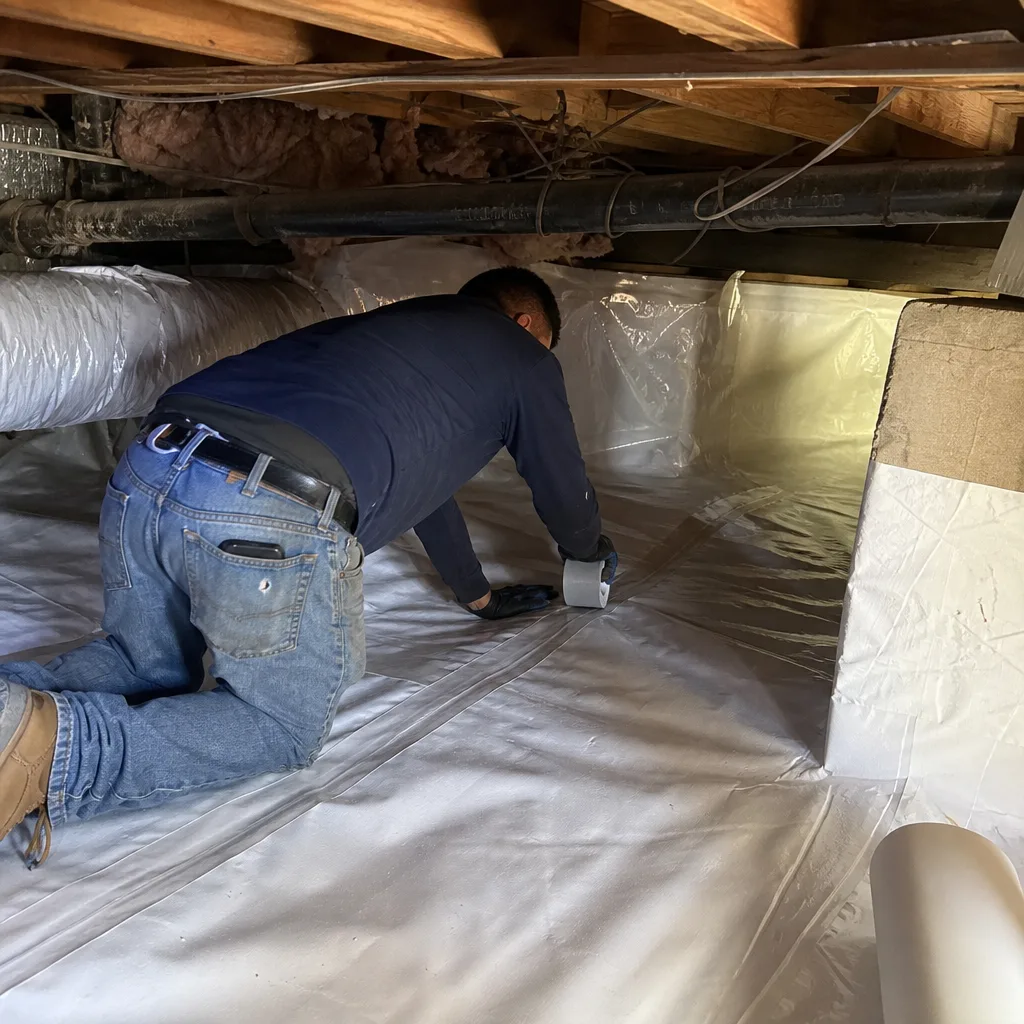
- Condensation pooling on the barrier’s top surface. This means warm, humid air is hitting the cool polyethylene and reaching dew point. In Glendale’s late summer months, when Santa Ana winds drop humidity briefly then marine layers return, this cycle accelerates. The barrier isn’t failing; the air sealing around it is.
- Fiberglass batts sagging or darkening at the bottom. Owens Corning PINK Next Gen batts lose their bonded layer integrity when moisture content exceeds 30% by weight. Once that happens, R-value drops permanently and mold colonization follows within 6 to 12 weeks in our climate.
- Musty odor that intensifies after rain. Glendale’s Verdugo-adjacent neighborhoods see this more than hillside properties because the flat terrain holds groundwater longer. The smell is geosmin from actinobacteria in damp soil, and it means your barrier has gaps, tears, or inadequate overlap at seams.
- White mineral deposits on the barrier surface. Efflorescence from concrete or masonry walls indicates vapor drive is pushing moisture through the foundation faster than the barrier can manage. This usually calls for 10-mil or higher, not the 6-mil that was likely original.
- Pest activity concentrated at barrier edges. Rodents tear polyethylene to access the soil beneath for nesting material. In Glendale’s older ranch homes near the Woodlands, we’ve found Norway rat burrows that started at a 3-inch gap left unsealed at a pier post.
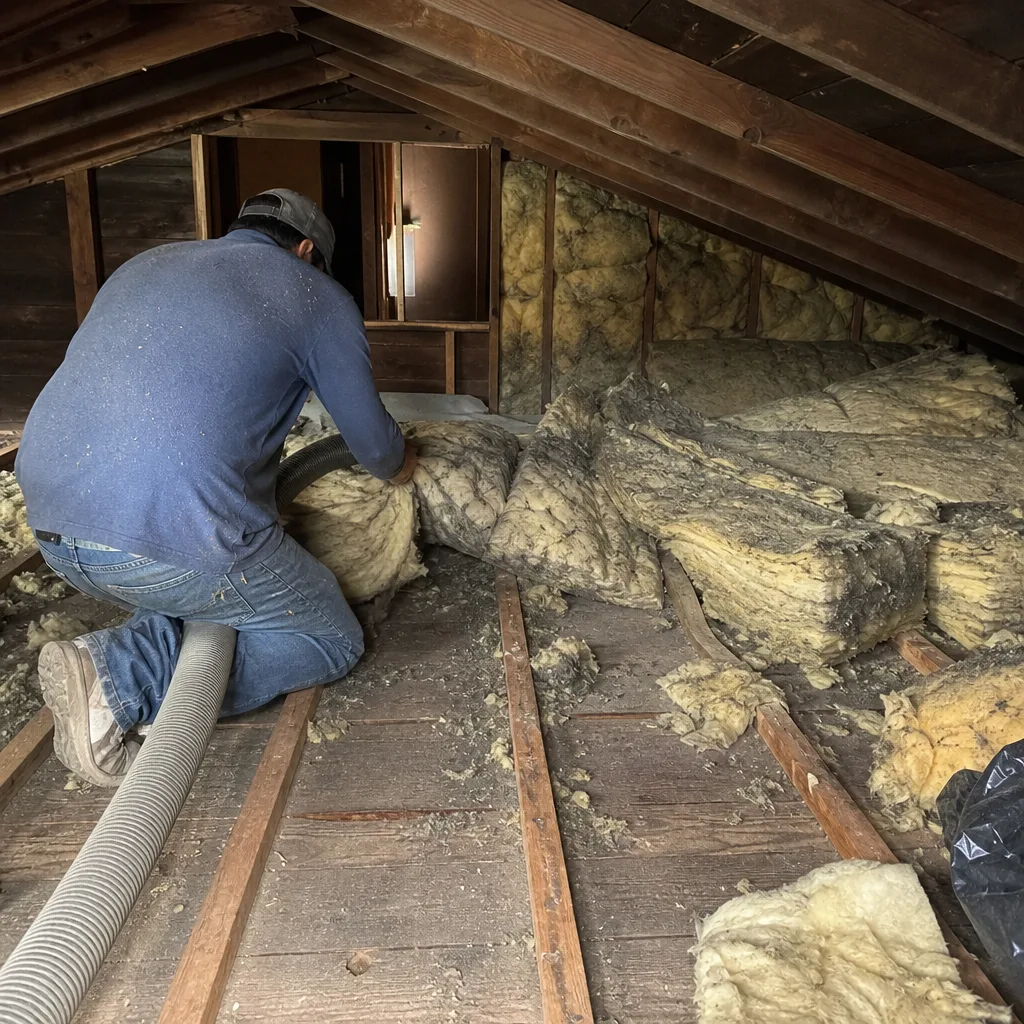 Before
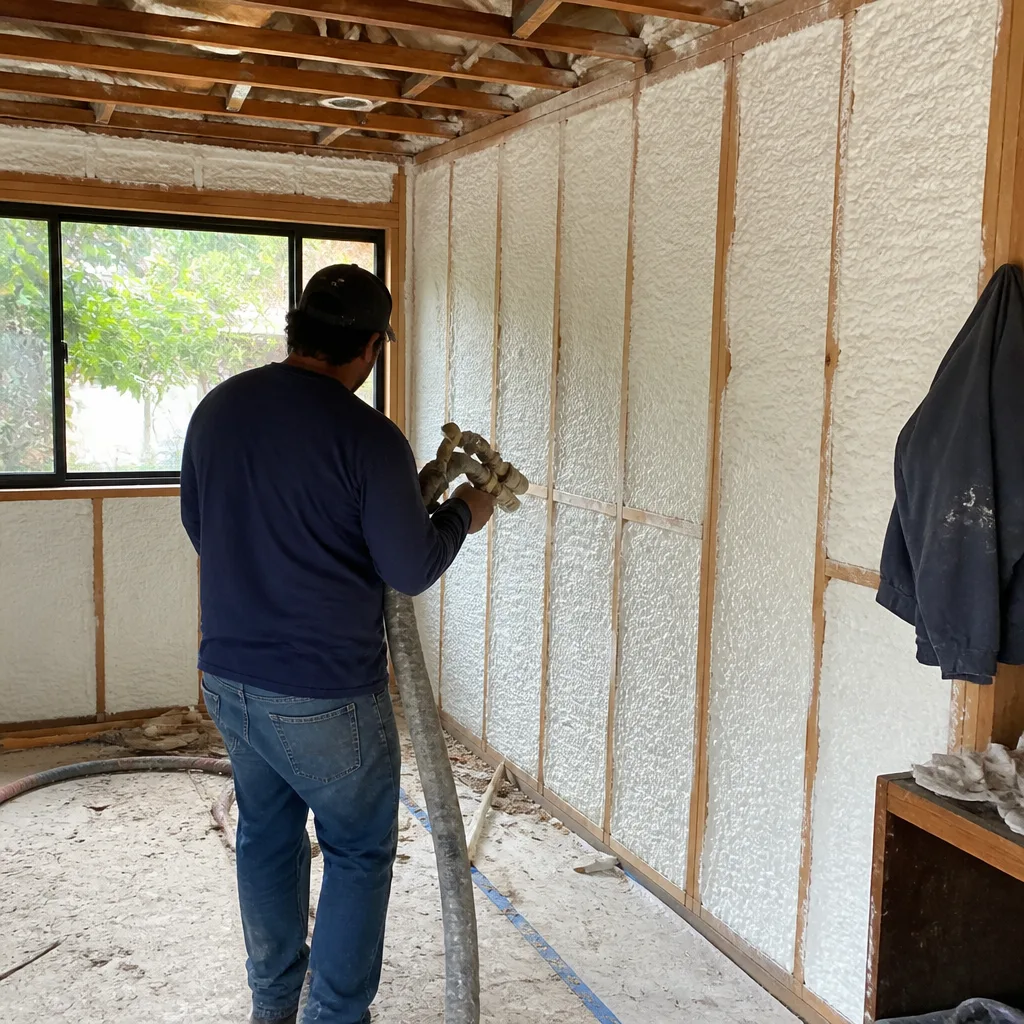 After
AfterReplacement Cost & What’s Included
For a typical Glendale crawl space of 1,200 to 1,800 square feet, complete vapor barrier replacement runs $1,800 to $3,400. That includes removal of the existing degraded sheet, surface prep (grading and smoothing sharp aggregate), installation of new 10-mil reinforced polyethylene with 12-inch overlap at seams, mechanical fastening to foundation walls, and sealed termination at all pier posts and penetrations.
What drives the range: accessibility (crawl height under 18 inches adds labor), soil condition (standing water requires a sump pump evaluation first), and whether we’re also air sealing the rim joist and sill plate - which we do before any barrier goes down. Every job gets a Written Price Before Any Work Starts under Haven Standard Clause 1, and every homeowner receives a Documented Photo Record showing the space before, during, and after. Our 365-Day Done Right Promise covers all completed work.
DIY or Call Us?
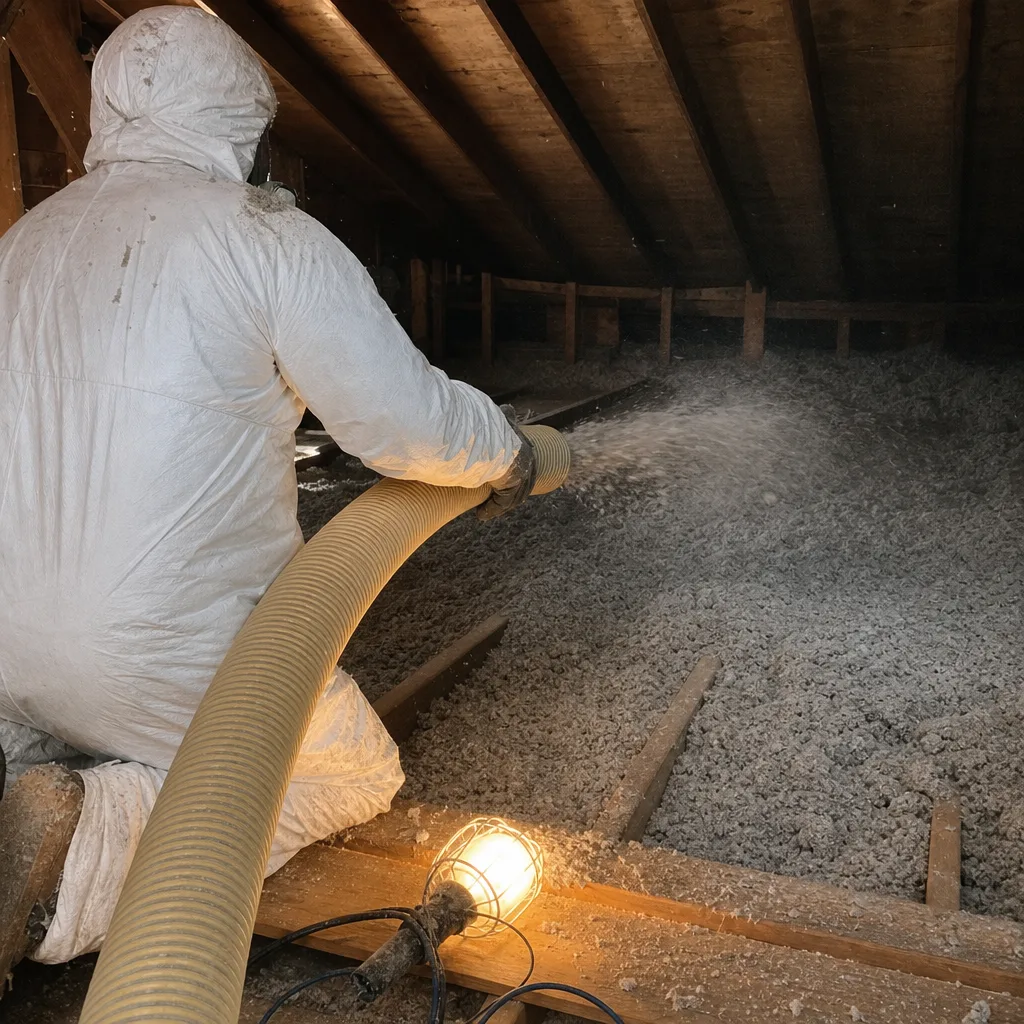
What you can safely check yourself: walk the perimeter of your crawl space or basement with a flashlight and note any visible tears, gaps at seams, or areas where the barrier has pulled away from walls. Measure your square footage. Look for the mil rating stamped on existing material. That’s it.
Where DIY goes wrong: vapor barrier installation looks like laying down a tarp, but performance lives in the details. Seams must overlap 12 inches and be sealed with pressure-sensitive tape rated for polyethylene, not duct tape that turns to goo in our temperature swings. The barrier must extend 6 inches up foundation walls and be mechanically fastened, not just tucked. And here’s the part that matters: if you lay a new barrier over unsealed air leaks at the rim joist, you’ve spent money on a solution that won’t perform. Seal the bypasses first. Insulation over air leaks is just expensive noise reduction. For a written price and documented installation, call (213) 474-3828.
FAQs
A properly installed 10-mil reinforced polyethylene barrier lasts 15 to 20 years in Glendale, though the 6-mil grade we often find installed by previous owners or builders typically degrades in 5 to 8 years due to UV exposure if any light penetrates, and oxidation from our temperature swings between 40°F winter nights and 110°F summer attic peaks. Call (213) 474-3828 for an inspection - estimates are free.
Small punctures or tears under 6 inches can be patched with compatible polyethylene tape if the surrounding material is still supple and the damage is isolated. If you’re seeing multiple failure points, brittle material that cracks when flexed, or any mold on the soil side, replacement is the only sound option. Call (213) 474-3828 for an assessment - we’ll tell you honestly which path makes sense.
Most residential crawl spaces in Glendale take one full day for a two-person crew, assuming standard accessibility and no standing water remediation. Tight crawl spaces under 24 inches, extensive rodent damage requiring soil treatment, or simultaneous rim joist air sealing can extend to a second day. We provide a written schedule with your written price before anyone starts.
Yes - we carry 6-mil and 10-mil reinforced polyethylene rolls, seam tape, mechanical fasteners, and termination bars on every Glendale-area truck, plus Reflectix radiant barrier for applications where moisture control is secondary to heat gain reduction. For most calls, we can inspect, price, and schedule within 48 hours, with same-day installation available for urgent moisture damage situations.
Written by Wes Okafor, Owner, Topside Attic Insulation Glendale at Topside Attic Insulation Glendale, serving Glendale and nearby areas.