
Knauf Vapor Barrier Installation: The Glendale Owner’s Guide
We stock and install Knauf-compatible vapor barrier systems in Glendale, with most residential jobs running between $1,800 and $3,400 depending on crawl space or attic footprint and whether the existing barrier needs full removal. Same-day installation is available when we have your measurements, and we carry 6-mil and 10-mil reinforced polyethylene on every truck. Homeowners usually discover a failing vapor barrier when they notice a sharp musty smell coming from floor registers, see condensation beading on ductwork in a Glendale crawl space, or find insulation batts that have turned heavy and gray from moisture wicking upward through compromised poly.
Which Knauf Models This Applies To
Knauf does not manufacture standalone vapor barrier membranes under a dedicated residential SKU system like some competitors. Instead, Knauf’s vapor barrier compatibility sits within their broader insulation ecosystem: EcoSeal Plus water-based sealant, Insulation Board products, and the Jet Stream Ultra blowing wool line, which is commonly specified in Glendale’s 1940s-1970s ranch and split-level stock where crawl space encapsulation follows wall or floor insulation upgrades.
To identify what you actually need, look at what’s currently installed. Knauf-labeled poly will carry a lot number and mil rating printed in the seam fold, usually 6-mil for basic code compliance or 10-mil for encapsulation-grade jobs. If your existing barrier was installed as part of a Knauf insulation package, the poly may be unbranded but spec-matched: 6-mil clear or reinforced, lapped 12 inches at seams, sealed with acrylic tape rather than duct tape, which degrades in the heat of a Glendale summer attic.
The OEM-versus-aftermarket question here is straightforward. Knauf does not restrict vapor barrier compatibility to proprietary membranes. We install virgin reinforced polyethylene that meets or exceeds Knauf’s published permeance specs, and we document the mil rating and ASTM E1745 Class A or C classification on your written scope. For Glendale’s clay-heavy soils and seasonal moisture migration, we typically spec 10-mil over 6-mil unless the crawl space has active drainage management.
Topside Attic Insulation Glendale is an independent service provider, not affiliated with Knauf.
Signs Your Knauf Vapor Barrier Installation Is Failing
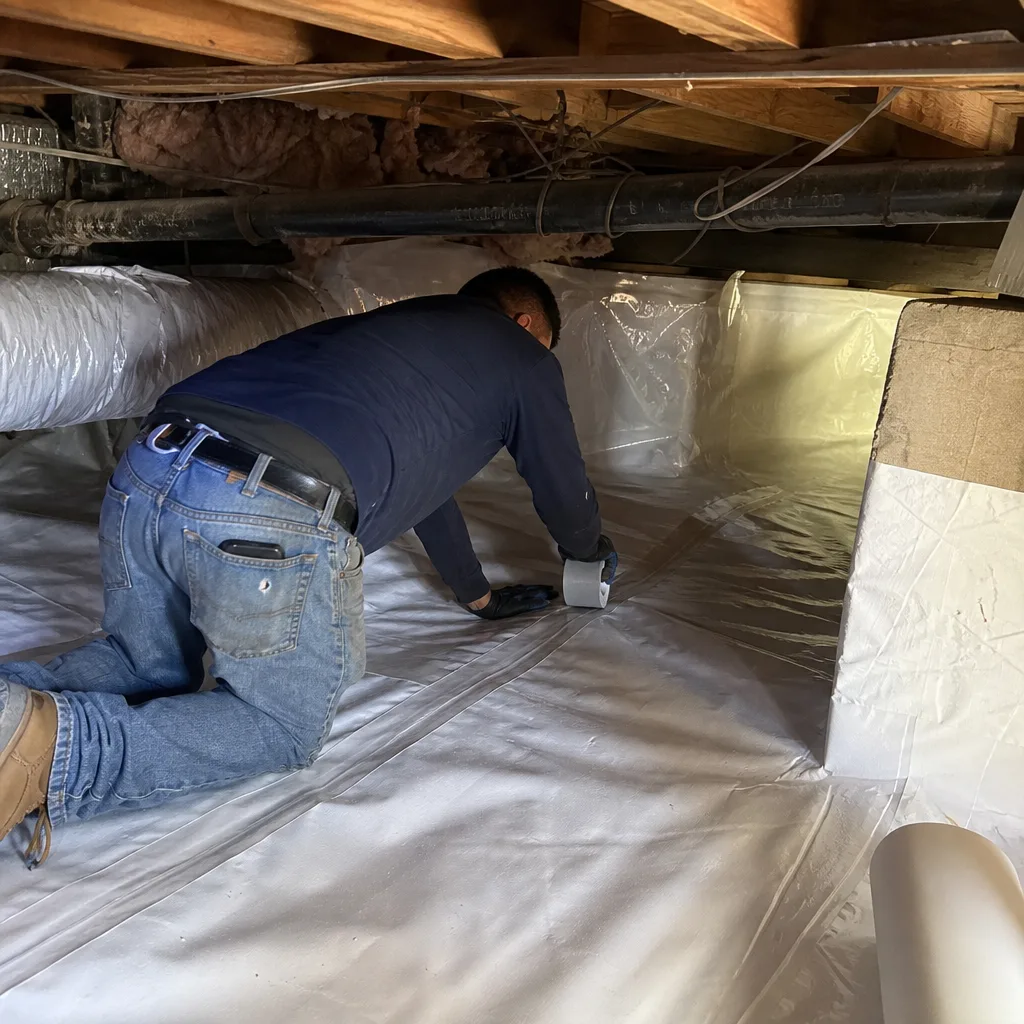
- Musty odors rising through floor systems. When the poly tears at pier pads or perimeter walls, soil gas and evaporated ground moisture enter the conditioned envelope. In Glendale’s older Verdugo Woodlands homes with original raised foundations, we find this at the interior pier line where trades have crawled over the barrier for plumbing or electrical work.
- Condensation on ductwork or floor joists. A properly sealed vapor barrier keeps crawl space relative humidity within 10 points of the living space. When the seal fails, summer humidity spikes and cold supply ducts sweat, which rusts galvanized trunk lines and eventually stains ceiling drywall from below.
- Insulation batts sagging or delaminating. Knauf fiberglass or mineral wool installed below a compromised barrier absorbs airborne moisture, loses its R-value, and pulls away from the subfloor. The batt weight doubles, the facing separates from the glass, and you’re left with a soggy blanket that does nothing.
- White or gray mold spotting on joist bottoms. This is not a surface issue. It means the vapor barrier has been breached long enough for wood moisture content to exceed 20 percent, which is the threshold for fungal growth in Southern California’s climate zone. The barrier needs replacement, not patching, and the affected wood needs evaluation.
- Increased energy bills with no HVAC explanation. Wet insulation conducts heat faster than dry insulation. A crawl space with failed vapor barrier and saturated batts can add 15-25 percent to heating and cooling load in a Glendale home with original single-pane windows already working against the envelope.
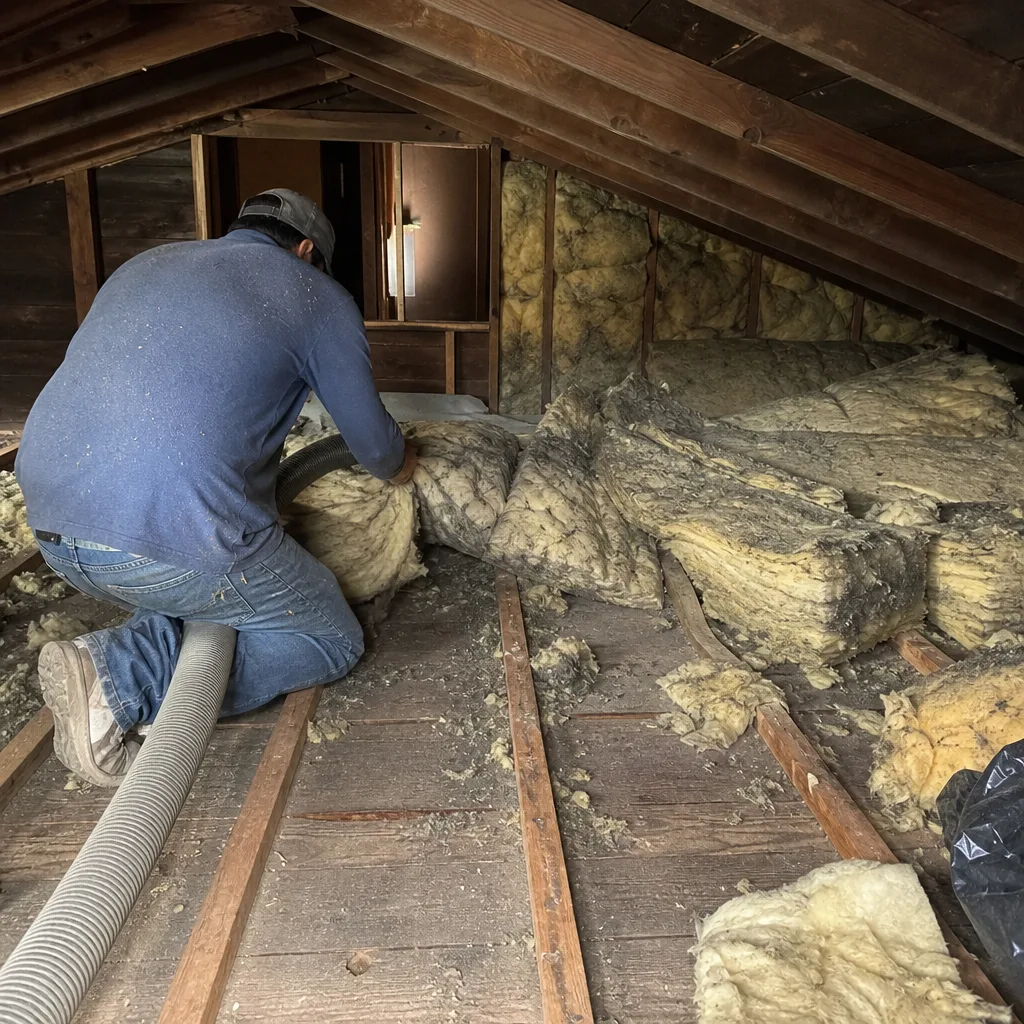 Before
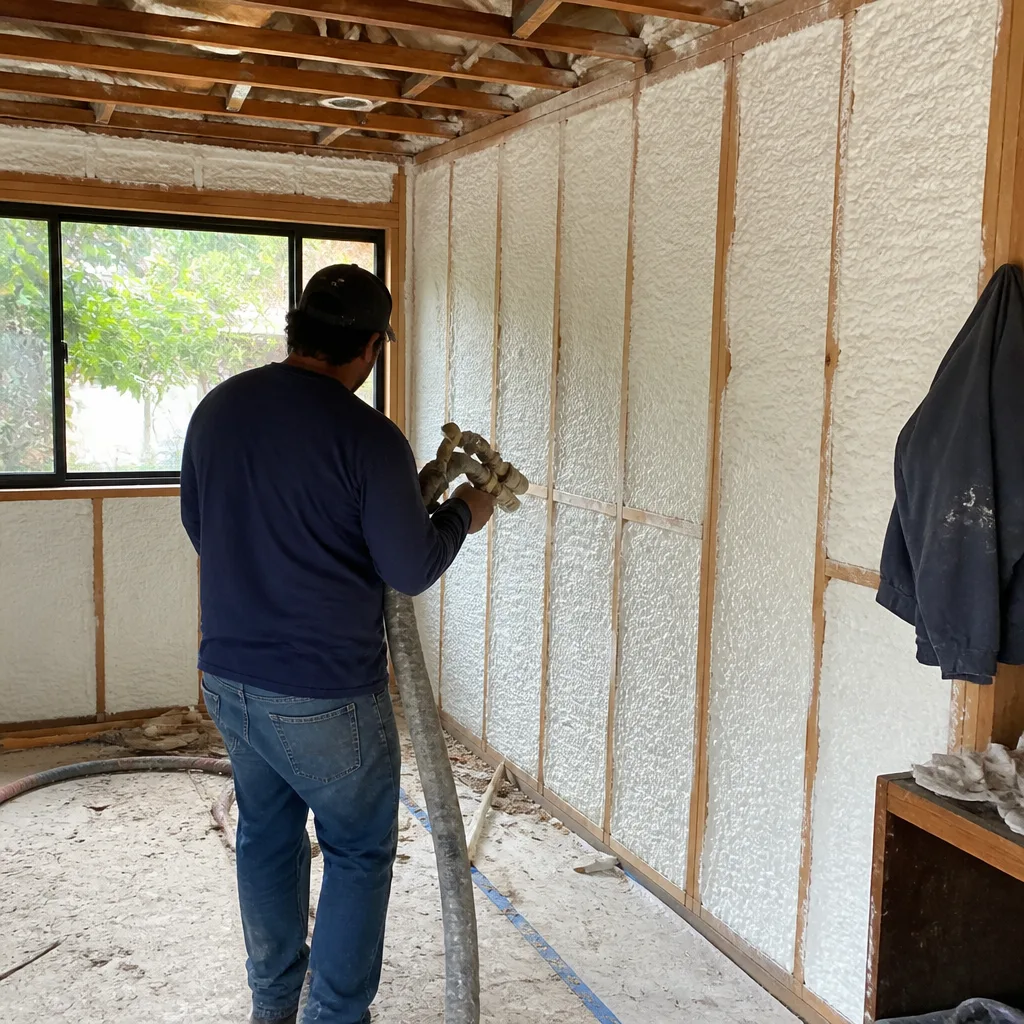 After
AfterReplacement Cost & What’s Included
Most Knauf-compatible vapor barrier replacements in Glendale run $1,800 to $3,400 for crawl spaces under 1,500 square feet, and $2,400 to $4,200 for full encapsulations with perimeter sealing and sump pit evaluation. Attic vapor barrier work, less common here but relevant for flat-roof conversions, starts around $1,400 for poly installation over existing Knauf batts.
The range depends on four factors: whether we remove existing degraded poly or overlay it, how many piers and plumbing penetrations need custom cutting and sealing, whether the perimeter walls require termination bars or just burial, and if we find rodent damage that needs exclusion work before the new barrier goes down. We itemize each line on your written scope before any work starts, Haven Standard Clause 1.
What you get: virgin reinforced polyethylene with documented mil rating, seam overlap to spec, acrylic vapor barrier tape at all laps, mechanical fastening at perimeter and piers, and a Documented Photo Record showing pre-condition, installation sequence, and final seal. The 365-Day Done Right Promise covers workmanship and material defects. We also publish before-and-after blower-door numbers when the vapor barrier is part of a larger air-sealing package, so you can verify that the crawl space is no longer communicating with the conditioned zone.
DIY or Call Us?
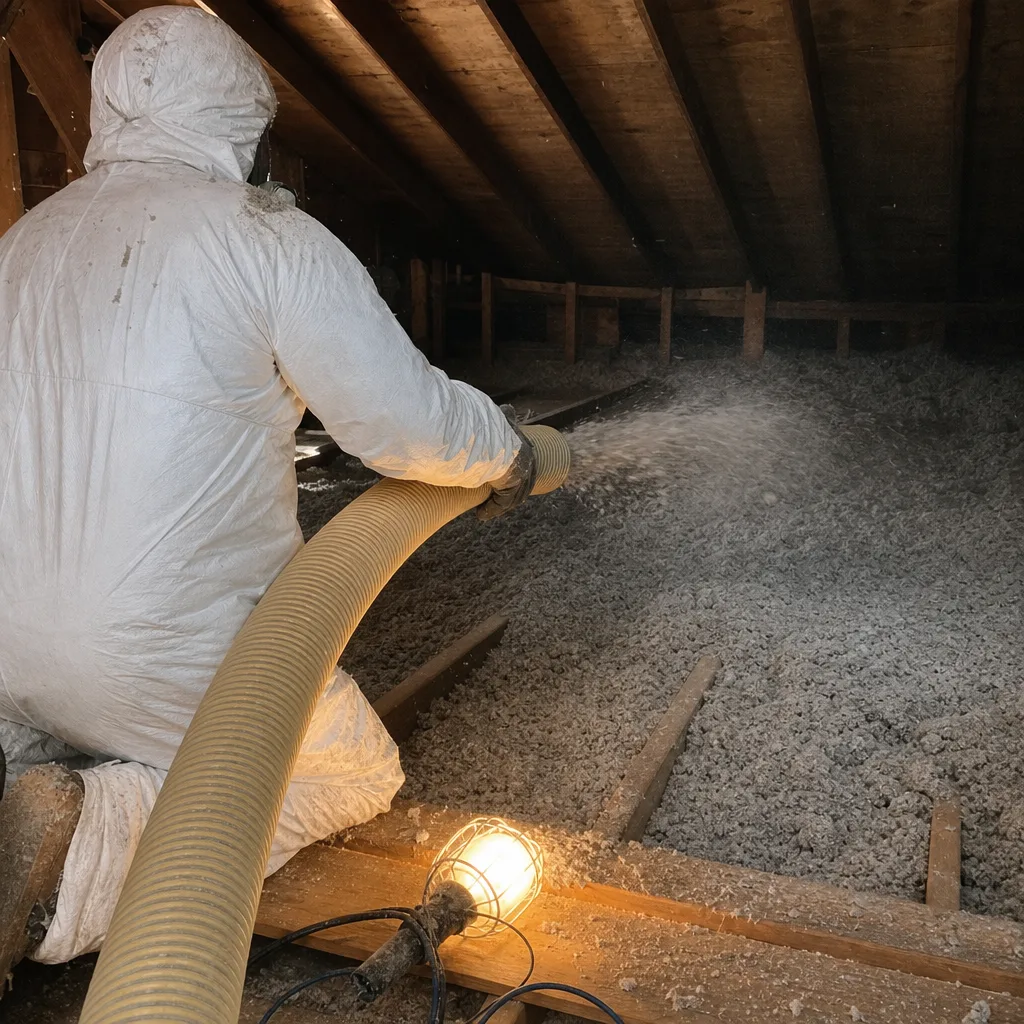
Here’s what you can safely check yourself. Walk the crawl space perimeter with a headlamp and look for tears at the pier pads, gaps where the poly meets the foundation wall, and any areas where previous repairs used duct tape or house wrap tape instead of vapor barrier acrylic. Note the mil rating if you can find printing on the poly edge. That’s useful information, and you’re not risking anything.
Where DIY goes wrong: vapor barrier installation looks like laying plastic, but the failure points are in the details. Seams need 12-inch overlap minimum, not 6. Tape needs pressure rolling, not hand smoothing. Pier pads need custom cuts that don’t create stress tears when the poly settles. And in Glendale’s older homes with unvented crawl spaces, you can trap moisture instead of blocking it if you seal the wrong surfaces in the wrong sequence. We’ve pulled out homeowner-installed barriers that were technically intact but functionally useless because they were laid over wet soil without addressing the source.
Seal the bypasses first. Insulation over air leaks is just expensive noise reduction.
For a written price before any work starts, call (213) 474-3828. We’ll measure your crawl space, photograph the existing condition, and deliver a flat scope with no surprise line items.
FAQs
A properly installed 10-mil reinforced poly barrier lasts 15 to 20 years in Glendale’s climate, though we see premature failure at 8-10 years when the original installation used 6-mil without reinforcement or when rodent activity goes unaddressed. The thermal cycling between Glendale’s 100-degree summer days and 45-degree winter nights stresses seam tape and pier cuts more than in coastal zones. Call (213) 474-3828 for an exact quote on replacement, estimates are free.
Patching works for isolated punctures smaller than a dinner plate, but widespread embrittlement, tape failure at seams, or multiple rodent breaches means full replacement is the cost-effective call. We’ve tested patch jobs that failed within two seasons because the surrounding poly had already UV-degraded or lost its flexibility. Call (213) 474-3828 for an exact quote, estimates are free.
Most residential crawl spaces in Glendale take one day for removal and replacement, or two days if we’re also air-sealing rim joists and running blower-door verification. Attic vapor barrier work typically finishes in four to six hours. We schedule a named technician and text you when they’re on the way, Haven Standard: Arrive on schedule. Call (213) 474-3828 for an exact quote, estimates are free.
Yes, we carry 6-mil and 10-mil reinforced polyethylene, acrylic vapor barrier tape, termination bars, and mechanical fasteners on every Glendale truck, plus Reflectix radiant barrier if your job needs a combined vapor-and-radiant solution. For Knauf-specific insulation packages, we coordinate poly spec with the batt or blown-in schedule so the permeance ratings match. Call (213) 474-3828 for an exact quote, estimates are free.
Written by Wes Okafor, Owner, Topside Attic Insulation Glendale at Topside Attic Insulation Glendale, serving Glendale and nearby areas.