
Icynene Vapor Barrier Installation: The Glendale Owner’s Guide
We stock and install Icynene-compatible vapor barrier systems for attics and crawl spaces across Glendale, with most completed jobs running between $1,800 and $3,400 depending on square footage and whether the space needs prep work. Same-day installation is available when the substrate is accessible and the air-sealing phase is already complete. Most Glendale homeowners discover a vapor barrier problem when they notice musty odors returning after a previous insulation job, or when their energy auditor flags elevated moisture readings in the crawl space during a resale inspection.
Which Icynene Models This Applies To
Icynene’s vapor barrier line isn’t model-numbered like mechanical equipment, but the compatibility question centers on which Icynene foam system was originally installed, and whether the barrier was part of the initial scope or added later.
We regularly encounter three scenarios in Glendale homes. First, open-cell Icynene (LD-C-50 series, the light-density formulation common in pre-2020 California builds) that was sprayed directly against roof decking without a vapor barrier in climate zone 9B, where winter moisture drive can be significant. Second, closed-cell Icynene (MD-R-200 series) used as its own vapor retarder at 2+ inches, but with a supplemental polyethylene barrier requested by a previous contractor for crawl space applications. Third, hybrid systems where Icynene was used for air sealing and another insulation was layered on top, leaving the vapor barrier location ambiguous.
The identification check: look for the Icynene lot number sticker on the foam itself, usually found on a rim joist or access hatch framing member. The lot prefix tells us the density class. For the barrier specifically, we measure existing mil thickness with a micrometer, 6-mil poly is the minimum for Glendale’s code, but we spec 10-mil reinforced poly for crawl spaces with soil contact due to the abrasive aggregate in local fill soils. Aftermarket reinforced barriers from Stego or VaporBlock match Icynene’s permeance ratings without the OEM markup, and we carry both on the truck.
Signs Your Icynene Vapor Barrier Installation Is Failing
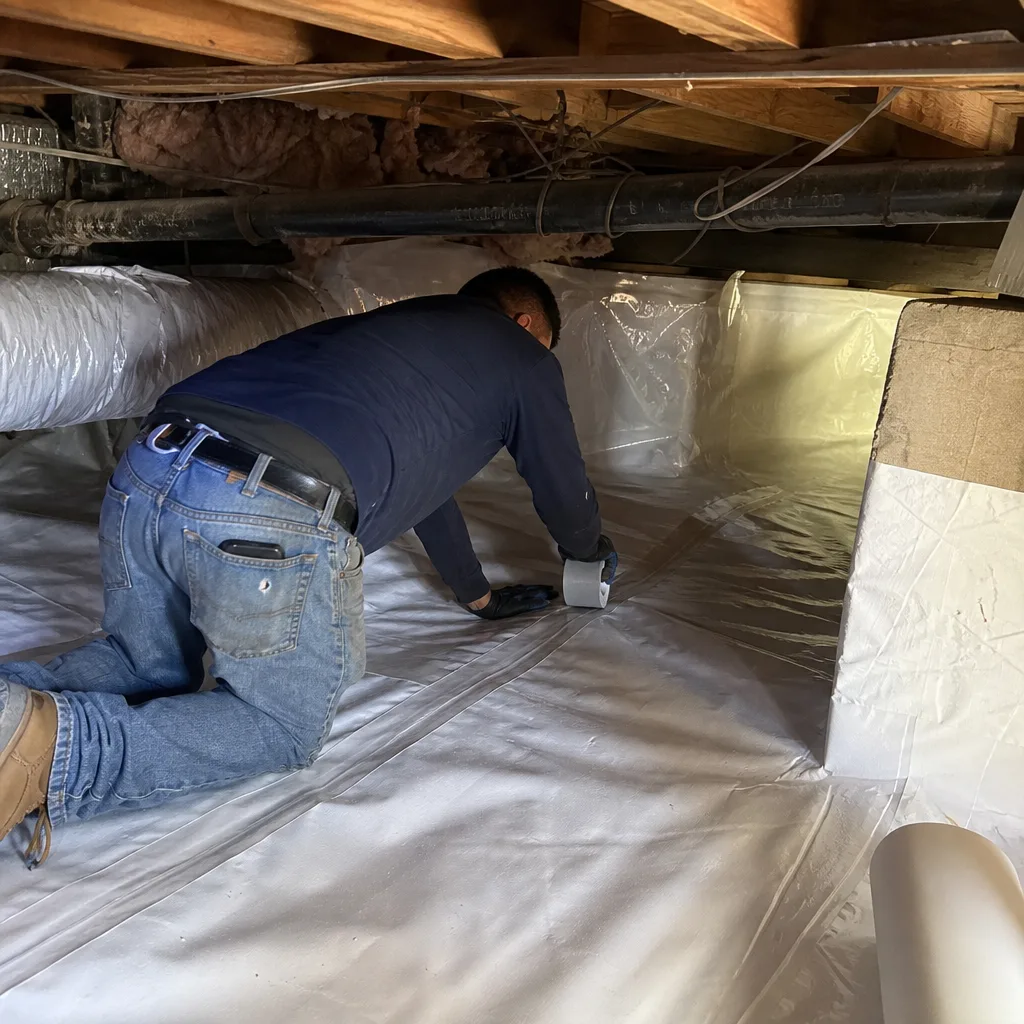
- Condensation pooling on the barrier surface. This indicates the vapor drive is exceeding the barrier’s perm rating, or more commonly, that the Icynene foam underneath was applied at insufficient thickness for the seasonal temperature differential. In Glendale’s climate, open-cell foam below 3.5 inches on roof decking often creates a condensing surface in January and February.
- Musty odor returning within 48 hours of ventilation. The barrier is trapping moisture rather than blocking it, which happens when the poly was installed with the wrong side facing the conditioned space. Icynene systems require the barrier to align with the dew point location predicted by a WUFI calculation, not guesswork.
- Visible mold on the barrier’s underside. This is nearly always a fastening failure. Staples or inadequate seam tape in a crawl space with active soil moisture let the barrier sag, creating condensation pockets. We see this especially in the hillside homes north of Mountain Street, where seasonal groundwater movement is more pronounced.
- Insulation settling or compressing above the barrier. The vapor barrier is doing no work if it’s not in continuous contact with the insulation plane. In retrofit jobs where Icynene was sprayed after a loose-laid barrier, the foam’s expansion can dislodge the poly, creating a convection loop that bypasses both materials.
- Energy bills climbing despite unchanged thermostat settings. A compromised vapor barrier allows latent load to hit the HVAC system directly. We measure this with a blower-door test, a pressurization reading that shows, in one number, how much conditioned air the building envelope is losing. Post-repair, the number should drop measurably.
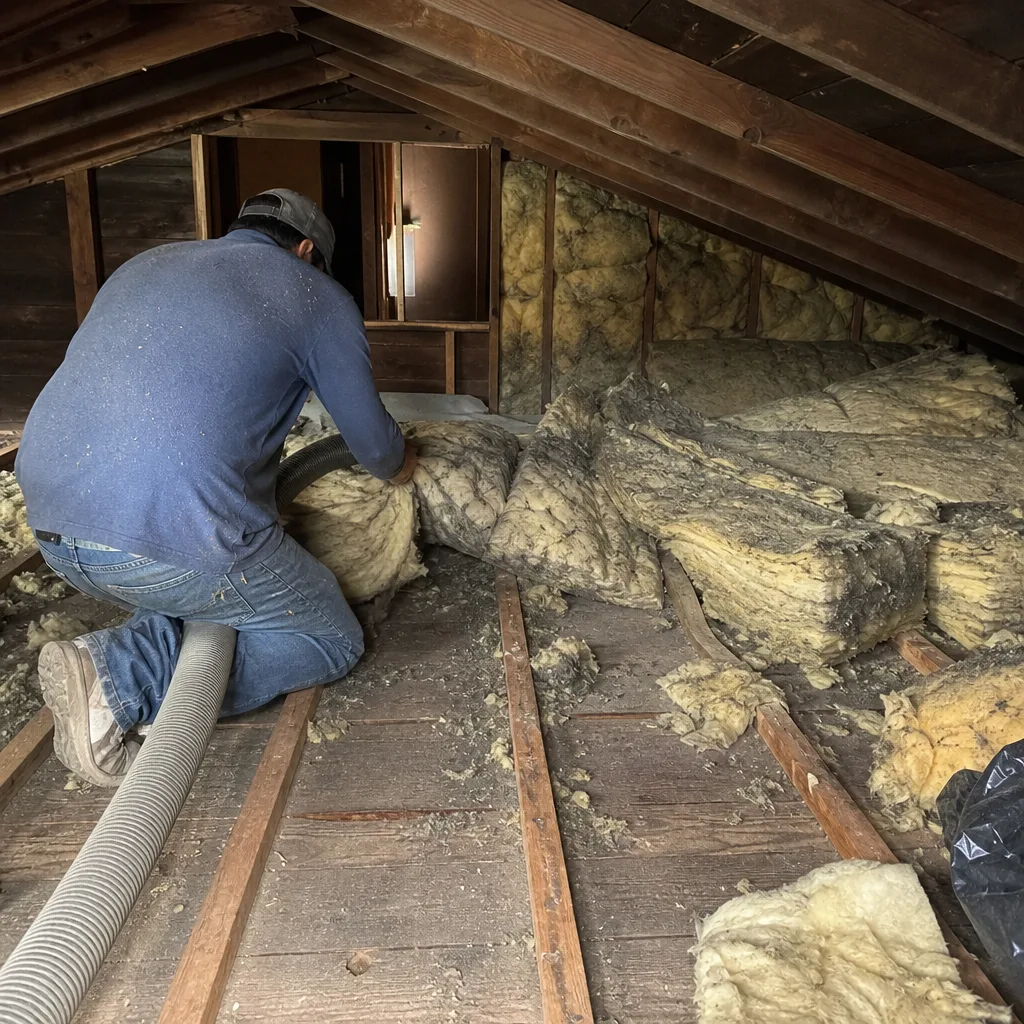 Before
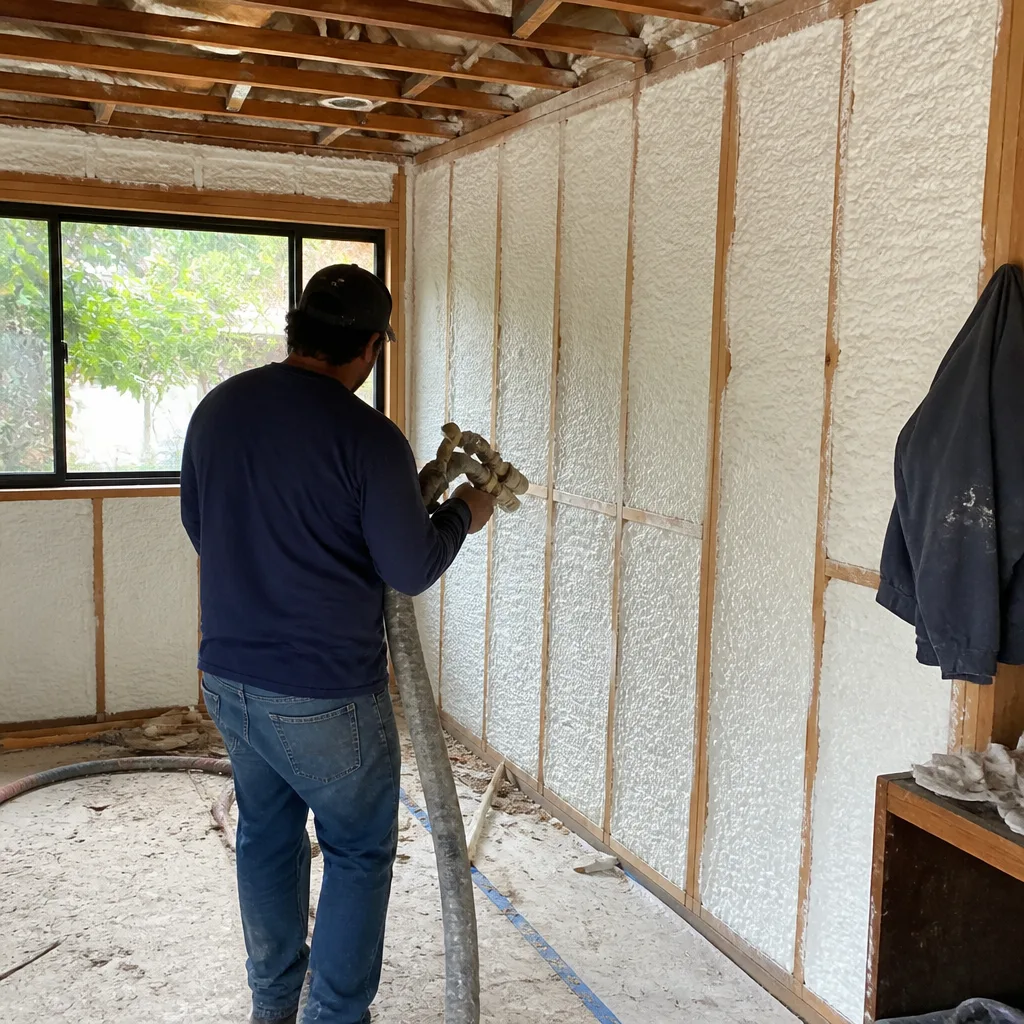 After
AfterReplacement Cost & What’s Included
For a typical Glendale single-family home, Icynene-compatible vapor barrier installation runs $1,800 to $3,400. The low end covers a clean crawl space up to 1,000 square feet with 6-mil poly, properly lapped and taped. The high end includes 10-mil reinforced poly, full substrate preparation (debris removal, minor leveling), and integration with existing Icynene foam at penetration points.
What moves the price: accessibility (crawl height under 18 inches adds labor), condition of the existing barrier (removal and disposal is additional), and whether we need to coordinate with a separate mold remediation contractor before our work begins. Every job gets a Written Price Before Any Work Starts, flat and itemized, with no open-ended hourly components. The 365-Day Done Right Promise applies, and you’ll receive a Documented Photo Record showing the completed installation and any substrate conditions we encountered. We publish before-and-after blower-door numbers on every applicable job so you can verify the air-sealing result in a single figure.
DIY or Call Us?
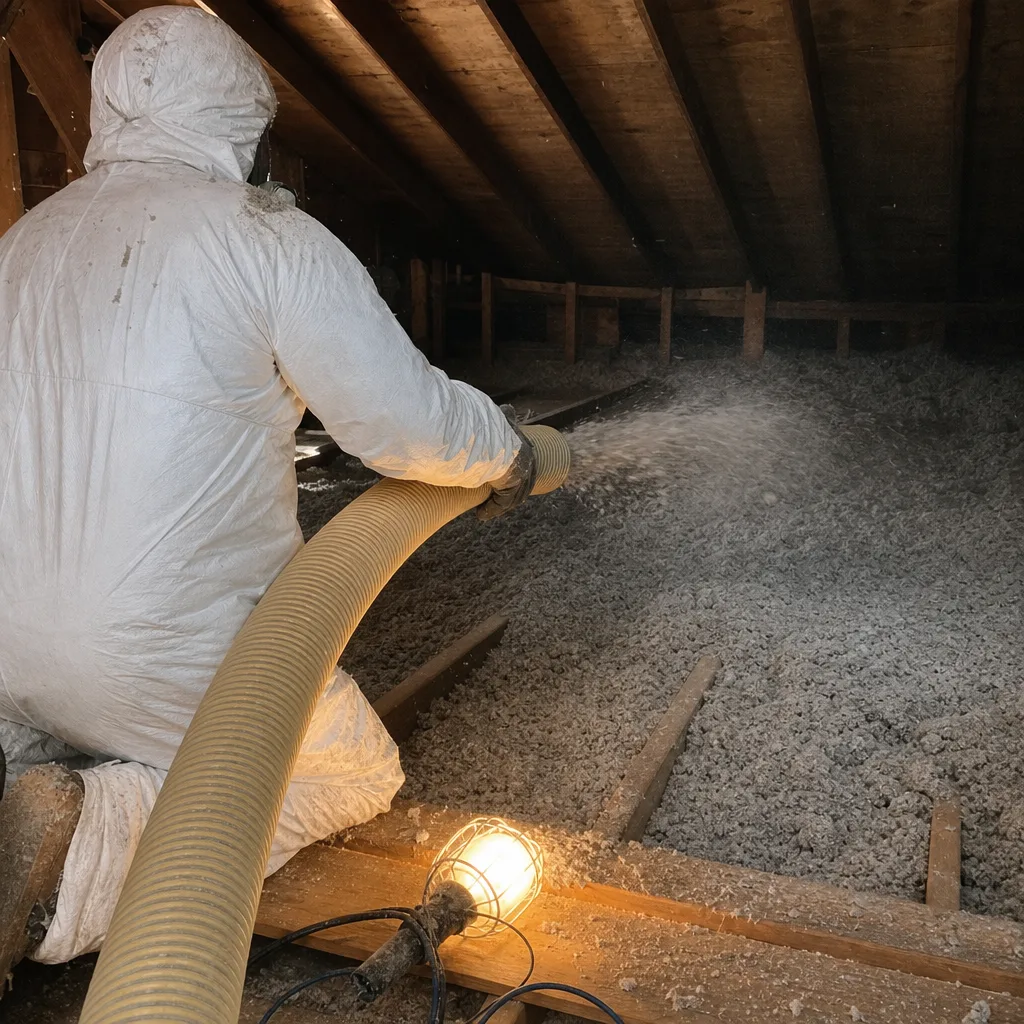
There’s no high-tension danger in vapor barrier work, but there is a significant performance risk from getting the assembly wrong. A homeowner can safely check: whether the existing barrier is torn or dislodged, whether puddles form after rain, and whether the access hatch seals properly. What goes wrong in DIY: wrong mil thickness for the application, seams taped with household duct tape that fails in six months, and barrier placement on the wrong side of the thermal boundary, which traps moisture inside the assembly. In Glendale’s mixed-humidity climate, a misplaced barrier can rot roof decking in three years. Seal the bypasses first. Insulation over air leaks is just expensive noise reduction. If you’re unsure about the Icynene layer’s condition underneath, call (213) 474-3828 and we’ll read the assembly with you.
FAQs
Properly installed 10-mil reinforced poly lasts 15 to 20 years in Glendale’s dry-winter, warm-summer climate, though crawl spaces with active soil moisture or rodent pressure may see 8 to 12 years. The Icynene foam beneath it, if closed-cell, typically outlasts the barrier itself. Call (213) 474-3828 for an exact quote on replacement, estimates are free.
Small punctures under 2 inches can be patched with compatible tape if the surrounding poly is still supple, but sagging, widespread embrittlement, or mold staining means full replacement. We don’t patch over active moisture conditions because the repair hides the symptom without fixing the assembly. Call (213) 474-3828 for an exact quote, estimates are free.
Most residential vapor barrier installations in Glendale are completed in one day, assuming the crawl space or attic is accessible and the substrate has been prepped. Jobs requiring coordination with mold remediation or structural repairs may extend to two days. Call (213) 474-3828 for an exact quote, estimates are free.
Yes, we carry 6-mil and 10-mil reinforced polyethylene barriers, plus Stego and VaporBlock aftermarket equivalents that match Icynene’s permeance specifications. For same-day installation, we also need to verify your existing Icynene layer’s condition, which we do on arrival. Call (213) 474-3828 for an exact quote, estimates are free.
Written by Wes Okafor, Owner, Topside Attic Insulation Glendale at Topside Attic Insulation Glendale, serving Glendale and nearby areas.