
Demilec Radiant Barrier Installation: The Glendale Owner’s Guide
Demilec radiant barrier installation in Glendale typically runs $2,800-$4,200 for a complete attic application in a 1,500-2,500 square foot home, and we stock Demilec-compatible radiant barrier material on every truck for same-day starts. Most Glendale homeowners realize something’s wrong when their upstairs bedrooms won’t cool below 78°F even after sunset, or when their July electric bill jumps 30-40% year-over-year. The radiant barrier film has either delaminated from its substrate, been punctured by a service technician crawling through the attic, or was never properly stapled to the rafters to begin with.
Which Demilec Models This Applies To
Demilec doesn’t sell standalone “radiant barrier” products under a single model name. Instead, they manufacture high-performance spray foam and hybrid systems, including open-cell Heatlok Soya HFO and closed-cell Demilec APX, that are frequently paired with reflective radiant barrier foil in attics across Glendale’s 91201 to 91214 ZIP codes. When we say “Demilec radiant barrier installation,” we’re referring to the integrated assembly: Demilec spray foam at the roof deck or attic floor plus a perforated radiant barrier foil (typically 0.5 mil aluminum on reinforced scrim) fastened to the rafter bays.
To identify what you have, look for the Demilec lot code sticker on the foam, usually found on the attic access hatch or a rafter near the entry point. The sticker shows the product series, install date, and applicator ID. If the foam is Heatlok Soya (light yellow, open-cell, R-3.7 per inch) and the foil is sagging or blackened, that’s the assembly we see most often in Glendale’s 1960s-1980s ranch homes near Verdugo Woodlands and Rossmoyne. If the foam is APX (gray, closed-cell, R-6.5 per inch), the radiant barrier was likely added as a retrofit and may be Reflectix or another brand we also stock parts for.
OEM Demilec foam requires matching Demilec chemistry for repairs. The radiant barrier foil itself is brand-agnostic. We use a perforated, double-sided product rated for 97% reflectivity and 3% emissivity, which exceeds California Title 24 requirements and won’t trap moisture against the foam.
Signs Your Demilec Radiant Barrier Installation Is Failing
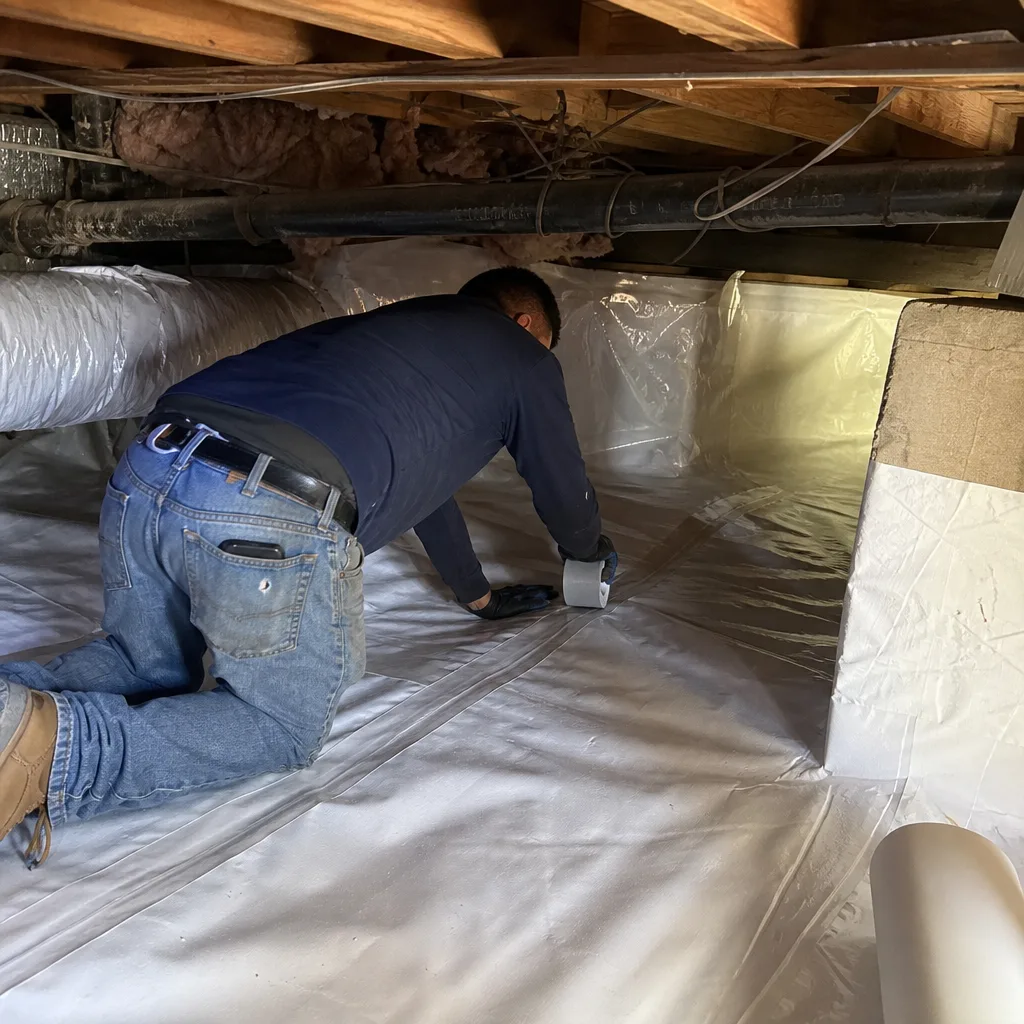
- Hot second-floor ceilings after 6 PM. In Glendale’s climate, a functioning radiant barrier drops radiant heat transfer by 95%. When the foil delaminates or tears, that heat re-radiates into the living space for hours after the sun sets. We measure this with an infrared camera during our initial walkthrough.
- Visible sagging or tearing in the foil. Attic work, rodent activity, or simple gravity over 10-15 years pulls staples through the scrim. Once the foil loses contact with the rafters, it becomes an air gap with no reflective function. We document this with photos for your record.
- Condensation on the foil’s underside. Unperforated or improperly installed foil traps moisture between the barrier and the roof deck. In Glendale’s occasional winter rains, this can wet the Demilec foam and degrade its R-value. Perforated foil is non-negotiable in our installs.
- Uneven cooling with new HVAC equipment. If you replaced your compressor but the upstairs still struggles, the envelope is the problem, not the mechanical system. We run a blower-door test - a pressurization reading that shows, in one number, how much conditioned air your building envelope is losing - before recommending any radiant barrier work.
- Blackened or oxidized foil patches. Dust accumulation kills reflectivity. In Glendale, wildfire ash and Santa Ana dust events accelerate this. Foil that looks dull gray instead of mirror-bright is performing at 30-50% of its rated capacity.
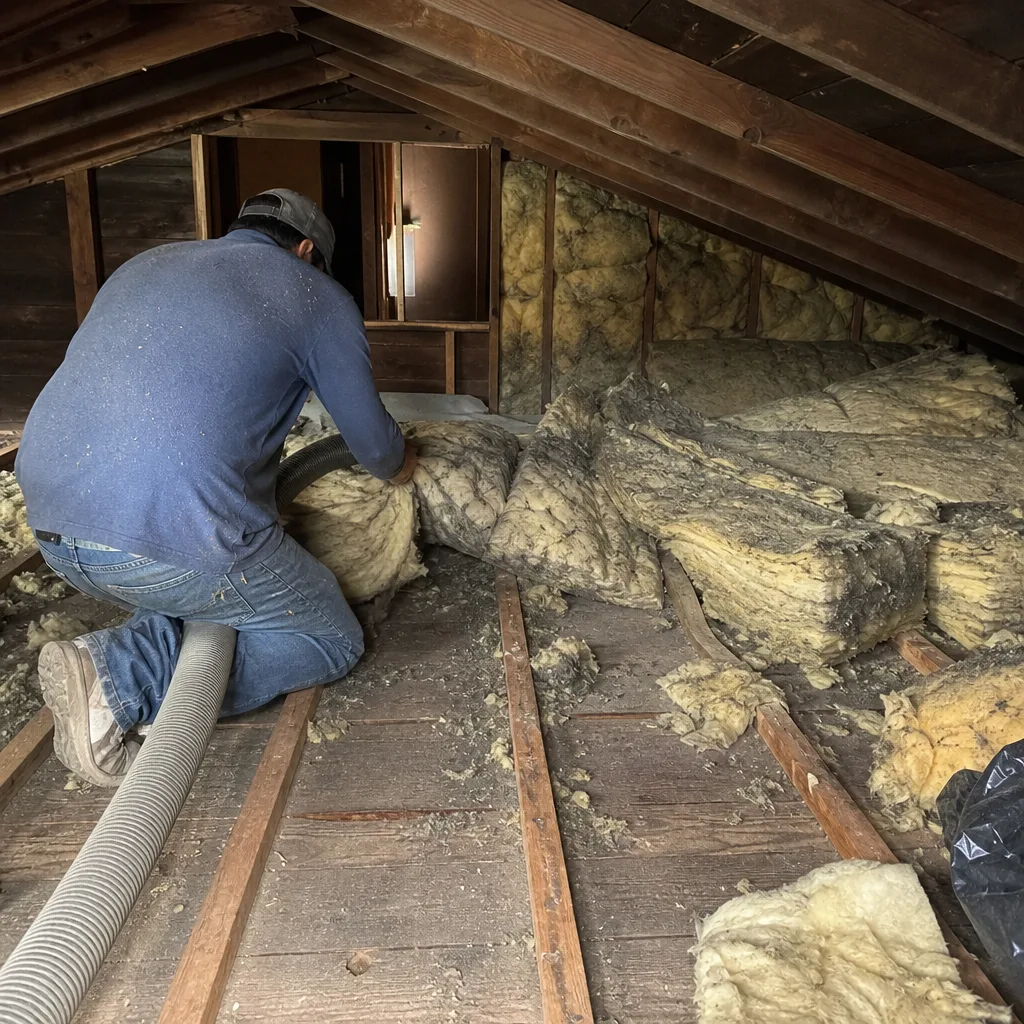 Before
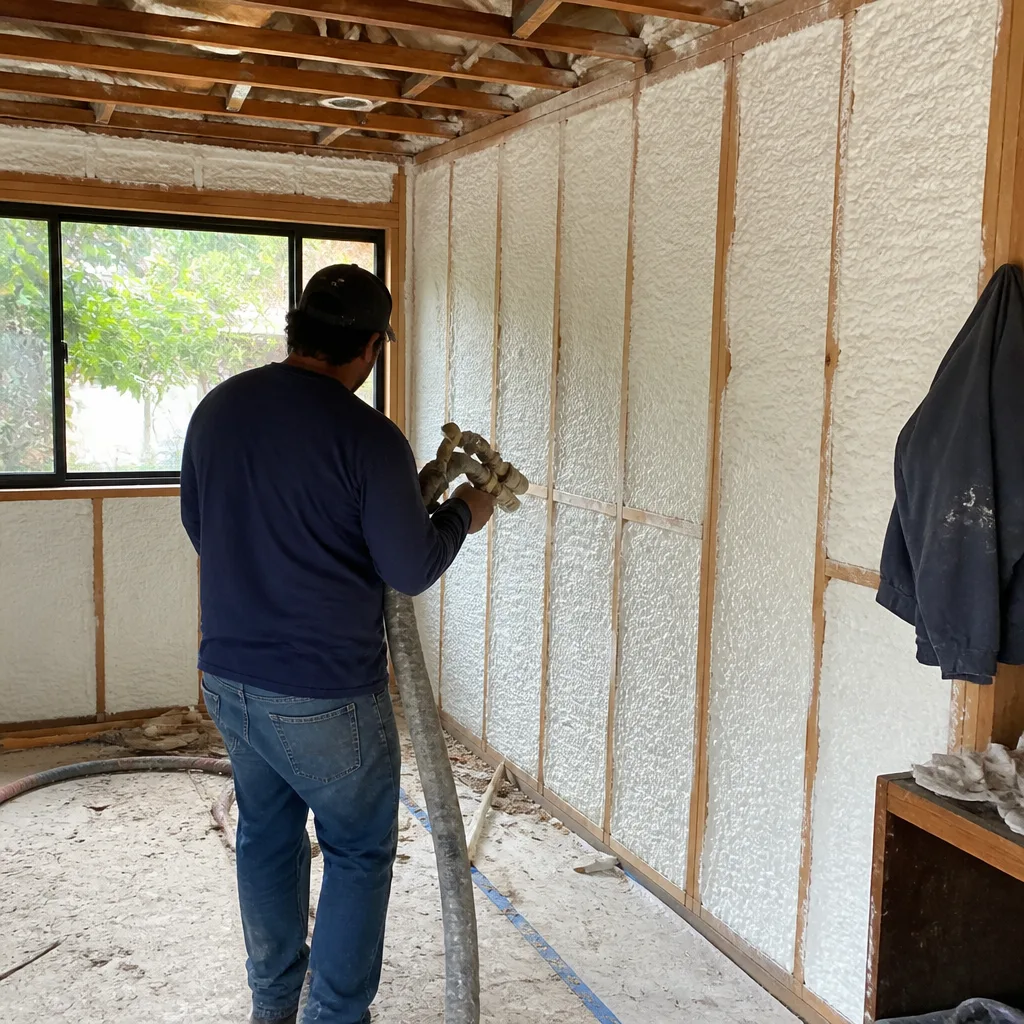 After
AfterReplacement Cost & What’s Included
Most Demilec radiant barrier replacements in Glendale fall between $2,800 and $4,200, with smaller partial retrofits (single attic section, under 800 square feet) starting around $1,600. The range depends on three factors: how much existing material needs removal, whether the Demilec foam underneath requires patching or spot-replacement, and attic accessibility. Steep-pitch roofs in the hillside neighborhoods above Glenoaks Boulevard add labor time. Flat or low-slope attics in the Adams Hill area go faster.
Every quote is itemized: radiant barrier material by square foot, Demilec foam patchwork if needed, labor, and disposal. We provide a Written Price Before Any Work Starts - Haven Standard Clause 1 - and that price includes our 365-Day Done Right Promise. If the foil fails or the foam delaminates where we touched it, we return and fix it at no charge. You’ll also receive a Documented Photo Record of the completed installation and, on applicable jobs, before-and-after blower-door numbers so you can verify the air-sealing result.
DIY or Call Us?
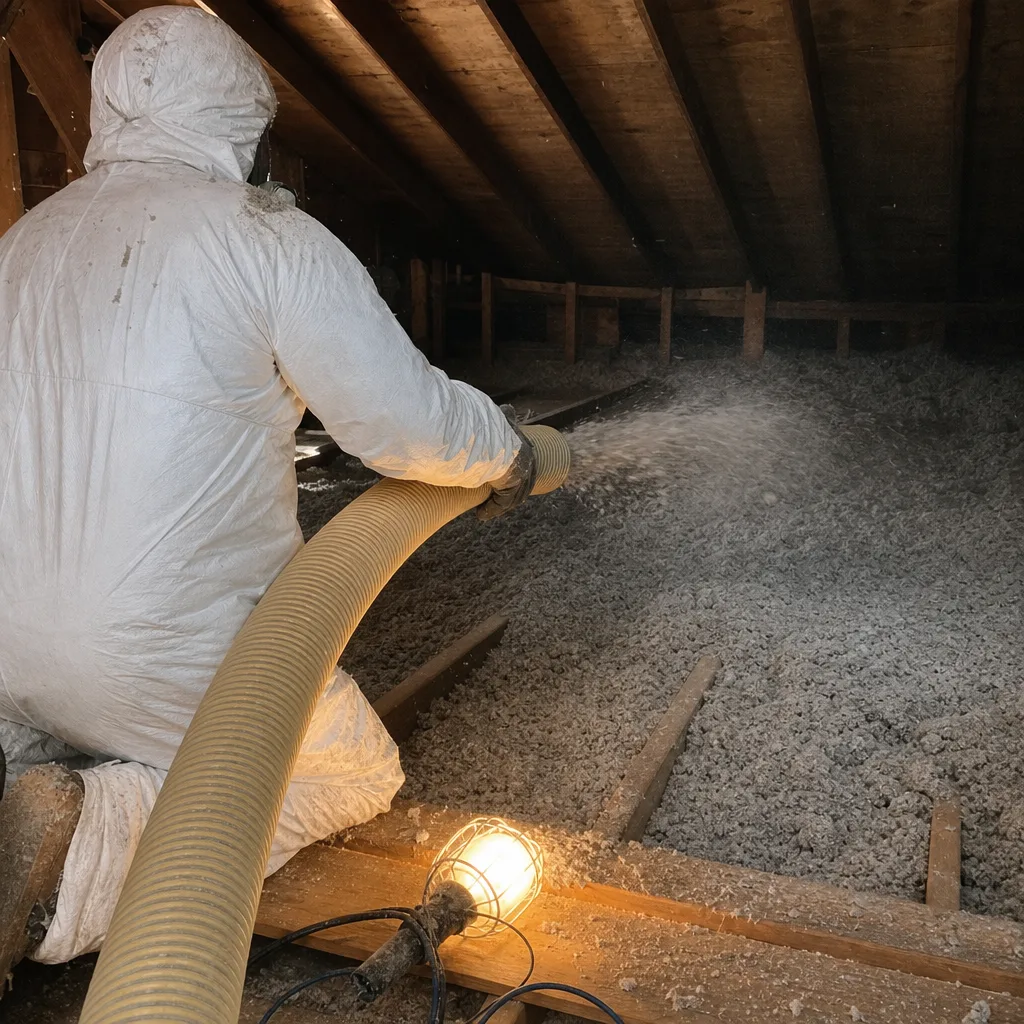
There’s no high-tension danger in radiant barrier work, but there are ways to waste money and create new problems. A homeowner can safely inspect the attic for torn or sagging foil with a flashlight and a dust mask. What you can’t safely assess is whether the existing Demilec foam has degraded underneath, whether your staple pattern meets fire code, or whether you’re creating a moisture trap with unperforated material.
We’ve found DIY radiant barrier installs in Glendale where the homeowner laid foil on top of existing insulation - which compresses the insulation and eliminates its R-value - or stapled it to the attic floor instead of the rafters, which does nothing against radiant heat. Seal the bypasses first. Insulation over air leaks is just expensive noise reduction. We check top plates, can lights, and penetrations before any barrier goes up. Call (213) 474-3828 and we’ll walk through what you’re seeing. Estimates are free, and we stock Demilec-compatible material for same-day starts when the scope is clear.
FAQs
Properly installed perforated radiant barrier foil lasts 20-25 years in Glendale’s dry climate, though dust accumulation and attic traffic can degrade performance after 10-15 years. Demilec spray foam underneath, if protected from UV and moisture, is rated for the life of the building. Call (213) 474-3828 for an attic inspection - estimates are free.
Small tears in isolated sections can be patched with matching foil tape, but widespread delamination, oxidation, or improper original installation usually requires full replacement to restore performance. We assess this during our walkthrough and show you the infrared imagery so you can decide. Call (213) 474-3828 to schedule.
A typical Glendale attic of 1,500-2,000 square feet takes one full day to remove old material, patch any Demilec foam as needed, and install new perforated radiant barrier to rafter bays. Larger or steeper attics may extend to a second day. We start with a written price and end with your Documented Photo Record - no surprises.
Yes. We carry perforated, double-sided radiant barrier foil rated for 97% reflectivity on every truck, along with Demilec Heatlok Soya and APX foam for patching. Same-day starts are available in Glendale when the attic is accessible and the scope is confirmed. Call (213) 474-3828 to check availability.
Topside Attic Insulation Glendale is an independent service provider and is not affiliated with Demilec. We source Demilec products through authorized distribution and install them according to manufacturer specifications and California Title 24 requirements.
Written by Wes Okafor, Owner, Topside Attic Insulation Glendale at Topside Attic Insulation Glendale, serving Glendale and nearby areas.