
Demilec Crawl Space Encapsulation & Vapor Barrier in Glendale: What to Know First
Demilec crawl space encapsulation and vapor barrier work in Glendale typically runs $2,800-$6,400 depending on crawl square footage, existing moisture damage, and whether the Demilec foam layer needs partial removal before we can seal the envelope properly. Most jobs we book are completed in two to three days, with the crew arriving the morning of day one with a written scope already signed. We’re an independent Demilec service provider - not affiliated with or authorized by Demilec - which means we source parts based on what fixes your specific assembly, not what moves a dealer program.
This page is for Glendale homeowners who’ve found Demilec open-cell or closed-cell foam in their crawl space and need to know whether it’s salvageable, what it’ll cost to encapsulate properly, and who’s qualified to do it without voiding whatever warranty remains. If that’s you, call (213) 474-3828. A live person answers, and we’ll schedule a free estimate with a written price before any work starts.
How Demilec Products Fail - and How We Fix Them
- Demilec SEALECTION 500 open-cell foam in vented crawl spaces: This water-blown open-cell foam absorbs ground moisture like a sponge in Glendale’s clay-heavy soils, especially in the low-lying areas near the Los Angeles River floodplain. We see it blackened and pulling away from rim joists within five to seven years. Our fix is partial removal of the degraded foam, mechanical drying with dehumidification, then a full encapsulation with a sealed vapor barrier and closed-cell foam or rigid board at the rim joist - never another layer of open-cell over wet substrate.
- Demilec Heatlok HFO High Lift closed-cell overspray on crawl walls: The high-lift chemistry can trap construction moisture behind it when applied too thick in a single pass, which was common in 2018-2021 Glendale builds chasing fast close dates. The foam skins over but the core stays wet, eventually blistering and delaminating. We map the voids with thermal imaging, remove the affected lifts, let the wall dry to 12% moisture content verified with a pin meter, then reapply in 1-inch passes with a proper vapor barrier integration at the footing.
- Demilec Heatlok XT rigid board at the crawl perimeter: XT is a solid product, but we’ve found it installed with incompatible tape at the seams - the acrylic tapes some crews used in 2019-2022 turn gummy in crawl humidity and lose adhesion. We cut back to clean substrate, re-tape with foil-faced butyl tape rated for below-grade use, and detail the barrier to the wall with termination bars, not just caulk.
- Demilec Agribalance in garden-level conversions: This bio-based open-cell foam was marketed hard to green builders in Glendale’s 2016-2019 renovation wave. It performs fine in conditioned space, but in crawl applications it lacks the vapor resistance for our climate’s winter groundwater rise. We treat it as a thermal layer only, never the air or moisture control layer, and always overlay with a 10-mil or thicker reinforced polyethylene vapor barrier sealed at all penetrations.
- Demilec foam at copper plumbing penetrations: Certain Demilec formulations from the 2017-2020 production window contained amine catalysts that corrode copper in high-humidity crawl environments - we’ve replaced three sections of pinholed copper in Verdugo Woodlands homes where the foam was in direct contact. Our protocol now includes a physical separation sleeve at every copper penetration, even when the foam itself looks intact.
Our Demilec Crawl Space Encapsulation & Vapor Barrier Process
- 1
Moisture and air-leakage mapping. We run a blower-door test - a pressurization measurement that shows, in one number, how much conditioned air your building envelope is losing - and take pin-meter readings at ten points across the crawl floor and walls. You get a printed report with CFM50 and moisture percentages before we touch anything.
- 2
Written scope and price. Under Haven Standard Clause 1, we deliver a flat price, written scope, and written warranty before anyone lifts a tool. No work starts without your signature.
- 3
Demilec assessment and parts decision. We identify your Demilec product line, assess what’s salvageable, and specify OEM-compatible or upgraded materials. For Heatlok HFO repairs, we may source Demilec-certified foam; for SEALECTION 500 removal, we specify replacement with closed-cell or a hybrid rigid-board system. The decision is documented in your scope.
- 4
Air sealing first, then insulation. Seal the bypasses first. Insulation over air leaks is just expensive noise reduction. We seal rim joists, sill plates, and penetrations with appropriate materials before any new thermal layer goes in.
- 5
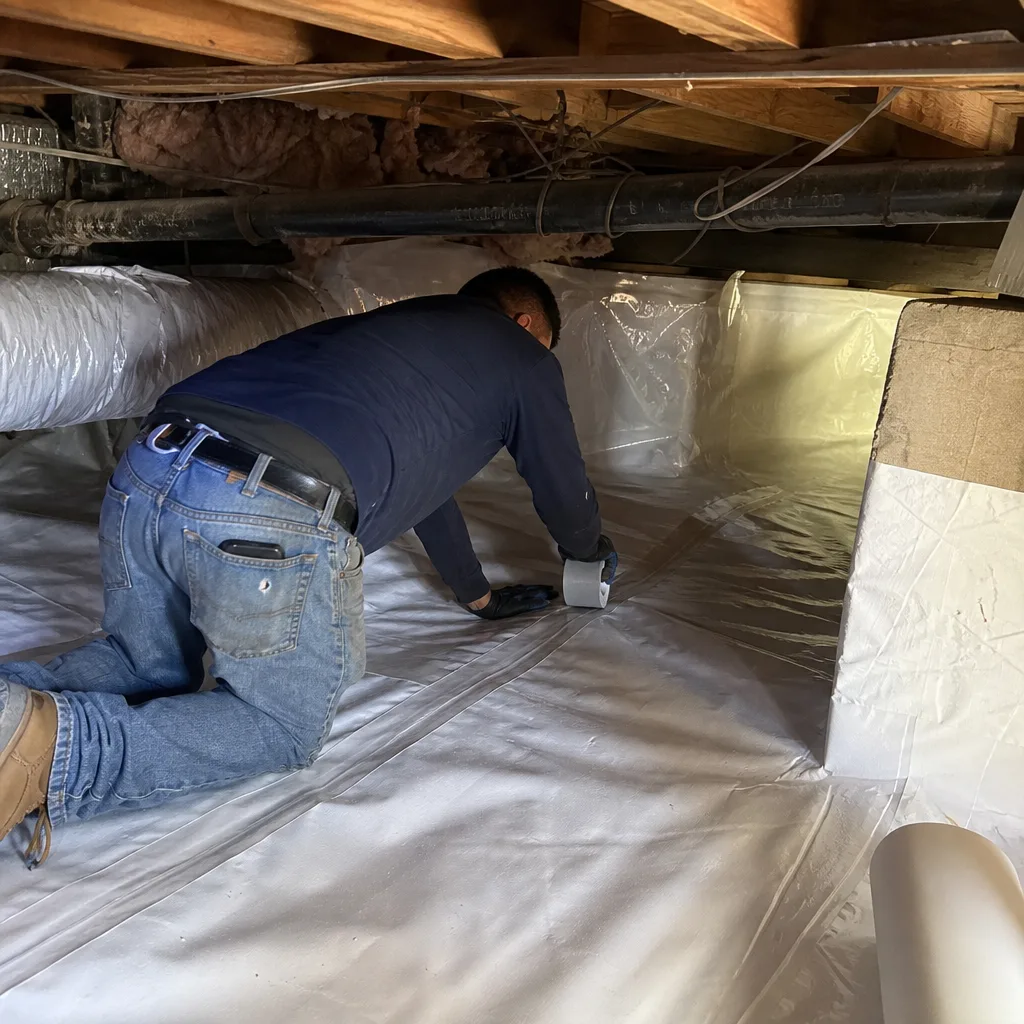
Encapsulation and vapor barrier installation. We lay 10-mil or 20-mil reinforced polyethylene across the crawl floor, run it 6 inches up the walls, and seal all seams with double-sided butyl tape and mechanical termination. The walls get closed-cell foam or rigid board as specified.
- 6
Post-work verification and documentation. We re-run the blower-door test and take post-installation photos. You leave with a Documented Photo Record, printed pre- and post-blower-door numbers, and your warranty paperwork. The 365-Day Done Right Promise applies from this moment.
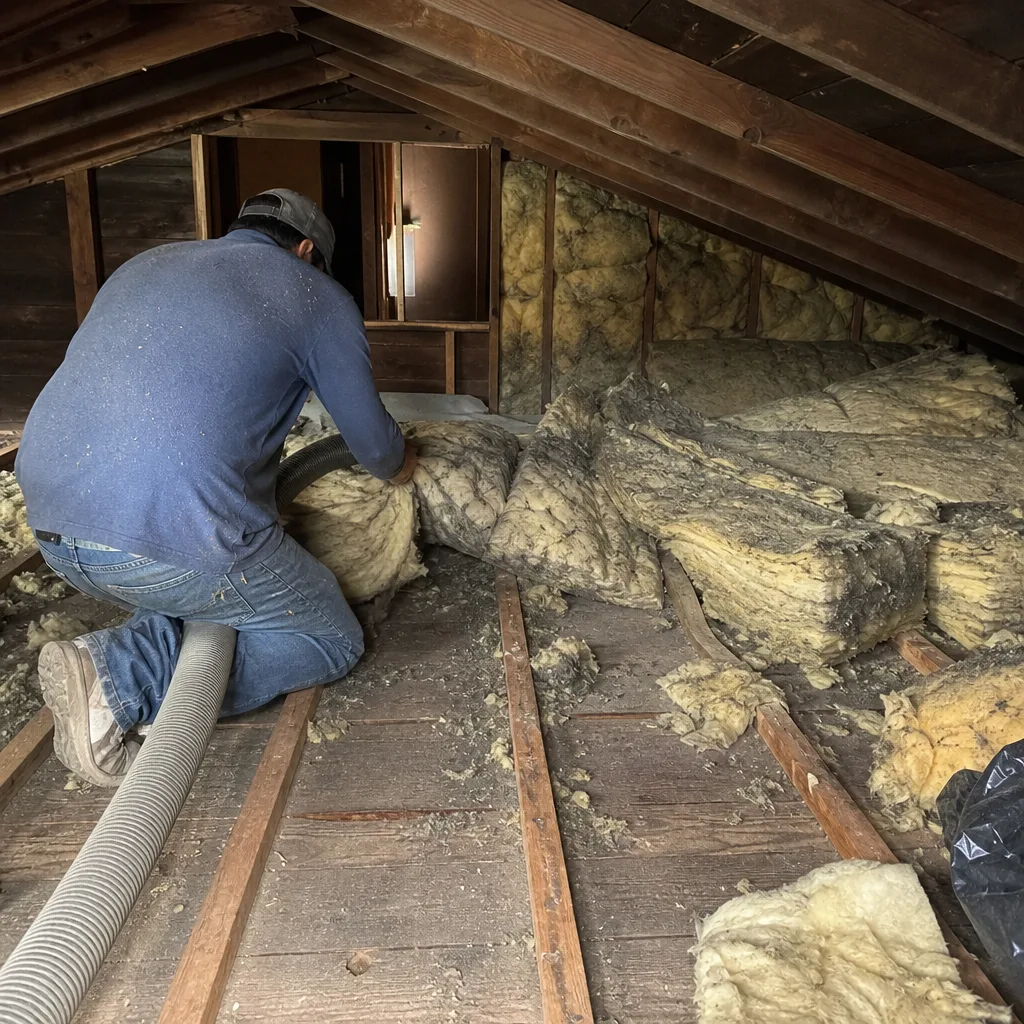 Before
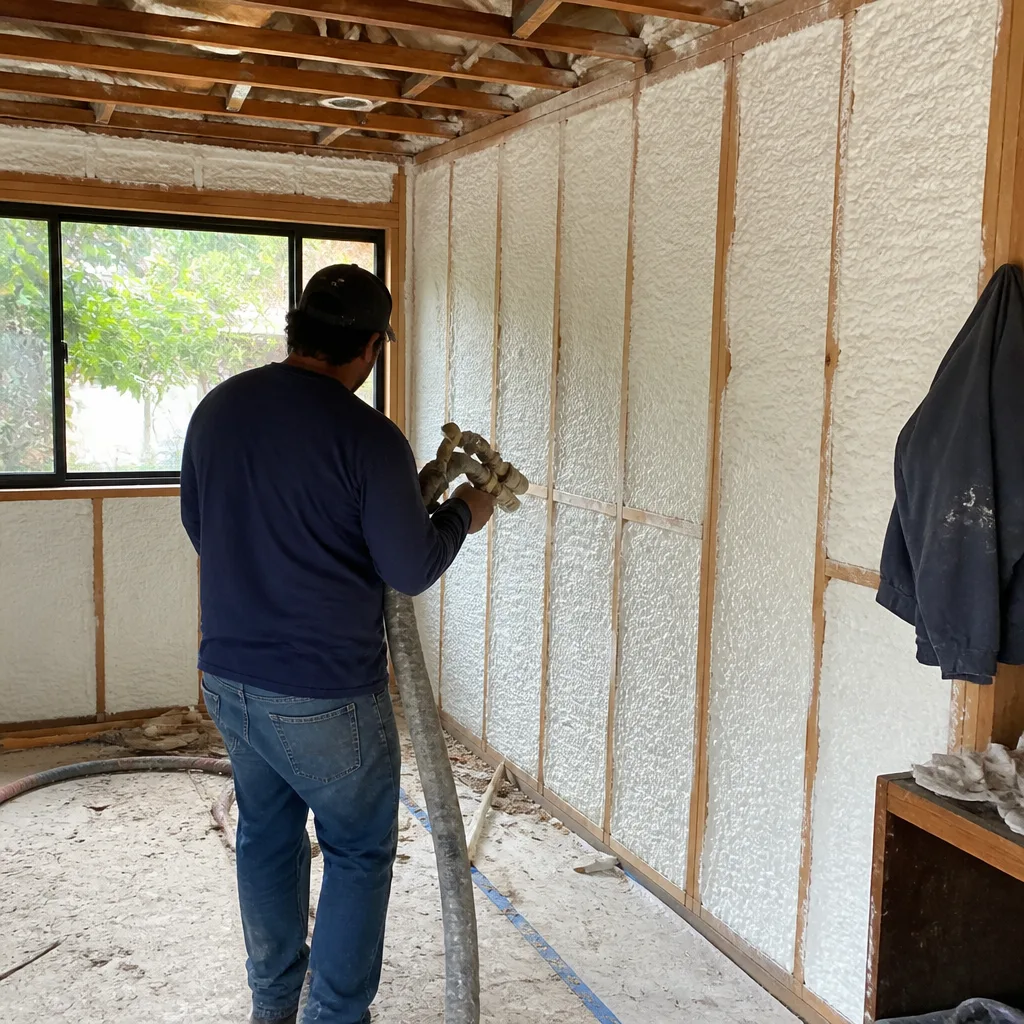 After
AfterWhat Demilec Crawl Space Encapsulation & Vapor Barrier Costs in Glendale
Most Demilec crawl space encapsulation jobs in Glendale fall between these ranges:
- Partial encapsulation with vapor barrier only (no foam removal): $2,800-$3,900
- Full encapsulation with SEALECTION 500 removal and replacement: $4,200-$5,800
- Heatlok HFO remediation with lift removal and reapplication: $4,800-$6,400
- Additional dehumidifier installation (70-pint crawl-rated unit): $1,200-$1,800
What moves the price: crawl square footage (most Glendale ranches run 800-1,400 sq ft), accessibility (height under floor joists, presence of ductwork), extent of Demilec removal required, and whether we find rot or pest damage once the old foam is out. We price for the work we can see and include contingencies for what we might find - no surprise invoices after the fact. Call (213) 474-3828 for a free estimate with a written price before any work starts.
Why Glendale Homeowners Call Topside Attic Insulation Glendale for Demilec Work
We’ve been running jobs across Glendale since 2016, including the older ranch-style homes near Verdugo Woodlands where crawl spaces were never designed for modern insulation loads. Wes Okafor, our owner, learned the trade at Richard J. Daley College in Chicago, where the curriculum drilled air sealing before insulation long before it was standard practice here. That shows up in our numbers: we publish before-and-after blower-door readings on every applicable job, so you can verify the performance change you paid for.
We’re also fluent in Reflectix and other brands, which matters when a Demilec assembly needs a hybrid repair or when the original product is discontinued. Every crew is background-checked and uniformed, and a live person answers calls 24/7 - no voicemail loops, no callback windows measured in business days. The 365-Day Done Right Promise and your Documented Photo Record come standard on every job, no exceptions.
FAQs
Modifying a Demilec installation - including encapsulating over it or removing it - can affect any remaining manufacturer warranty, which is why we document the existing product line and condition before we start. As an independent Demilec service provider, we cannot extend or honor Demilec’s warranty, but our 365-Day Done Right Promise covers our workmanship and materials. Call (213) 474-3828 and we’ll review your warranty status during the free estimate.
We source Demilec-certified foam for Heatlok HFO and Heatlok XT repairs when the application calls for it, but we’re not locked to any single supplier. For many crawl encapsulations, we specify equal-or-better closed-cell products from Icynene, Owens Corning, or rigid-board assemblies that outperform the original Demilec installation in below-grade applications. The choice is documented in your written scope with the rationale explained.
If the foam is dry, fully adhered, and the pin meter reads under 15% moisture content at multiple points, a vapor barrier overlay may be sufficient. If it’s blackened, delaminating, or reading over 15% moisture, removal is the only durable fix - covering wet foam traps the problem and voids any chance of a healthy crawl environment. We make this call during the initial assessment and show you the meter readings so you can see what we see.
Partial remediation with targeted removal and encapsulation is usually 30-40% less than full gut-and-replace, and it’s often the right call for isolated failures. If the entire crawl is compromised - multiple product lines, widespread moisture, or pest damage - a full system replacement may be more cost-effective over ten years. We’ll run both scenarios in your written estimate and show you the ten-year cost comparison.
Most Demilec crawl jobs are scheduled within five to seven business days of estimate approval, with emergency moisture remediation available sooner if there’s active water intrusion or mold risk. Every job begins with a written price - no work starts without it - and most encapsulations are completed in two to three days. Call (213) 474-3828 to check current availability; a live person answers.
Written by Wes Okafor, Owner, Topside Attic Insulation Glendale at Topside Attic Insulation Glendale, serving Glendale and nearby areas.