
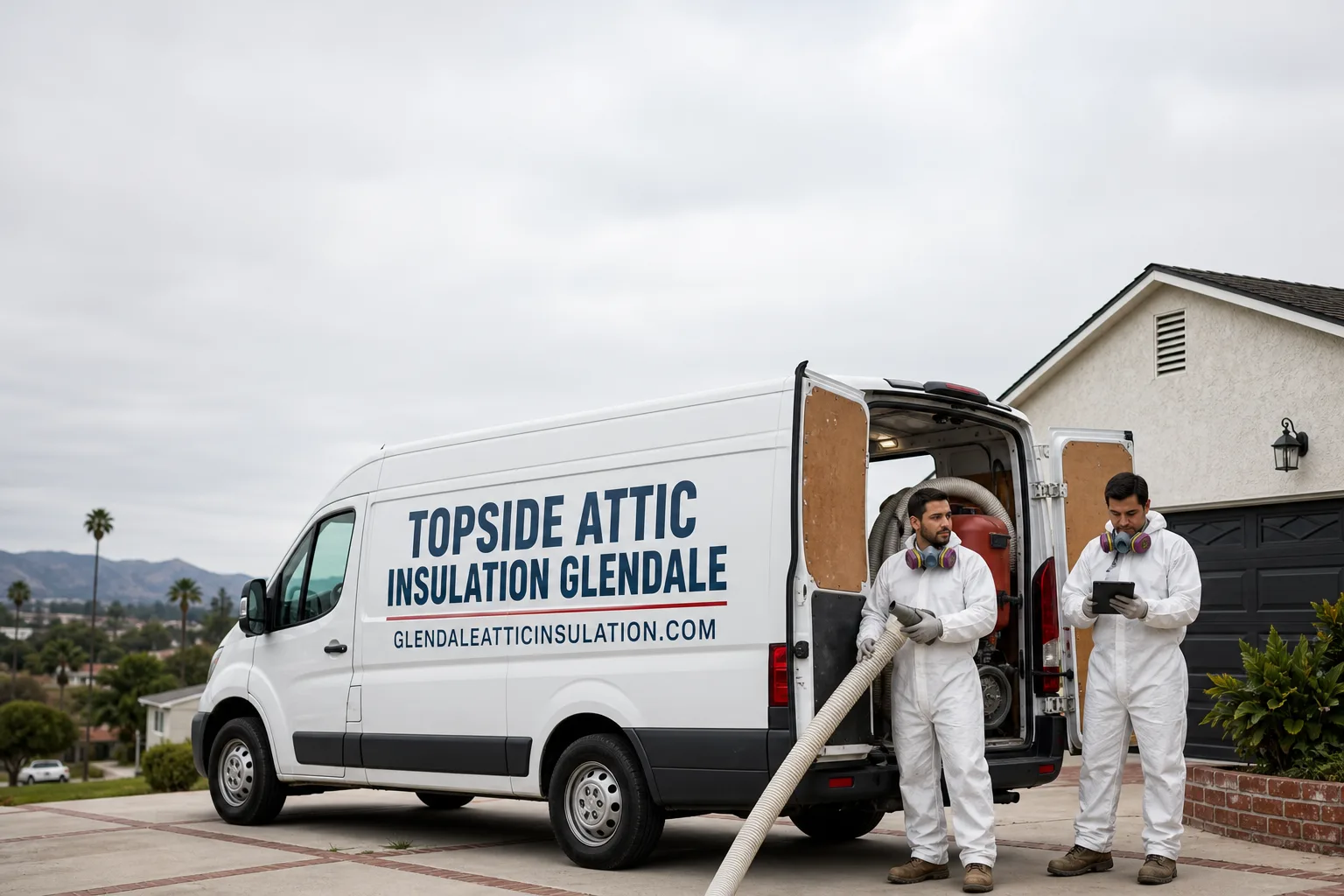
How Much Does Blown-In Insulation Cost in Glendale?
Blown-in insulation in Glendale, CA typically costs $1,400 to $3,800 for a standard attic, depending on square footage, current R-value, and whether air sealing is completed first. Most Glendale homeowners with a 1,200-to-1,800-square-foot attic land somewhere between $1,800 and $2,900 for a full blown-in installation that brings the attic to R-49 - the code-minimum for Climate Zone 10. At Envelope Insulation Co., our Blown-In Insulation services start with a written price before any work begins; that number is on paper before a single bag of material is opened.
Blown-In Insulation Cost Breakdown (2026)
The table below reflects actual job costs we see in the Glendale market - neighborhoods like Montrose, Verdugo Woodlands, Glenoaks Canyon, Adams Hill, and the flats east of Brand Boulevard. These are not national averages pulled from a syndication feed. Costs are per completed job unless noted.
| Scope of Work | Typical Cost Range (Glendale, 2026) |
|---|---|
| Attic blown-in only, 800-1,000 sq ft | $1,200 – $1,800 |
| Attic blown-in only, 1,200-1,600 sq ft | $1,600 – $2,400 |
| Attic blown-in only, 1,800-2,400 sq ft | $2,200 – $3,200 |
| Attic air sealing + blown-in, 1,200-1,600 sq ft | $2,200 – $3,200 |
| Attic air sealing + blown-in, 1,800-2,400 sq ft | $2,900 – $3,800 |
| Blown-in wall insulation (retrofit), per linear foot | $3.50 – $6.50/LF |
| Old insulation removal before blown-in | $600 – $1,400 (add-on) |
| Blown-in over existing insulation (top-off to R-49) | $800 – $1,600 |
| Dense-pack cellulose (wall cavities), per room | $450 – $900/room |
| Fiberglass blown-in vs. cellulose blown-in (cost delta) | Fiberglass typically runs $0.10-$0.25/sq ft higher |
A few things push a Glendale job toward the higher end of these ranges. Tile roofs – extremely common in the Chevy Chase Estates and Rossmoyne neighborhoods – create low-pitch attic sections that require slower, more careful blowing to avoid gaps at the eaves. Many homes built in the 1950s and 1960s in the Verdugo Hills foothills area have irregular joist spacing and diagonal bracing that slows the install and adds labor time. Homes near the 2 and 134 freeways also tend to show more accumulated particulate in the attic, which sometimes means the existing material needs to come out before new insulation goes in – that removal adds $600 to $1,400 to the total.
Material choice matters but is not the biggest cost driver. Cellulose blown-in – made from recycled content and the most common choice we use from GreenFiber and Knauf – typically costs slightly less per bag than fiberglass blown-in from Owens Corning or Johns Manville. For most Glendale attics, the labor, access conditions, and current insulation state move the number more than the material itself.
What Affects Blown-In Insulation Pricing in Glendale
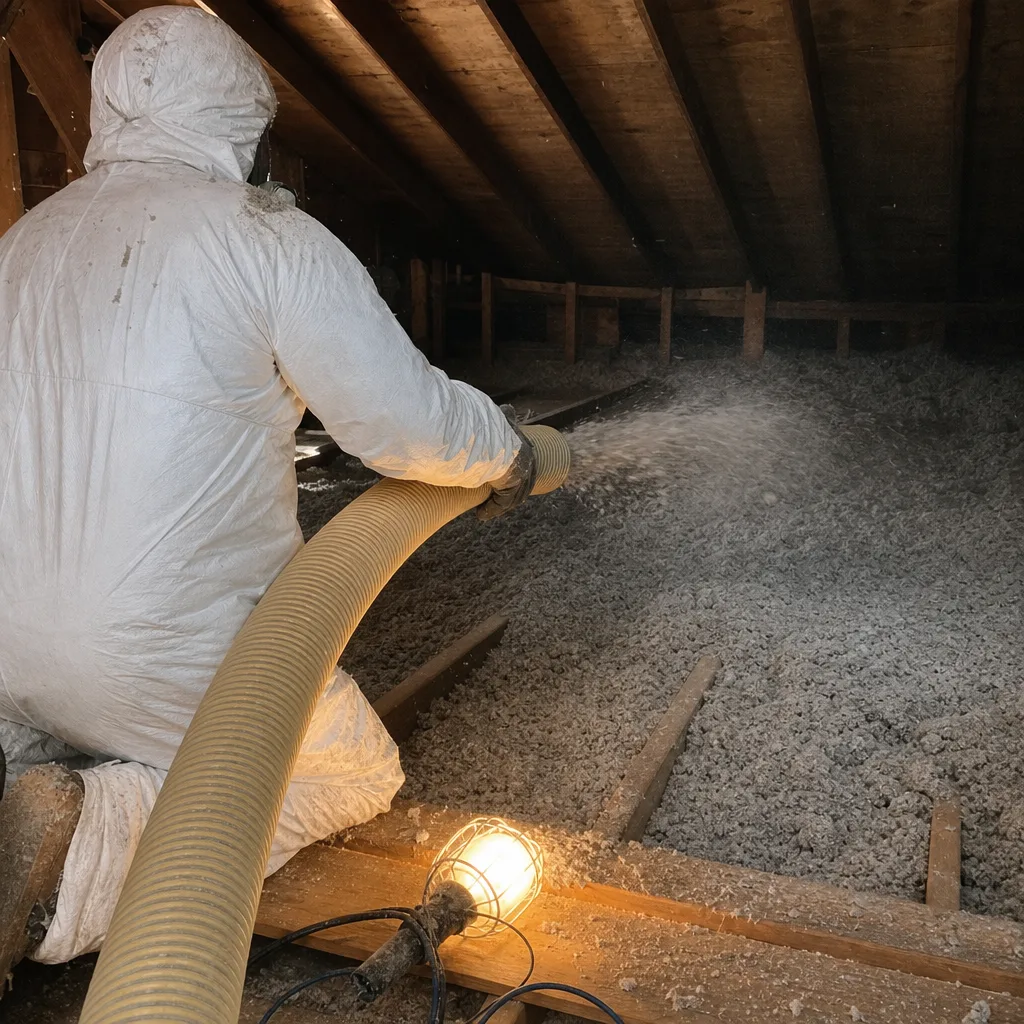
- Attic square footage and access difficulty. The square footage of the conditioned floor below – not the full attic footprint – is the base measure. But access matters just as much. Many single-story Craftsman bungalows in the Glendale Narrows and Adams Hill areas have low-clearance attics under 18 inches at the ridge, which means longer hose runs, slower blowing speeds, and more technician time to get consistent coverage across the whole deck.
- Air sealing first – not optional at Envelope Insulation Co. We treat air sealing as a prerequisite, not an upsell. Before any insulation goes in, the top plates, can lights, and attic penetrations are sealed with fire-rated foam or caulk. Skipping that step is like insulating over an open window: the R-value is technically there, but conditioned air keeps moving. The air-sealing phase adds $400 to $900 to most Glendale jobs but changes the blower-door reading – the pressurization measurement that shows, in a single number, how much air the building envelope is losing – in a way that insulation alone cannot.
- Existing insulation condition and R-value. Many Glendale homes built before 1980 have 3 to 4 inches of original blown-in that reads at R-11 to R-15 – well below the current California Energy Code requirement of R-49 for Climate Zone 10. If the existing material is intact and clean, we can blow over it and still reach R-49. If it’s contaminated, compressed, or damaged by a prior rodent issue (common in foothill properties backing up to Deukmejian Wilderness Park), removal is the right call first. That adds cost but it is the honest answer.
- Material type: cellulose vs. fiberglass blown-in. Cellulose holds a slight edge in settled R-value per inch in hot attic conditions and runs $0.10 to $0.25 per square foot less than fiberglass blown-in for equivalent depth. Fiberglass blown-in from Owens Corning or Johns Manville installs slightly faster in very tight spaces and does not absorb moisture the way cellulose can if there’s an undetected roof leak. We discuss both options during the estimate and put the chosen material in writing on the scope before work starts.
- Glendale’s climate zone and target R-value. Glendale sits in California Climate Zone 10 – hotter and drier than coastal Los Angeles but with genuine cold snaps in January and February, especially in the foothills above Montrose and La Crescenta. Title 24 requires R-49 in new construction and major renovations. Most older homes we see are at R-11 to R-19, sometimes zero in additions that were insulated with batts and never topped off. The larger the gap between current and target R-value, the more material goes in, and the higher the material cost.
- Permit requirements in Glendale. The City of Glendale Building Division requires a permit for insulation work when it is part of a larger permitted scope (re-roof, addition, HVAC replacement). Standalone blown-in attic insulation to an existing residence typically does not require a separate permit under California Residential Code Section R806, but homeowners should confirm with the Glendale Building and Safety Division at 633 E. Broadway if their job involves a concurrent permitted project. We will tell you upfront whether a permit is needed for your specific scope – and that conversation happens before any price is committed to paper.
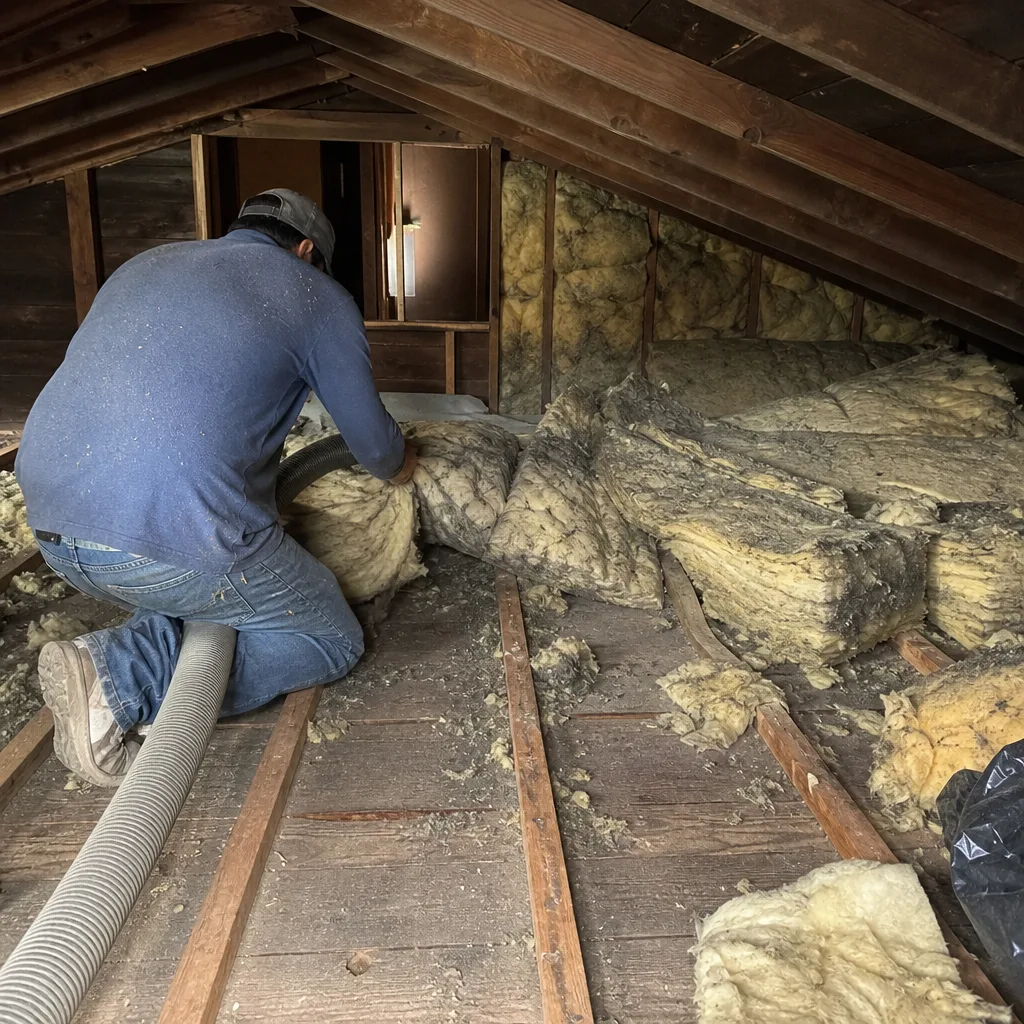 Before
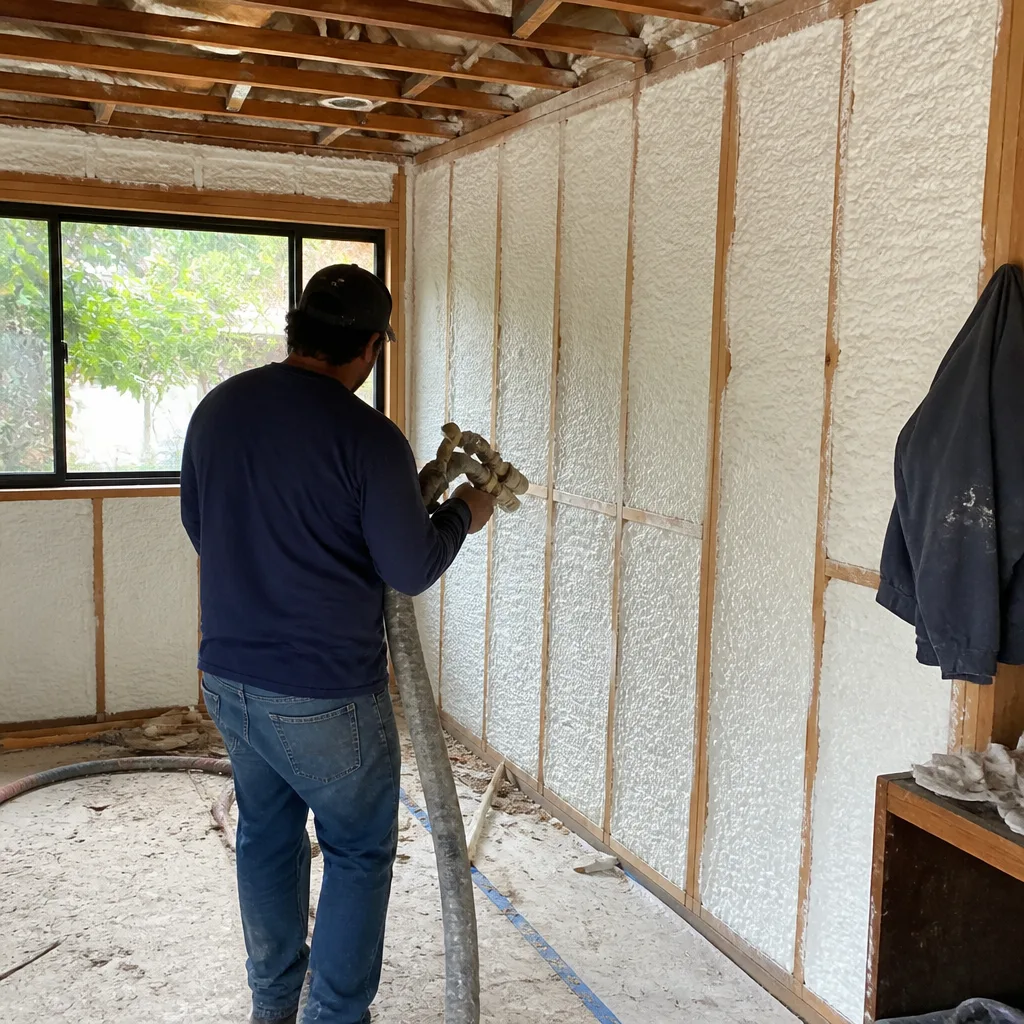 After
AfterHow to Save on Blown-In Insulation in Glendale
The single most useful thing a Glendale homeowner can do before signing any insulation contract is request a blower-door test or at minimum a visual attic inspection – and get the findings in writing before agreeing to scope. Here is why: a contractor who suggests a certain depth of blown-in without first measuring current conditions is guessing. You could end up paying to add R-19 over R-30 that is already there, or – more commonly – blowing insulation over an air-leaking attic floor and getting 40% of the performance you paid for.
Have the air sealing done at the same time as the insulation. Scheduling these together costs less than two separate mobilizations. In Glendale, splitting the jobs adds $200 to $500 in labor costs over doing both in one visit. Most of the savings we see on Glendale jobs come from this combination, not from using cheaper materials.
Ask about California utility rebates. SoCalGas and Southern California Edison both operate rebate programs for residential insulation improvements. Rebate amounts change, but as of 2026, some Glendale homeowners have received $200 to $600 back on qualifying attic insulation work through SCE’s Energy Upgrade California programs. These programs typically require documentation of pre- and post-installation R-values – exactly the kind of documented photo record and written scope that comes with every Envelope Insulation Co. job under Haven Standard Clause 1. Ask during the estimate whether your project qualifies; we will tell you what documentation the program requires so you can submit it yourself.
Get a second opinion on any written estimate. If you have a competing quote in hand, we will read it with you – line by line – at no cost. That is our Free Second Opinion offer, and it is not a sales tactic. If the competing scope is solid and the price is fair, we will tell you. If there are line items missing – air sealing omitted, R-value target not specified, material brand not named – you will know before you sign.
Don’t over-specify material when the application doesn’t require it. Spray foam is not the right answer for every attic. For a standard open attic in a Glendale home, blown-in cellulose or blown-in fiberglass reaches R-49 efficiently and at a fraction of the cost of closed-cell spray foam. We use Icynene and Demilec spray foam where it is genuinely the right product – unvented attics, rim joists, crawl space applications – not as a default upsell.
For a no-obligation written estimate on your Glendale home, call (213) 474-3828. The estimate is free, the price is flat and written, and no work starts until you have a signed scope in your hands.
Glendale Neighborhoods and What We Typically Find
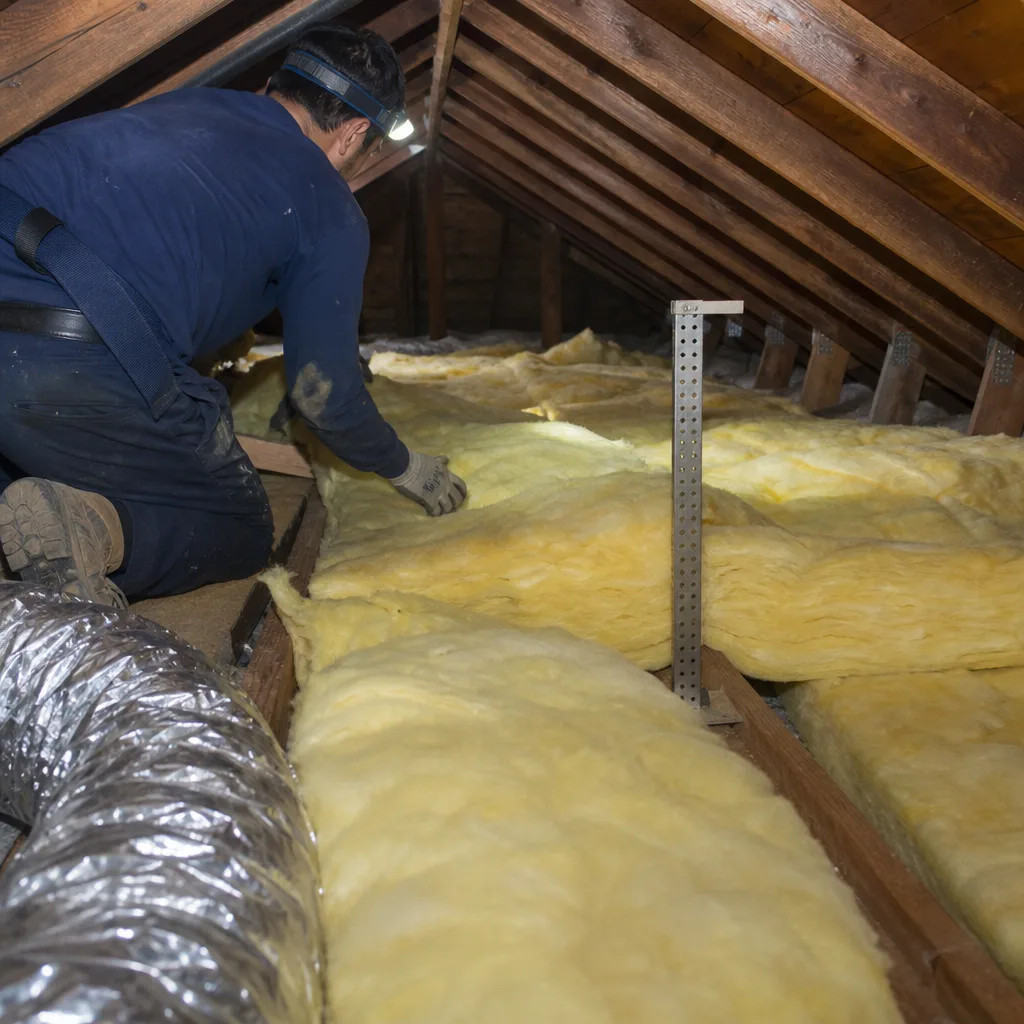
Glendale is not a uniform market. The age of the housing stock, the construction type, and the attic conditions vary enough by neighborhood that it is worth naming what we actually see when we open the hatch.
Adams Hill and the Glendale Narrows are dense with 1920s-to-1940s Spanish Revival and Craftsman bungalows. These homes almost always have original blown-in rock wool or old cellulose that has settled to 2 to 3 inches over 80 years. Attic access is tight. Can lights were often added in the 1980s and 1990s without air sealing, so the attic floor is effectively full of holes. Air sealing before insulation is not optional on these jobs – it is the entire point.
Verdugo Woodlands and Glenoaks Canyon have a mix of mid-century homes and newer construction backing up to brushland. Attics here are frequently larger and better accessed, but the fire risk from canyon wind events (the area sees significant Santa Ana conditions) means radiant barrier consideration comes up often. A radiant barrier does not replace adequate R-value, and we will not suggest it as a substitute – but combined with R-49 blown-in, it does reduce summer attic temperatures meaningfully in canyon-facing exposures.
Rossmoyne and Chevy Chase Estates tend to have larger footprints, tile roofs, and more complex attic geometries with multiple levels and hip sections. These jobs take longer and sit at the higher end of the price ranges above. The good news is that these homes also benefit the most from a thorough job because the conditioned square footage is larger and the energy cost of under-insulation is proportionally higher.
Montrose sits at higher elevation and sees more heating-degree days than the Glendale flats. Homes here lose more energy to ceiling heat loss in winter than their lower-elevation counterparts. We have measured blower-door readings in Montrose homes that read above 5,500 CFM50 before air sealing – a figure that reflects how much air the building envelope was losing – and dropped below 2,800 CFM50 after sealing and blown-in insulation was completed in the same visit.
For more on what full Blown-In Insulation in Glendale includes – scope, process, materials, and what a completed job looks like – that page covers the full service in detail.
Blown-In vs. Other Insulation Types: A Quick Cost Comparison for Glendale
Homeowners sometimes ask whether batt insulation or spray foam would be cheaper. For an open attic in a Glendale home, here is how the numbers typically compare:
- Blown-in cellulose or fiberglass (attic): $1.10 to $1.80 per square foot installed to R-49. Best fit for open attics with existing joist bays. This is the most cost-effective path to code compliance for most Glendale homes.
- Fiberglass batt (attic): $0.90 to $1.50 per square foot installed. Lower material cost but more labor-intensive to fit correctly around obstructions, and batts compress over time. In attics with irregular framing – common in pre-1960 Glendale construction – blown-in achieves more consistent coverage.
- Open-cell spray foam (attic underside, unvented application): $1.80 to $2.80 per square foot at 3.5 inches. Correct for unvented “hot roof” designs or when the HVAC equipment is in the attic. Not the right default for a standard vented attic – costs more and does not outperform blown-in cellulose in that application.
- Closed-cell spray foam (rim joists, crawl spaces): $3.50 to $6.00 per square foot at 2 inches. Appropriate for specific air-barrier applications, not for general attic coverage. We use Icynene and Demilec where it is the right product.
- Rockwool blown-in (less common, available): $1.60 to $2.20 per square foot. Higher fire resistance than fiberglass or cellulose, relevant for homes in Glendale’s high-fire-severity zones. Costs more per square foot but the fire-resistance characteristic has genuine value in certain canyon-adjacent locations.
What a Completed Envelope Insulation Co. Job in Glendale Looks Like
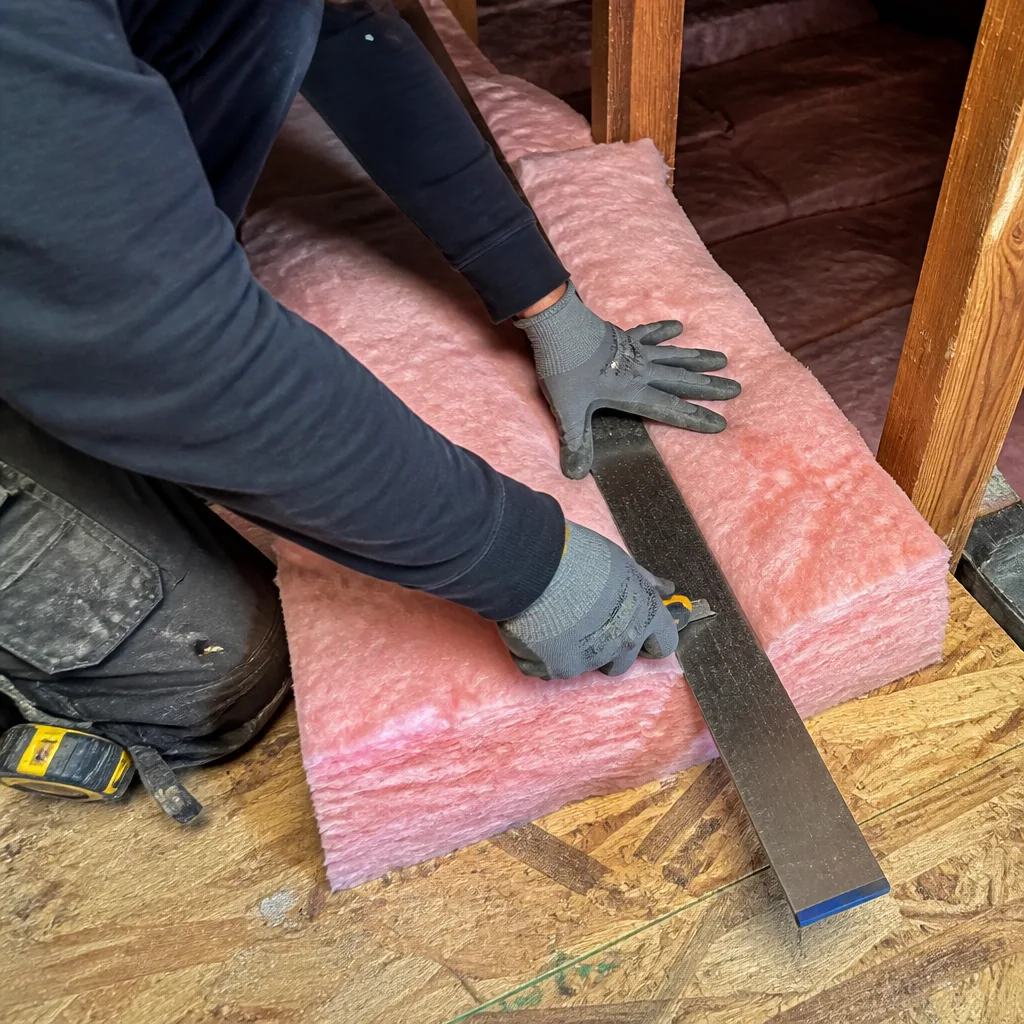
This matters because knowing what you get before the crew arrives means you can verify it when they leave.
Before work starts: you have a flat, written price with a written scope naming the material, the target R-value, the air-sealing locations, and the written warranty. That is Haven Standard Clause 1 and it applies to every job, without exception.
During the job: the attic floor is sealed first. Top plates, can-light penetrations, and any plumbing or electrical chases are foam-sealed before a single bag of blown-in material is loaded into the machine. This is the sequence that matters – insulation over unsealed penetrations adds R-value on paper but does not stop air movement. After sealing, the blown-in goes in to the depth required to hit the written R-value target.
After the job: you receive a Documented Photo Record showing conditions before and after, including depth measurements. On applicable jobs – any job where air sealing is part of the scope – before-and-after blower-door readings are included so you have a number, not a feeling, for what changed. The 365-Day Done Right Promise covers all completed work in writing. If something is not right within that window, we make it right – the scope and warranty are the evidence, not a handshake.
The technician who does the work is background-checked, uniformed, and named before they arrive. You get a text when they are on the way. That is the Haven Standard, and it runs through every job we do.
Since 2016, Envelope Insulation Co. has completed this process on over 9,000 homes – every one with a written price before work started and a documented record when the crew left. Wes Okafor leads the operation and stands behind the 365-Day Done Right Promise personally.
If you want to understand the full building-envelope picture for your home, the home page outlines every service we offer, from attic air sealing through crawl space encapsulation and home energy audits.
FAQs – Blown-In Insulation Cost in Glendale
How much does blown-in insulation cost in Glendale, CA in 2026?
Most Glendale homeowners pay between $1,400 and $3,800 for blown-in attic insulation, with the most common range for a 1,200-to-1,800-square-foot attic landing between $1,800 and $2,900 when air sealing is included. Jobs at the lower end are typically top-offs on relatively clean attics with good access. Jobs at the higher end involve removal of old contaminated material, complex attic geometry (common in Rossmoyne and Chevy Chase Estates tile-roof homes), or full air sealing of an attic floor with many can-light penetrations. Call (213) 474-3828 and we will give you a flat written number after seeing the attic – no estimate without an inspection, no work without a written price.
Is it cheaper to repair or replace existing blown-in insulation in Glendale?
Topping off existing blown-in insulation typically costs $800 to $1,600 for a 1,200-to-1,800-square-foot attic, versus $1,600 to $2,900 for a full removal-and-replace. If the existing material is clean, dry, and above R-11, blowing over it is almost always the more cost-effective path. If it is contaminated by rodent activity – which we see regularly in Glendale foothill properties near Deukmejian Wilderness Park – removal is the right call first, even though it adds cost. We will tell you which situation you have after inspecting the attic, and that assessment is free. Call (213) 474-3828 to schedule it.
Does blown-in insulation require a permit in Glendale?
Standalone blown-in attic insulation in an existing Glendale residence typically does not require a separate permit under California Residential Code. A permit is generally required when insulation work is part of a larger permitted project – a re-roof, HVAC replacement, or room addition. If you are unsure, the Glendale Building and Safety Division at 633 E. Broadway can confirm for your specific address and project scope. We clarify permit requirements as part of the written scope on every job, before any price is committed to paper.
How much does air sealing add to the cost of blown-in insulation in Glendale?
Air sealing adds $400 to $900 to most Glendale attic insulation jobs when done at the same time as the blown-in installation. Scheduling both together in one visit costs $200 to $500 less than two separate mobilizations. The reason we treat air sealing as a prerequisite – not an upsell – is measurable: in Glendale homes where we have run before-and-after blower-door tests, air sealing alone has reduced air-change readings by 35% to 55% in older Adams Hill and Montrose bungalows. Blown-in insulation without sealing the penetrations first delivers a fraction of that result. The blower-door reading – a pressurization number that shows exactly how much air the building envelope is losing – is included on applicable jobs so you have documented evidence of the change.
Can I get a free estimate for blown-in insulation in Glendale?
Yes – the estimate is free and the price is flat and written before any work starts. That is Haven Standard Clause 1: a written price, written scope, and written warranty delivered before anyone lifts a tool. If you already have a competing quote, bring it – we will read it with you line by line as part of our Free Second Opinion offer, at no cost. Call (213) 474-3828 to schedule an attic inspection and get a written price for your specific Glendale home.
How long does blown-in insulation last in a Glendale attic?
Properly installed blown-in cellulose or fiberglass in a Glendale attic typically maintains its rated R-value for 20 to 30 years under normal conditions. Settling reduces depth slightly over the first few years – this is expected and accounted for in the installation depth we specify. The main factors that shorten the lifespan are moisture intrusion from a roof leak (which compresses cellulose and degrades both types), rodent activity, and HVAC duct leaks that blow conditioned air through the insulation layer. Any of these conditions change the removal-vs-top-off calculus. A visual inspection during the estimate will identify which situation applies to your attic.
Pricing reflects the Glendale market as of 2026. Topside Attic Insulation Glendale offers free estimates – call (213) 474-3828.
Written by Wes Okafor, Owner at Envelope Insulation Co., serving Glendale, CA since 2016.
What Our Customers Say
"Two other companies quoted to blow more insulation on top of what was there. These were the only ones who said the existing material had to come out first, and explained why."
- Clifford E."They photographed rodent damage in the old insulation that we had no idea about, and priced the exclusion work separately so we could decide."
- Harriet N."Crawl space encapsulation done properly. Photographs of the vapour barrier at every seam, and the damp smell in the hallway is gone."
- Ainsley P.