
Crawl Space Insulation in Glendale, CA
Crawl space insulation in Glendale typically runs between $1,800 and $4,200 for a standard single-family home, depending on square footage, access conditions, and whether the floor system needs air sealing before insulation goes in. Most jobs in the Verdugo Hills and Montrose foothills take one day; homes with tighter access or significant moisture intrusion may run into a second. We give you a flat written price before anyone opens a hatch – no surprises when the invoice arrives.
At Topside Attic Insulation Glendale, crawl space insulation is part of a complete building-envelope approach that we’ve been executing under The Haven Standard since 2016. That means the crawl space floor joist cavities get air-sealed first – rim joists, band joists, plumbing penetrations, and any utility chase openings – and then insulation goes in. This order matters: blowing or batting insulation over an unsealed floor system just buries the air leaks instead of stopping them. If you’ve already had a quote from another contractor that skips the air-sealing step, bring it in. We’ll read it with you – that’s our Free Second Opinion on Any Written Estimate, and it costs you nothing.
This page covers the crawl space insulation sub-service specifically. For the full picture of moisture control, liner installation, and encapsulation, see our Crawl Space Encapsulation & Vapor Barrier in Glendale page. And if you’d like to understand how this work fits into our broader home energy services, that’s a good starting point too.
To get a written price without picking up the phone, call (213) 474-3828 – a live person answers, any hour.
When You Need Crawl Space Insulation
Glendale’s housing stock is not uniform. The older craftsman bungalows in Adams Hill and the post-war ranch homes scattered across the Crescenta Valley corridor have very different crawl space configurations, but both share a common problem: the floor system is frequently underinsulated or missing insulation entirely. Here are the situations where crawl space insulation moves from “eventually” to “now”:
- Floors that feel cold in December and January. Glendale doesn’t get the winters that the San Gabriel Mountains above it do, but nighttime lows in the 30s are common from November through February. Without insulation between the floor joists, a vented crawl space turns your floor assembly into a radiator running in reverse – pulling warmth out of the living space. If you’ve added rugs and it still doesn’t help, the floor deck is losing heat to the crawl.
- Energy bills that don’t match your thermostat settings. Uninsulated or degraded crawl space insulation can account for 15-25% of a home’s heating load in a mild climate like Glendale’s, where the HVAC system runs more frequently in shoulder seasons than in extreme cold. If your bills spiked after a wet winter or after a pest treatment, the insulation condition is worth inspecting.
- Old batts sagging or missing entirely. Kraft-faced fiberglass batts installed in the 1970s and 1980s – common in the homes along Kenneth Road and upper Glenoaks – degrade over decades. Moisture and rodent activity are the two fastest ways to destroy batt insulation. Compressed, wet, or fallen batts have near-zero R-value and need to come out before new insulation goes in. We document what we find with photos before touching anything.
- Rodent activity in the crawl space. Glendale’s proximity to the Verdugo Mountains means roof rats and Norway rats are a real and recurring issue. Rats nest in fiberglass batts and compress the material to the point of uselessness. If you’ve had a pest control company out recently, have the insulation inspected next – the two problems almost always come together in this area.
- A recent encapsulation or vapor barrier installation without insulation follow-through. Encapsulation controls moisture; insulation controls temperature and energy loss. The two are complementary, not interchangeable. A sealed crawl space with no insulation on the floor joists above is still an energy problem.
- Preparing a home for sale. Glendale’s real estate market rewards documented improvements. A completed crawl space insulation job with before-and-after documentation – including a Documented Photo Record and, where applicable, blower-door readings – is a line item a buyer’s inspector doesn’t flag and a seller can point to with a paper trail.
Our Crawl Space Insulation Process
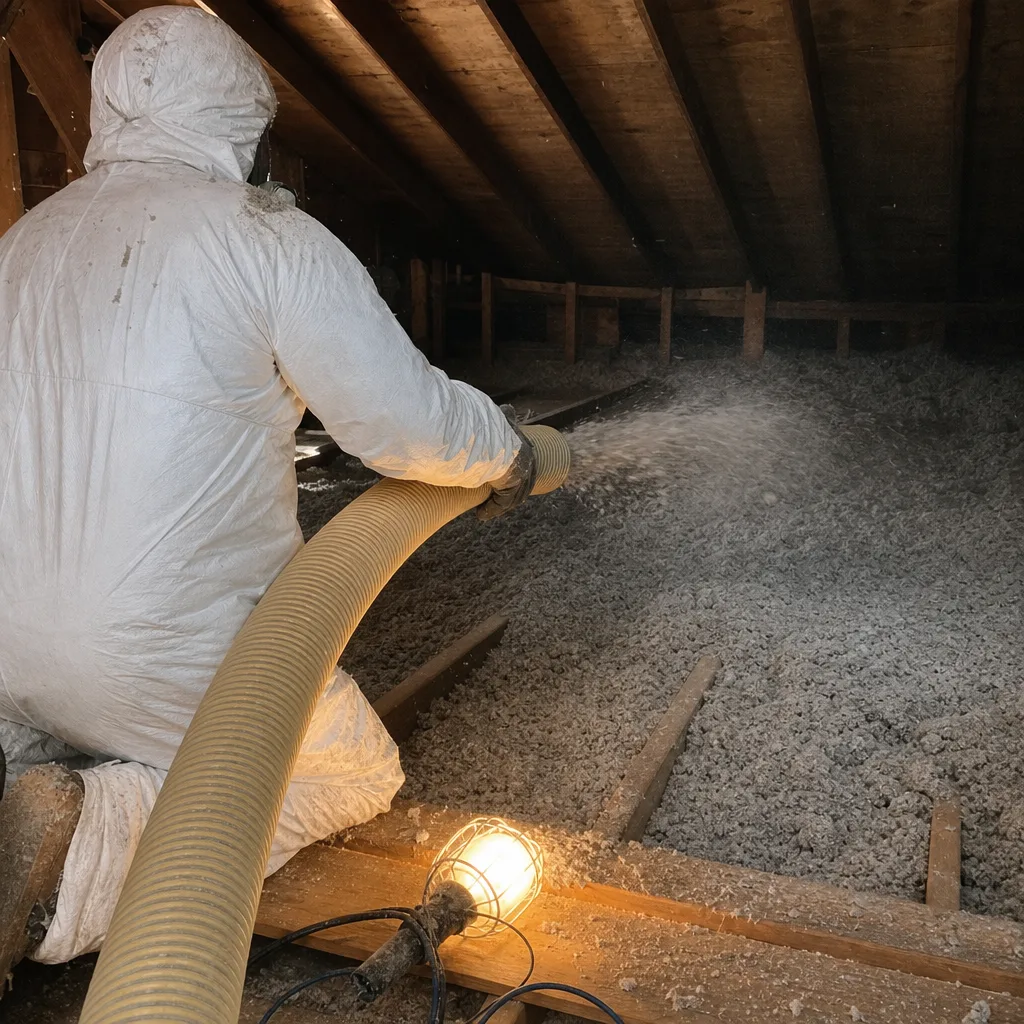
Every crawl space job we do in Glendale follows the same sequence. The order is not flexible, because the physics aren’t flexible: air moves before insulation slows it, and sealing happens before covering. Here’s exactly what that looks like from the first visit to the final photo.
- Pre-work inspection and written scope. Before we quote anything, a technician goes into the crawl space with a camera and a moisture meter. We document what’s there: existing insulation type and condition, vapor barrier presence and condition, signs of moisture or pest activity, and the condition of the rim joist and band joist assemblies. You get a written price and a written scope before we schedule work – Haven Standard Clause 1, no exceptions. Nothing starts until you’ve signed off on a flat number.
- Removal of degraded or contaminated insulation (when applicable). If the existing batts are compressed, wet, rodent-contaminated, or simply too degraded to function, they come out first. We don’t insulate over failed material. Removed insulation is bagged and hauled off the property, and the subfloor deck is left clean before any new material goes in. The Documented Photo Record starts here – you’ll have photos of the crawl space before we touch anything, and again after removal.
- Air sealing of the floor system. This is the step most contractors skip or treat as an add-on. We seal it as a hard prerequisite. Rim joists get closed-cell spray foam – typically a 2-inch pass that hits R-13 and doubles as a vapor retarder in a vented crawl space. Penetrations through the subfloor for plumbing, HVAC flex lines, and electrical are sealed with appropriate foam or fire-rated caulk. In Glendale homes built before 1980, we regularly find unsealed utility chases that run directly from the crawl to the wall cavities above – those get closed. If your home qualifies for a blower-door test, we can take a before reading at this stage so you have a baseline number.
- Insulation installation between floor joists. For most Glendale crawl spaces, we install Johns Manville or Owens Corning kraft-faced fiberglass batts friction-fit between the floor joists, with the kraft facing toward the conditioned space above. R-19 is the current California Title 24 minimum for Climate Zone 9 (which covers most of Glendale proper); R-30 is appropriate where joist depth allows and is our recommendation for homes in the cooler Crescenta Valley microclimates above the 1,200-foot elevation line. Where joist cavities are shallow or irregular, we may recommend a different approach – we’ll specify it in writing before the job starts.
- Post-installation inspection and documentation. Once insulation is in, a technician walks the crawl space a second time to confirm full coverage, no gaps at the rim joists, and no batts that have already begun to sag or dislodge from the fastening wire. If a blower-door test was appropriate for the scope, we take the “after” reading here. The before-and-after numbers go into your job file. You receive the Documented Photo Record – crawl space photos, insulation photos, and rim joist photos – before the crew leaves the property.
- Written warranty and 365-Day Done Right Promise. Every completed crawl space insulation job closes with a written warranty delivered to you in writing. If anything isn’t right within 365 days of completion, we come back and make it right. That promise is in the warranty document, not just in marketing copy.
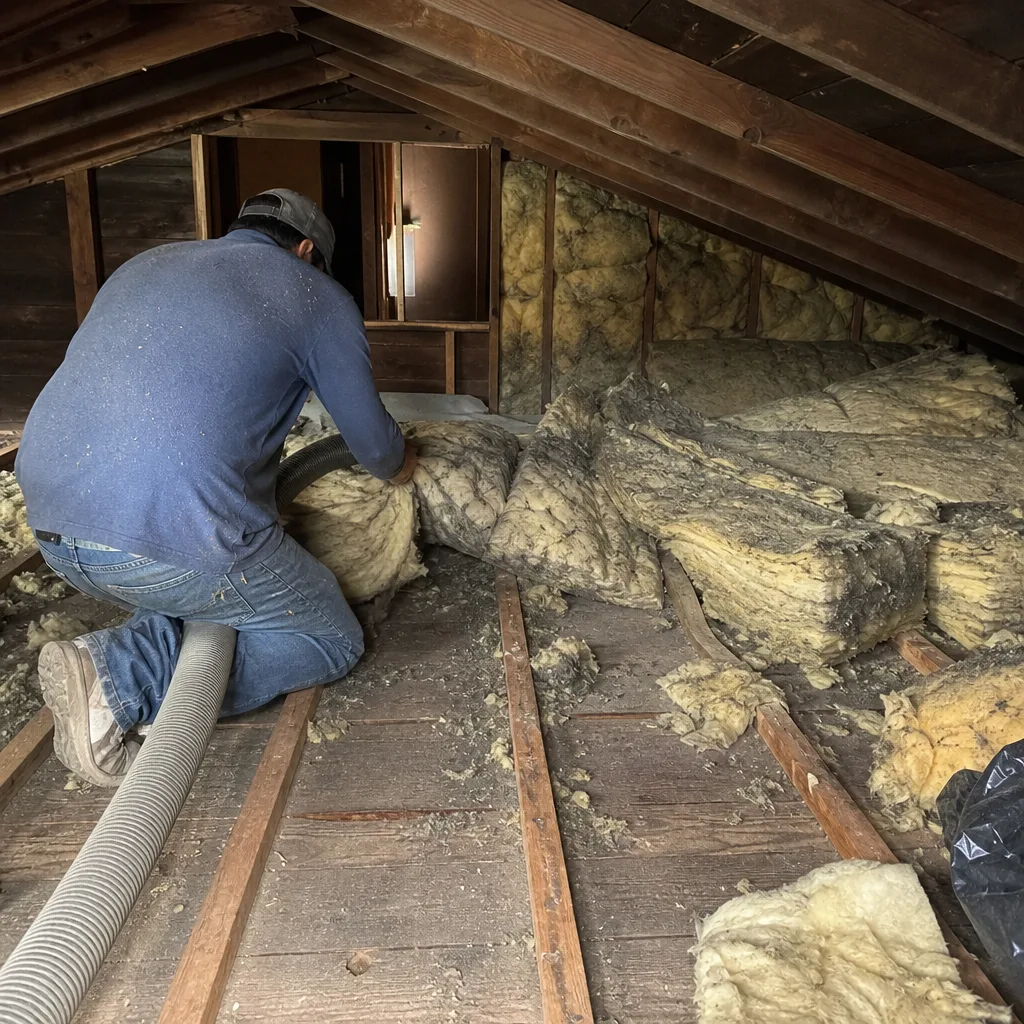 Before
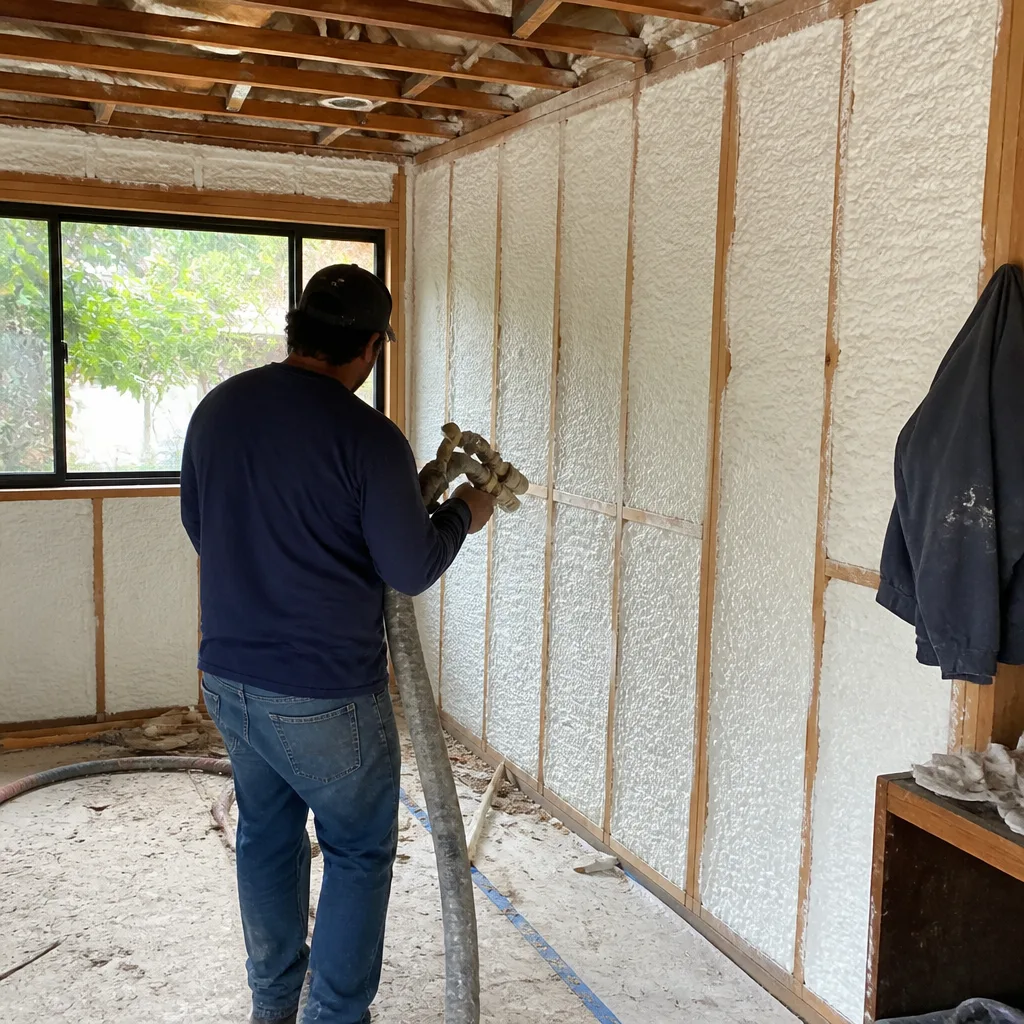 After
AfterCrawl Space Insulation Pricing in Glendale
Crawl space insulation in Glendale runs between $1,800 and $4,200 for most single-family homes, with the majority of straightforward jobs in the $2,200 to $3,000 range. Pricing is always a flat written number before any work starts – we don’t quote by the square foot on the phone and then adjust at the invoice stage.
Here’s what moves the number in either direction:
| Factor | Lower End | Higher End |
|---|---|---|
| Crawl space square footage | Under 800 sq ft | 1,200+ sq ft |
| Crawl height / technician access | 18+ inches of clearance | Under 12 inches; obstacles present |
| Existing insulation condition | Clean space, no removal needed | Full removal of contaminated batts required |
| R-value target | R-19 (Title 24 minimum) | R-30 upgrade with wire fastening system |
| Air sealing scope | Rim joist only, standard penetrations | Extensive utility chases, multi-run plumbing |
| Vapor barrier / encapsulation add-on | Existing liner in good condition | Full liner replacement combined with insulation |
Homes in the Adams Hill and Chevy Chase Canyon neighborhoods tend to sit at the lower-to-middle range: smaller footprints, adequate clearance, and often no existing insulation to remove. Larger ranch homes along the Foothill corridor, or homes in the Sparr Heights area with finished additions that complicated the original framing, often land at the higher end.
If you’ve already received a written estimate from another contractor, bring it. We’ll review it with you line by line – no charge, no obligation. That’s the Free Second Opinion on Any Written Estimate, and it’s a standing offer, not a promotional event with an expiration date.
To get a flat written price for your specific crawl space, call (213) 474-3828. A live person answers. We schedule an inspection, go into the crawl, document what’s there, and give you a written number before leaving.
FAQs – Crawl Space Insulation in Glendale
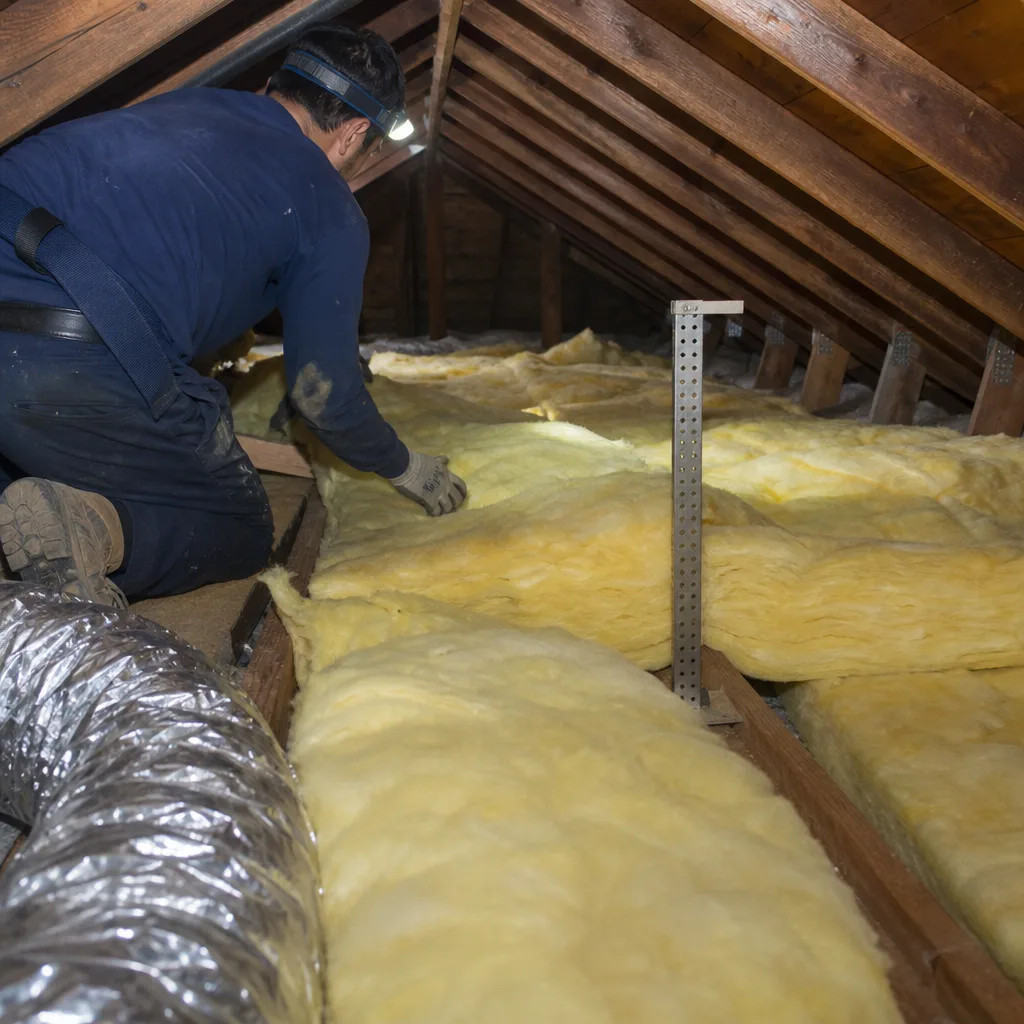
What R-value does crawl space insulation need to be in Glendale, CA?
California Title 24 requires R-19 minimum for floor assemblies over unconditioned crawl spaces in Climate Zone 9, which covers Glendale proper. If your home sits above approximately 1,200 feet – parts of La Crescenta, Montrose, or the Verdugo foothills – you’re still in Zone 9, but nighttime temperatures drop more consistently in winter, and we typically recommend R-30 where joist depth allows. R-30 is achievable in standard 2×10 joist bays with a friction-fit batt; shallower 2×6 or 2×8 bays may need a different approach, which we’ll spell out in the written scope before work starts. Call (213) 474-3828 for a no-surprise written price specific to your floor system.
Do I need to encapsulate the crawl space before insulating it?
Not always, but moisture conditions determine the answer. If the crawl space has standing water, active condensation on the subfloor, or a deteriorated vapor barrier, moisture needs to be addressed before insulation goes in – insulation installed into a wet crawl space will fail quickly and may contribute to mold growth on the subfloor above. If the crawl is dry, the existing liner is intact, and there’s no visible moisture damage, insulation can proceed without full encapsulation. Our pre-work inspection documents the actual conditions, and we tell you clearly which situation you’re in. For the full moisture-control side of the work, see our Crawl Space Encapsulation & Vapor Barrier in Glendale page.
How long does crawl space insulation installation take in Glendale?
Most single-family homes in Glendale are done in one day – typically a 4-to-6-hour job for a standard footprint under 1,000 square feet with adequate clearance. Larger homes, tight access points, or jobs that include removal of old insulation plus full air sealing of a heavily penetrated floor system can extend to a second day. We confirm the expected timeline in the written scope before any work starts so you know what to plan for.
Can crawl space insulation reduce my energy bill noticeably?
In Glendale’s climate, a properly installed and air-sealed floor system can reduce heating load by 15-25% in winter months – meaningful in homes where the crawl was completely uninsulated or the existing batts had collapsed. The savings show up most clearly in the November-February billing period when the HVAC system runs on heating mode against consistent overnight lows. What we can document is the before-and-after air sealing result via blower-door test on applicable jobs – a pressurization reading that shows, in a single number, how much conditioned air the building envelope was losing before and after the work. That number goes in your file. Call (213) 474-3828 to talk through whether a blower-door test is appropriate for your home’s scope.
Key Takeaways
- Crawl space insulation in Glendale typically costs $1,800 to $4,200, with a flat written price before any work starts – always.
- California Title 24 requires R-19 minimum for floor assemblies in Climate Zone 9; R-30 is the right target for homes at higher elevations or with accessible 2×10 framing.
- Air sealing – rim joists, band joists, and all floor penetrations – is completed before insulation goes in. This is not optional and is not an upsell.
- Every job closes with a Documented Photo Record and a written warranty; on applicable jobs, before-and-after blower-door readings are included.
- The 365-Day Done Right Promise applies to all completed work: if it’s not right, we come back and make it right.
- If you have a competing written estimate, bring it. The Free Second Opinion is a standing offer with no strings.
Schedule Your Crawl Space Insulation Inspection in Glendale
If your floors run cold in January, your energy bills don’t match your thermostat settings, or you’ve seen pest activity in the crawl space and haven’t had the Crawl Space Vapor Barrier or insulation inspected since, the next step is straightforward. We come out, go into the crawl with a camera and moisture meter, document what we find, and give you a written price before we leave. No work starts without your sign-off on a flat number.
Topside Attic Insulation Glendale serves Glendale and the surrounding communities including Adams Hill, Montrose, La Crescenta, Sparr Heights, Chevy Chase Canyon, and the Verdugo Hills corridor. We’ve been operating under The Haven Standard since 2016, and Wes Okafor stands behind every job personally – 9,000+ homes sealed and insulated, every one with a written price and a documented record when the crew left.
Call (213) 474-3828 to schedule your inspection and get a written estimate for crawl space insulation in Glendale. A live person picks up, any hour. No voicemail loops, no callback windows measured in business days.
Written by Wes Okafor, Owner at Topside Attic Insulation Glendale, serving Glendale.