
Crawl Space Vapor Barrier in Glendale, CA
A crawl space vapor barrier is a polyethylene or reinforced poly sheeting installed across your crawl space floor and up the foundation walls to block ground moisture before it migrates into your home’s structural framing, subfloor, and living space. Most Glendale homes with a vented crawl space need one – and those that already have one often need the existing sheet inspected, repaired, or upgraded as part of our Crawl Space Encapsulation & Vapor Barrier services. If you’re noticing soft flooring, musty air, or elevated humidity on your ground floor, the crawl space is usually where the investigation starts.
Envelope Insulation Co., operating as Topside Attic Insulation Glendale, has been doing this work under The Haven Standard since 2016. Every job starts with a written price before anyone touches a tool – that’s Haven Standard Clause 1, not a marketing line. Call us at (213) 474-3828 and we’ll schedule a crawl space assessment, document what we find with photos, and hand you a flat-priced written scope before any work begins.
This page covers the vapor barrier sub-service specifically. If you want to understand how vapor barrier fits into a full crawl space system – drainage, insulation, air sealing, and encapsulation – the Crawl Space Encapsulation & Vapor Barrier in Glendale page covers the broader project in detail.
When You Need a Crawl Space Vapor Barrier
Glendale sits in the foothills of the San Gabriel Mountains, and the soil moisture dynamics here are different from what you’d find on the flatter parts of the LA Basin. The hillside neighborhoods – Chevy Chase Canyon, Glenoaks Canyon, and the streets climbing toward the Verdugo Mountains – see seasonal groundwater movement that pushes moisture up through exposed soil into crawl spaces with no barrier at all. Even in the flatter parts of town like Adams Hill or Montecito Park, slab-on-grade construction wasn’t universal; a lot of the pre-1960 housing stock sits on raised foundations with dirt crawl spaces that have never had a proper vapor barrier installed.
Here are the scenarios where a vapor barrier is the right next step:
- Visible condensation or standing water on the crawl space floor. If a technician shines a light in there and sees wet soil, pooling, or moisture beading on existing plastic, the barrier – if one exists – has failed or was never adequate. In Glendale’s canyon zones, this is especially common after the wet season runs from December through March.
- Musty or earthy odors inside the home. Stack effect pulls air from the crawl space up through floor penetrations into living areas. When the crawl space smells like damp soil, the house often follows. This is one of the clearest indicators we see in older Glendale homes, particularly in the Rossmoyne and Kenneth Village neighborhoods where crawl space access was never a priority during original construction.
- Soft, spongy, or squeaky subfloor sections. Moisture-damaged joists lose structural integrity before they look visibly rotted. If sections of your floor feel different underfoot than they used to, a crawl space inspection is the first step – not a flooring contractor.
- Higher-than-expected utility bills combined with humidity complaints on the ground floor. A wet crawl space raises the effective humidity load on your HVAC system. The equipment runs longer, the lower floor feels clammy, and the energy bills reflect both. A vapor barrier alone won’t fix an HVAC problem, but it removes the moisture source that’s compounding it.
- Existing vapor barrier that’s torn, bunched, or thin. Many Glendale homes built in the 1950s through 1980s have a 6-mil poly sheet in the crawl space that was installed during construction and never touched again. Sixty-year-old polyethylene fails – it gets brittle, tears at seams, and lets the soil breathe right through the gaps. We see this routinely in the older blocks near Brand Park and in the hillside streets off Chevy Chase Drive.
- Post-rodent remediation. If you’ve had rats or mice in the crawl space, the existing vapor barrier is almost certainly compromised. Rodents nest in and tear through poly sheeting. After pest control is complete and the crawl space is cleaned, a new vapor barrier is standard procedure.
Our Crawl Space Vapor Barrier Process
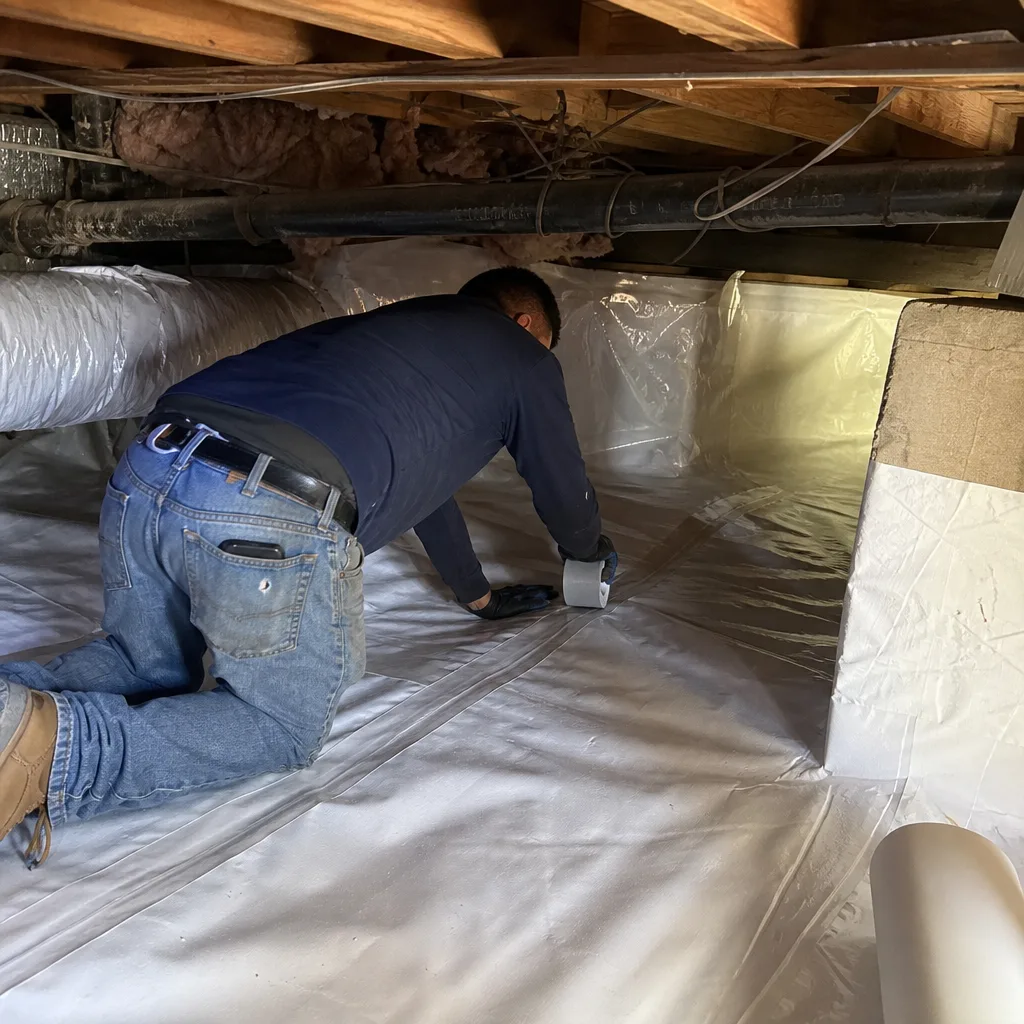
We run the same documented sequence on every job. You’ll see each step in the photo record we leave with you when the work is done.
- Crawl space assessment and written scope. Before pricing anything, a technician enters the crawl space, photographs the existing conditions – soil moisture, any standing water, the state of any existing barrier, joist and sill plate condition, and the location of penetrations – and documents what’s there. The written price and scope you receive are based on those actual findings, not a square footage estimate taken from the street.
- Remove and dispose of old material. If there’s an existing vapor barrier, we pull it out completely. Patching over failed poly is not a repair we perform – it leaves the compromised material in place and creates an air gap between layers where moisture can still travel. Old insulation that’s wet or fallen needs to come out too; we document its condition before removal so you can see what was actually there.
- Ground preparation. Debris, sharp rocks, and organic material are cleared from the crawl space floor. A vapor barrier laid over rough or organically active soil is more likely to tear and more likely to trap the materials that continue to off-gas moisture. This step takes time and most contractors skip it; we don’t.
- Install vapor barrier sheeting. We use reinforced polyethylene sheeting in the thickness specified for the job – typically 10-mil to 20-mil depending on the site conditions and whether the project is a standalone vapor barrier or part of a full encapsulation. Overlapping seams are sealed with manufacturer-specified tape; the barrier runs up the foundation walls and is mechanically fastened and sealed at the perimeter. No exposed soil remains. On applicable jobs using Owens Corning or Johns Manville encapsulation systems, we follow the manufacturer’s installation specifications so the material warranty is preserved.
- Seal penetrations. Plumbing, electrical conduit, and structural posts that penetrate the barrier get individually sealed. This is where a lot of vapor barrier installations lose effectiveness – the sheet looks complete but each pipe becomes a bypass. We treat penetrations as part of the job, not an afterthought.
- Final inspection and documented photo record. Once the barrier is down and sealed, we photograph the finished installation – perimeter seals, seam tape, penetration seals, and the overall floor coverage. That photo record is yours. You’ll see exactly what was done and where, without having to take our word for it. The 365-Day Done Right Promise applies from the day the job closes: if anything isn’t right, we make it right.
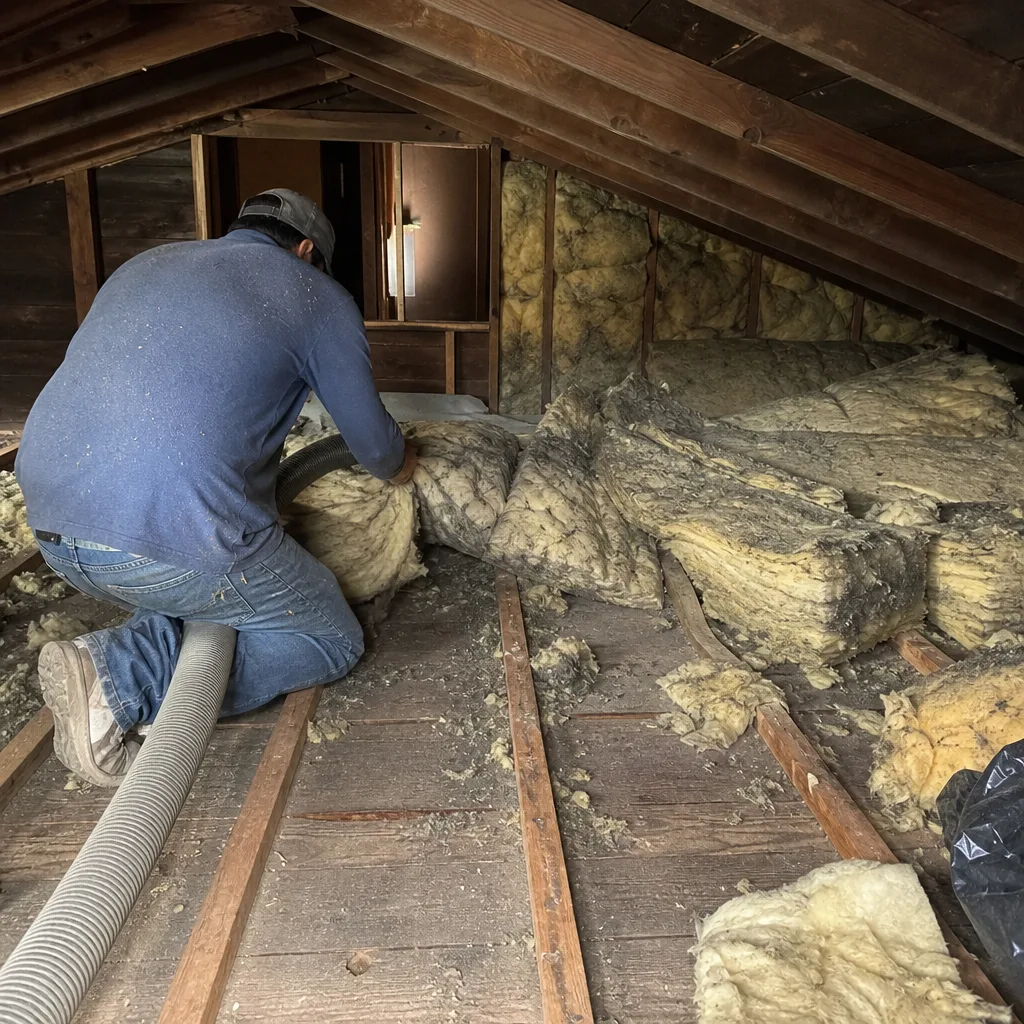 Before
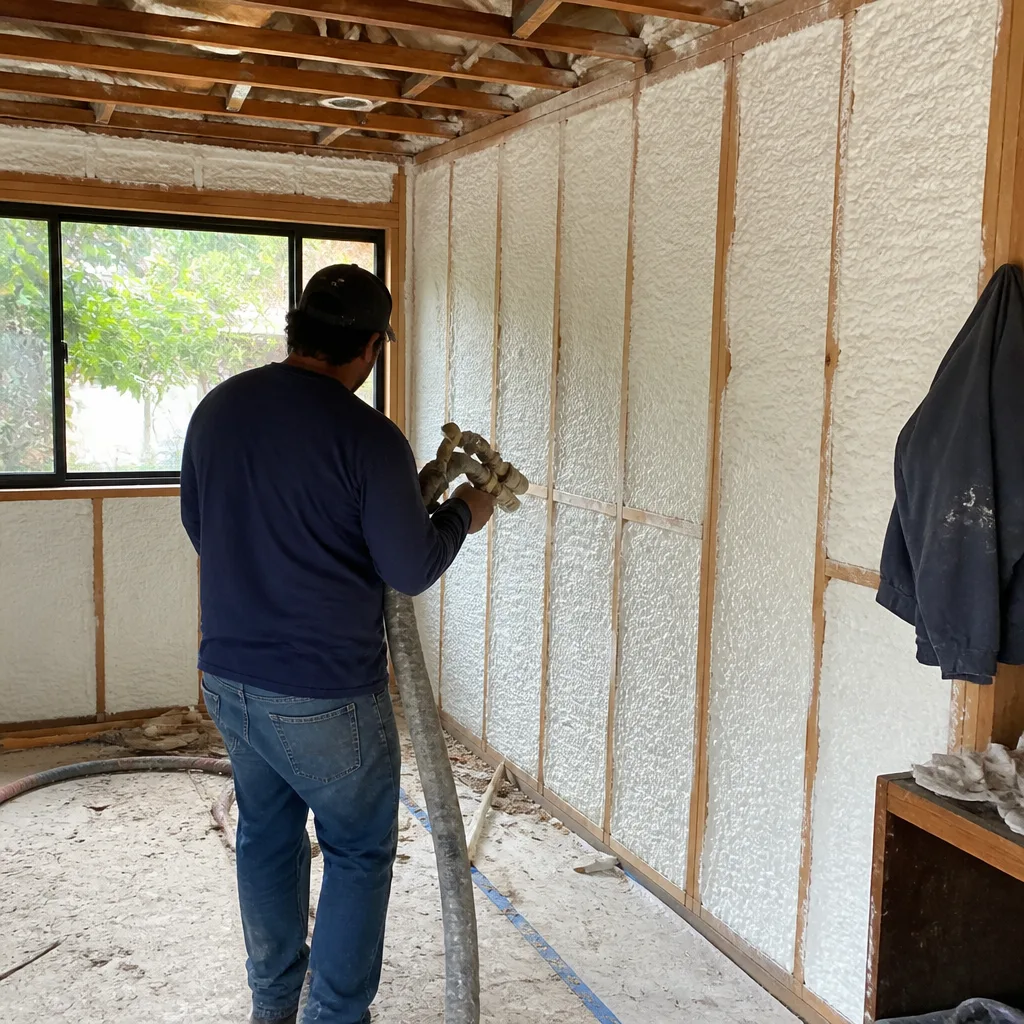 After
AfterCrawl Space Vapor Barrier Pricing in Glendale
If you’re wondering How Much Does Crawl Space Encapsulation & Vapor Barrier Cost? (2026 Price Guide) - Glendale, CA, installation typically runs between $1,200 and $4,500 for a standalone barrier project. The range is wide because crawl space conditions vary significantly – a clean, accessible crawl space under a 1,000-square-foot footprint with no existing material to remove is a different job than a 2,000-square-foot crawl space with low clearance, old insulation to dispose of, and a failed barrier that’s been there since 1962.
Here’s how the major cost variables break down:
- Crawl space footprint (sq ft): The largest single factor. Larger footprints require more material and more labor to move around in a confined space.
- Barrier thickness (mil rating): Standard installations use 10-mil to 12-mil reinforced poly. If the site has higher moisture load – common in the lower-elevation and canyon-adjacent parts of Glendale – a 16-mil or 20-mil product is appropriate and adds to material cost.
- Crawl space height and accessibility: A 36-inch clearance is workable. An 18-inch clearance takes significantly longer and adds labor. Many of the older craftsman-style homes in Glendale’s historic residential neighborhoods have low clearance crawl spaces that require a full day of careful work.
- Old material removal and disposal: If there’s existing poly, old batt insulation, debris, or rodent contamination, removal is a line item. We document what we remove so you know exactly what was there.
- Number of penetrations: More pipes, posts, and conduit penetrations mean more sealing work. A heavily plumbed crawl space takes longer to do correctly.
- Standalone vapor barrier vs. full encapsulation: If this project is the vapor barrier component of a broader encapsulation that includes closed-cell spray foam on the walls, a conditioned crawl space design, and a dehumidifier, the vapor barrier itself is one line in a larger budget. We price each component separately in the written scope.
Under Haven Standard Clause 1, you’ll have a flat written price in hand before any work begins. No surprises on the invoice. If you have a written estimate from another contractor, bring it to us – we’ll read it with you as part of our free second opinion, line by line, and tell you what’s in it and what isn’t. Call (213) 474-3828 to schedule your crawl space assessment.
FAQs – Crawl Space Vapor Barrier
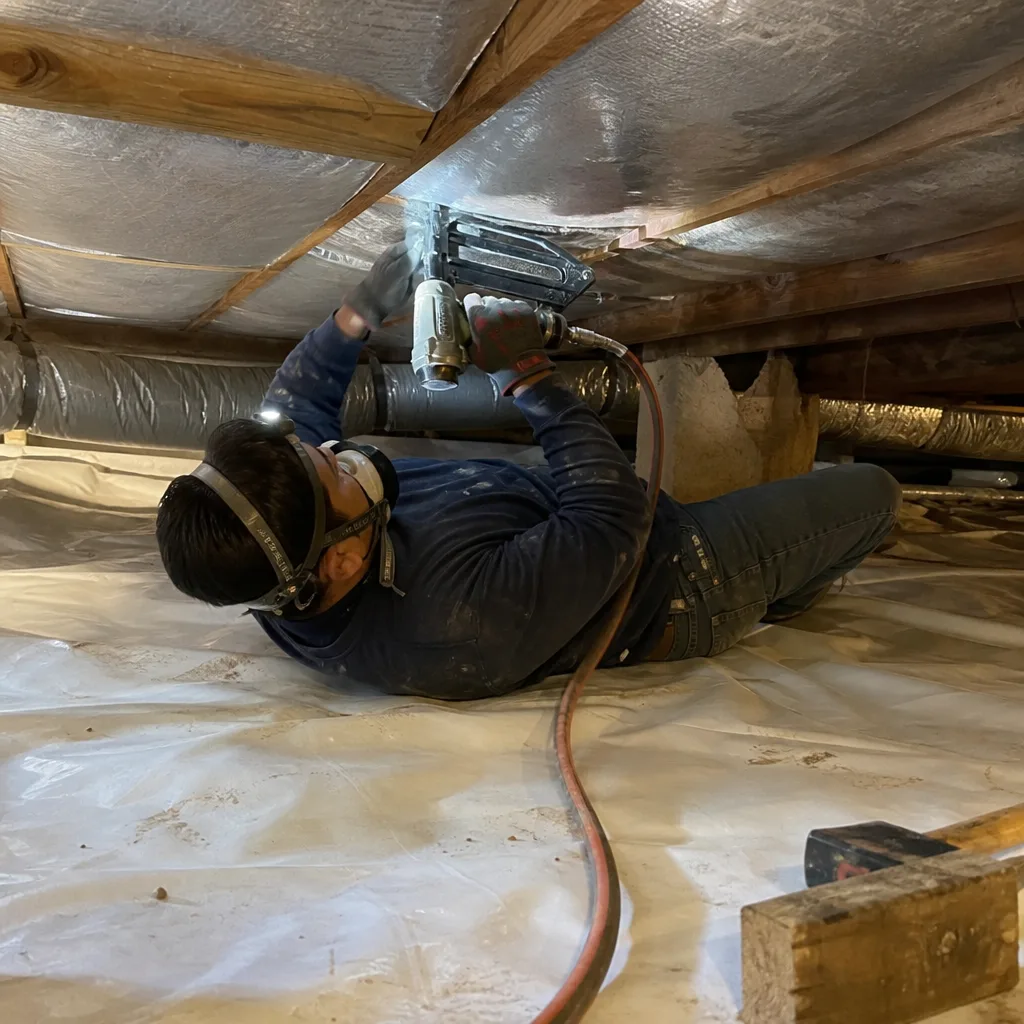
How thick should a crawl space vapor barrier be in Glendale?
For most Glendale homes, a minimum of 10-mil reinforced polyethylene is appropriate; homes in the canyon neighborhoods or with known seasonal groundwater movement should use 16-mil to 20-mil for effective Crawl Space Insulation. The 6-mil sheeting sold at hardware stores meets older California building code minimums but doesn’t hold up well under foot traffic during future crawl space access or against the occasional sharp debris left on an unprepped floor. We specify the mil rating in the written scope before the job starts so you know exactly what’s going in.
Can I install a vapor barrier myself?
You can purchase the materials and lay them, but the parts that actually determine whether the barrier works – seam sealing, wall termination, penetration sealing, and ground preparation – are where most DIY installations fail. A vapor barrier with un-taped seams and unsealed pipe penetrations still allows significant moisture transfer. We regularly inspect crawl spaces in Glendale where a homeowner or a prior contractor installed poly sheeting that was never sealed at the edges, and the moisture damage continued uninterrupted. If you want to see what a correctly installed barrier looks like, we document every finished installation with a photo record so the standard is visible.
Is a vapor barrier the same as crawl space encapsulation?
A vapor barrier is one component of a full encapsulation system, not the same thing. Encapsulation typically means sealing the ground and the foundation walls, insulating the walls with closed-cell spray foam, sealing the vents, and adding a dehumidifier to condition the crawl space air. A vapor barrier on the ground floor only, with open vents, is a partial measure – it reduces ground moisture but doesn’t address the humid outdoor air that enters through vents. For Glendale homes with significant crawl space moisture problems, the Crawl Space Encapsulation & Vapor Barrier in Glendale page explains when a full encapsulation makes sense over a ground-only barrier.
How long does a crawl space vapor barrier last?
A properly installed reinforced polyethylene barrier at 10-mil or higher, sealed at seams and penetrations, should last 20 years or more without needing replacement. The 6-mil material common in older installations degrades faster – UV exposure during installation, foot traffic, and natural brittleness over time can cause it to fail in 10 to 15 years. Our 365-Day Done Right Promise covers the installation itself for the first year; the long-term performance depends on the material specified, which is documented in your written scope so you have a clear record of what was installed and when.
Why Glendale Homeowners Choose Envelope Insulation Co.
Since 2016, we’ve completed work on more than 9,000 homes across the region – every single one with a written price before the work started and a documented photo record when the crew left. That’s not a policy we added later; it’s how The Haven Standard was built from the beginning, and Wes Okafor holds every job to it.
In Glendale specifically, we’ve worked in the hillside neighborhoods where soil drainage makes crawl space moisture a seasonal problem, and in the flat residential blocks where homes have sat on raised foundations for 60 or 70 years without anyone ever looking at the crawl space. The conditions vary by block, sometimes by house. That’s why the assessment comes first, the photo documentation comes with every visit, and the price is written and flat before a single piece of poly gets unrolled.
We source materials from manufacturers including Owens Corning and Johns Manville – not because we have an exclusive arrangement with either, but because these are the products with documented performance data and traceable material warranties. You’ll see the specific product specified in your written scope.
If you’ve already received a written estimate from another contractor, bring it to us. Our free second opinion offer means we’ll read it with you, identify what’s included and what isn’t, and tell you whether the scope matches the problem described. No obligation to book with us afterward.
To schedule a crawl space assessment or ask about pricing for your specific home, call Wes Okafor and the team at (213) 474-3828. You’ll reach a live person – no voicemail, no callback window. A written price is the first thing you’ll have before any work gets discussed further.
Written by Wes Okafor, Owner at Topside Attic Insulation Glendale, serving Glendale.