
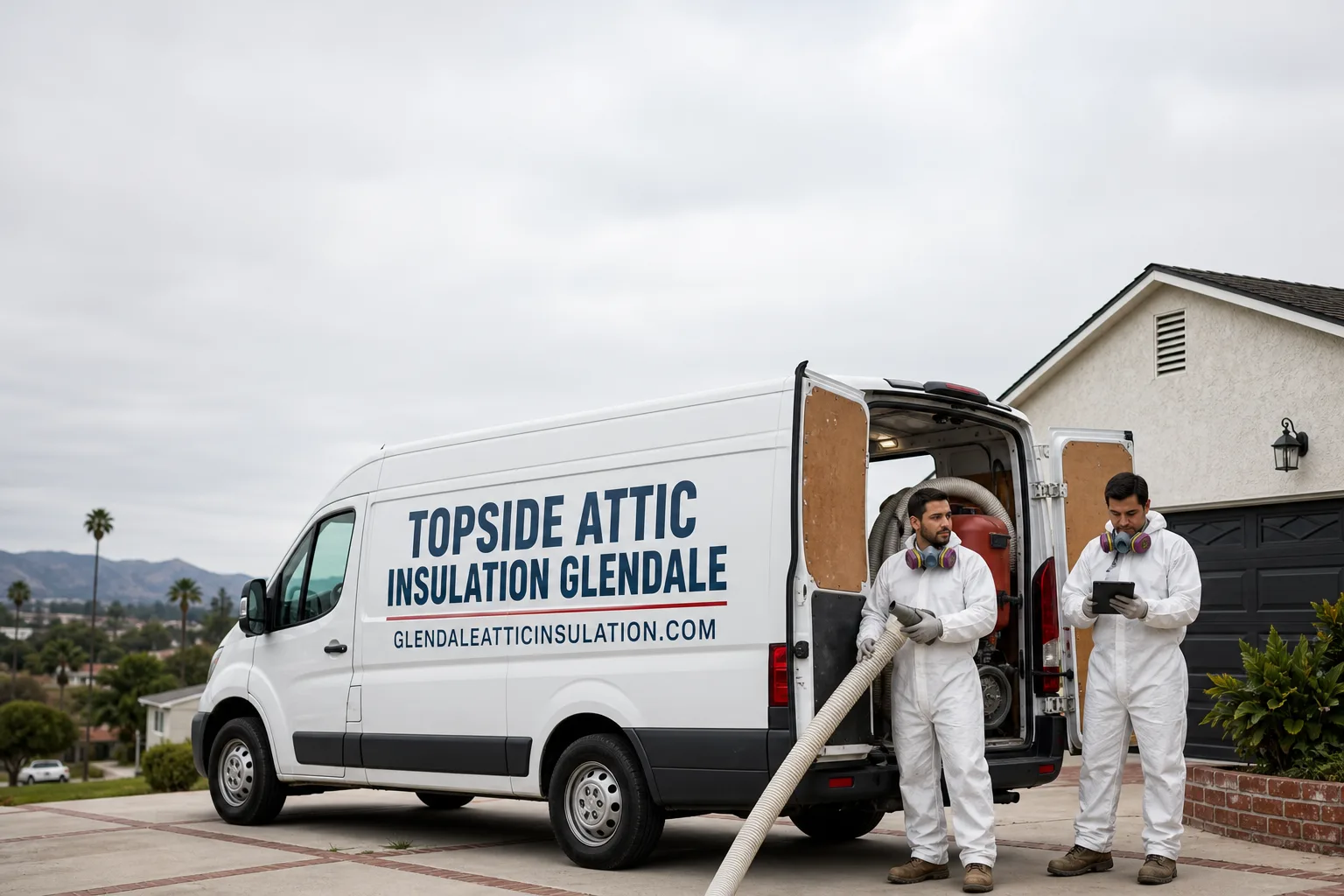
Trusted Spray Foam Insulation for Glendale Homeowners
If you’re wondering how much Spray Foam Insulation costs, Glendale prices typically run $2.80 to $6.50 per board foot installed, with most whole-attic jobs at $3,200 to $7,800 depending on whether open-cell or closed-cell foam is used. Most residential jobs in Glendale, from the hillside homes near Brand Park to the post-war bungalows in Adams Hill, are completed in a single day with crews arriving by 8 a.m. and the space ready for occupancy by evening. Call (213) 474-3828 for a written price before any work starts, a free second opinion on any competing estimate, and same-week scheduling in most Glendale neighborhoods.
We’ve sealed and insulated more than 9,000 homes since 2016 with our Glendale Spray Foam Insulation service, and every one began with a written price and ended with a documented photo record. In Glendale specifically, we see the same pattern repeatedly: homes built between 1945 and 1975 with original fiberglass batt insulation that has settled, compressed, or been disturbed by rodents, leaving the attic floor performing at a fraction of its labeled R-value. The summer heat in the Verdugo Mountains foothills, where afternoon temperatures regularly exceed 95°F from July through September, turns those under-insulated attics into radiant ovens that force air conditioning systems to run continuously. Our crews start every spray foam job with a blower-door test, a pressurization reading that shows, in one number, how much conditioned air the building envelope is losing. We seal first, then insulate, and we publish the before-and-after numbers so you can verify the result. Under Haven Standard: Have it in writing, always.
What Our Spray Foam Insulation Service Includes
Open-Cell Spray Foam
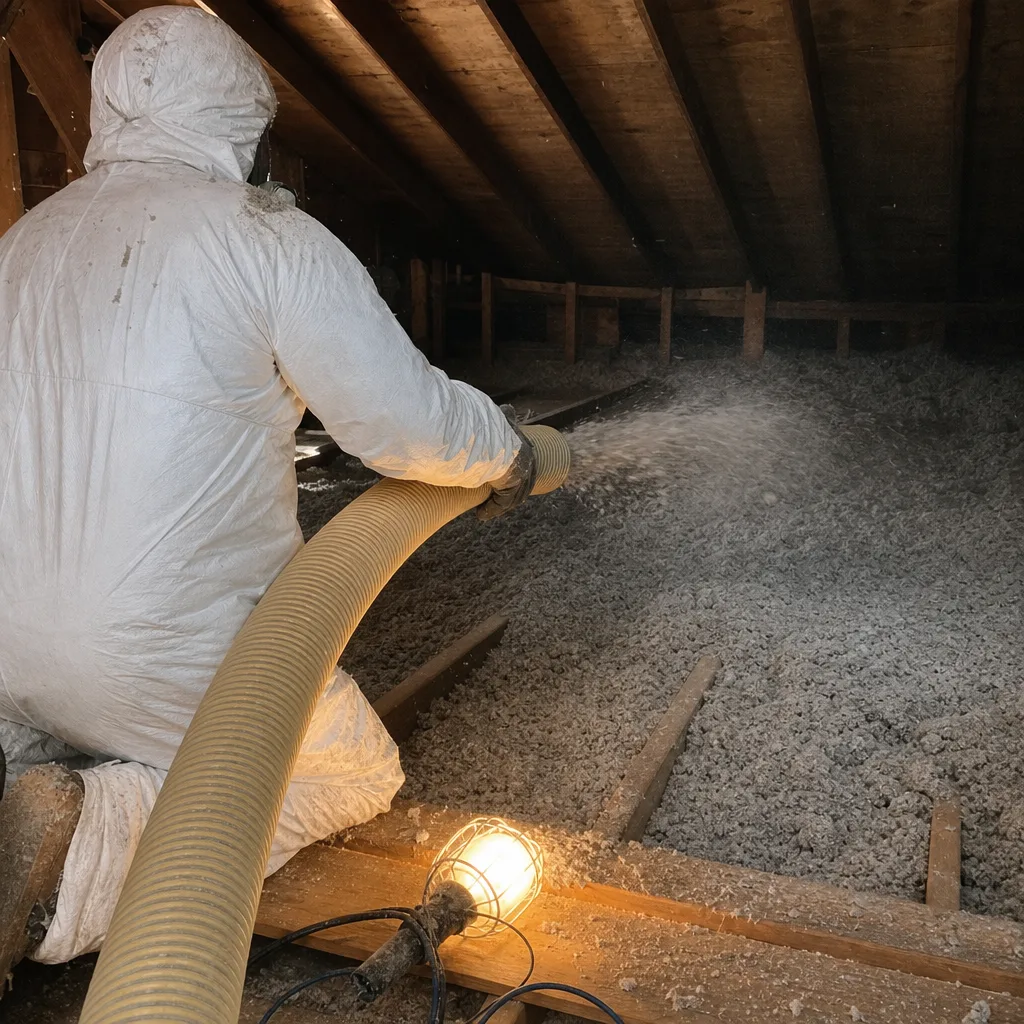
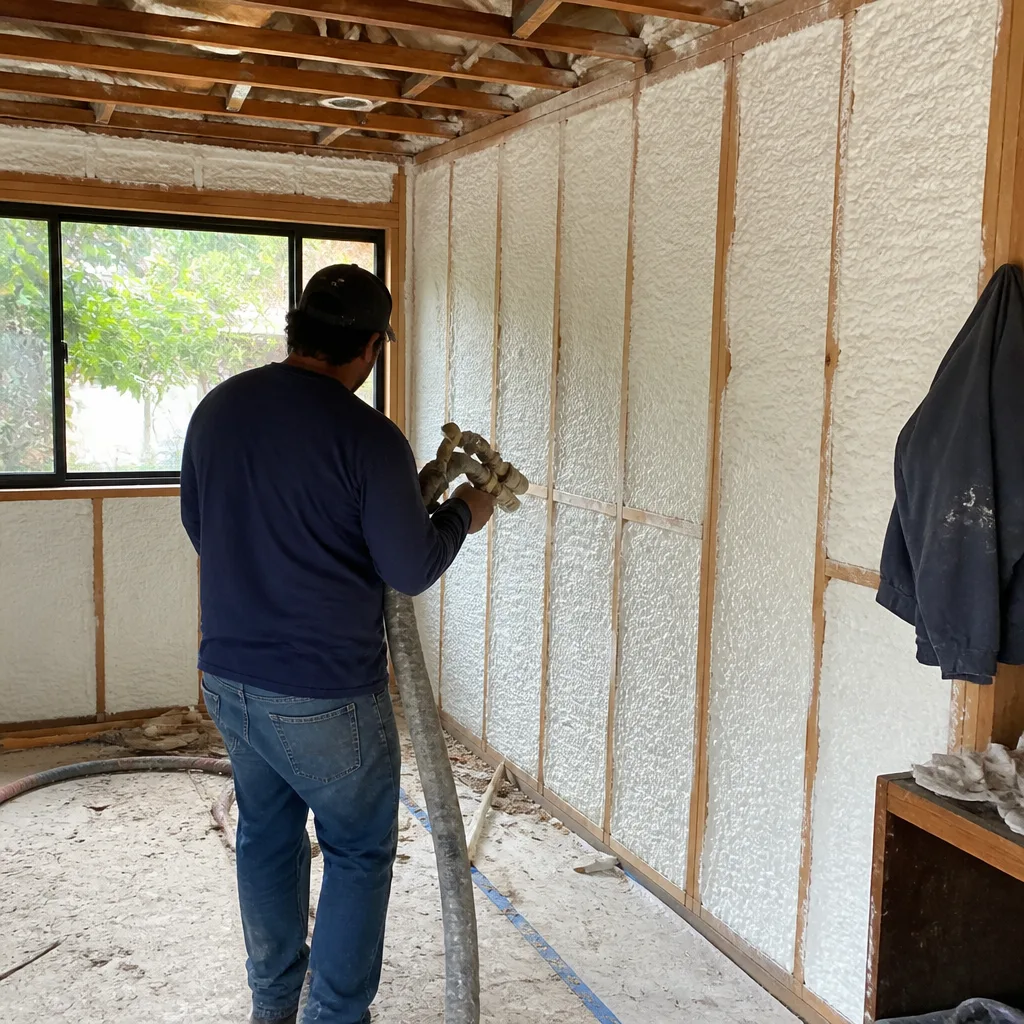
Open-cell spray foam is a low-density polyurethane that expands to roughly 100 times its liquid volume, creating a soft, flexible insulation layer with an R-value of about 3.6 per inch. In Glendale, we use open-cell foam most often for attic floor applications in homes with adequate roof ventilation paths, particularly in the ranch-style houses north of Mountain Street where attic height allows for the 5 to 7 inches typically needed to reach R-21 or R-30. Our crews apply open-cell foam directly to the attic floor after completing air sealing of top plates, can light penetrations, and duct chases, ensuring the insulation doesn’t simply filter conditioned air leaking through the ceiling plane. The material we source from Demilec and Johns Manville is HFC-free and carries a Class III vapor permeability rating, which matters in Glendale’s mixed-dry climate where seasonal moisture migration can trap condensation in improperly specified assemblies.
Closed-Cell Spray Foam
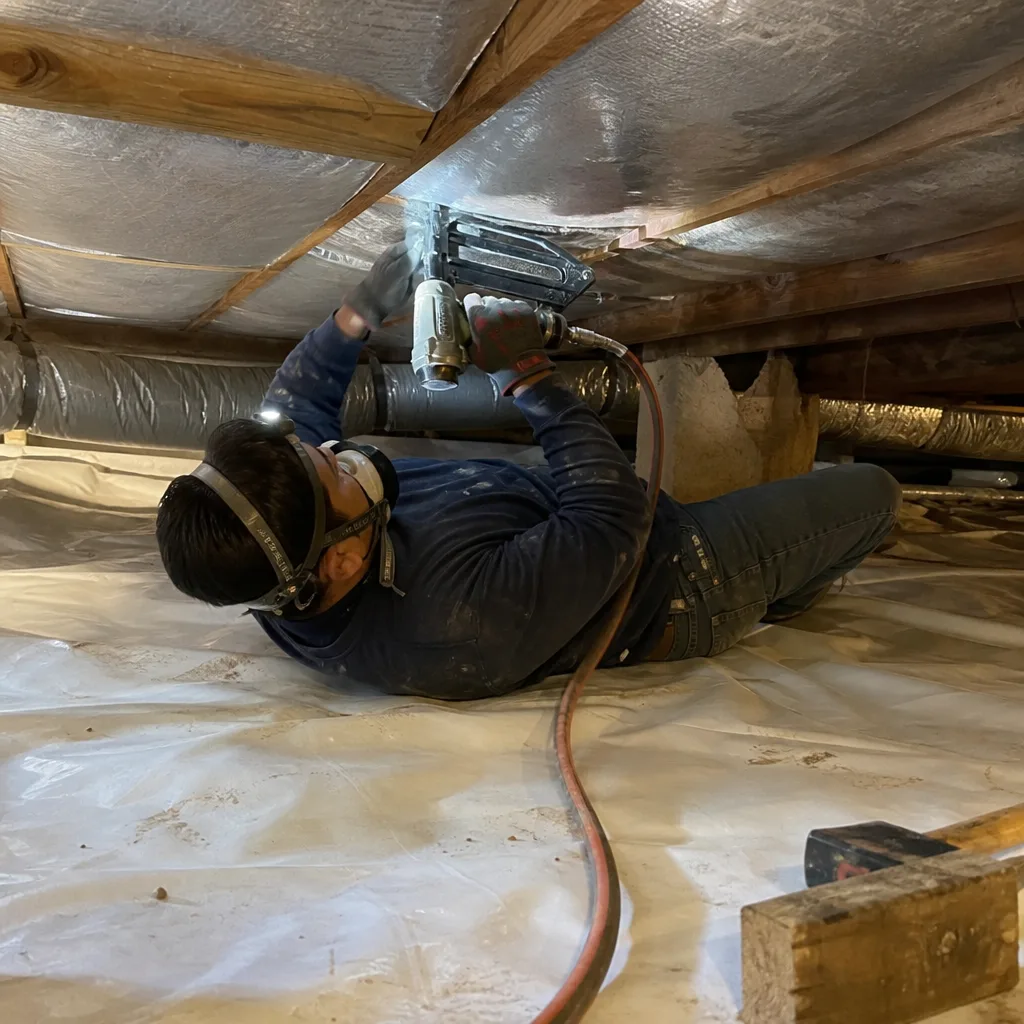
Closed-cell spray foam is a medium-density polyurethane that cures to a rigid, structural layer with an R-value of approximately 6.5 per inch and a Class II vapor retarder rating. We specify closed-cell foam for Glendale homeowners who need maximum thermal resistance in limited space, such as the compact attics in the condominium conversions along Wilson Avenue or the historic California bungalows in Rossmoyne with shallow roof pitches that don’t accommodate thicker open-cell applications. Closed-cell foam also adds shear strength to roof decks, a consideration in the hillside zones near Glenoaks Canyon where seismic bracing and structural redundancy matter. Our crews apply closed-cell foam in lifts of 1 to 2 inches to prevent exothermic heat buildup during curing, with full cure verification before the job is signed off. Every closed-cell installation includes a written warranty and the documented photo record that Haven Standard requires.
Rim Joist Spray Foam
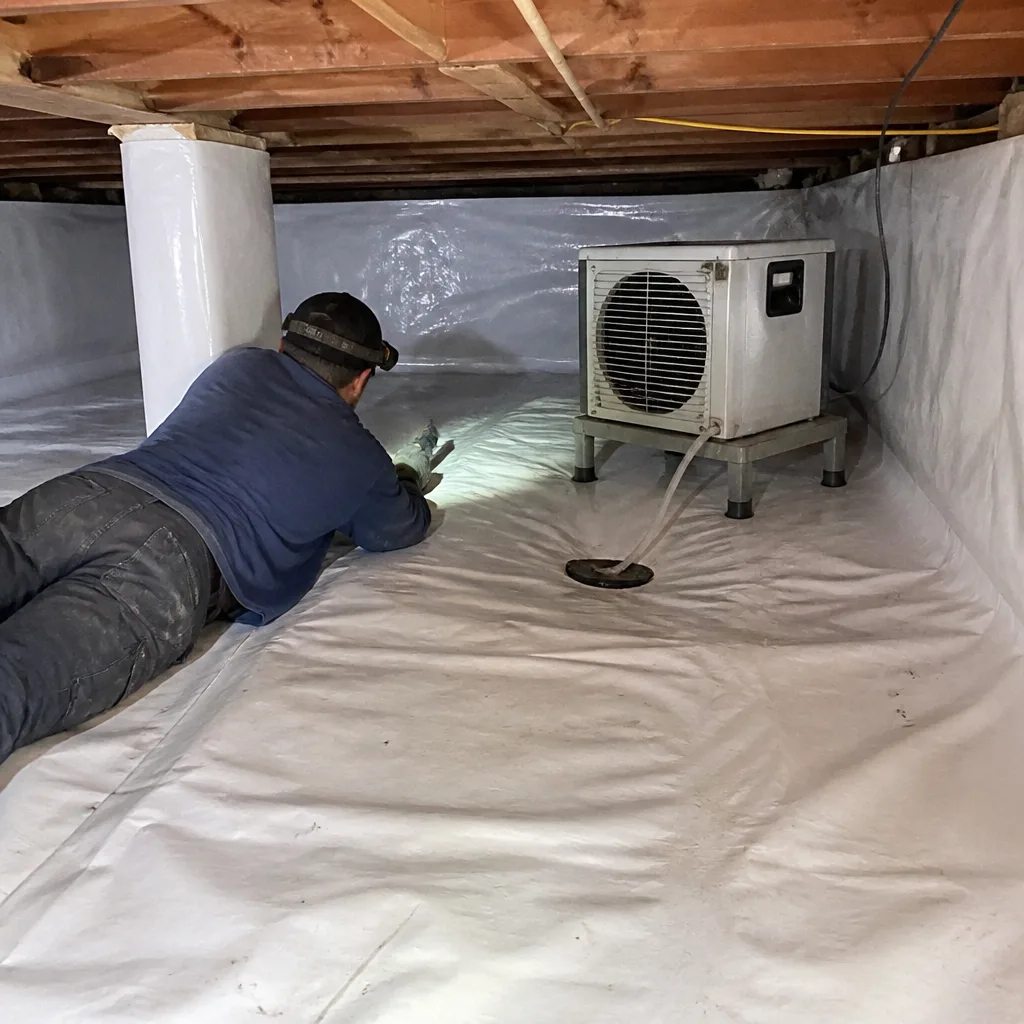
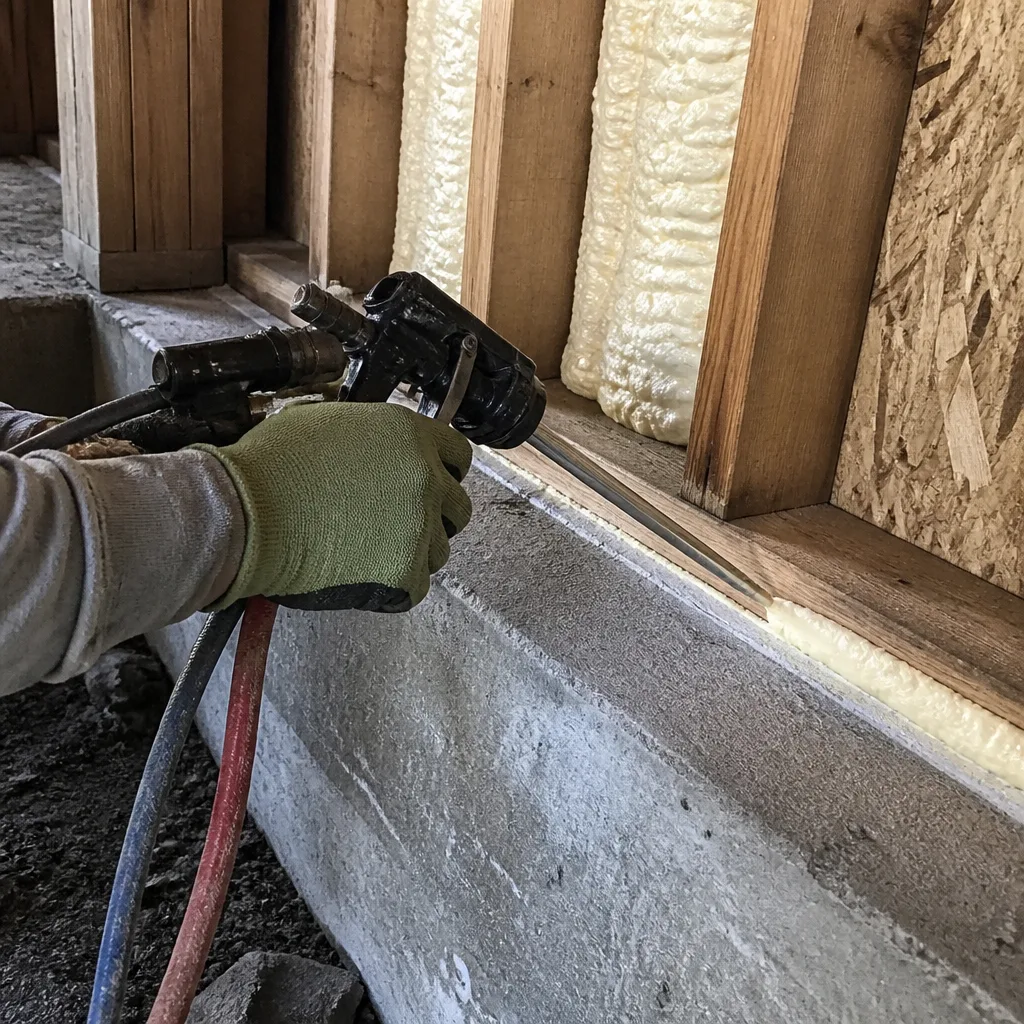
The rim joist, also called the band joist or sill box, is the perimeter framing member where the floor system meets the foundation, and it’s often the most significant single air leakage point in a Glendale home’s thermal envelope. In the split-level and raised-foundation houses common south of Colorado Boulevard, unsealed rim joists can account for 15 to 20 percent of total building air leakage, pulling conditioned air into wall cavities and creating cold-floor complaints in winter. We spray closed-cell foam into rim joist bays after removing any degraded fiberglass or rodent-contaminated material, sealing the joint between sill plate and foundation with compatible sealant first. The result is a monolithic air barrier that also insulates the critical floor-wall transition. On jobs where blower-door testing is applicable, we typically see 150 to 400 CFM50 reduction from rim joist treatment alone in a 1,800-square-foot Glendale home.
Garage Ceiling Spray Foam
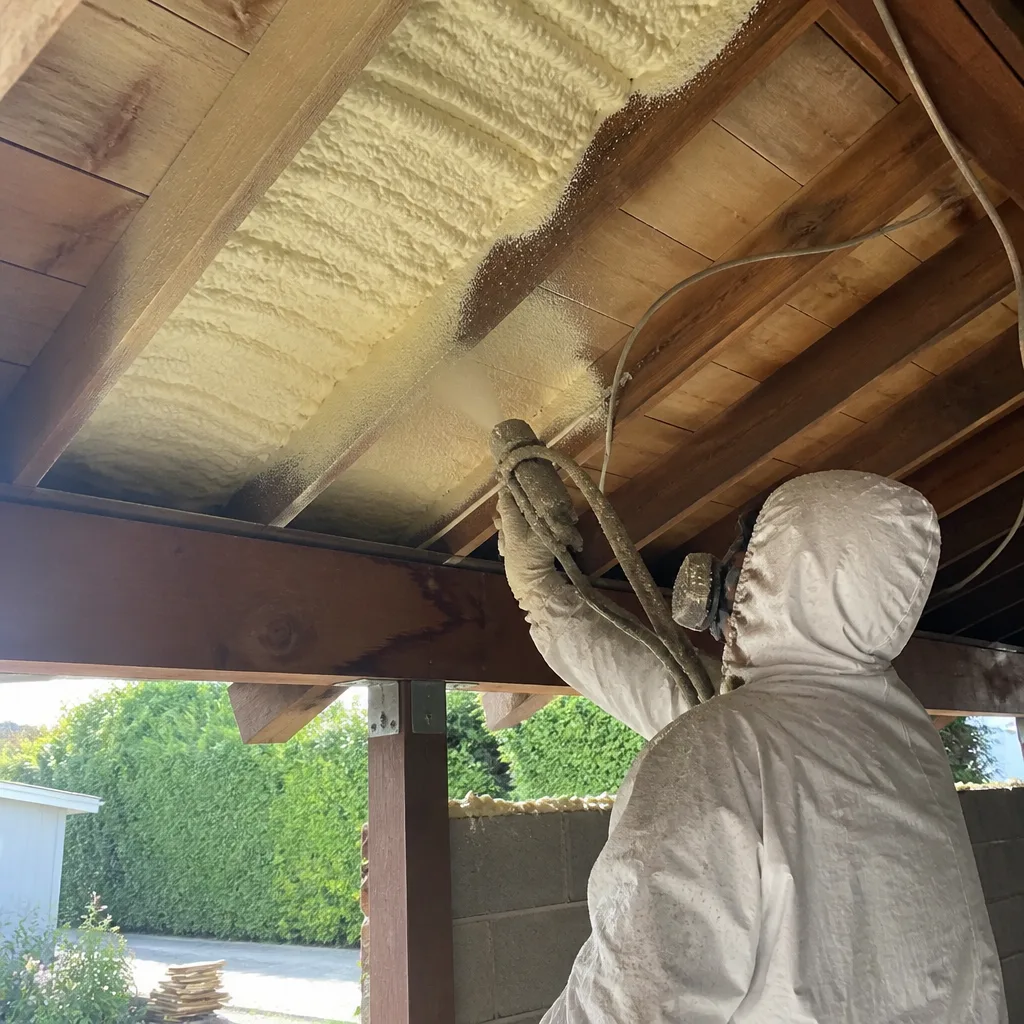
Garage ceiling spray foam addresses the thermal bridge created when a conditioned room sits above an unconditioned garage, a common configuration in Spray Foam Insulation in Burbank and Glendale’s 1960s and 1970s two-story tract homes in neighborhoods like Somerset and Whiting Woods. Without proper air sealing and insulation at the garage ceiling, bedroom floors above run cold in winter and hot in summer, and garage fumes and particulates migrate through penetrations into living space. Our crews treat garage ceiling applications as full air-sealing projects first: we seal around duct boots, electrical penetrations, and the garage-to-house door frame before applying either open-cell or closed-cell foam depending on the cavity depth and whether the garage is used for storage that might contact the foam surface. We use ignition-barrier-rated materials where required by Glendale’s adopted California Building Code provisions for habitable-space separation.
Spray Foam Roof Deck
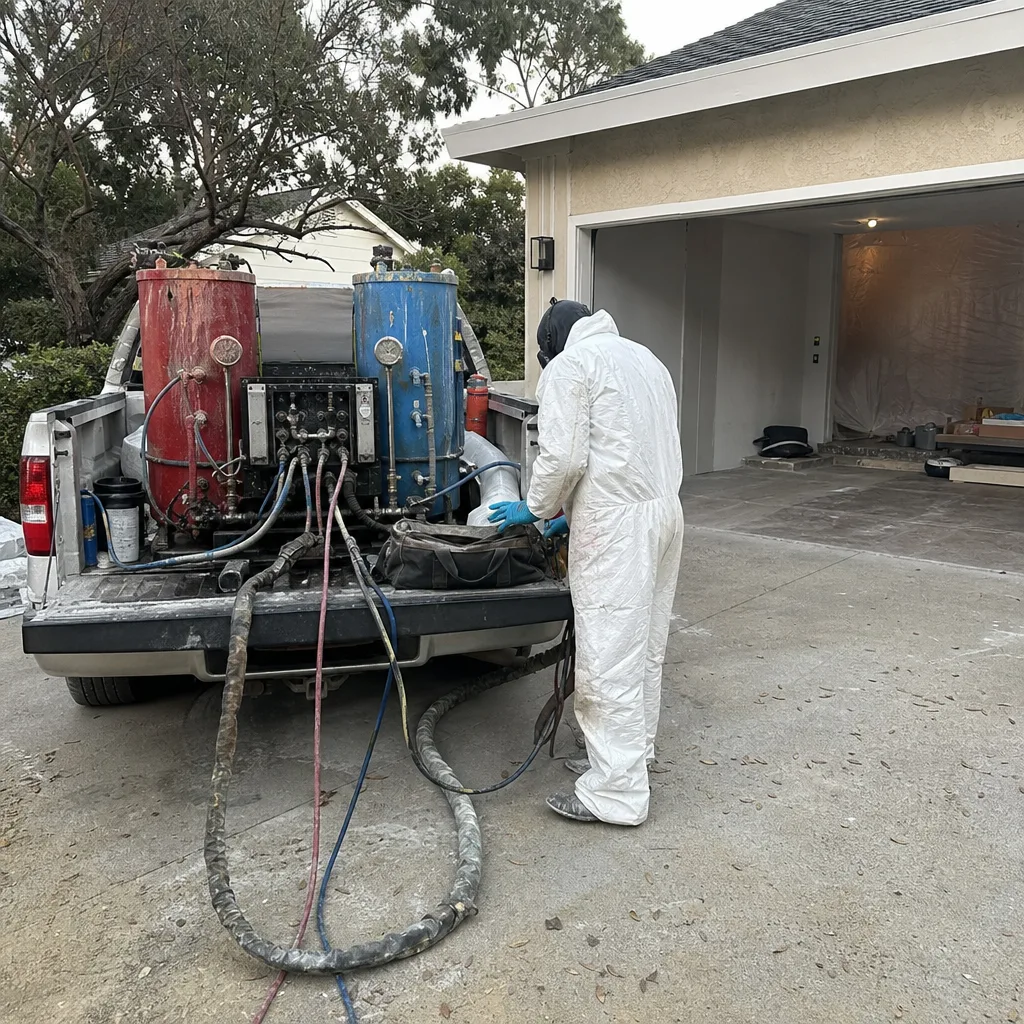
Spray foam applied directly to the underside of the roof deck creates an unvented, conditioned attic assembly, converting what was previously a hostile space into a semi-conditioned zone that reduces duct losses and eliminates ice dam risk. Spray Foam Insulation in West Hollywood and Glendale both benefit from roof deck foam, which makes particular sense for homes with HVAC equipment or ductwork in the attic, describing roughly 60 percent of the housing stock built between 1950 and 1990. We specify open-cell foam for roof deck applications in most cases, applied to a thickness of 5 to 7 inches to achieve code-compliant R-value while maintaining vapor permeability that allows incidental roof deck moisture to dry inward. The assembly requires careful coordination with roofing conditions and, in some Glendale hillside zones, may trigger additional fire-resistance requirements under local amendments to the California Residential Code. We document all code compliance measures in the written scope delivered before work begins.
What happens when you call
- 1
A real person answersNo phone trees - you reach a local pro.
- 2
You get an upfront price rangeHonest numbers before anyone is dispatched.
- 3
A background-checked tech heads outLicensed & insured, dispatched right away.
- 4
You approve before work beginsNothing starts until you say go.
Brands We Service for Spray Foam Insulation
We source spray foam materials from Demilec, Johns Manville, Owens Corning, and other established manufacturers, with no proprietary product lock-in that would limit specification flexibility for your specific assembly. Our crews have applied Demilec’s Heatlok HFO Pro series in more than 200 Glendale-area jobs, particularly for closed-cell applications where the low global-warming-potential blowing agent aligns with California’s evolving environmental regulations. We’ve found its adhesion characteristics reliable on the mixed sheathing substrates common in local remodels, including plywood, OSB, and existing foam board that needs additional R-value. Johns Manville’s Corbond III is our typical specification for open-cell roof deck work, with consistent expansion ratios that reduce waste in the confined attic spaces typical of Glendale’s older housing stock.
We also stock and install Owens Corning’s Foamular NGX rigid foam board for hybrid assemblies where spray foam needs complementary continuous insulation at rim joists or foundation transitions. Whether your project calls for Demilec, Johns Manville, Owens Corning, or another manufacturer specified by your architect or energy consultant, we install to the manufacturer’s published application guidelines and provide the documentation, including lot numbers and installation conditions, that warranty compliance requires. Bring us a specification; we’ll price it against our standard recommendations with a free second opinion on any written estimate.
 Before
 After
AfterSigns You Need Spray Foam Insulation Right Now
- Your air conditioner runs constantly from July through October. In Glendale’s extended cooling season, an under-insulated attic can reach 140°F on summer afternoons, forcing your HVAC system to overcome radiant heat gain through the ceiling plane. If your upstairs rooms never reach the thermostat setpoint despite a properly sized and maintained system, the thermal boundary at your attic floor has likely failed.
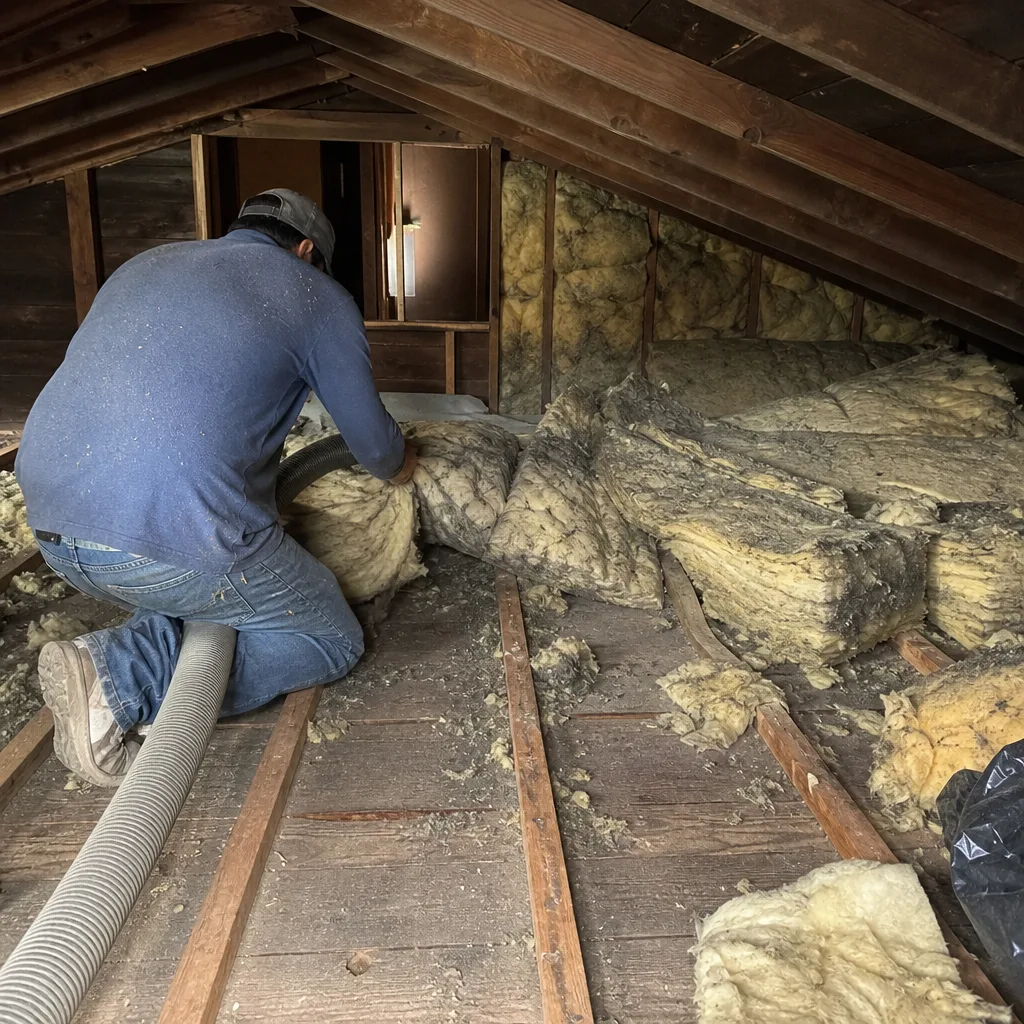
- You can see the tops of your ceiling joists in the attic. Original fiberglass batt insulation settles over decades, and in Glendale’s pre-1980 housing stock, we regularly find attics where the insulation sits 2 to 4 inches below the joist tops, indicating 30 to 50 percent R-value loss from the original installation. Spray foam applied directly to the floor deck restores full contact and eliminates convection loops that degrade batt performance.
- Your energy bills spike every summer regardless of usage. Southern California Edison’s tiered rate structure penalizes high summer consumption heavily, and an unsealed, under-insulated attic is typically the largest single driver of excess cooling load. If your usage patterns haven’t changed but your bills have climbed, the building envelope is the place to look.
- You feel drafts or temperature stratification between rooms. Air leakage through top plates, partition walls, and penetrations creates pressure imbalances that manifest as unexplained drafts or rooms that are consistently 5 to 10 degrees different from the thermostat location. Spray foam, properly applied after air sealing, addresses both the leakage paths and the thermal bypasses.
- You’ve had rodents in the attic. Rodent activity compresses, contaminates, and displaces fiberglass insulation, and the pheromone marking left behind attracts subsequent infestations. Spray foam is not rodent-proof, but it eliminates the nesting habitat and thermal bypasses that make attics attractive, and it can be applied after proper cleaning and proofing to restore performance.
Our Spray Foam Insulation Process - Step by Step
- 1
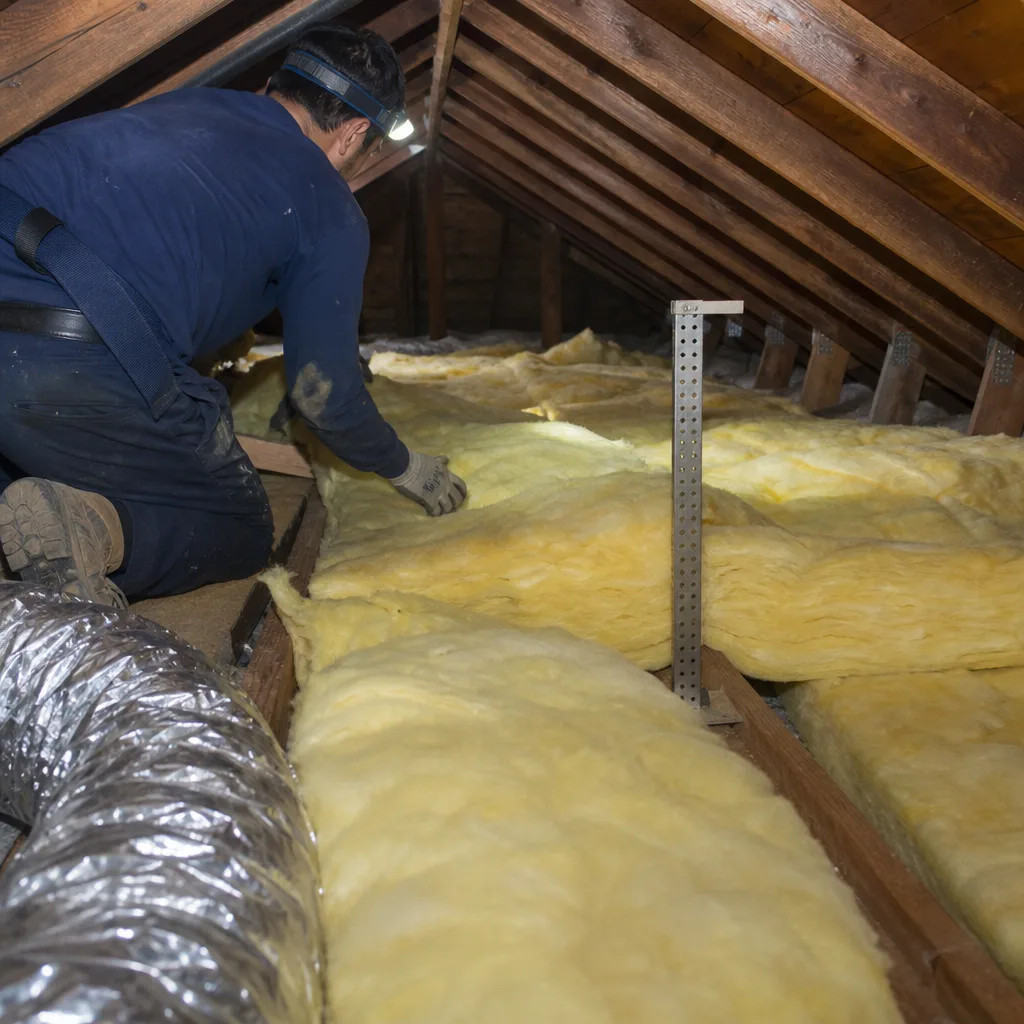
Initial assessment and blower-door baseline. We arrive at your Glendale home at the scheduled time, with a named technician you’ll recognize from the text sent when they departed our shop. The technician walks the interior to identify comfort complaints, then runs a blower-door test to establish the baseline air leakage rate in CFM50, the standard metric for building envelope tightness. This number, typically 2,500 to 5,000 CFM50 for a Glendale home of 1,500 to 2,500 square feet, becomes the benchmark against which we measure our air-sealing work.
- 2
Written scope and price delivered before any work starts. Under Haven Standard Clause 1, we provide a flat price, written scope, and written warranty before anyone lifts a tool. The scope specifies foam type, application thickness, square footage, and any preparatory work such as insulation removal or rodent proofing. There is no “call for a quote” step; the price is in your hands, with no expiration pressure and no obligation until you approve.
- 3
Air sealing before insulation. We seal top plates, electrical penetrations, can lights, duct chases, and chimney baffles with compatible sealants and rigid blocking before any foam is applied. In Glendale’s older homes, we often find significant leakage at the junction between stucco exterior walls and the attic floor, a detail that spray foam alone cannot reliably seal. This step typically reduces blower-door readings by 15 to 30 percent before insulation is added.
- 4
Spray foam application with thickness verification. Our crews apply foam in manufacturer-specified lifts, with real-time thickness measurement using depth gauges and thermal imaging to identify thin spots or voids. We allow full cure time, typically 24 hours for open-cell and 12 to 24 hours for closed-cell depending on ambient temperature and humidity, before verifying final R-value and surface condition. The job site is protected with masking and ventilation controls throughout.
- 5
Final documentation and sign-off. We deliver a Documented Photo Record showing before, during, and after conditions, plus the final blower-door reading where applicable. The written warranty, Haven Standard scope compliance checklist, and material lot numbers are compiled in a folder you keep. Payment is due only after you’ve reviewed the documentation and confirmed satisfaction. The 365-Day Done Right Promise applies from this date.
How Much Does Spray Foam Insulation Cost in Glendale?
Spray foam insulation pricing in Glendale reflects three variables: foam density (open-cell versus closed-cell), application area and thickness, and preparatory work required. For a typical 1,800-square-foot Glendale home with accessible attic space, open-cell attic floor insulation runs $3,200 to $5,400 at 5 to 7 inches thickness. Closed-cell applications in the same footprint, at 3 to 4 inches to achieve comparable thermal performance, range from $4,800 to $7,800 due to higher material cost and slower application rate. Rim joist treatment in a raised-foundation home adds $1,200 to $2,400 depending on perimeter linear footage and existing material condition. Garage ceiling applications typically fall between $2,800 and $4,500 for a two-car footprint with bedroom above.
Several factors push pricing toward the higher end of these ranges. Homes in the Glendale hillside zones, including areas north of Glenoaks Boulevard with steep driveways and limited crew access, incur additional mobilization time. Attics with active or recent rodent infestation require removal and sanitization before foam can be applied safely, adding $800 to $2,000 depending on contamination extent. Existing insulation that has been wet or contains asbestos-containing vermiculite triggers abatement protocols that we coordinate with licensed specialists, with costs passed through at our cost plus project management.
To avoid overpaying, we recommend obtaining at least one competing written estimate and bringing it to us for a free second opinion, a Haven Standard service we provide with no obligation. Be wary of per-board-foot pricing that doesn’t specify lift thickness, cure time, or air-sealing scope; spray foam installed over an unsealed attic floor will underperform regardless of its nominal R-value. Our written price includes all labor, materials, ventilation controls, cleanup, and documentation. There are no line-item surprises after work begins.
Spray Foam Insulation Near Glendale - Our Service Area
We maintain regular crews in Glendale with typical response times of same-day to three days for initial assessments, and we serve the full surrounding corridor including Spray Foam Insulation in Burbank, Spray Foam Insulation in La Cañada Flintridge, Pasadena, Altadena, South Pasadena, Alhambra, West Hollywood, San Gabriel, Beverly Hills, El Monte, and Los Angeles. Drive time from our Glendale staging area to Burbank or Pasadena is typically under 20 minutes, and we schedule La Cañada Flintridge and Altadena jobs with hillside-access equipment when needed. For home energy audits or multi-zone insulation projects spanning city boundaries, we coordinate single-visit assessments to minimize disruption. Call (213) 474-3828 to confirm current availability in your specific neighborhood.
Serving Glendale, CA - Our Local Coverage Area
We’re based in the Glendale area and know this community well. Use the map below to see our service coverage - if you’re nearby, we can almost certainly help.
Frequently Asked Questions - Spray Foam Insulation in Glendale
Spray foam insulation is a polyurethane-based material that expands on application to fill cavities, seal air leaks, and create a continuous thermal barrier in a single step, unlike fiberglass batts or blown-in cellulose which require separate air-sealing work to perform as labeled. The expansion characteristic allows spray foam to seal irregular joist bays, penetrations, and framing joints that are difficult to address with pre-formed materials. In Glendale’s varied housing stock, from 1920s stucco cottages to 1980s tract homes, this adaptability often makes spray foam the most cost-effective path to a genuinely continuous thermal envelope.
Most residential spray foam jobs in Glendale are completed in one day, with larger whole-home applications or projects requiring insulation removal extending to two days. The foam itself cures within 12 to 24 hours depending on product specification and ambient conditions, after which the space is safe for occupancy and normal use. We schedule start times to minimize your displacement, and our crew lead provides progress updates by text throughout the day.
Typical open-cell attic floor applications in Glendale run $3,200 to $5,400 for an 1,800-square-foot home, while closed-cell applications range from $4,800 to $7,800 for comparable thermal performance; rim joist and garage ceiling applications add $1,200 to $4,500 depending on scope. Final pricing depends on foam type, application thickness, preparatory work, and access conditions, all specified in the written price delivered before any work starts. Call (213) 474-3828 for an exact quote on your specific home, estimates are free.
Yes, we install Owens Corning Foamular NGX rigid foam board for hybrid assemblies and can source Owens Corning spray foam formulations through our distributor network when specified. Our standard specifications typically use Demilec or Johns Manville spray foam products for cost and availability reasons, but we have no exclusive arrangements that would prevent us from meeting your preferred material specification. Bring us a product requirement; we’ll price it transparently against our standard recommendation.
We answer calls 24/7 through a live person, not voicemail, and we can typically dispatch for same-day assessment in Glendale for situations such as insulation failure after roof leaks, rodent contamination requiring immediate remediation, or pre-sale inspection deadlines. True emergencies involving spray foam are rare, as the material does not fail catastrophically, but we treat urgent scheduling needs with the same priority as any time-sensitive project. Call (213) 474-3828 to discuss your timeline.
Every spray foam installation is backed by our 365-Day Done Right Promise, if it’s not done right, we make it right, plus the manufacturer’s material warranty that typically covers dimensional stability and R-value retention for the lifetime of the building assembly. The written warranty, delivered before work starts under Haven Standard, specifies coverage terms, claim procedures, and our obligation to remedy any installation defect within the promise period. Documentation including material lot numbers and installation photographs supports any future warranty claim.
Clear attic storage items and provide access to electrical panels and attic hatches; our crew handles all protective masking, ventilation, and material staging. If you have pets, we recommend keeping them in a separate room away from work areas during application and initial cure, as the aerosolized components can irritate sensitive respiratory systems. We send a preparation checklist by text or email when you confirm your scheduled date, and our technician reviews any site-specific considerations during the initial assessment walkthrough.
Schedule Your Spray Foam Insulation Service in Glendale Today
Call (213) 474-3828 to speak with a live person, 24/7, and schedule your free assessment. You’ll receive a written price before any work starts, a free second opinion on any competing estimate, and the documented photo record and blower-door verification that Haven Standard requires. Same-week scheduling is available in most Glendale neighborhoods, including Adams Hill, Rossmoyne, Somerset, and the Verdugo Woodlands. No voicemail loops, no callback windows measured in business days, and no work begins without your approved written scope.
Written by Wes Okafor, Owner at Topside Attic Insulation Glendale, serving Glendale since 2016.