
GreenFiber Vapor Barrier Installation: The Glendale Owner’s Guide
We stock and install GreenFiber-compatible vapor barrier systems in Glendale homes, with most crawl space and attic floor jobs running between $1,800 and $3,400 installed, depending on square footage and whether the existing barrier needs full removal. Same-day installation is available when we have your measurements in advance. Homeowners usually discover the problem during seasonal humidity spikes, when musty odors rise through floor registers or a home inspector flags condensation staining the subfloor during a sale.
Which GreenFiber Models This Applies To
GreenFiber does not manufacture standalone vapor barrier membranes; their vapor control strategy is built into their cellulose insulation systems, particularly the GreenFiber All Borate and Sanctuary product lines. The vapor barrier installation we pair with GreenFiber jobs is a 6-mil polyethylene sheet or reinforced cross-laminated membrane installed at the thermal boundary, typically over dirt crawl space floors or beneath attic floor decking before cellulose is blown in.
To identify what you need, check the bag labels from your original installation for the GreenFiber product name and R-value specified. If your home was insulated between 2015 and 2020, you likely have the All Borate formulation, which requires a vapor barrier with a perm rating below 1.0 to prevent moisture migration into the cellulose. We also stock Reflectix radiant barrier products for hybrid assemblies where both vapor control and radiant heat rejection are needed in Glendale’s sun-exposed attic conditions.
OEM-spec 6-mil poly is what GreenFiber’s installation literature references, but we typically install a 10-mil reinforced membrane in Glendale crawl spaces because the clay-heavy soil in neighborhoods like Rossmoyne and the foothills below the Verdugo Mountains holds moisture longer after winter rains. The aftermarket upgrade costs roughly $0.35 more per square foot in material but eliminates the puncture failures we see when standard 6-mil poly is walked on during future plumbing or HVAC service.
Topside Attic Insulation Glendale is an independent service provider with no affiliation to GreenFiber. We source materials through standard distribution channels and install to California Title 24 energy code requirements.
Signs Your GreenFiber Vapor Barrier Installation Is Failing
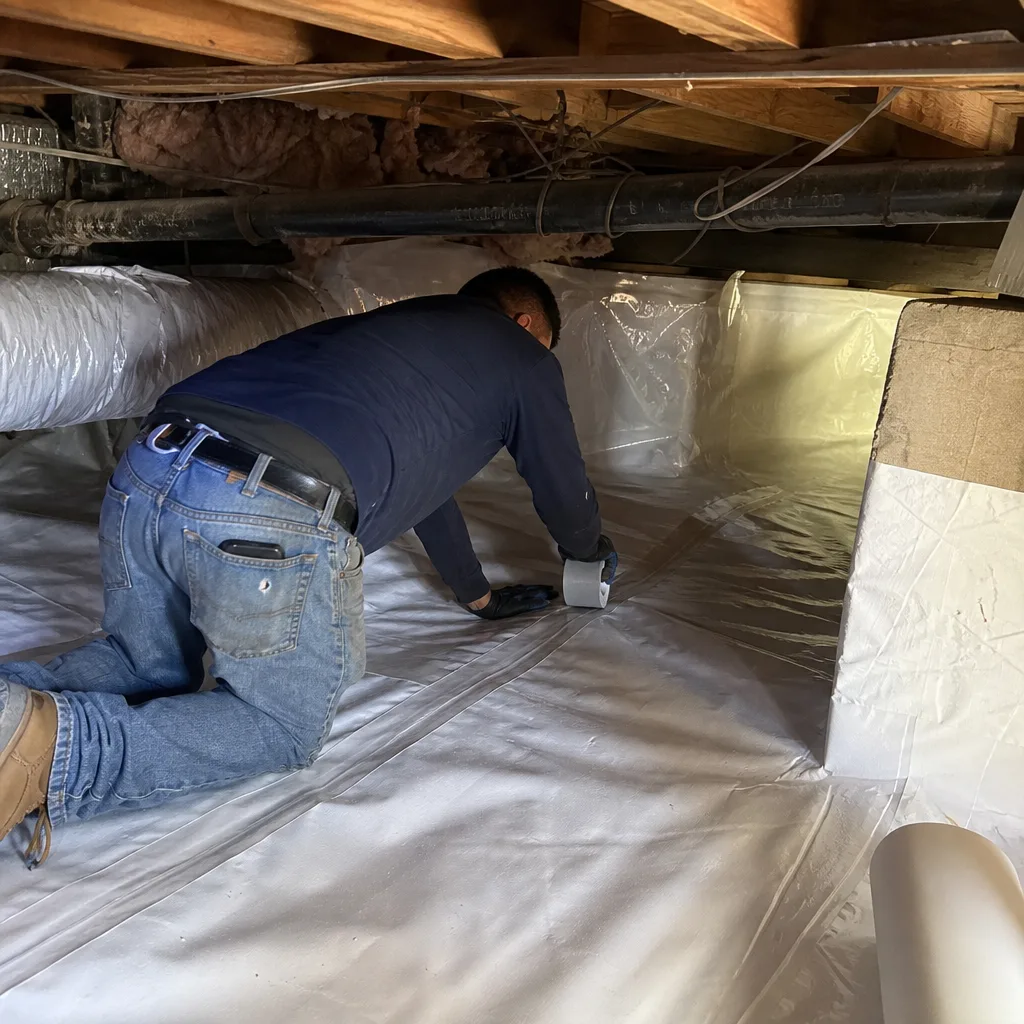
- Musty odors rising through floor vents. When the poly sheet separates at seams or tears around pier posts, soil moisture evaporates directly into the crawl space air. That moisture rides the stack effect up through wall cavities and floor registers. In Glendale, we see this most often in homes built on the 1920s-1950s flat lots between Colorado Boulevard and Broadway, where original crawl spaces were never properly sealed.
- Condensation or rust on ductwork in the crawl space. A functioning vapor barrier keeps the relative humidity below 70 percent at the soil interface. Once the barrier fails, summer dew points in the crawl space can exceed the surface temperature of air-conditioned supply ducts, causing sweat that corrodes galvanized fittings.
- White or grayish mold spotting on the subfloor underside. Cellulose insulation wicks moisture if the vapor barrier is compromised above a dirt crawl space. The mold is typically Aspergillus or Penicillium species, not the black mold that panics homeowners, but it indicates the thermal boundary is breathing backward, pulling soil moisture up instead of blocking it.
- Sagging or displaced insulation batts above the crawl space. When moisture reaches blown-in GreenFiber cellulose, the borates that provide fire and pest resistance also make the fibers heavier as they absorb water. The material compacts, loses R-value, and in severe cases pulls away from band joists.
- Increased energy bills with no equipment change. Wet insulation conducts heat faster than dry insulation. A crawl space with a failed vapor barrier can drop the effective R-value of floor insulation by 30 to 50 percent, which the HVAC system compensates for with longer run times. We have measured this with blower-door and duct-blaster combinations in Glendale homes where the homeowner’s only complaint was a $40-$60 summer cooling spike.
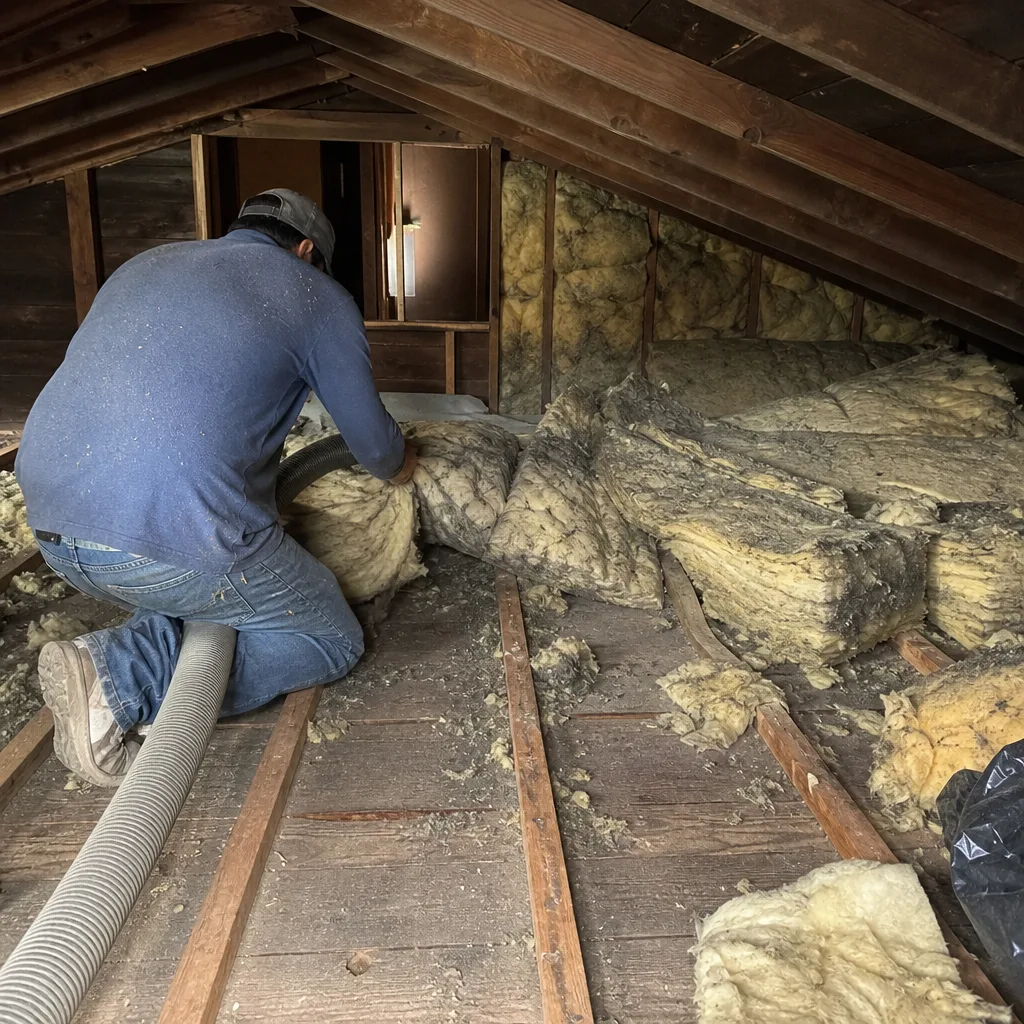 Before
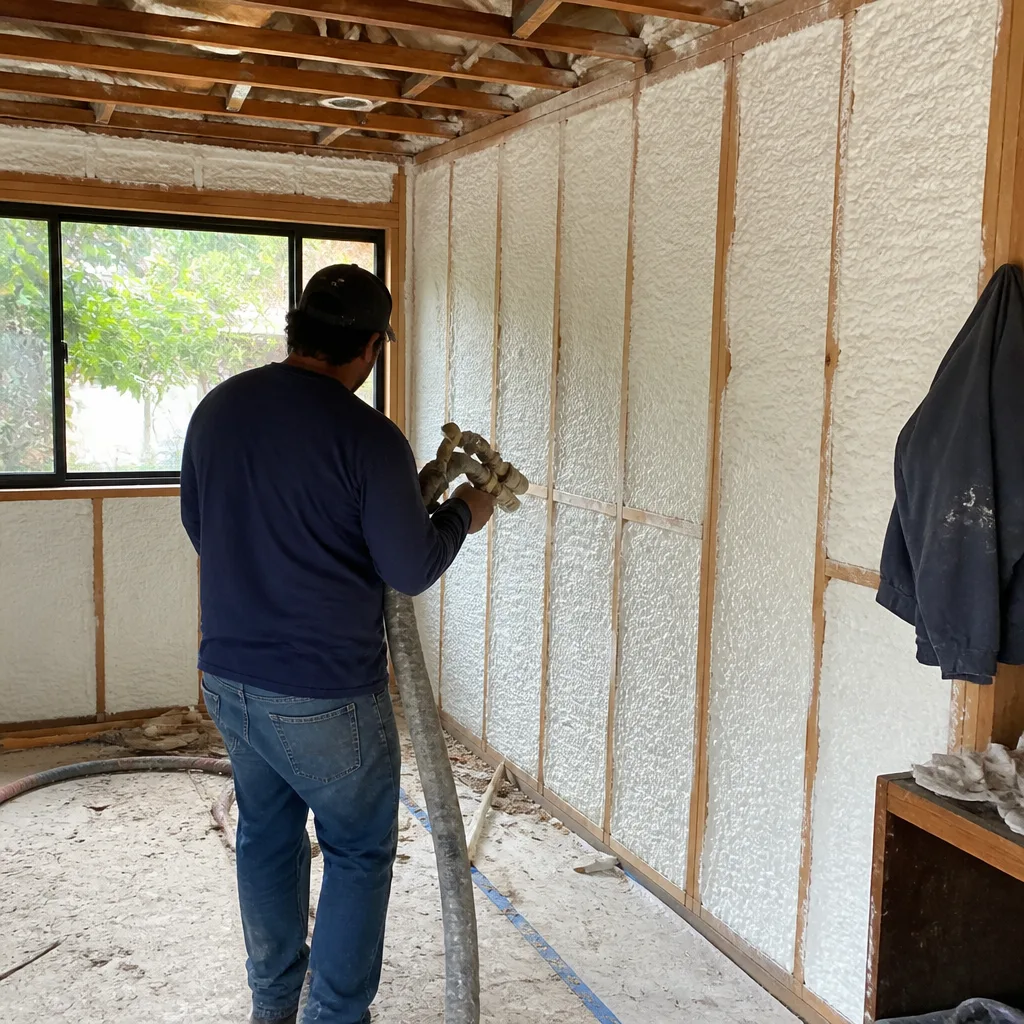 After
AfterReplacement Cost & What’s Included
For a typical Glendale crawl space or attic floor between 800 and 1,500 square feet, complete vapor barrier replacement runs $1,800 to $3,400 installed. The low end assumes accessible clearance, intact perimeter fastening, and removal of a single layer of existing poly. The high end covers full excavation of degraded material, treatment of fungal staining on the subfloor, installation of 10-mil reinforced membrane with sealed seams and mechanical fastening to sill plates, and a post-installation moisture meter reading.
What drives the range: crawl space height (anything below 18 inches requires different crew scheduling), number of pier posts that need custom cutting and sealing, and whether the existing barrier was installed with proper overlap at seams. We have found barriers in Glendale’s older homes near Adams Hill that were simply laid on the dirt like a tarp, edges unsecured, which is not a repair but a full redo.
Every vapor barrier job includes: written scope and fixed price before work starts, removal and lawful disposal of old material, installation per California Title 24 vapor retarder requirements, and a Documented Photo Record showing before condition, seam detail, and finished coverage. The 365-Day Done Right Promise applies. If seam lift or puncture occurs in the first year, we return and repair at no charge.
DIY or Call Us?
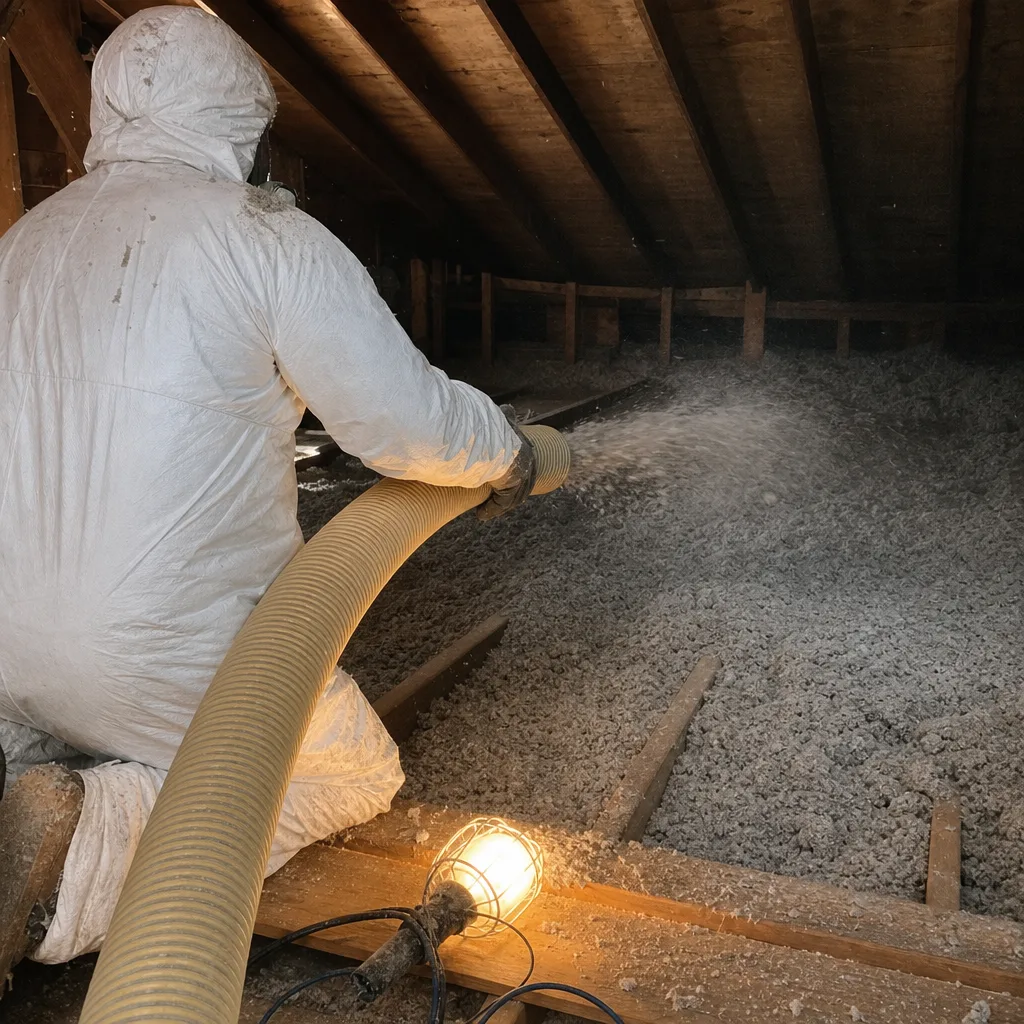
What you can safely check yourself: walk the perimeter of your crawl space with a flashlight and note any visible tears, standing water, or areas where the poly has pulled away from the walls. Measure the approximate square footage and count pier posts. That information is enough for us to give you a written price range before scheduling.
Where DIY goes wrong: cutting and seaming 10-mil reinforced poly in a confined crawl space requires a heat-sealing iron or specialized tape system and knee mobility most homeowners do not have. More critically, if you find mold staining on the subfloor, disturbing it without containment spreads spores through the HVAC return path. The California Department of Public Health recommends professional remediation for any visible mold growth exceeding 10 square feet. We carry HEPA-contained removal equipment for this reason.
Call (213) 474-3828 and we will walk through what you found. If you have a competing quote, bring it. Our Free Second Opinion means we read it with you line by line.
FAQs
A properly installed 10-mil reinforced vapor barrier in a Glendale crawl space typically lasts 15 to 20 years, though we see premature failure at 8 to 10 years in homes with poor site drainage or where the original installer used 6-mil poly without reinforcement. The clay soils in the Verdugo foothills hold moisture longer after rain, which accelerates degradation at unsecured edges. Call (213) 474-3828 for an exact assessment of your current barrier’s condition.
Small punctures under 2 inches can be patched with compatible polyethylene tape if the surrounding material is still supple and the seam perimeter is intact. If the poly is brittle, discolored, or lifting at multiple edges, patching is temporary and replacement is the cost-effective choice. We do not charge for the evaluation that determines which path makes sense.
Most residential crawl spaces in Glendale are completed in one working day, typically 4 to 6 hours for crews of two. Homes with restricted access, extensive fungal treatment, or more than 2,000 square feet may require a second day. We give you a firm schedule window when we deliver the written price, not a callback estimate.
Yes. We carry 10-mil reinforced poly, seam tape, mechanical fasteners, and perimeter adhesive in standard crew inventory. For GreenFiber-specific jobs, we also stock the low-perm accessories that maintain the product’s moisture management warranty. If your job requires Reflectix radiant barrier hybrid installation, we order to spec after measurement confirmation.
Seal the bypasses first. Insulation over air leaks is just expensive noise reduction. Wes Okafor learned that rule at Richard J. Daley College in Chicago, where the building science curriculum put air sealing ahead of everything else, and it is still the first step on every job our crew runs across Glendale.
Written by Wes Okafor, Owner, Topside Attic Insulation Glendale at Topside Attic Insulation Glendale, serving Glendale and nearby areas.