
Demilec Vapor Barrier Installation: The Glendale Owner’s Guide
Demilec vapor barrier installation in Glendale typically runs $1,800-$3,400 for a standard crawl space or basement application, and we stock the full Demilec-compatible membrane range for same-day starts on most jobs. Most Glendale homeowners discover their existing vapor barrier has failed when they notice musty odors returning after rain, efflorescence blooming on foundation walls, or humidity readings climbing above 60% on a basic hygrometer. The 210 freeway corridor’s clay-heavy soils and seasonal groundwater shifts put particular stress on membrane seams and perimeter seals.
Which Demilec Models This Applies To
Demilec does not sell vapor barrier as a standalone branded SKU; their membrane systems are specified by mil thickness, permeance rating, and application type. What we install are Demilec-compatible reinforced polyethylene membranes, typically 10-mil or 15-mil, sourced through the same distribution channels that supply Demilec spray foam contractors in Los Angeles County.
To identify what you need, check three things: the existing membrane’s edge stamp for its mil rating (often worn but sometimes legible near a corner), the square footage of your crawl space or basement (measured at the footing, not the floor above), and whether your application calls for Class I (0.1 perm or less) or Class II vapor retarder. Most Glendale homes built between 1950 and 1990 with original crawl spaces need Class I for code compliance on any new installation.
We source membranes from the same suppliers that stock Demilec products: Owens Corning, Johns Manville, Knauf, and GreenFiber among them. No proprietary lock-in. The 15-mil woven reinforced poly we carry exceeds Demilec’s typical spec and carries a 20-year rated lifespan in Southern California’s UV-exposed crawl space conditions.
Signs Your Demilec Vapor Barrier Installation Is Failing
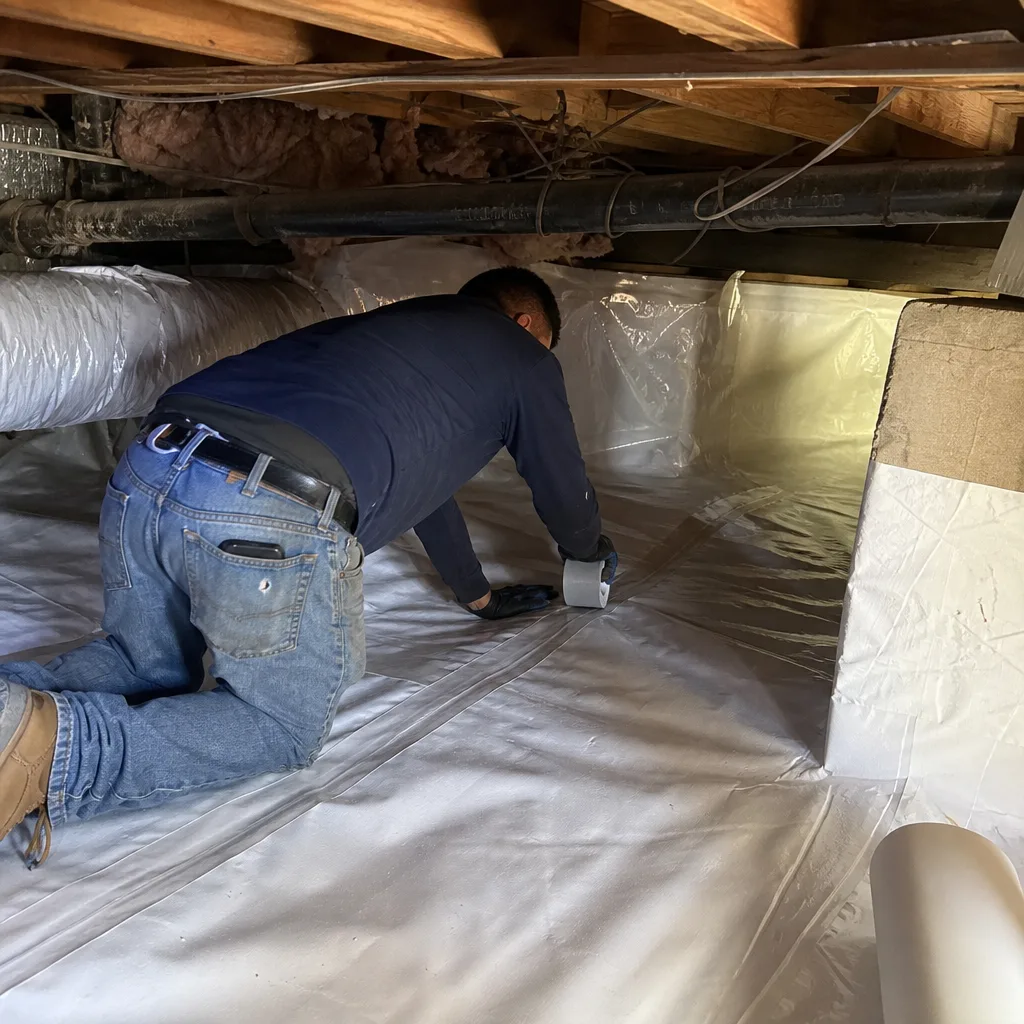
- Condensation pooling on the membrane surface. This means the seal at the perimeter or around piers has breached, letting warm moist air contact the cool concrete or soil beneath. In Glendale’s Montrose and Chevy Chase Canyon areas, where morning marine layer lingers, this shows up first as isolated wet spots near foundation vents.
- Efflorescence on foundation walls or piers. White powdery deposits indicate moisture is migrating through concrete, passing a compromised barrier, and evaporating at the surface. The vapor barrier isn’t blocking the diffusion path.
- Musty odor that returns within 48 hours of ventilation. A functioning barrier keeps relative humidity below the 60% threshold where mold spores activate. If airing out the crawl space only buys a day or two, the membrane has pinholes, seam separations, or inadequate ground coverage.
- Membrane tearing at seams or pier wraps. The original installer may have used non-reinforced poly, or the seam tape has degraded from soil chemistry. Glendale’s older neighborhoods near the Verdugo Mountains see more alkaline soil conditions that accelerate adhesive failure.
- Sagging or displacement from original position. Membrane that has shifted off the ground cover indicates inadequate anchoring or perimeter fastening, often from an install that skipped mechanical attachment at the sill plate.
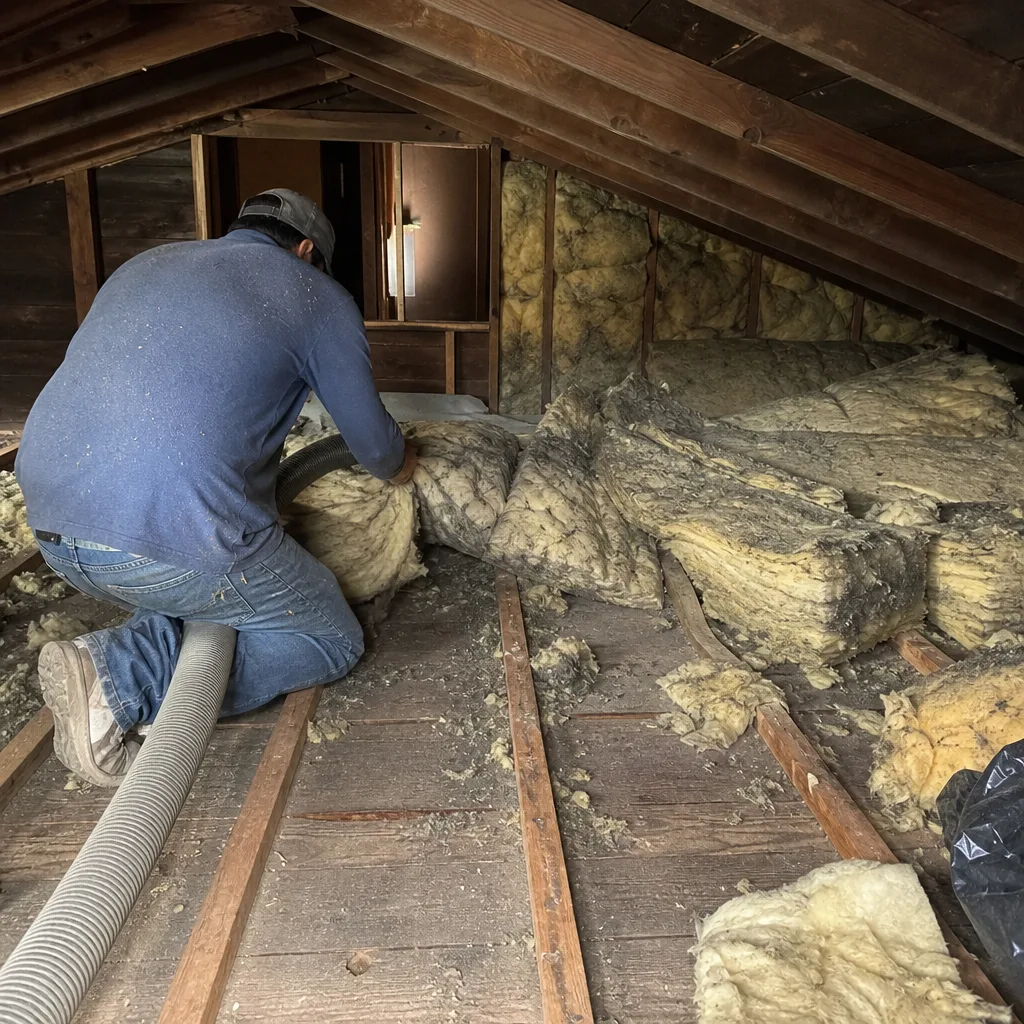 Before
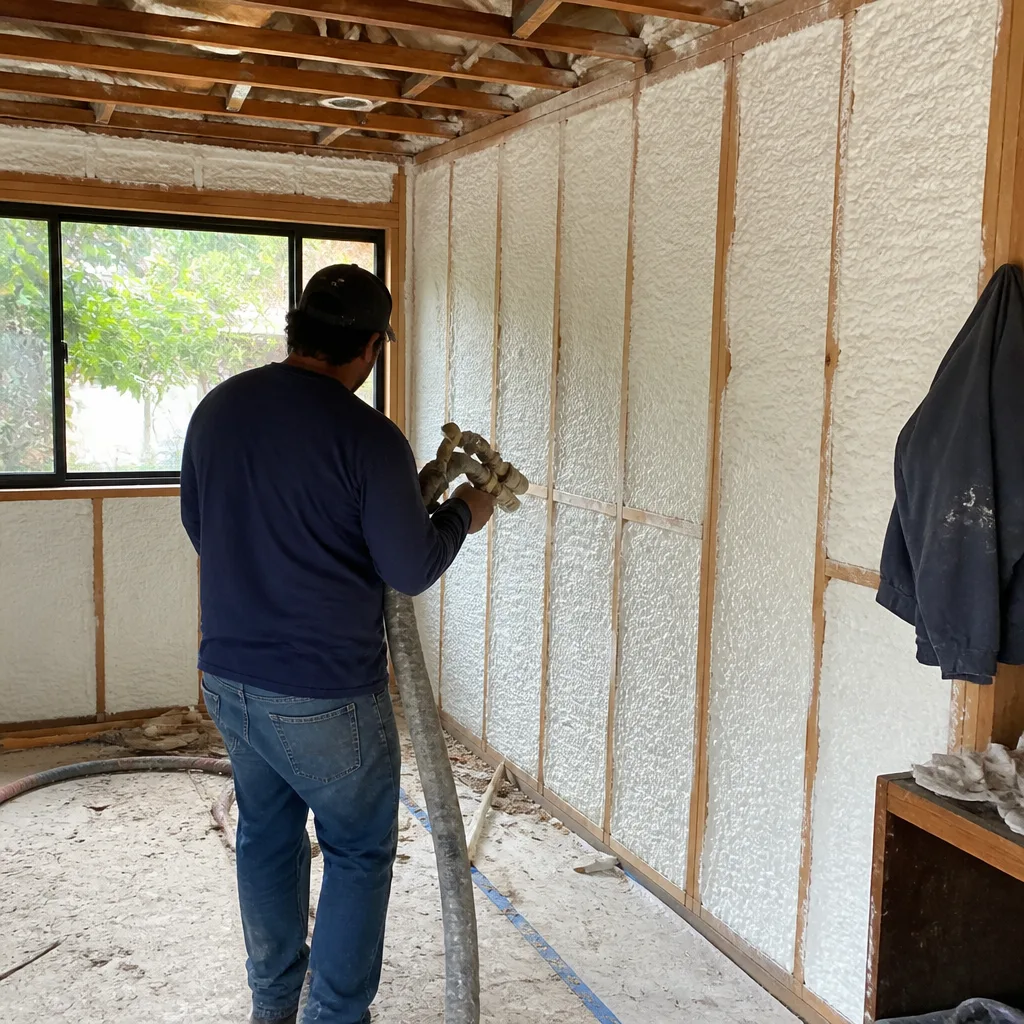 After
AfterReplacement Cost & What’s Included
Most full vapor barrier replacements in Glendale run $1,800-$3,400 for crawl spaces under 1,500 square feet. The range depends on three factors: whether we remove the existing failed membrane (adds $300-$500 for disposal and surface prep), how many piers need custom cutting and sealing, and whether the perimeter requires new mechanical fastening into masonry or existing sill plates.
Every job includes: reinforced 15-mil membrane with taped seams, mechanical perimeter attachment, pier wraps sealed with compatible tape, and a post-installation humidity check. We deliver a written scope before work starts and a Documented Photo Record when we leave. Under our 365-Day Done Right Promise, if moisture readings climb back above 60% within a year, we return and correct it.
We also offer a Free Second Opinion on any written estimate you’ve received. Bring us another contractor’s scope; we’ll read it with you and flag what’s included, what’s missing, and what the price actually covers.
DIY or Call Us?
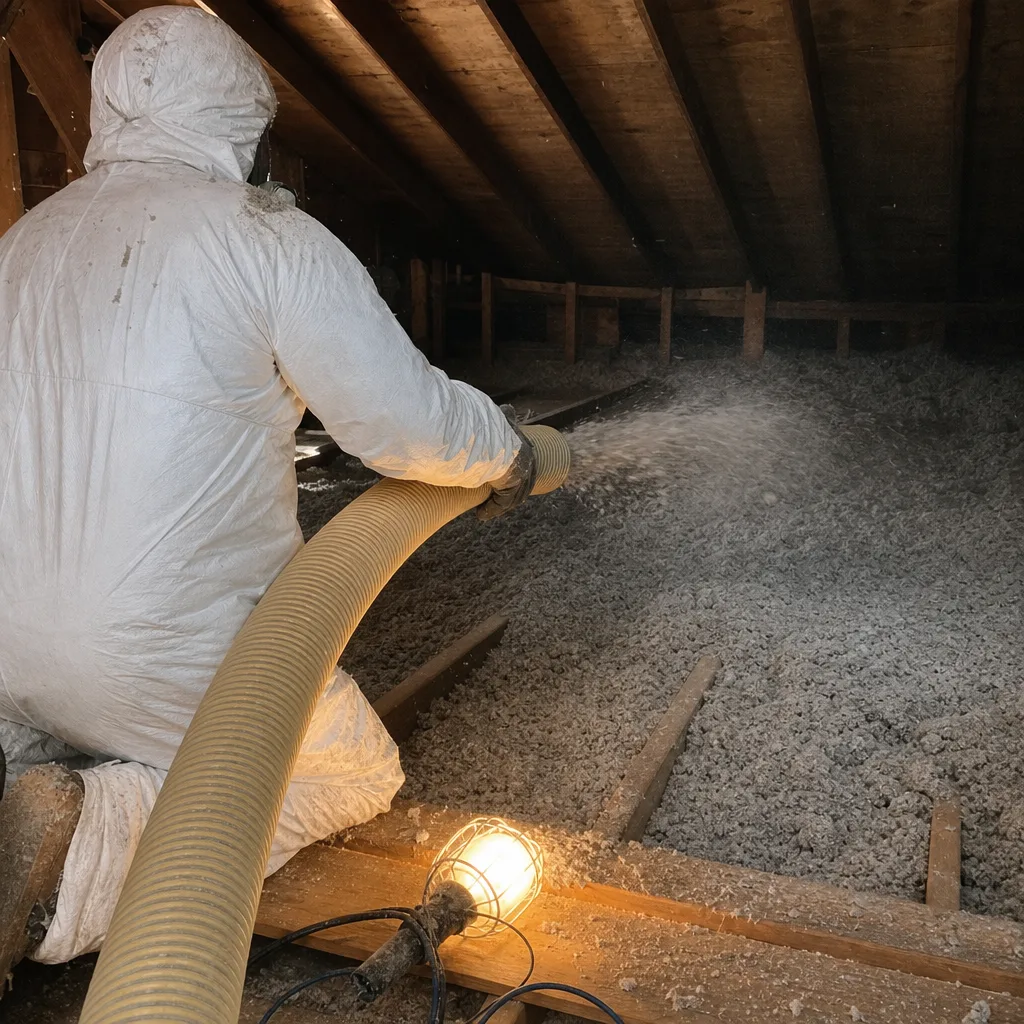
There’s no high-tension danger in vapor barrier work, but there is a common DIY failure pattern we see in Glendale: homeowners lay new poly over old, skip seam taping entirely, and fasten only with landscape staples that rust out in months. The result is a membrane that looks installed but performs at roughly 30% effectiveness.
What you can safely check yourself: measure your crawl space square footage, photograph the existing membrane’s edge stamp for mil rating, and verify your foundation vents are functioning. What requires trained installation: proper overlap sequencing (12-inch minimum, shingle-style), compatible tape selection for your soil chemistry, and mechanical perimeter fastening that won’t back out as the structure seasons.
Seal the bypasses first. Insulation over air leaks is just expensive noise reduction. The same principle applies below grade. A vapor barrier without sealed seams and proper perimeter attachment is a decorative sheet.
Call (213) 474-3828 for a written price before any work starts. Estimates are free, and a live person answers.
FAQs
In Glendale’s climate, a properly installed 15-mil reinforced membrane typically performs for 15-20 years. The limiting factor is usually perimeter seal degradation from seasonal soil movement, not the membrane itself. Call (213) 474-3828 for an exact assessment of your existing install.
Patching works for isolated punctures smaller than a quarter using compatible tape and reinforcement patches. If you have multiple seam failures, widespread embrittlement, or membrane displacement, replacement is more cost-effective than chasing individual leaks. We evaluate both options during our free estimate and recommend whichever delivers the drier result.
Most residential crawl spaces in Glendale are completed in one working day, with crews arriving between 8 and 9 a.m. and finishing by late afternoon. Larger basements or crawl spaces with extensive pier fields may extend to a second day. We confirm the schedule in your written scope before anyone lifts a tool.
Yes. We carry 10-mil and 15-mil reinforced polyethylene membrane, compatible seam tape, and mechanical fastening hardware on every truck. For standard Glendale crawl space dimensions, we can typically start within 24-48 hours of your written approval.
Written by Wes Okafor, Owner, Topside Attic Insulation Glendale at Topside Attic Insulation Glendale, serving Glendale and nearby areas.