
Rockwool Attic Air Sealing: The Glendale Owner’s Guide
Rockwool-compatible attic air sealing in Glendale typically runs $1,800-$3,400 for a complete top-plate and penetration seal on a 1,200-2,400 sq ft home, and we stock the rigid stone-wool board, fire-stop caulk, and gasketed covers needed for same-day starts on most jobs. The work pairs Rockwool’s non-combustible mineral wool with targeted air-barrier detailing at the attic floor plane, not the roof deck. Most Glendale homeowners call us after noticing rooms that won’t hold temperature, dust streaks around ceiling fixtures, or a recent energy audit flagging excessive stack effect - all signs that insulation was added over leaks that were never sealed first.
Which Rockwool Models This Applies To
Rockwool does not sell a branded “attic air sealing kit,” so matching the right components means reading the existing insulation labels and measuring the cavity depths. We most often see Rockwool Comfortbatt (3.5″ to 5.5″ thicknesses, R-15 to R-23) and Comfortboard 80 (1″ to 3″ rigid boards, R-4.2 per inch) in Glendale attics, especially in homes built 1945-1975 near the Verdugo Woodlands and Chevy Chase Canyon where original batt insulation was removed and replaced with stone wool.
The critical compatibility gotcha: Comfortbatt is friction-fit and does not itself air-seal. It fills the stud bay but leaves the top plate, wire penetrations, and can-light housings leaking. We pair it with Rockwool AFB (Acoustical Fire Batts) only where fire-blocking is required by Glendale’s amended Title 24, and we source gasketed electrical-box covers separately - Rockwool does not manufacture these. OEM Rockwool caulk is not available in the U.S. market; we use 3M Fire Block FB 136 or Hilti CFS-S SIL silicone, both listed for mineral-wool contact and temperature-rated to 2,000°F. If your attic has Rockwool MultiFix or former Roxul Safe’n’Sound, the density is wrong for thermal applications - we flag this during inspection and quote the correct replacement rather than sealing around inadequate material.
Identification is straightforward: Comfortbatt has a brown-tan color and printed “ROCKWOOL” every 24″; Comfortboard 80 is gray, rigid, and marked with a lot number and density (8.0 lbs/ft³). Photograph the label before we arrive and we’ll confirm compatibility by text.
Signs Your Rockwool Attic Air Sealing Is Failing
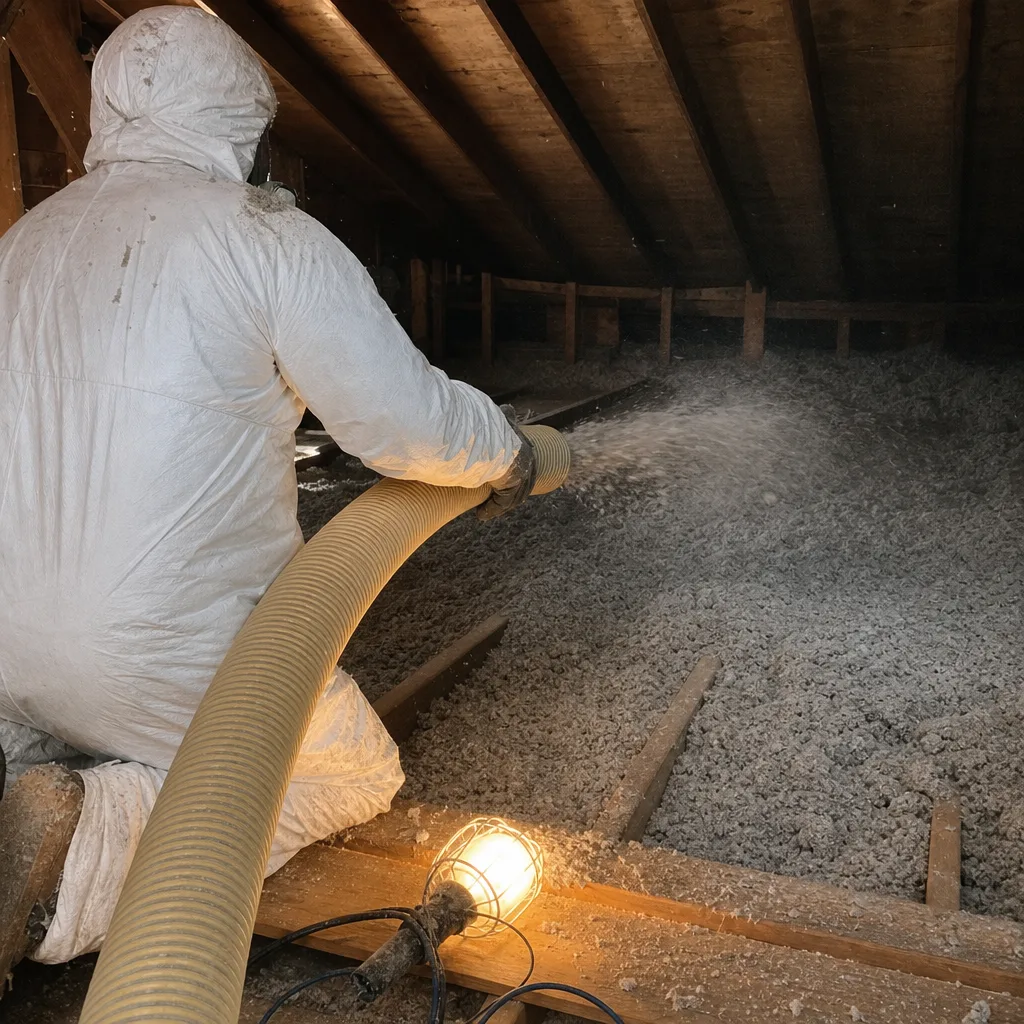
- Uneven room temperatures despite decent insulation depth. The Rockwool batts are doing their thermal job, but conditioned air is escaping through the framing joints and bypasses above. We see this constantly in Glendale’s 1950s ranch homes where top plates were never sealed before the insulation went in.
- Dust streaks or dark staining around ceiling fixtures and outlets. These are thermal bypass markers - air moving through gaps carries attic dust into the living space. With Rockwool’s dense fiber structure, the dust often accumulates at the batt edges rather than filtering through, making the leak paths obvious.
- Ice damming or excessive summer heat in the attic. In Glendale’s climate, this shows up as a superheated attic in July (120°F+ at the ridge) because conditioned air is leaking upward, carrying moisture that degrades the Rockwool’s binders over time. The material doesn’t mold, but the air movement undermines the effective R-value by 30-50%.
- Blower-door test showing minimal improvement after “insulation only” work. A previous contractor blew or laid insulation without sealing first. We inherited a job in the Rossmoyne area where the post-insulation CFM50 was 3,800 - essentially unchanged - because the Rockwool was bridging over leaky top plates like a blanket over a grate.
- Rodent disturbance or compressed batts at the eaves. Air leaks create pressure differentials that draw pests and moisture. Rockwool is pest-resistant but not pest-proof; gaps at the air barrier become highways. The batts get compressed or displaced, and the thermal boundary fragments.
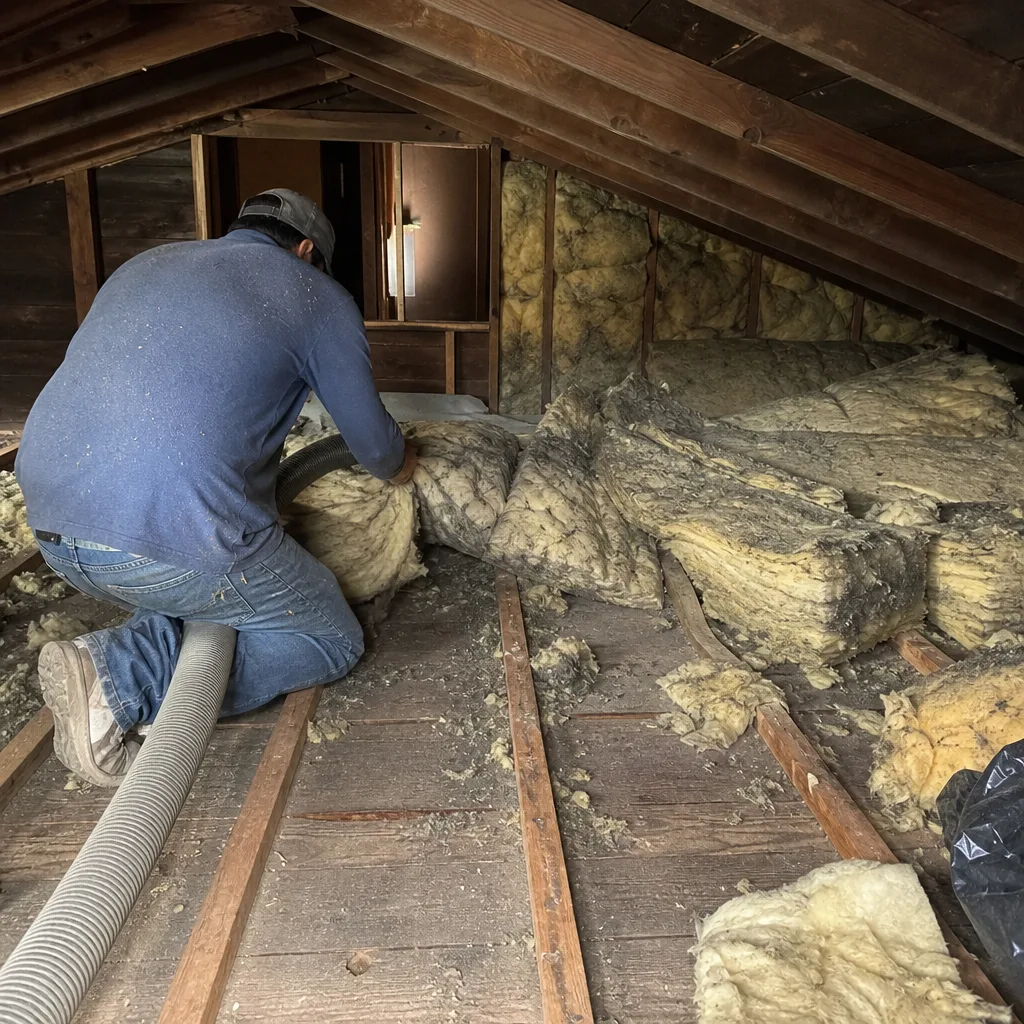 Before
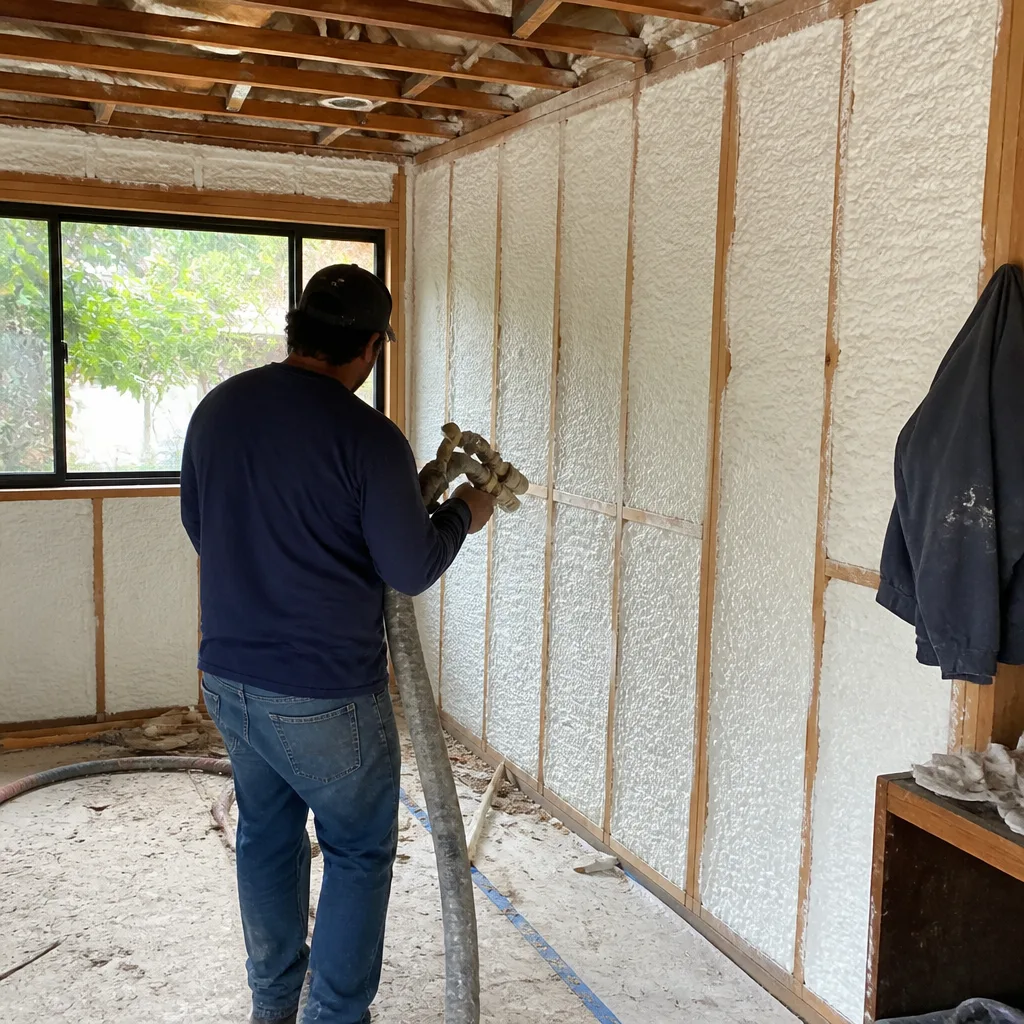 After
AfterReplacement Cost & What’s Included
| Scope | Typical Range (Glendale) | What’s Driving It |
|---|---|---|
| Top-plate seal only (single-story, ~1,200 sq ft) | $1,800-$2,400 | Access difficulty, quantity of top-plate joints, existing insulation removal and replacement |
| Full penetration seal + top plates (1,500-2,400 sq ft) | $2,600-$3,400 | Can-light count, chimney chase detail, HVAC platform sealing, blower-door verification |
| Rockwool Comfortboard 80 rigid air barrier (cathedral or conditioned attic) | $3,200-$4,800 | Board cutting to irregular framing, taped seams, fire-caulk detailing at all edges |
Every quote is a Written Price Before Any Work Starts - Haven Standard Clause 1 - and includes: removal and reinstallation of existing Rockwool (or disposal if degraded), fire-rated sealant at all penetrations, gasketed covers on non-IC can lights, a pre- and post-work blower-door test with printed CFM50 and ACH50 readings, and a Documented Photo Record of every sealed location. The 365-Day Done Right Promise covers labor and materials. We do not markup Rockwool product; you pay our wholesale cost plus labor.
DIY or Call Us?
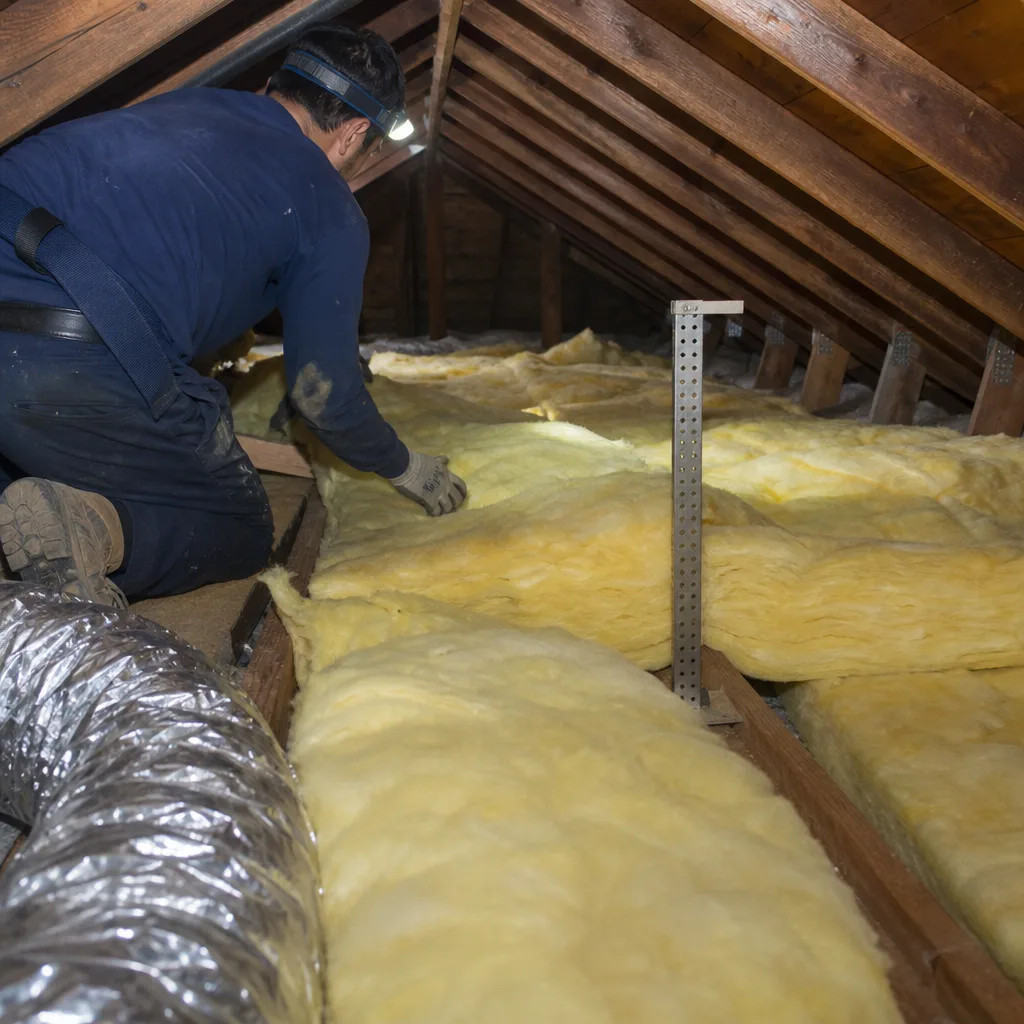
Here’s where the line sits. A homeowner can safely pull back a few batts to photograph labels, measure cavity depth with a ruler, and use a smoke pencil or incense stick to spot obvious drafts at outlets and fixtures. Do not attempt to seal top plates or can lights yourself. Attic work involves electrical hazards (live junctions buried in insulation), combustion safety (recessed lights require fire-rated covers, not just tape), and fall risk through drywall ceiling. In Glendale’s older housing stock, we regularly find knob-and-tube wiring still active, buried under decades of added insulation.
The actual air sealing requires working across the full attic floor, moving insulation systematically, and verifying with a blower-door test - a pressurization measurement that shows, in one number, whether the leaks are actually closed. Without that feedback loop, you’re guessing. We’ve been called to fix DIY jobs where caulk was applied to the wrong side of the top plate, or where spray foam blocked soffit vents and created moisture problems. Seal the bypasses first. Insulation over air leaks is just expensive noise reduction. Call (213) 474-3828 and we’ll give you a written price before anyone lifts a tool.
FAQs
Properly installed, the air seal itself lasts the life of the structure - 25 to 40 years or more. The acrylic or silicone sealants we use are rated 20+ years; gasketed covers are mechanical and replaceable independently. Rockwool fiber does not settle or degrade in Glendale’s dry climate, though we reinspect at 10 years because seismic activity and roof work can disturb the assembly. Call (213) 474-3828 to schedule a look - estimates are free.
Spot repair works only if the original sealing was done correctly and a limited area has failed - a single can-light retrofit, a chimney chase that opened up, or rodent damage at one eave. If the attic was never properly sealed, patching individual leaks leaves the systematic bypasses active and the blower-door numbers won’t move. We assess this with a targeted depressurization test; if spot work makes sense, we quote it honestly. Call (213) 474-3828 for an evaluation.
Most single-story Glendale homes are completed in one day; two-story homes or those with complex HVAC platforms and 15+ can lights typically run into a second day. We do not rush the blower-door verification - the post-test must show measurable improvement or we keep hunting leaks. You’ll receive the printed report and photo documentation before we leave.
We stock Comfortbatt in all standard thicknesses, Comfortboard 80 in 1″ and 2″, fire-rated sealants, gasketed covers for 4″, 5″, and 6″ can lights, and rigid air-barrier tape. For Rockwool AFB or specialized thicknesses, we pull from our supplier in Burbank with same-day availability. We also stock Reflectix radiant barrier and complementary air-sealing components if your assembly calls for a hybrid approach. Topside Attic Insulation Glendale is an independent service provider and is not affiliated with Rockwool.
Written by Wes Okafor, Owner, Topside Attic Insulation Glendale at Topside Attic Insulation Glendale, serving Glendale and nearby areas.