
Rockwool Radiant Barrier Installation: The Glendale Owner’s Guide
Rockwool radiant barrier installation in Glendale typically runs $2,800-$4,200 for a standard 1,500-square-foot attic, and we stock Rockwool-compatible radiant barrier materials on every truck for same-day starts. Most Glendale homeowners realize something’s wrong when their second floor won’t cool below 78°F even after sunset, or when their summer electric bill jumps $80-$140 over the prior year despite no change in thermostat settings. The radiant barrier, usually installed beneath roof decking or as a standalone foil-faced assembly paired with Rockwool batts, has either detached, oxidized, or was never properly integrated with the insulation layer to begin with.
Which Rockwool Models This Applies To
Rockwool doesn’t manufacture a standalone radiant barrier product, which is where most compatibility confusion starts. What we install is a radiant barrier system designed to pair with Rockwool Comfortbatt, Comfortboard, or AFB evo batts, typically in R-13 through R-30 configurations. The barrier itself is either a perforated foil product (like Fi-Foil’s Ultra NT or a comparable ASTM C1313-rated material) or a foil-faced rigid board laminated to the insulation face.
To identify what you’ve got, check the attic for silver or white reflective facing on the insulation surface facing the roof deck. True radiant barriers have an emissivity rating printed on them, usually 0.05 or lower. If you see plain tan or gray Rockwool with no reflective layer, you have insulation only, no barrier. We also see Glendale homeowners who’ve been sold “radiant barrier paint,” which is not a replacement for actual foil assembly and won’t produce measurable attic temperature reduction.
OEM-spec foil facing from Rockwool’s distribution partners tends to hold up better in Glendale’s dry heat than discount aftermarket rolls, which can delaminate at the adhesive layer after three to four summers. We source through Johns Manville, Owens Corning, and Rockwool’s authorized channels, not proprietary house brands with untested UV stability.
Signs Your Rockwool Radiant Barrier Installation Is Failing
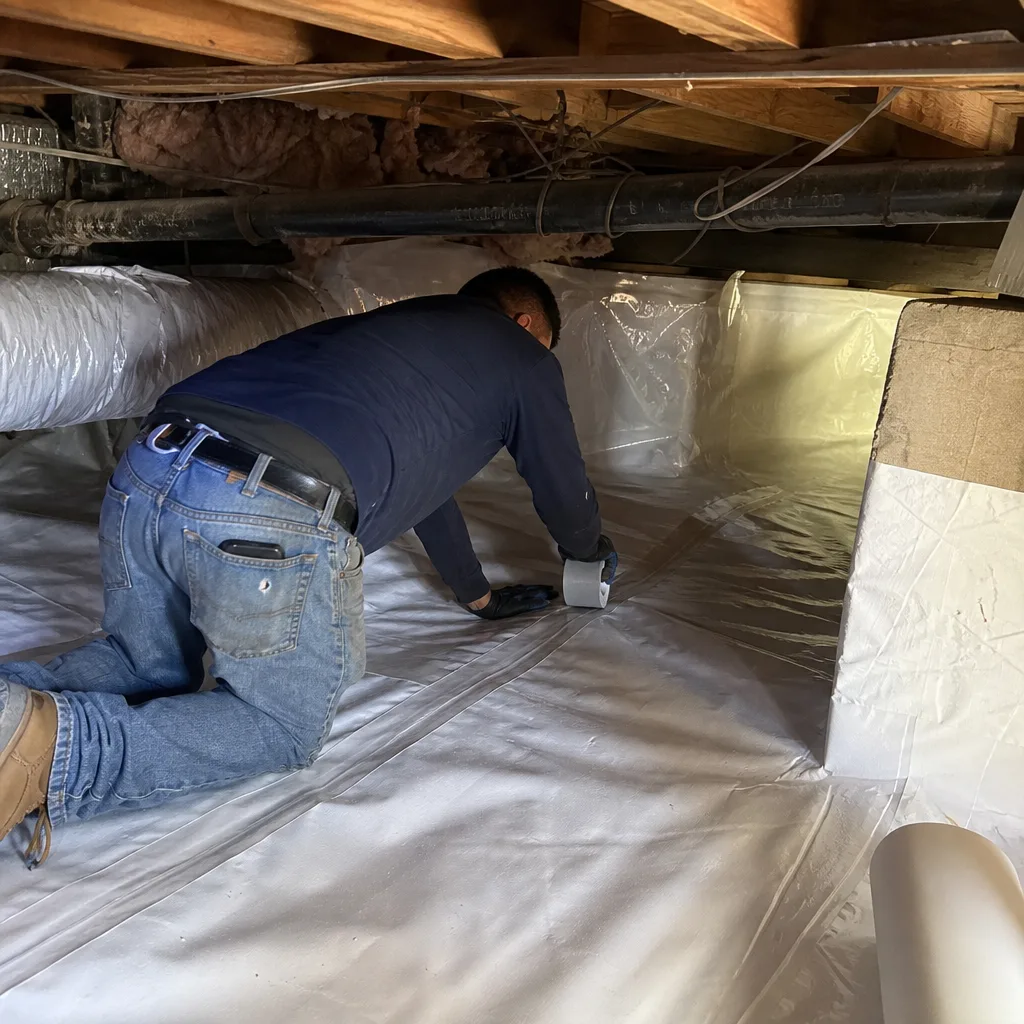
- Hot ceiling patches in late afternoon. The radiant barrier has pulled away from fasteners or torn at seams, letting infrared radiation hit drywall directly. In Glendale, where roof deck temperatures can hit 160°F in August, even a 10% gap in coverage creates noticeable hot spots.
- AC runs continuously from 2 PM to 8 PM. Your cooling load hasn’t changed, but the attic is dumping heat faster than your insulation assembly can block it. The barrier’s emissivity has likely degraded above 0.20, meaning it’s reflecting less than half the radiant energy it should.
- Foil facing visible on the attic floor or in insulation. The barrier detached completely and fell, usually because it was stapled to bottom chords instead of proper counter-batten installation, or because summer expansion-contraction cycles popped cheap plastic-cap fasteners.
- Moisture staining on ceiling drywall below the barrier. This one’s counterintuitive: a failed radiant barrier can trap humidity if the foil is non-perforated and installed without proper venting channels. Rockwool handles moisture well, but the foil facing doesn’t breathe.
- Insulation crew from 2018-2021 with no documentation. We find this constantly in Glendale’s post-boom construction. A lot of radiant barrier was tacked up fast during those years with no ASTM C1313 verification, no emissivity testing, and no integration with the Rockwool layer below.
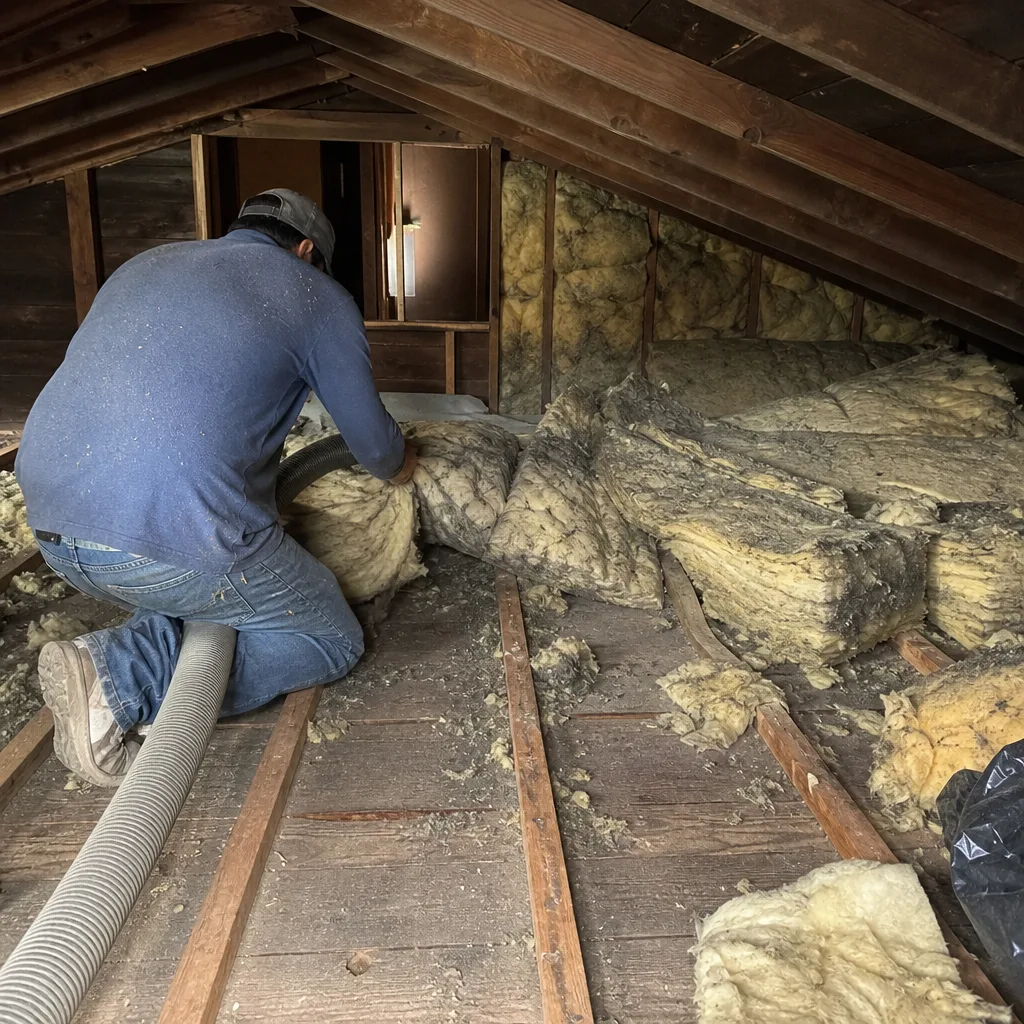 Before
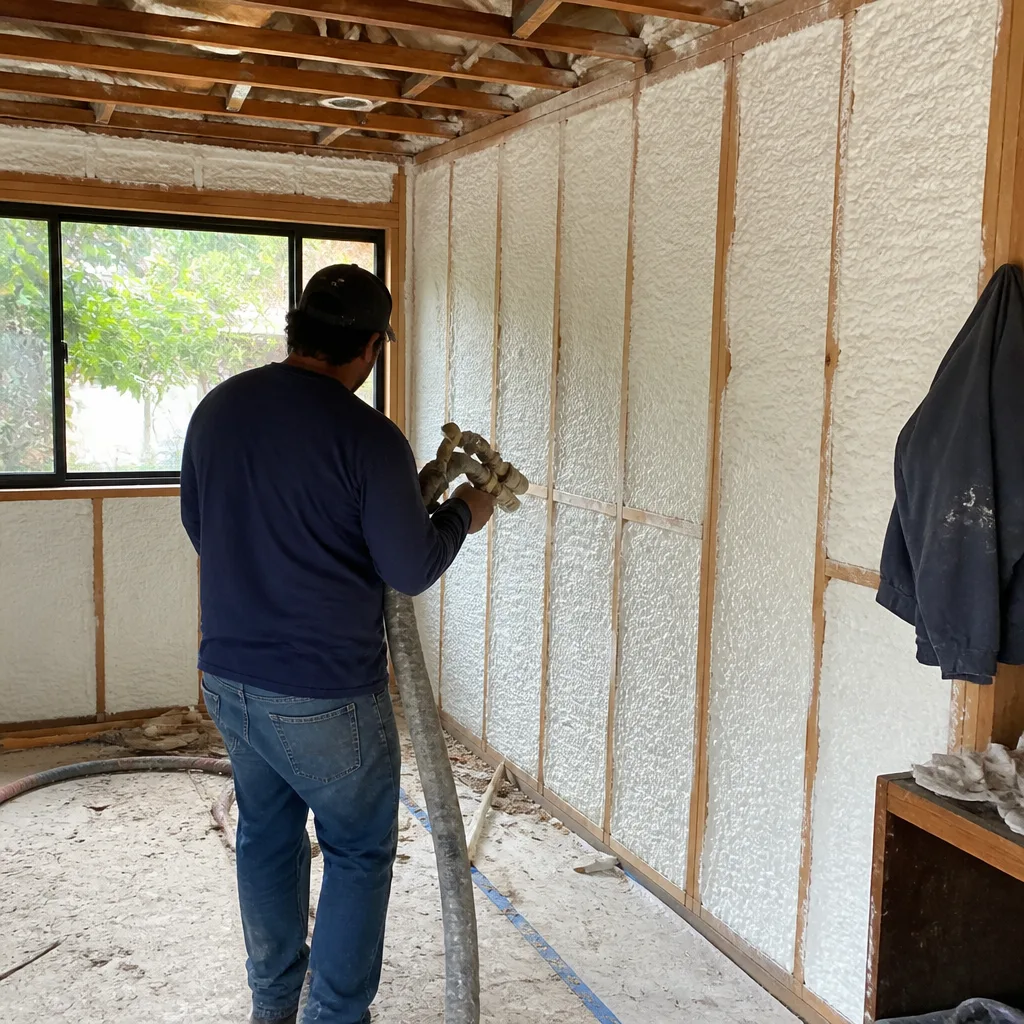 After
AfterReplacement Cost & What’s Included
| Component | Price Range (Glendale) |
|---|---|
| Perforated radiant barrier foil, ASTM C1313, 500 sq ft | $340-$480 |
| Foil-faced rigid board, integrated with Rockwool batts | $1,800-$2,600 |
| Attic air sealing (top plates, can lights, penetrations) | $680-$1,100 |
| Labor: remove failed barrier, install new, integrate with existing Rockwool | $1,400-$2,200 |
| Blower-door test, before and after | Included |
| Documented Photo Record + written scope | Included |
The total installed price for most Glendale homes lands between $2,800 and $4,200. What drives the range: attic square footage, whether we need to remove and re-install existing Rockwool to get proper barrier-to-insulation contact, and how much air sealing the top plates and penetrations need first. We don’t blow insulation over unsealed leaks. Seal the bypasses first. Insulation over air leaks is just expensive noise reduction.
Every job closes with a written scope, the 365-Day Done Right Promise, and printed blower-door numbers showing CFM50 reduction. Materials carry manufacturer warranty; our labor is backed by Haven Standard Clause 1.
DIY or Call Us?
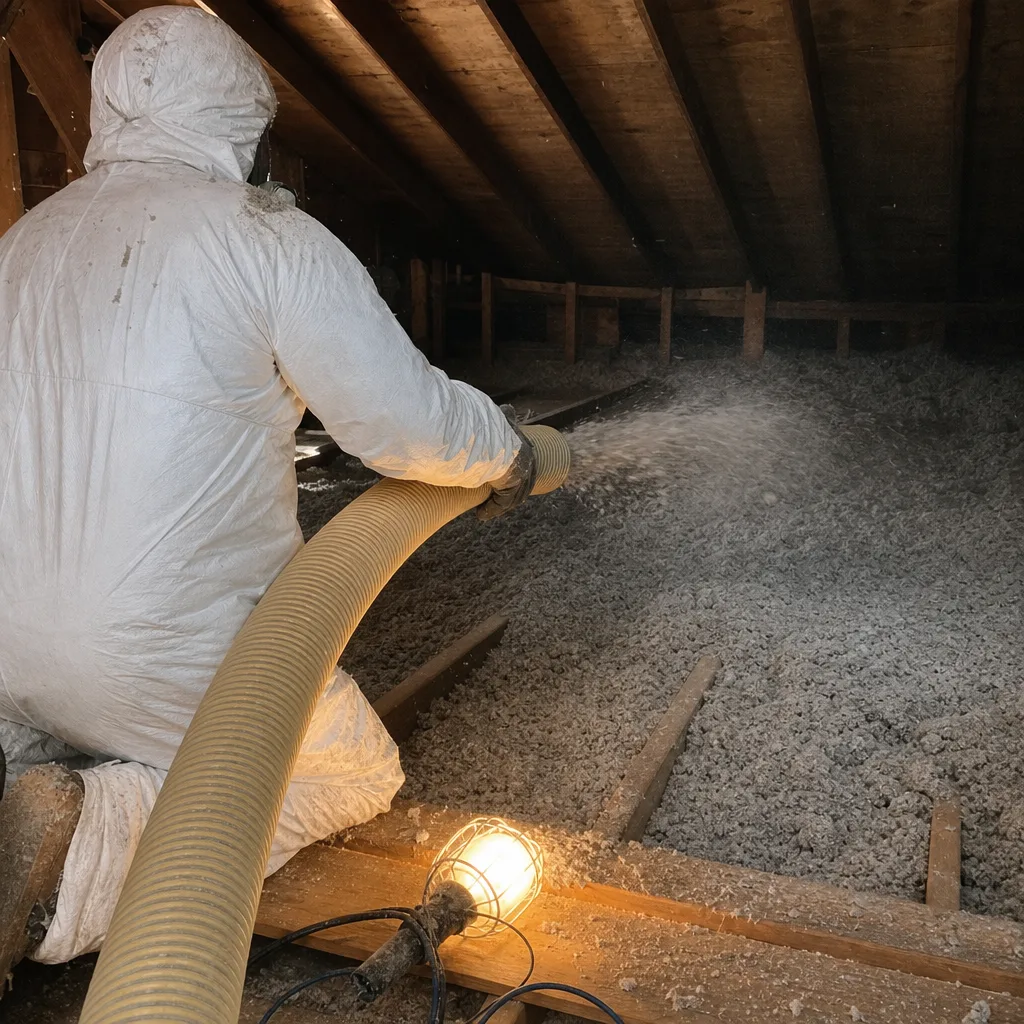
There’s no high-tension danger here like a garage door spring, but there are real ways DIY goes wrong. A homeowner can safely check: whether foil is still attached to the deck, whether any product labeling is visible for identification, and whether attic ventilation intakes are blocked. Use a headlamp, not your phone flashlight, and watch for nails through the roof deck.
Where DIY fails: most radiant barrier needs to be installed with a minimum 3/4-inch vented air gap between foil and roof deck, which requires counter-battens or proper truss spacing most homeowners don’t measure correctly. Stapling foil directly to the underside of roof decking without that gap actually increases heat transfer in some conditions. Non-perforated foil without adequate attic ventilation traps moisture and voids most Rockwool warranty language. And without a blower-door test, you can’t verify whether the real problem is air leaks masquerading as radiant heat gain.
We stock Rockwool-compatible radiant barrier materials on every truck. Call (213) 474-3828 and we’ll read your situation with you, no charge.
FAQs
Properly installed ASTM C1313-rated foil should perform for 15-20 years in Glendale’s dry climate, though UV-degraded products or those with adhesive delamination may fail in 5-7 years. The foil facing on integrated rigid boards tends to outlast stapled rolls because it’s factory-laminated under pressure. Call (213) 474-3828 if you’re unsure what you have - estimates are free.
Patching small tears with foil tape works temporarily, but if the barrier has detached at multiple fasteners or the emissivity has degraded, replacement is the only fix that restores performance. We don’t sell partial solutions. Call (213) 474-3828 for an exact assessment.
Most Rockwool radiant barrier replacements in Glendale take one full day for attics under 2,000 square feet, or two days if we need to remove and re-install existing insulation to achieve proper integration. We arrive with materials on the truck and start with a blower-door test, not a sales pitch.
We stock perforated foil barrier, foil-faced rigid board, and all fastening and venting accessories on every truck. We’re an independent service provider, not affiliated with Rockwool, but we source through their authorized distribution channels along with Johns Manville, Owens Corning, and Knauf. Same-day starts are normal for Glendale calls.
Topside Attic Insulation Glendale is independently owned and operated under The Haven Standard since 2016. We also stock parts for Reflectix radiant barrier systems.
Written by Wes Okafor, Owner, Topside Attic Insulation Glendale at Topside Attic Insulation Glendale, serving Glendale and nearby areas.