
Rockwool Crawl Space Encapsulation & Vapor Barrier in Glendale: What to Know First
We provide independent Rockwool crawl space encapsulation and vapor barrier service in Glendale, typically completing standard jobs in one to two days with a written price delivered before any work starts. Most Rockwool crawl space projects in Glendale homes run between $3,200 and $7,800 depending on whether we’re addressing isolated moisture intrusion or full perimeter encapsulation with conditioned-air integration. This page is for homeowners who’ve found Rockwool Comfortbatt, Comfortboard, or AFB (Acoustical Fire Batt) in their crawl space and need to know whether it can stay, what it’s actually doing down there, and what fixing it properly costs. Call (213) 474-3828 for a free estimate with a written scope.
How Rockwool Products Fail - and How We Fix Them
- Comfortbatt R-30 compressed against foundation walls loses its labeled R-value. Rockwool’s stone wool fibers resist moisture, but when installers wedge full-thickness batts into 2×8 or 2×10 joist bays in Glendale’s older hillside homes, the compression drops effective insulation to roughly R-19. We remove the compressed batts, air-seal the rim joist with closed-cell spray foam or acrylic latex sealant, then reinstall at proper thickness or switch to Comfortboard 80 for full-contact rigid installation against masonry.
- Comfortboard 110 wicks groundwater through capillary action at the footing. The board doesn’t rot, but it becomes a thermal bridge when saturated, and in Glendale’s clay-heavy soils near the Verdugo Wash, we’ve measured moisture content above 30% in boards that looked fine from above. We excavate the bottom edge, install a dimpled drainage mat against the wall, and terminate the vapor barrier 6 inches up the board with acoustic sealant, not tape alone.
- AFB (Acoustical Fire Batt) installed as thermal insulation in crawl spaces performs poorly. AFB is rated for fire blocking and STC improvement, not thermal resistance. Homeowners find it crumbling after years of humidity cycling because it was never formulated for below-grade moisture. We document the existing material with photos, remove it, and specify either Comfortbatt R-23 for framed floors or a hybrid rigid-foam and Rockwool assembly for maximum R-value in limited headroom.
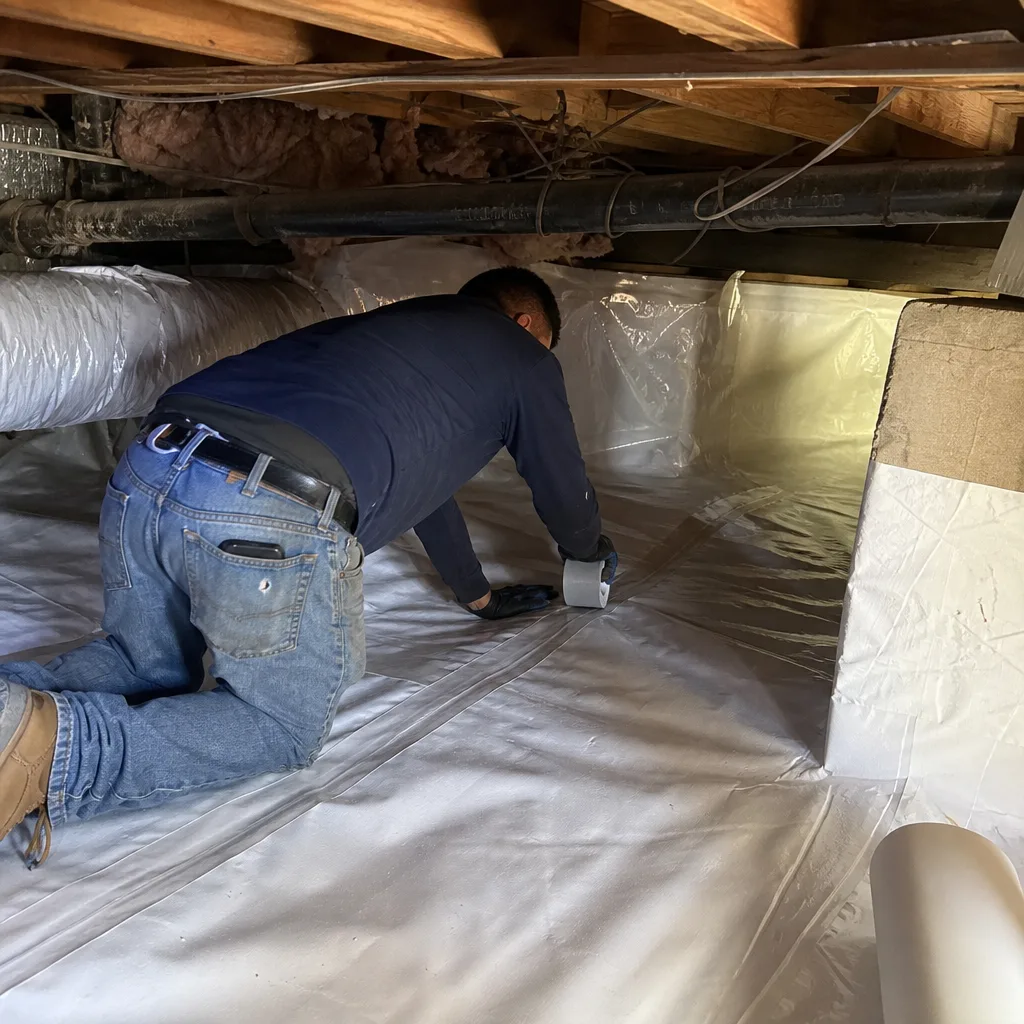
- Rockwool left exposed without a vapor barrier creates a condensation sink. Stone wool is vapor-permeable, which is useful in walls but problematic in crawl spaces where summer ground temperatures stay in the low 60s while attic air hits 140°F. The temperature differential drives moisture into the crawl space, and Rockwool absorbs it until the assembly reaches equilibrium. We install 10-mil or 20-mil reinforced polyethylene vapor barriers, sealed at seams with double-sided butyl tape, before any Rockwool goes back in.
- Retrofit jobs where Rockwool was blown or stuffed over unsealed plumbing and electrical penetrations. We regularly find 4-inch gaps around ABS drain lines and romex holes in Glendale’s 1950s-1970s slab-on-grade ranches. The Rockwool does nothing for air leakage here. Our crew pulls the material back, seals penetrations with fire-rated caulk or expanding foam as appropriate, then reinstalls. Seal the bypasses first. Insulation over air leaks is just expensive noise reduction.
Our Rockwool Crawl Space Encapsulation & Vapor Barrier Process
- 1
Call and scheduling. A live person answers, or you can text. We book a 2-hour arrival window and send a text when the technician is en route. Under Haven Standard: Arrive on schedule, you get a named technician.
- 2
On-site assessment and blower-door test. We run a blower-door test - a pressurization measurement that shows, in one number, how much air your building envelope is losing - to establish baseline CFM50. We photograph existing Rockwool condition, measure moisture content with a pinless meter, and identify whether we’re dealing with bulk water, capillary wicking, or vapor drive.
- 3
Written scope and price. You get a flat price, written scope, and written warranty before anyone lifts a tool. Haven Standard Clause 1. No work starts without it. We note whether we’ll reuse existing Rockwool, specify replacement materials by product line, and flag any OEM-vs-aftermarket decisions.
- 4
Air sealing and preparation. Rim joists, sill plates, and all penetrations sealed. Drainage and grading issues addressed. Vapor barrier installed and seam-sealed. Only then does insulation go in.
- 5
Rockwool installation or reinstallation. Cut to fit without compression. Proper contact with subfloor above. Rigid boards mechanically fastened with corrosion-resistant fasteners for below-grade use.
- 6
Final test, documentation, and cleanup. Post-work blower-door test to verify air-sealing result. Documented Photo Record delivered. You leave with printed pre- and post-installation ACH50 numbers side by side.
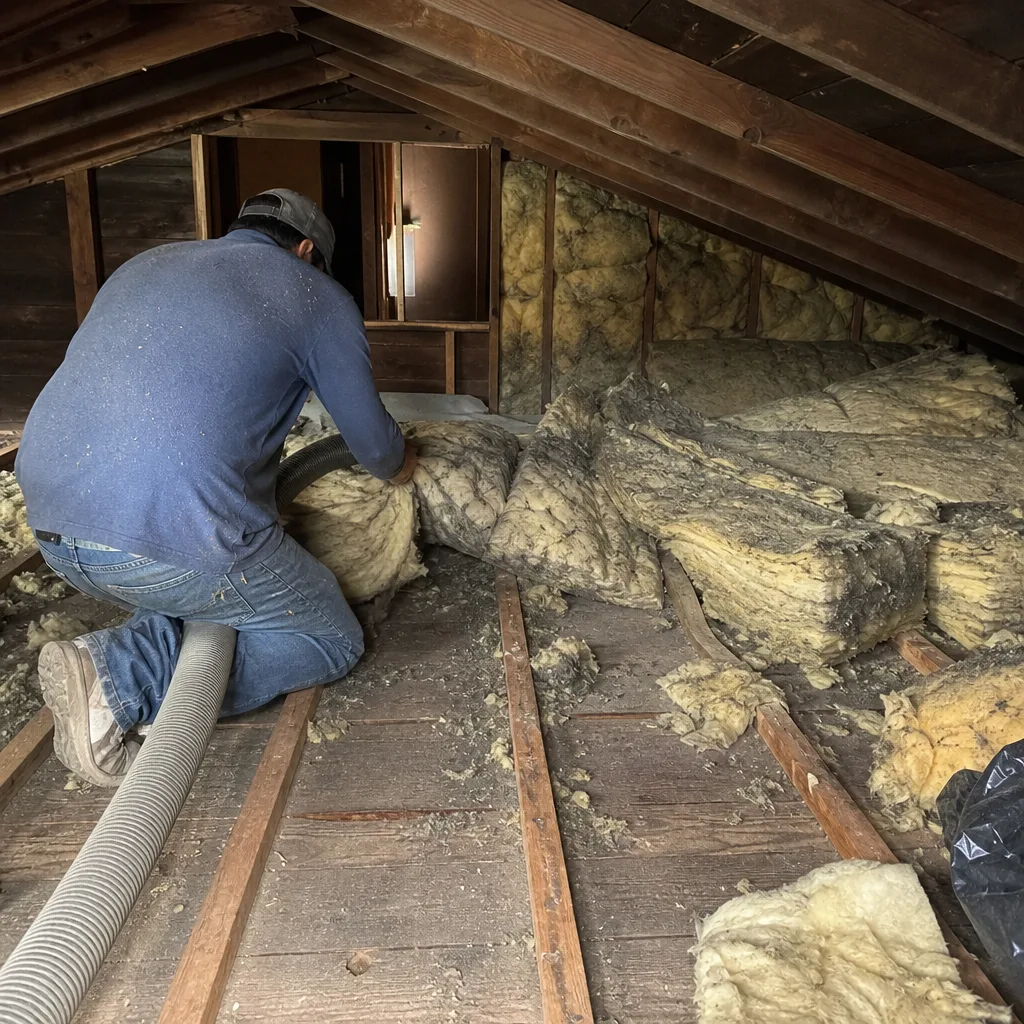 Before
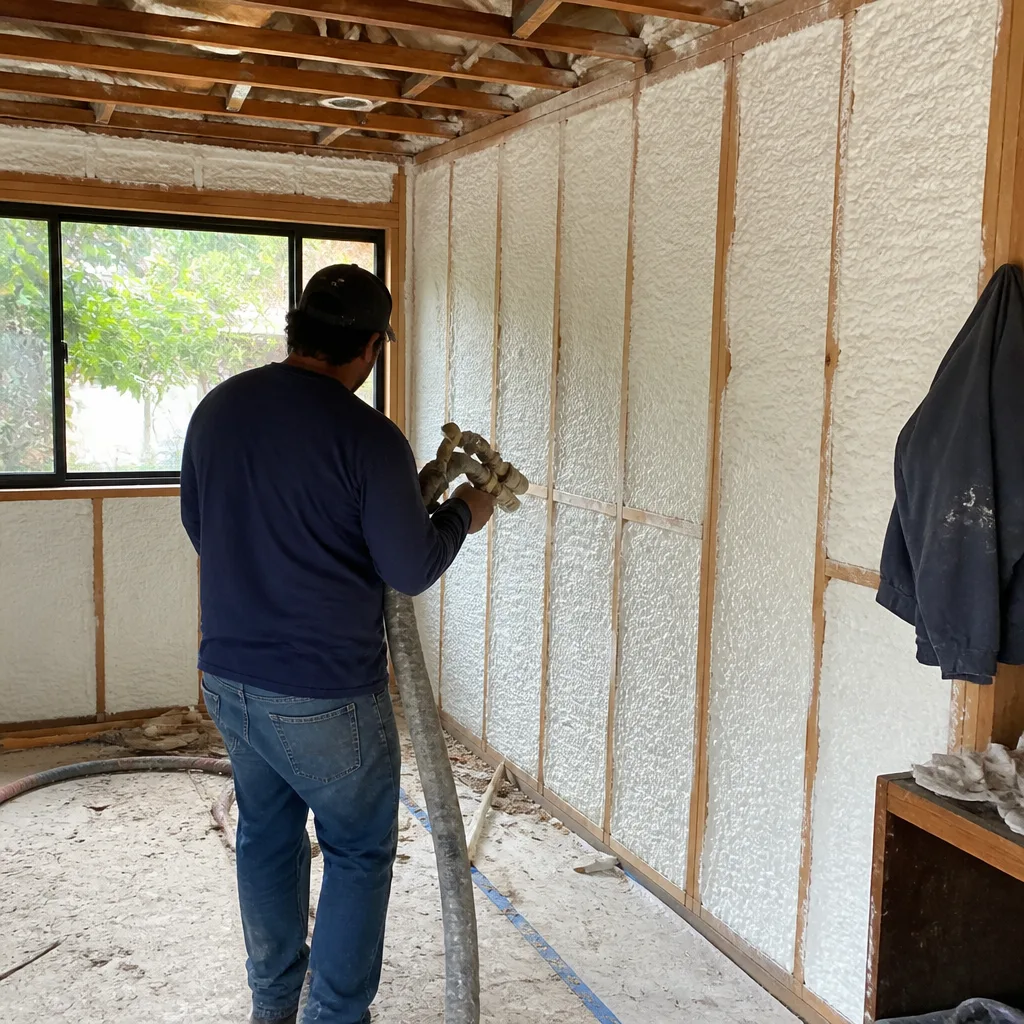 After
AfterWhat Rockwool Crawl Space Encapsulation & Vapor Barrier Costs in Glendale
Most Rockwool crawl space encapsulation and vapor barrier jobs in Glendale fall between these ranges:
| Partial vapor barrier with Rockwool inspection/repair | $3,200 - $4,800 |
| Full encapsulation with 10-mil vapor barrier, Rockwool replacement | $5,500 - $7,800 |
| Full encapsulation with dehumidifier, drainage mat, and conditioned-air tie-in | $8,500 - $12,000 |
| Rockwool removal and disposal (per cubic yard) | $180 - $260 |
What moves the price: crawl space height (anything under 18 inches requires different equipment), active water intrusion requiring sump or drainage, accessibility in hillside Glendale homes with tight side yards, and whether the existing Rockwool is salvageable. We also service Reflectix and other brands, so if your crawl space has mixed materials, we’ll specify what’s worth keeping. Call (213) 474-3828 for an exact quote - estimates are free.
Why Glendale Homeowners Call Topside Attic Insulation Glendale for Rockwool Work
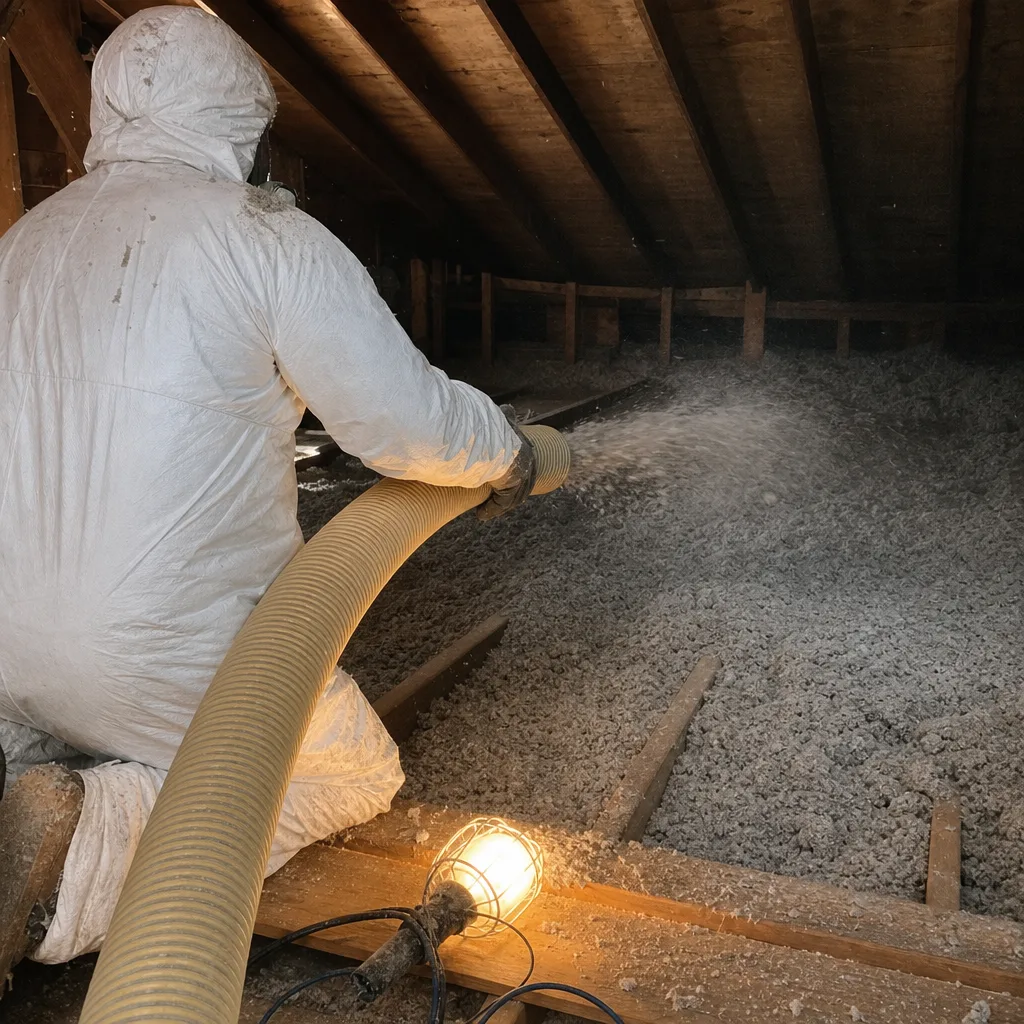
We’ve been running jobs across Glendale since 2016, including older ranch-style homes near the Verdugo Woodlands where crawl space conditions vary block by block. Wes Okafor learned the trade at Richard J. Daley College, where the curriculum was heavy on air sealing before it was fashionable anywhere, and that shows in our process: blower-door numbers published on every applicable job, not promised and forgotten. Our 365-Day Done Right Promise applies to all completed work. Background-checked, uniformed technicians. Calls answered by a live person, 24/7. Free Second Opinion on any written estimate - bring us a competing quote and we’ll read it with you. Materials sourced from Owens Corning, Johns Manville, Knauf, Rockwool, CertainTeed, Icynene, Demilec, and GreenFiber - no proprietary product lock-in.
FAQs
Rockwool’s limited warranty covers manufacturing defects, not installation errors or environmental moisture conditions. If your Comfortbatt or Comfortboard failed due to improper vapor barrier installation or missing air sealing, that’s an installation issue, not a material defect. We document existing conditions with photos so you know exactly what caused the failure. Call (213) 474-3828 for a free assessment.
We source Rockwool products through standard distribution channels; there are no “OEM parts” in the traditional sense for insulation, but there are correct product lines for each application. We specify Comfortboard 80 or 110 for rigid applications, Comfortbatt for framed cavities, and AFB only where fire-rating or acoustics are the primary goal. If another contractor specified the wrong product line, we’ll flag it in our written scope.
Repair is cheaper when the material is dry, uncompressed, and was originally the right product for the location. In Glendale, we find that roughly 40% of existing crawl space Rockwool can stay after air sealing and vapor barrier correction. If it’s been wet, compressed below 75% of labeled thickness, or if it’s AFB misapplied as thermal insulation, replacement is the only cost-effective path. We give you both options in writing.
Standard jobs are one to two days. If we find active water intrusion requiring drainage correction, add a day. We don’t schedule work we can’t finish, and we don’t leave vapor barriers half-sealed. Call (213) 474-3828 - a live person answers 24/7, and we typically book within 48 hours for non-emergency work.
A properly air-sealed and insulated crawl space with correct vapor barrier installation typically reduces heating and cooling load by 10-20%, but the exact figure depends on your home’s starting leakage rate. We measure that with a blower-door test before and after, so you see the actual CFM50 reduction, not an estimate. The bigger win in Glendale’s climate is often moisture control - preventing mold, rot, and the structural repairs that follow.
Written by Wes Okafor, Owner, Topside Attic Insulation Glendale at Topside Attic Insulation Glendale, serving Glendale and nearby areas.