
Rockwool Attic Insulation: The Glendale Owner’s Guide
Rockwool attic insulation installed in Glendale homes typically runs $2.80 to $4.20 per square foot for batt installation, or $1,800 to $3,400 for a standard 1,200-square-foot attic with air sealing included. Most Glendale jobs we book are started within two business days, and we stock Rockwool Comfortbatt and AFB evo on the truck for same-day replacement when the existing material has compressed, gotten wet, or been displaced by rodent activity. You’ll know it’s failing when your second-story bedrooms won’t hold temperature in July, your PG&E bill climbs 20% or more year-over-year, or you find gray, fibrous debris below your attic hatch.
We are an independent insulation contractor, not affiliated with Rockwool. We source it because it performs well in Glendale’s climate, and because some of the 1950s ranch homes near the Verdugo Woodlands have framing dimensions that match Rockwool’s standard widths more cleanly than fiberglass alternatives.
Which Rockwool Models This Applies To
Rockwool residential attic insulation falls into three product lines you’re likely to encounter in Glendale. Comfortbatt is the rigid batt, most common in open attic floors and kneewalls, labeled by R-value and dimension: R-23 for 2×6 framing, R-30 for 2×8, R-38 for 2×10. AFB evo is the semi-rigid acoustic/fire batt, gray and slightly softer, often found in partition walls and between floors where sound transfer matters. TopRock DD is the loose-fill blowing wool, used when you need to fill irregular joist bays or top off existing insulation without removing what’s there.
To identify what you have, check the paper facing if it exists, or look for the stamped ink on the batt edge: “ROCKWOOL” plus a four-digit lot code. Measure the thickness uncompressed; a batt labeled R-30 that now measures four inches instead of seven and a half has lost roughly half its thermal value. For Comfortbatt, the 23-inch width fits standard 24-inch on-center framing, but pre-1960 Glendale homes with true 2x8s on 16-inch centers sometimes need the 15-inch width, which we don’t always carry on the truck.
OEM Rockwool is what we install. There is no direct aftermarket equivalent that matches the density and melt point: 2,150°F for Rockwool versus roughly 1,200°F for standard fiberglass. If a contractor proposes substituting fiberglass at a lower price, you’re getting a different product, not a generic version of the same thing.
Signs Your Rockwool Attic Insulation Is Failing
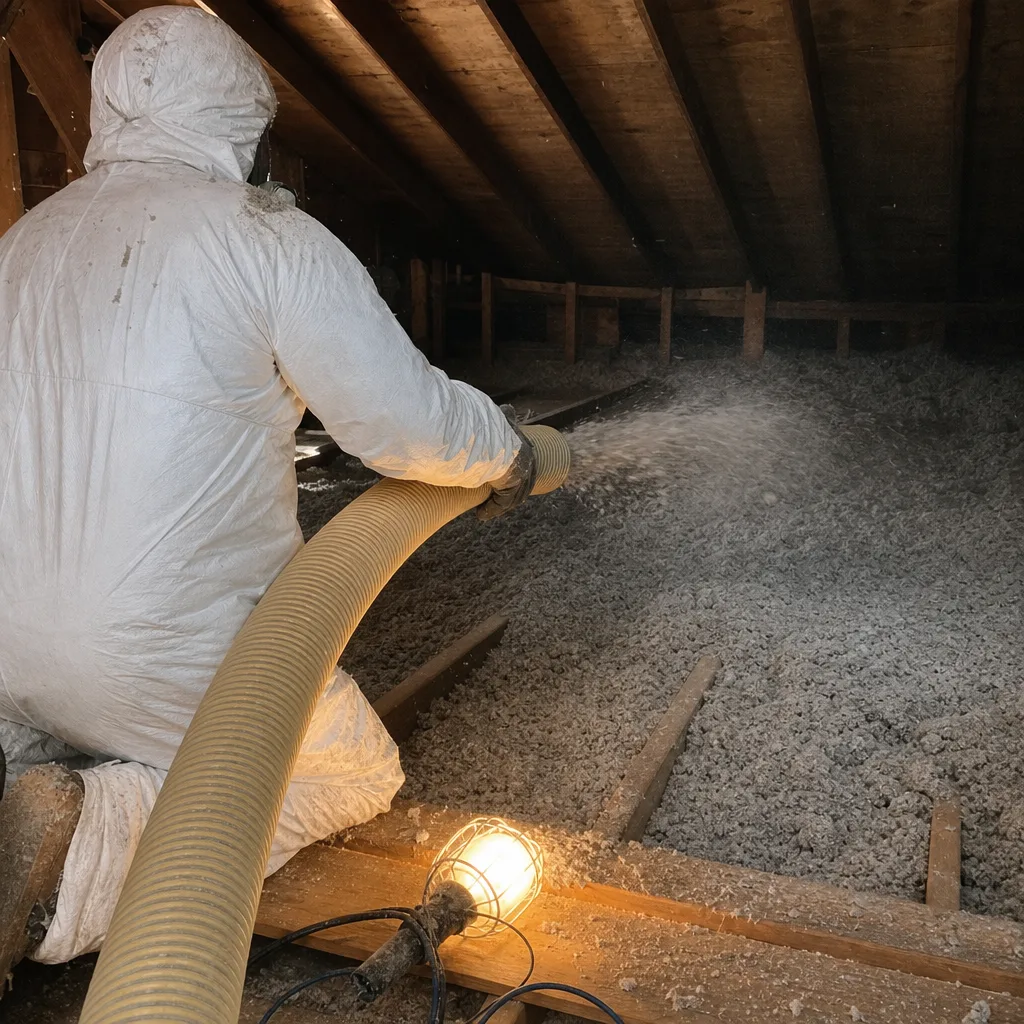
- Uneven temperatures between rooms. Rockwool doesn’t settle as severely as cellulose, but it can be displaced by wind washing through soffit vents or by contractors who walk on it during HVAC service. The result is bare patches where the attic floor shows joists, and the room below gains heat fast in Glendale’s August afternoons.
- Visible moisture or mold on the batt surface. Rockwool is hydrophobic, meaning it doesn’t absorb liquid water, but it can hold vapor against the drywall if the attic ventilation is blocked. In Glendale, where marine layer moisture meets afternoon heat, this shows up as dark streaking on the paper facing or a musty smell at the attic hatch.
- Insulation compressed below the joist tops. Storage boards, old HVAC flex runs, or rodent nesting can mash Comfortbatt to half its designed thickness. An R-38 batt compressed to R-19 depth performs at roughly R-19, no matter what the label says. We measure this with a depth gauge on every inspection.
- Dust or fibers collecting at ceiling penetrations. If you’re finding gray, cotton-candy-like debris around recessed can lights or bathroom fan housings, air is moving through the insulation and carrying particulate with it. This means the insulation is no longer forming an effective air barrier at that location, and the bypass is costing you conditioned air.
- PG&E bills rising without rate changes. A 30% spike in summer cooling costs, with no change in thermostat setting or occupancy, often traces to insulation that has degraded, been removed by prior work, or was never sufficient for the roof assembly. Glendale’s 90°F-plus days in July and August expose this fast.
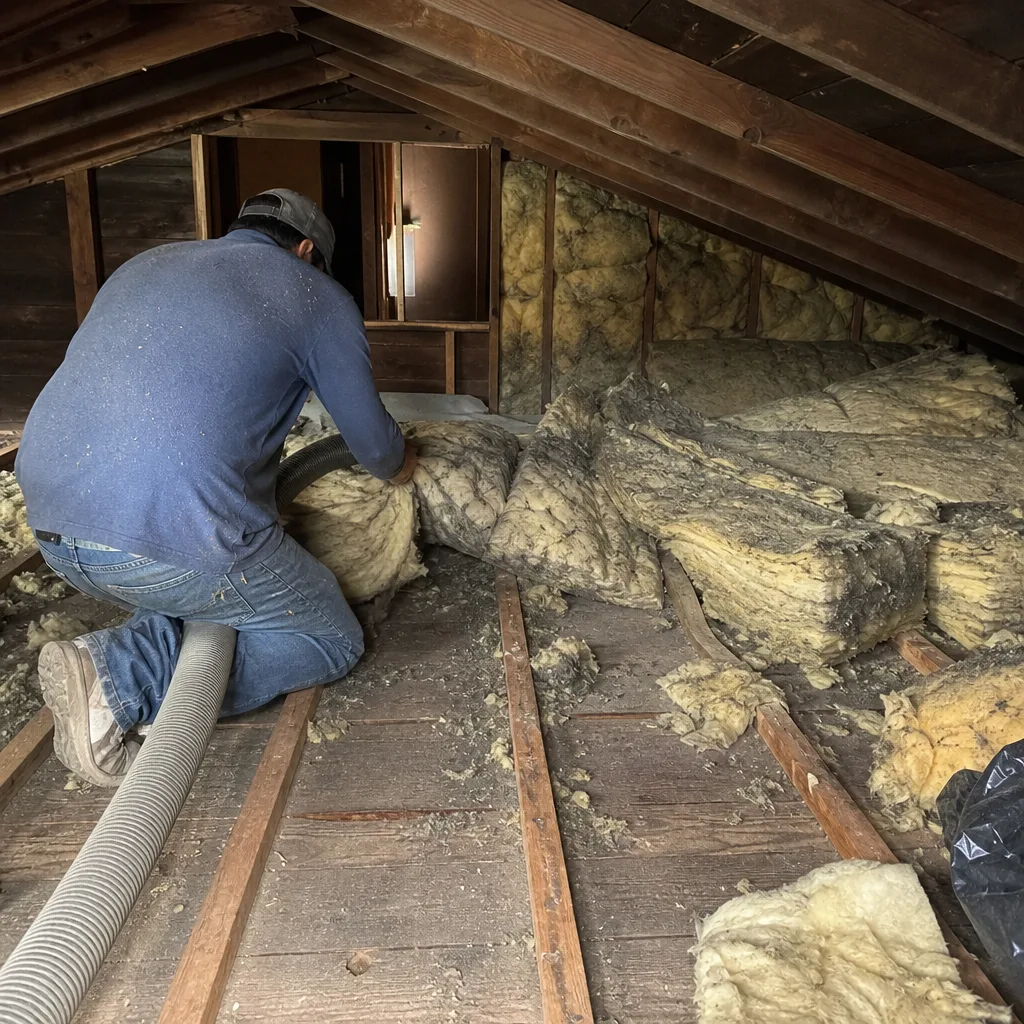 Before
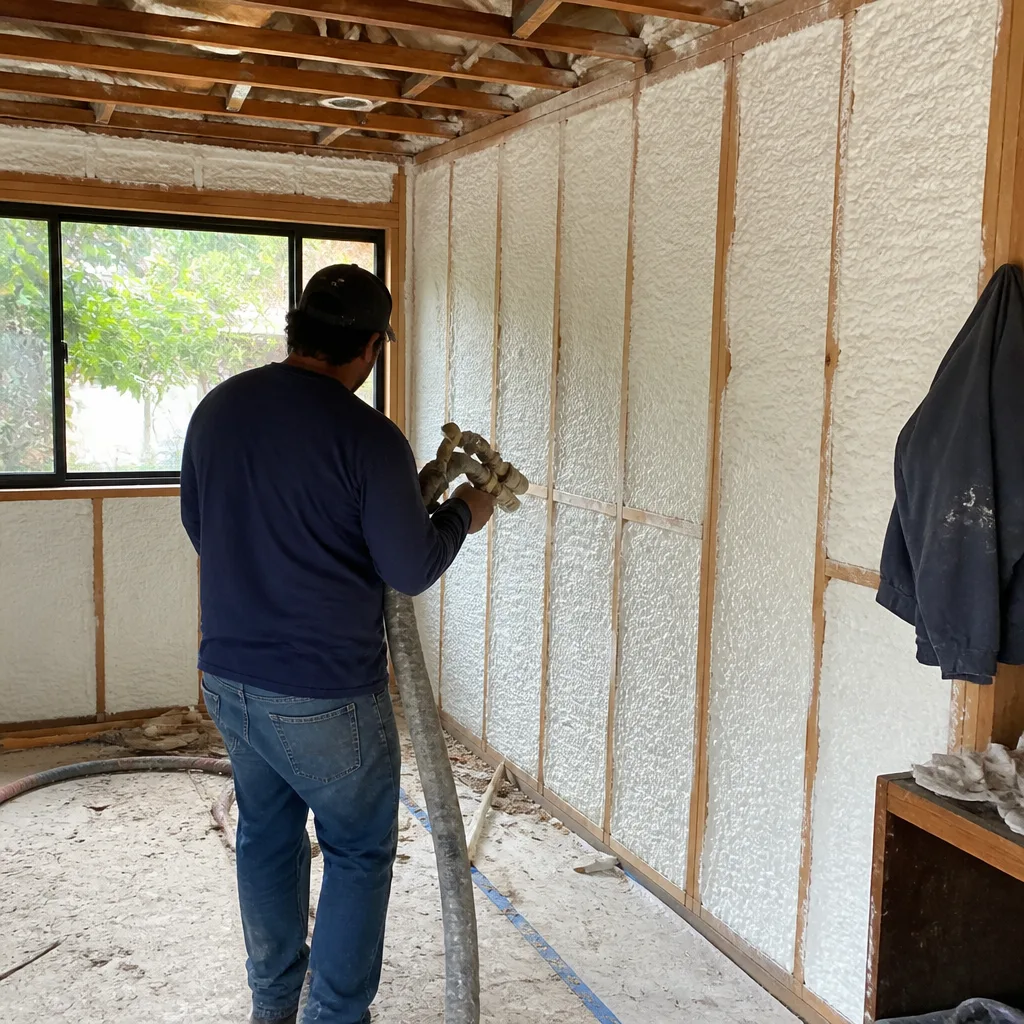 After
AfterReplacement Cost & What’s Included
| Scope | Price Range (Glendale) | Typical Home Size |
|---|---|---|
| Rockwool Comfortbatt removal + replacement, no air sealing | $1,400 - $2,400 | 1,000 - 1,400 sq ft attic |
| Rockwool Comfortbatt with full attic air sealing | $2,200 - $3,800 | 1,000 - 1,400 sq ft attic |
| Rockwool TopRock DD blow-in over existing | $1.80 - $2.60 / sq ft | Variable depth |
| Air sealing only (top plates, penetrations, can lights) | $800 - $1,600 | 1,000 - 1,400 sq ft attic |
What drives the range: attic accessibility (steep roof pitch or limited hatch size adds labor hours), whether existing insulation must be removed versus topped off, and the extent of air sealing required. We find that roughly 60% of Glendale homes built between 1945 and 1975 have unsealed top plates and electrical penetrations that leak enough to show on a blower-door test.
Every job closes with a written invoice, a Documented Photo Record of the completed work, and on air-sealing jobs, before-and-after blower-door numbers so you can verify the performance change. The 365-Day Done Right Promise applies: if the insulation settles beyond specification or the air sealing fails to hold, we return and correct it. Under Haven Standard Clause 1, you get the written price before any work starts, always.
DIY or Call Us?
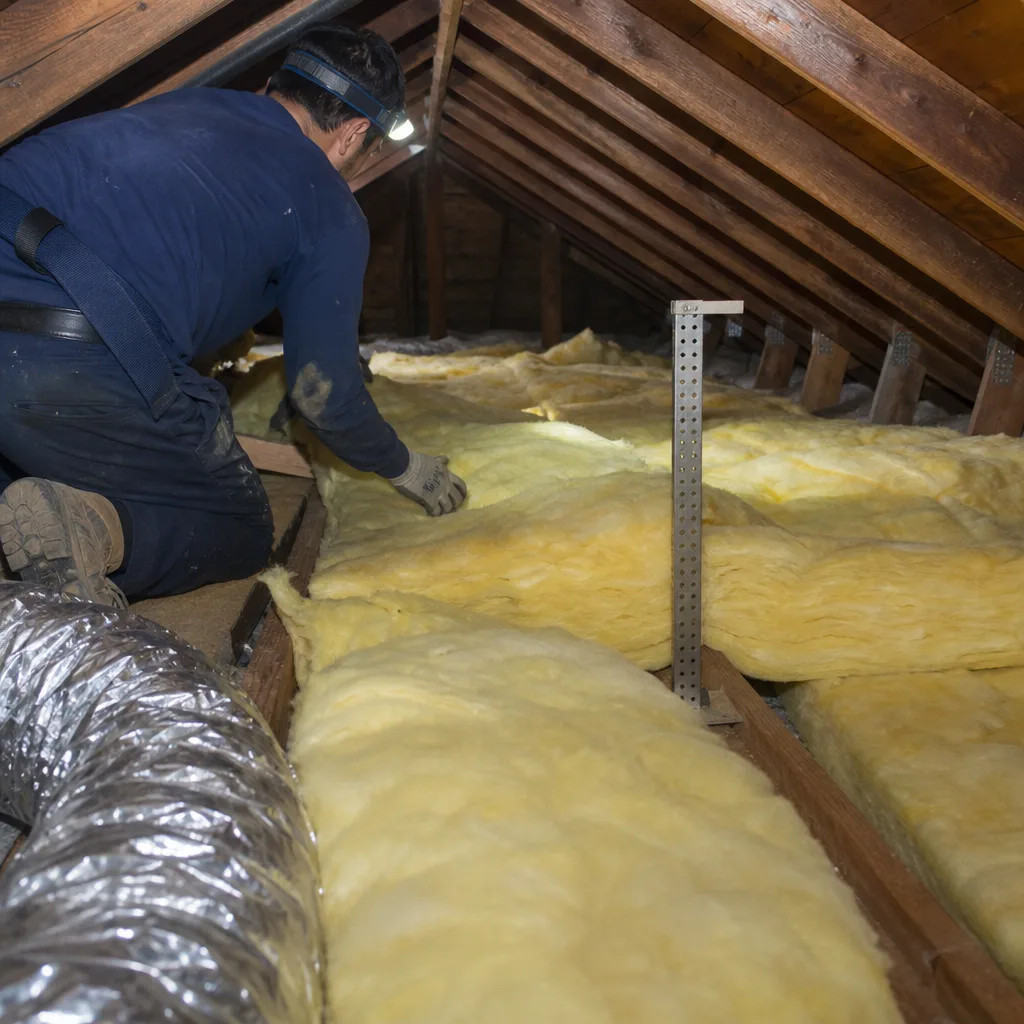
What you can safely check yourself: measure insulation depth at three points in the attic with a ruler or tape measure, photograph any stained or compressed areas, and verify that your soffit vents aren’t blocked by insulation pushed against them. Look for daylight through the eaves; if you see none, the vents may be obstructed.
Where DIY goes wrong: Rockwool batts are dense, roughly three times the weight per square foot of fiberglass, and awkward to maneuver through a small attic hatch without compressing them. Compression voids the R-value. More critically, disturbing old insulation without respiratory protection exposes you to decades of accumulated dust, rodent droppings, and possible asbestos if the home predates 1980. We use P100 respirators and negative-air setup when removal is required.
And here’s the part most homeowners miss: adding new Rockwool over unsealed air leaks is, as we say on every job, “expensive noise reduction.” The conditioned air escapes around the insulation, not through it. Seal the bypasses first. Insulation over air leaks is just expensive noise reduction. We run a blower-door test before we open a single bag, identify the leakage paths, and seal them. The insulation goes in after.
For a written price on Rockwool attic insulation in Glendale, call (213) 474-3828. Estimates are free, and we provide a Free Second Opinion on any written estimate you’ve already received.
FAQs
Rockwool itself does not degrade chemically; the mineral wool fibers are stable for decades. What fails first is the installation quality: compression from foot traffic, displacement from wind washing, or moisture intrusion from roof leaks. In Glendale’s dry climate, properly installed Rockwool should maintain its rated R-value for 25 years or more, though we recommend an inspection every 10 years after any roof or HVAC work. Call (213) 474-3828 to schedule a free inspection.
Localized damage, such as a wet patch from a one-time roof leak, can sometimes be cut out and patched with new batt material if the surrounding insulation is dry and uncompressed. However, if the failure is widespread compression, rodent contamination, or displacement across more than 20% of the attic floor, replacement is more cost-effective than spot repair. We assess this on inspection and give you both options in writing. Call (213) 474-3828 for an exact quote.
A standard removal-and-replacement with air sealing takes one to two days for a 1,200-square-foot attic in Glendale. Day one is removal, air sealing, and the blower-door verification. Day two is installation of new Rockwool and final documentation. Smaller top-off jobs with TopRock DD can finish in a single morning. We book most jobs within 48 hours of your call to (213) 474-3828.
We stock Comfortbatt in R-23 and R-30 widths on every Glendale service vehicle, and AFB evo for partition wall applications. TopRock DD is ordered to the job site by the pallet, typically arriving next business day. If you have an urgent need, call (213) 474-3828 and we’ll confirm truck stock against your specific framing dimensions.
Written by Wes Okafor, Owner, Topside Attic Insulation Glendale at Topside Attic Insulation Glendale, serving Glendale and nearby areas.