
Knauf Attic Air Sealing: The Glendale Owner’s Guide
Knauf attic air sealing components installed in Glendale homes typically run $340-$780 for a complete top-plate and penetration seal, depending on attic square footage and accessibility. Most jobs we book are completed same-day, and we stock Knauf-compatible sealants, gasketed covers, and fire-rated foam on every truck. You’ll know the work mattered when you see the blower-door number drop, not because we told you it did.
Most Glendale homeowners figure out their attic air sealing has failed the same way: rooms that never hold temperature evenly, dust streaks around ceiling outlets, or an energy bill that climbed after insulation was added but the bypasses were never touched. In the Verdugo Woodlands ranches we work, balloon-frame walls connected to unsealed attic floors are especially prone to this, pulling conditioned air straight into the roof cavity year-round.
Which Knauf Models This Applies To
Knauf doesn’t sell attic air sealing as a single branded kit. What we’re talking about are the compatible sealants, gaskets, and fire-rated foams used with Knauf insulation systems, particularly where EcoSeal or similar water-based elastomeric sealants were specified, or where Knauf Jet Stream blown-in fiberglass was installed over top plates that still leaked. The key identifier is the insulation label itself, usually printed on the bag or stamped on a batt edge, showing a Knauf product code and R-value. If your attic has Knauf insulation but no visible sealing at the top plates, can lights, or plumbing/electrical penetrations, you’re looking at the right repair.
We don’t require OEM-only parts for this work. Knauf’s own sealants perform well, but we also carry compatible fire-rated acrylic latex and intumescent foam that meets the same ASTM E-814 and California Title 24 requirements. The decision point is usually whether the original sealant has degraded (common in Glendale’s heat-cycling attic conditions) or whether it was never applied in the first place, which we see in roughly half the homes built 2015-2020 that had insulation subcontracted to the lowest bid.
Signs Your Knauf Attic Air Sealing Is Failing
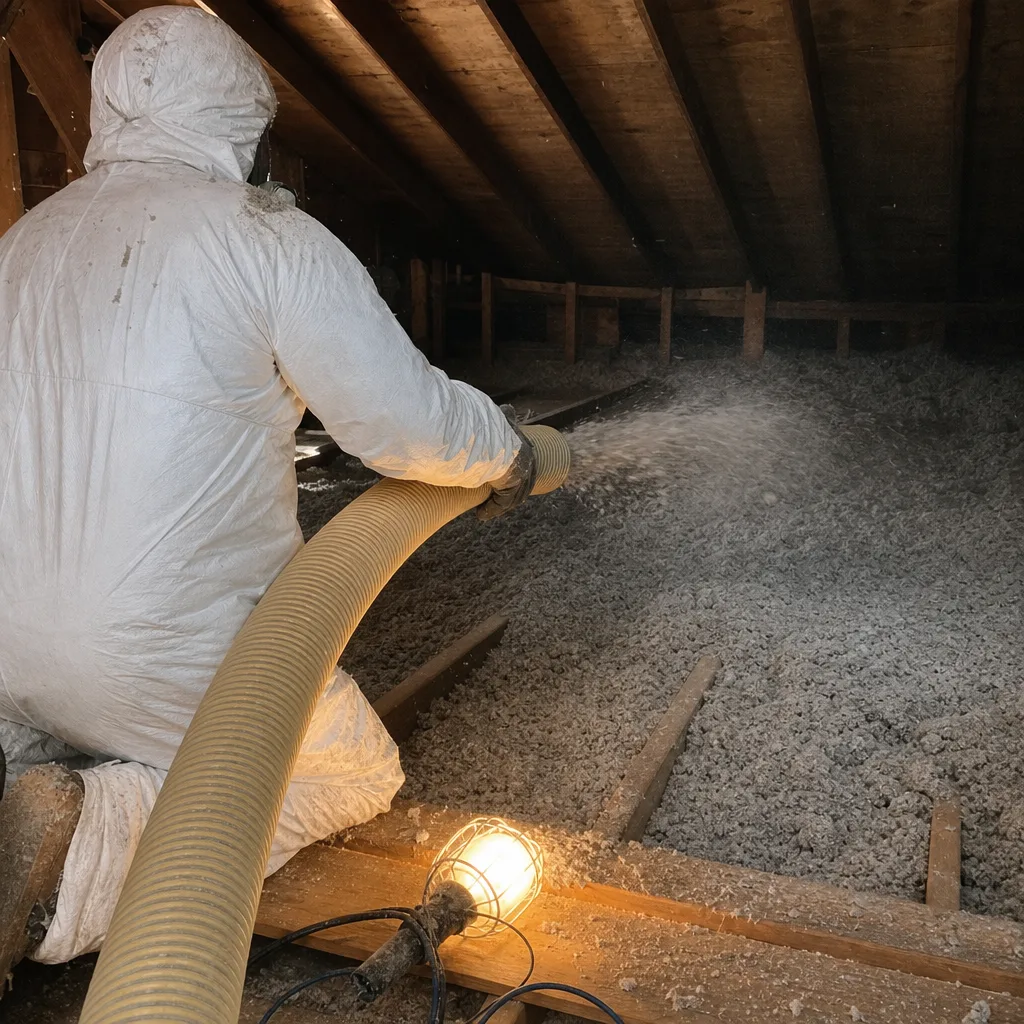
- Uneven room temperatures despite good insulation depth. Conditioned air is escaping through unsealed top plates and partition walls, so the thermostat reads satisfied while the far bedroom never gets its share. The blower-door test will show elevated CFM50 in the upper floor zone specifically.
- Dust streaks or darkening around ceiling outlets and fixtures. These are thermal tracking marks, airborne particles depositing where air moves through gaps. In Glendale’s dry climate with Santa Ana wind events, the streaking tends to be more pronounced than in coastal cities.
- Ice damming or excessive summer heat in the attic. Air leaks carry moisture in winter and superheated air in summer. Even with adequate R-value, unsealed bypasses let conditioned air bypass the insulation entirely.
- Insulation that looks settled or disturbed near eaves and penetrations. Air moving through gaps carries fine fiberglass particles, creating visible hollows. This is especially common with Knauf Jet Stream where the install skipped the air-sealing prerequisite.
- Rising energy bills with no equipment change. When the envelope leaks, the HVAC runs longer to maintain setpoint. We’ve measured homes in Glendale losing 25-40% more conditioned air than necessary through attic bypasses alone.
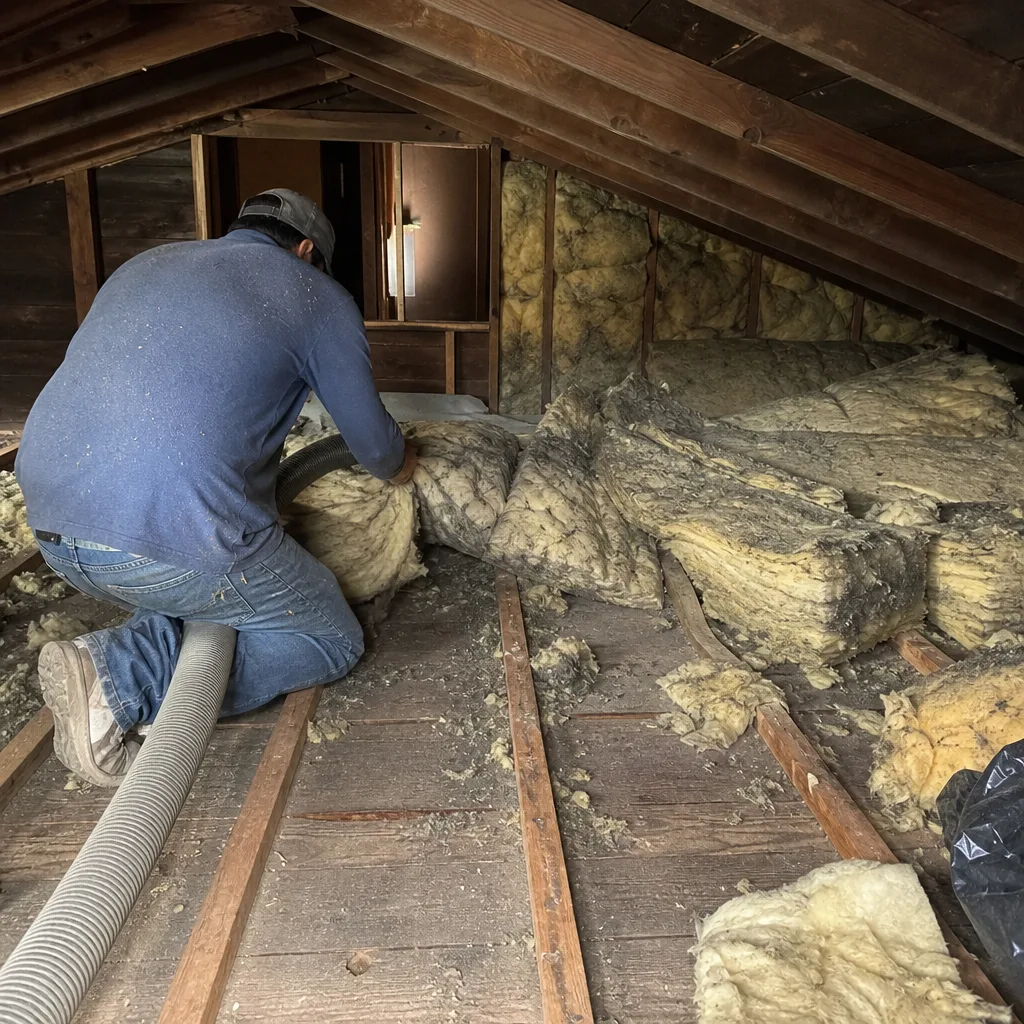 Before
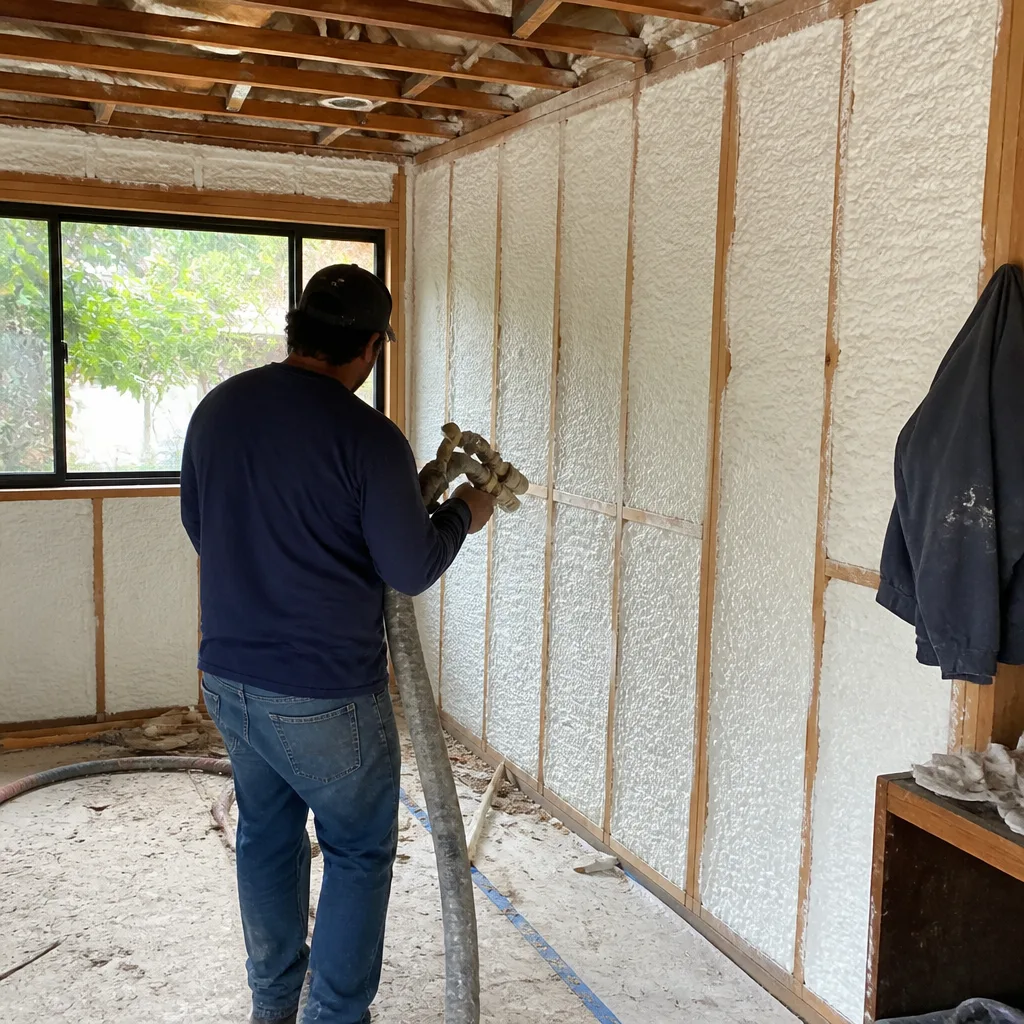 After
AfterReplacement Cost & What’s Included
Most complete attic air sealing jobs in Glendale run $340-$780 for homes under 2,500 square feet, scaling to $890-$1,400 for larger or more complex attics with multiple HVAC platforms, recessed can lights, or chimney chases. The range reflects labor hours, not material markup, sealant is cheap, access and detail work are what take time.
Every job includes: written scope and flat price before work starts (Haven Standard Clause 1), sealing of all top plates, electrical/plumbing penetrations, can-light covers or gasketed replacements, and the blower-door test before and after. You get the printed CFM50 and ACH50 numbers, a Documented Photo Record of every sealed location, and the 365-Day Done Right Promise in writing. No per-hour surprises, no “we’ll see how long it takes.”
DIY or Call Us?
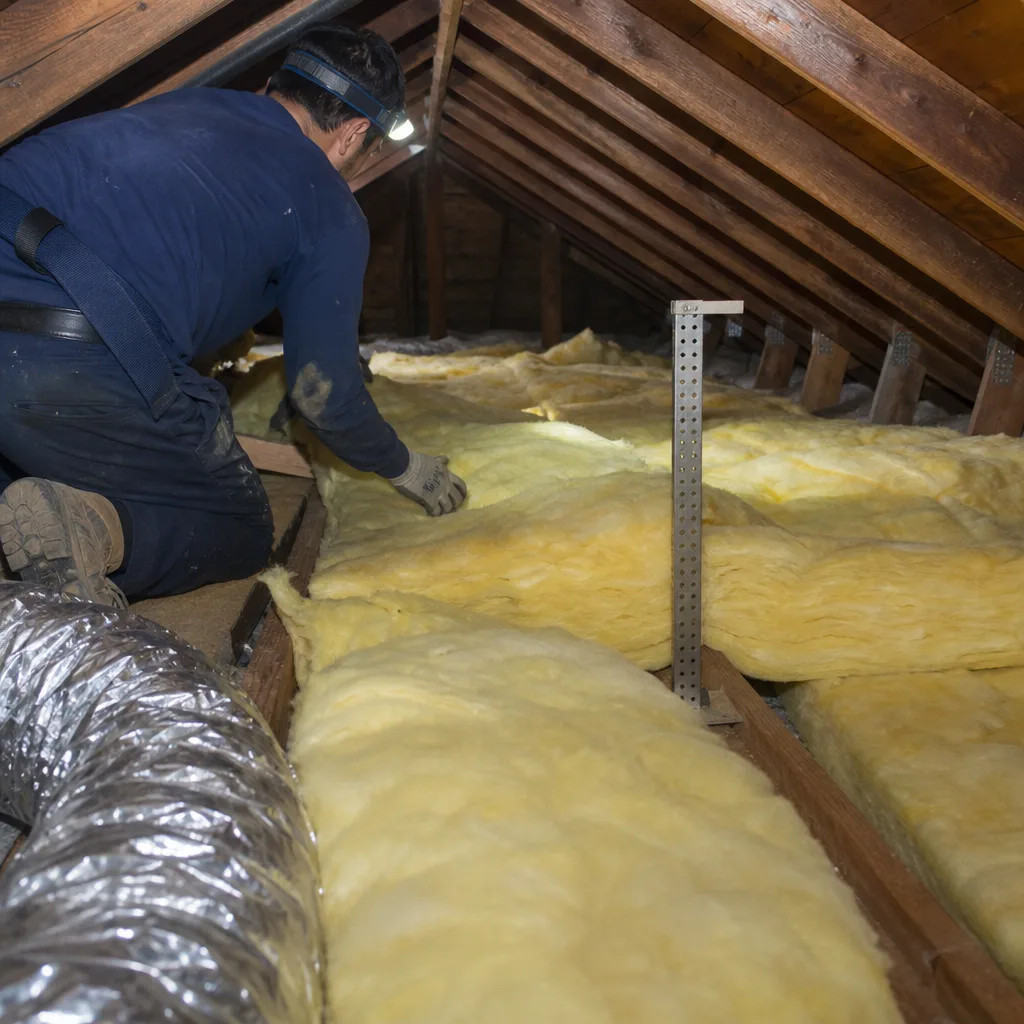
Here’s what you can safely check yourself: look at your attic floor with a flashlight. If you see bare wood at the wall top plates, gaps around pipes and wires, or can lights without metal covers, you’ve found the leaks. That’s the end of safe DIY for most homeowners.
The actual sealing work involves working around energized electrical, proper fire-rated material selection (ordinary caulk fails code at chimney and flue penetrations), and the blower-door test to verify the result. Without that test, you’re guessing. We’ve been called to fix DIY seal jobs where the homeowner used the wrong foam and created a combustion hazard at a furnace vent, or missed the partition-wall top plates entirely because they looked like interior walls. Seal the bypasses first. Insulation over air leaks is just expensive noise reduction. Call (213) 474-3828 and we’ll give you a written price before anyone climbs the ladder.
FAQs
Properly installed fire-rated acrylic latex and gasketed covers last 20+ years in Glendale’s dry climate, though extreme attic heat cycling (150°F+ summer peaks) can degrade lower-grade sealants in 5-8 years. We use products rated for the temperature swing and document what was applied so the next contractor, or you, knows what to expect. Call (213) 474-3828 for an exact quote, estimates are free.
Partial repair is possible if the original sealant is still flexible and the failure is isolated to one penetration or a section of top plate. In practice, most Glendale homes we assess have spotty or missing sealing throughout, so a comprehensive approach yields the measurable result the blower-door test can verify. Call (213) 474-3828 for an exact quote, estimates are free.
Most residential attic air sealing jobs in Glendale take 4-6 hours for a crew of two, including the pre- and post-work blower-door test. Larger attics or those with limited access (steep pitch, tight scuttle) run longer. We schedule enough time to do it without rushing, and we don’t leave until the documented numbers show the improvement.
Yes. We carry fire-rated acrylic latex sealant, intumescent foam, gasketed can-light covers, and top-plate gasket material on every truck, along with blower-door equipment to verify the result before we leave. We also stock Reflectix-compatible radiant barrier components for homes where that upgrade makes sense. We’re an independent service provider, not affiliated with Knauf, and we source materials from multiple manufacturers to match what your home actually needs.
Written by Wes Okafor, Owner, Topside Attic Insulation Glendale at Topside Attic Insulation Glendale, serving Glendale and nearby areas.