
Johns Manville Radiant Barrier Installation: The Glendale Owner’s Guide
We stock and install Johns Manville-compatible radiant barrier systems in Glendale homes, with most attic installations running between $1,800 and $3,400 depending on roof pitch and square footage. Same-day installation is available when we have your measurements ahead of the crew’s arrival. Most Glendale homeowners discover their radiant barrier is failing when upstairs rooms won’t cool below 78°F even after the AC runs continuously, or when they spot sagging, dusty foil that has pulled away from the rafters.
Which Johns Manville Models This Applies To
Johns Manville produces radiant barrier products under several product lines, and matching the right material to your existing system matters for both performance and warranty coverage. The JM AP Foil-Faced Polyiso line is the most common retrofit we encounter in Glendale, particularly in homes built between 1985 and 2005 where original kraft-faced batts have degraded. The AP Series carries a foil facing on one or both sides, with thicknesses ranging from 0.5 inch to 2.5 inches. R-values run from R-3 to R-15 depending on the core density.
To identify what you have, check the printed ink stamp on the foil facing itself. Johns Manville stamps the product code, date of manufacture, and R-value in a repeating pattern every 24 inches. If the stamp has faded, measure the core thickness with a tape measure and note whether the foil is perforated (breathable) or solid (vapor barrier). Perforated foil is required in Glendale’s Climate Zone 3B where cooling-dominated buildings need drying potential to the exterior.
We also stock Reflectix as an aftermarket equivalent for certain Johns Manville applications, though we will tell you upfront when the OEM specification is worth preserving for code compliance or existing warranty transfer. Topside Attic Insulation Glendale is an independent service provider with no affiliation to Johns Manville.
Signs Your Johns Manville Radiant Barrier Installation Is Failing
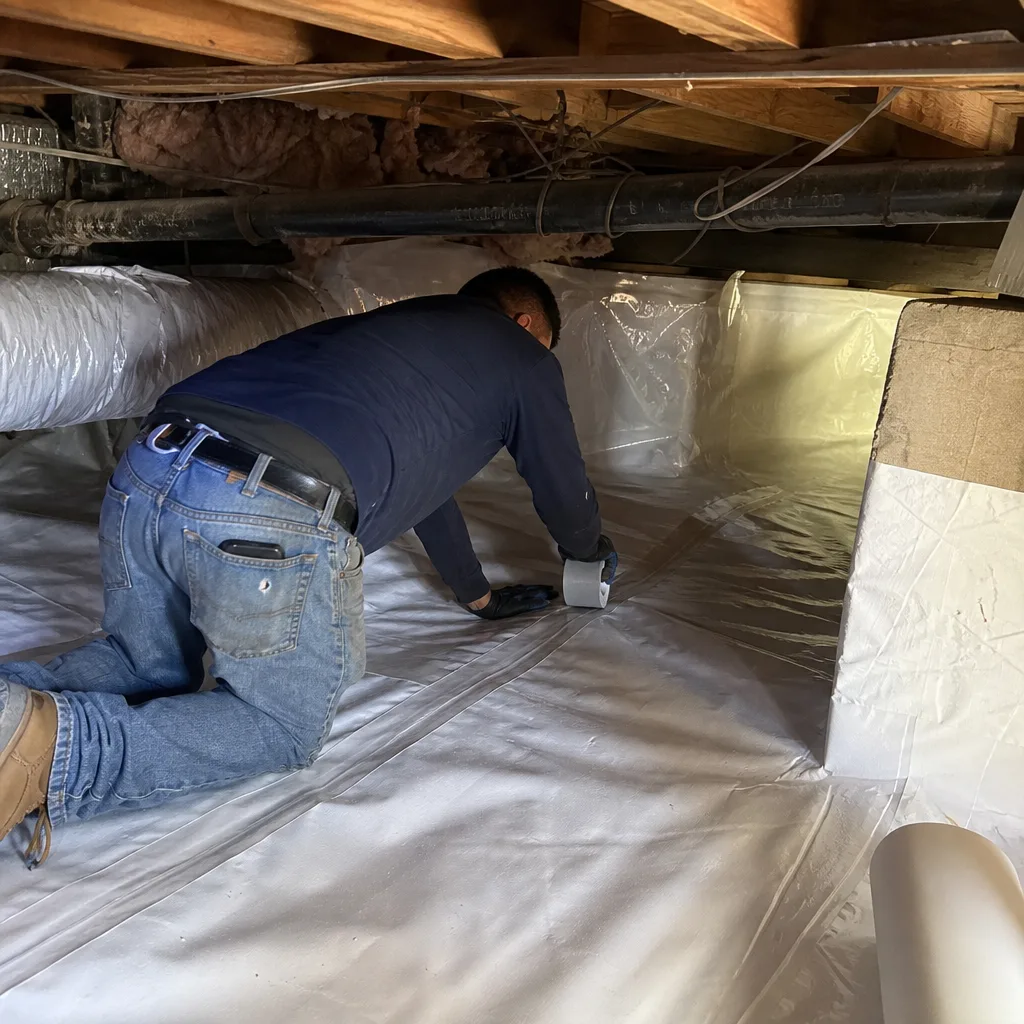
- Foil facing has pulled away from rafters or trusses. The adhesive strips or mechanical fasteners have failed, usually from attic heat cycling above 140°F in Glendale summers. Once the foil sags, it stops reflecting radiant heat and becomes an air collector that traps moisture against the roof deck.
- Upstairs rooms stay hot until after sunset. A working radiant barrier should drop attic temperatures 20-35°F below an unprotected roof. When the reflective surface oxidizes or collects dust, that temperature reduction collapses and your ductwork in the attic soaks up heat all afternoon.
- Water stains appear on the foil or roof deck. This signals a condensation problem, often because the original installer used solid foil where perforated was required. In Glendale’s dry climate this still happens when bathroom or kitchen exhaust vents terminate in the attic and raise humidity.
- You can see bare insulation or attic floor through gaps in the barrier. Rodent activity, wind pressure through soffit vents, or careless storage traffic tears the foil. Every gap is a thermal bypass that undermines the entire system.
- Your summer electric bills have climbed 15% or more year-over-year with no rate change. The AC runs longer to overcome radiant heat gain the barrier used to block. We verify this with a surface thermometer on the attic floor, comparing readings against the roof deck temperature.
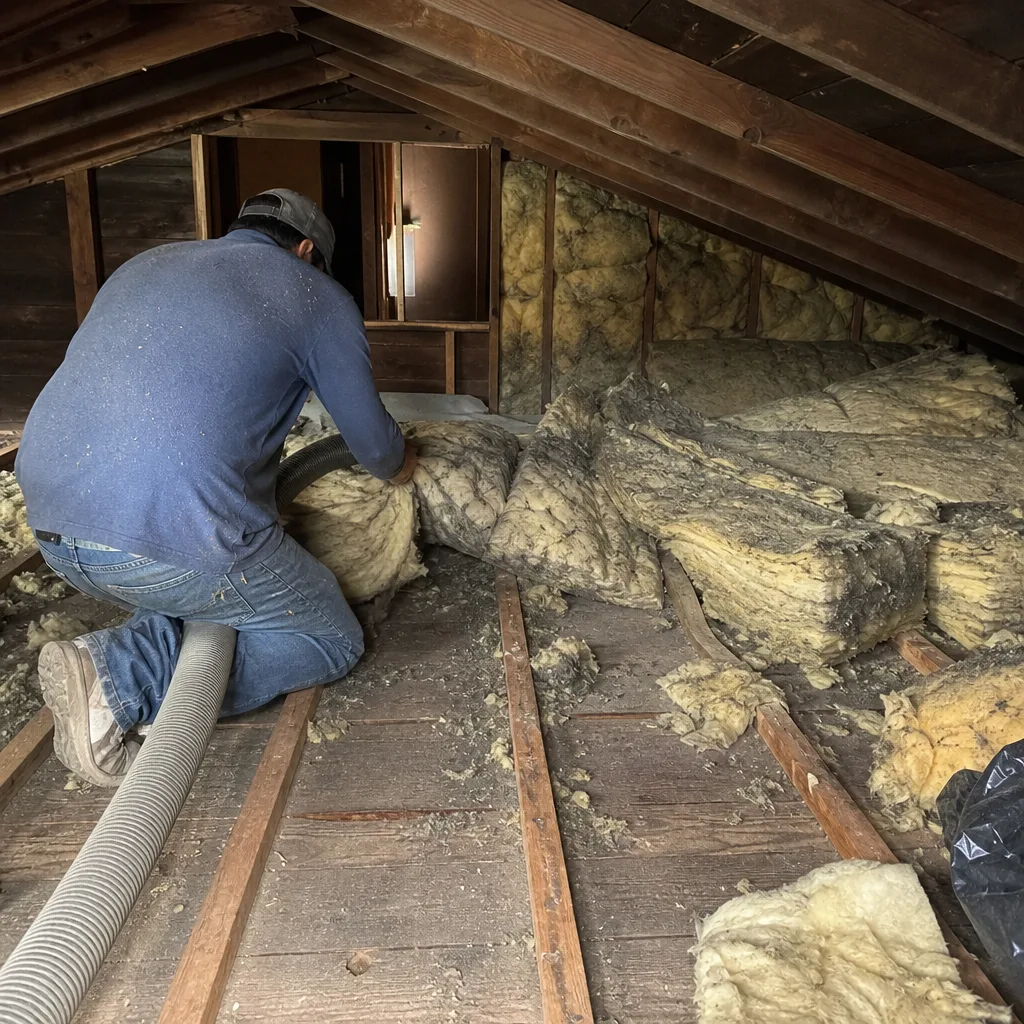 Before
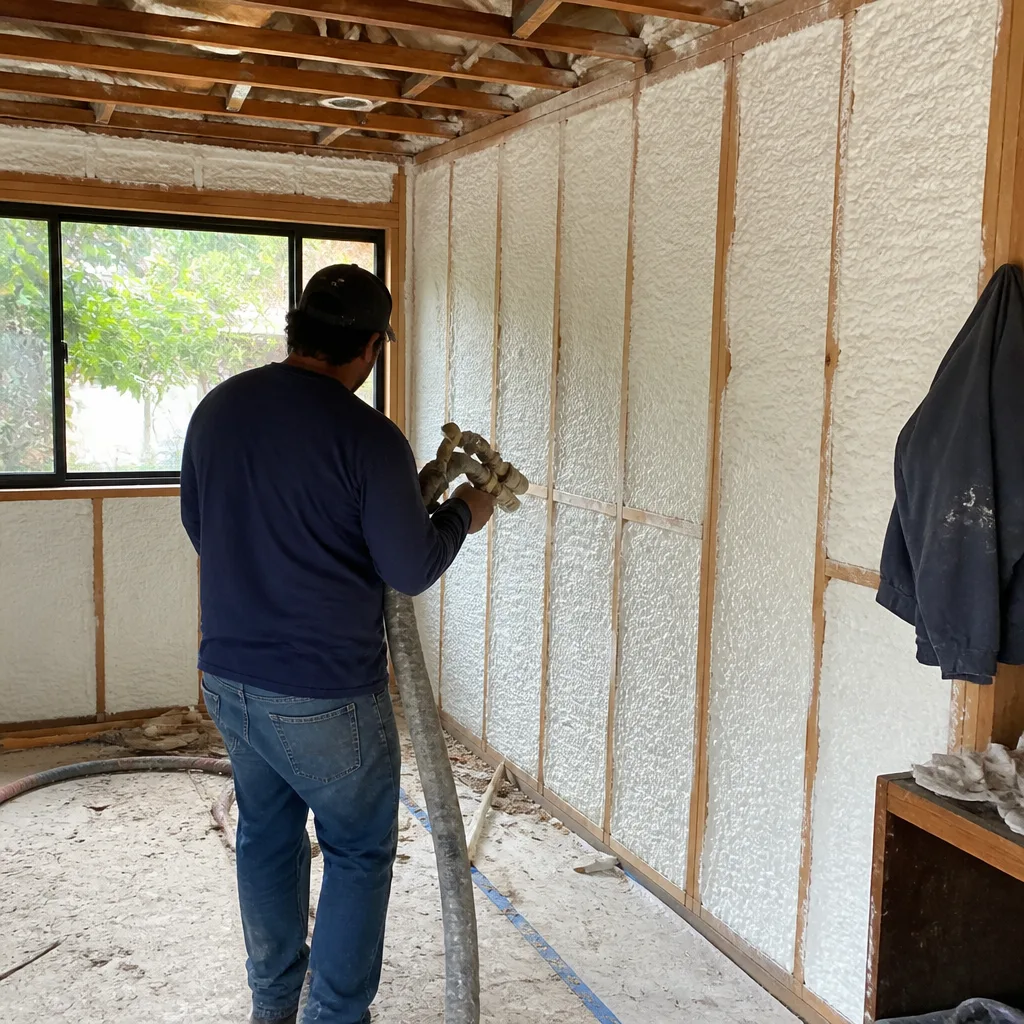 After
AfterReplacement Cost & What’s Included
Most Johns Manville radiant barrier replacements in Glendale run $1,800-$3,400 for a typical 1,200-2,400 square foot attic. The low end covers straightforward jobs with good attic access, minimal removal of failed material, and standard perforated foil installation. The high end accounts for steep pitches above 6:12, extensive removal of degraded existing barrier, or upgrading to a hybrid system with air-sealed top plates.
Every quote we write breaks out material, labor, and disposal separately. The material line specifies the exact Johns Manville or equivalent product, square footage, and fastening method. Labor includes removal, surface prep, installation, and cleanup. We do not start work until you have that written price in hand, per Haven Standard Clause 1.
The 365-Day Done Right Promise covers installation workmanship. Material defects fall to Johns Manville’s product warranty, which we help you document at completion. Before-and-after blower-door numbers are included on every job where air sealing accompanies the radiant barrier.
DIY or Call Us?
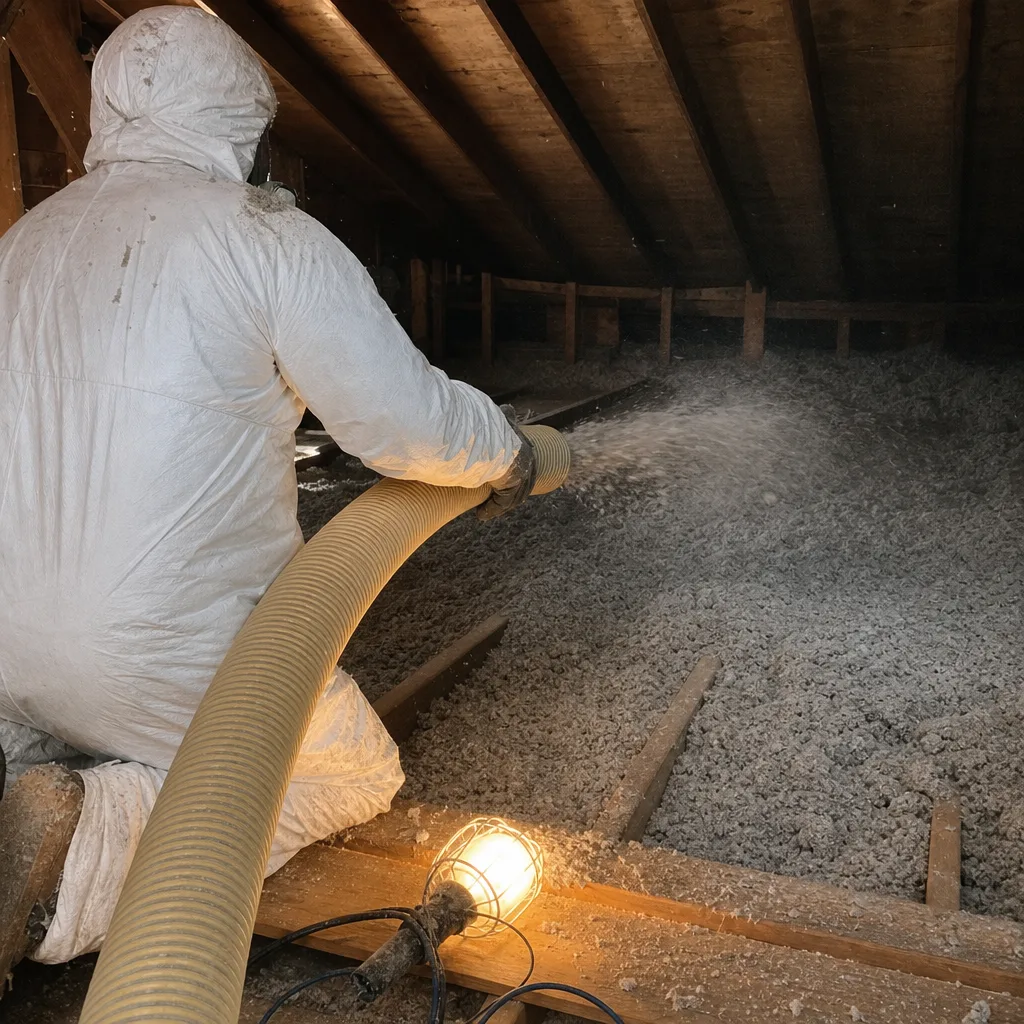
There is no high-tension danger in radiant barrier work, but there are genuine ways to make your home worse. A homeowner can safely verify the product stamp, measure attic square footage, and photograph sagging or torn sections from the hatch. Do not, however, walk a Glendale attic in July without proper fall protection, and do not staple new foil over old without addressing why the first installation failed.
The common DIY error is installing solid foil in a vented attic, which traps moisture and voids your roof manufacturer’s warranty. Another is blocking soffit vents at the eaves, starving the attic of intake air and cooking your shingles. We see both mistakes regularly in Verdugo Woodlands ranch homes where the original 1960s ventilation design is already marginal.
Seal the bypasses first. Insulation over air leaks is just expensive noise reduction. Call (213) 474-3828 and we will run a blower-door test before quoting any radiant barrier work.
FAQs
In Glendale’s climate, a properly installed perforated foil radiant barrier lasts 15-25 years before oxidation measurably degrades reflectivity. Attics that exceed 150°F regularly, or where dust accumulates from nearby construction, can cut that to 10-15 years. We check emissivity with an infrared thermometer during energy audits to tell you where yours stands. Call (213) 474-3828 for an exact assessment.
Small tears in isolated sections can be patched with matching foil tape if the surrounding material is still taut and reflective. Widespread sagging, oxidation, or adhesive failure means replacement is the only cost-effective path. We will show you photos of both conditions and quote each option so you can decide. Estimates are free.
Most residential radiant barrier replacements in Glendale are completed in one day, typically 4-6 hours for a crew of two. Jobs requiring extensive old-material removal, steep roof access, or simultaneous air sealing may extend to a second day. We give you a written schedule with the price, not a guess.
We stock Johns Manville AP Foil-Faced and Reflectix equivalents in common widths on our Glendale-area trucks, with next-day availability for less common specifications. For same-day installation, we need your attic measurements and photos of the existing product stamp by 8 AM. Call (213) 474-3828 to coordinate.
Ready to stop fighting your upstairs temperature? Call (213) 474-3828 for a free estimate with a written price before any work starts. We serve Glendale and nearby areas with documented results you can verify.
Written by Wes Okafor, Owner, Topside Attic Insulation Glendale at Topside Attic Insulation Glendale, serving Glendale and nearby areas.