
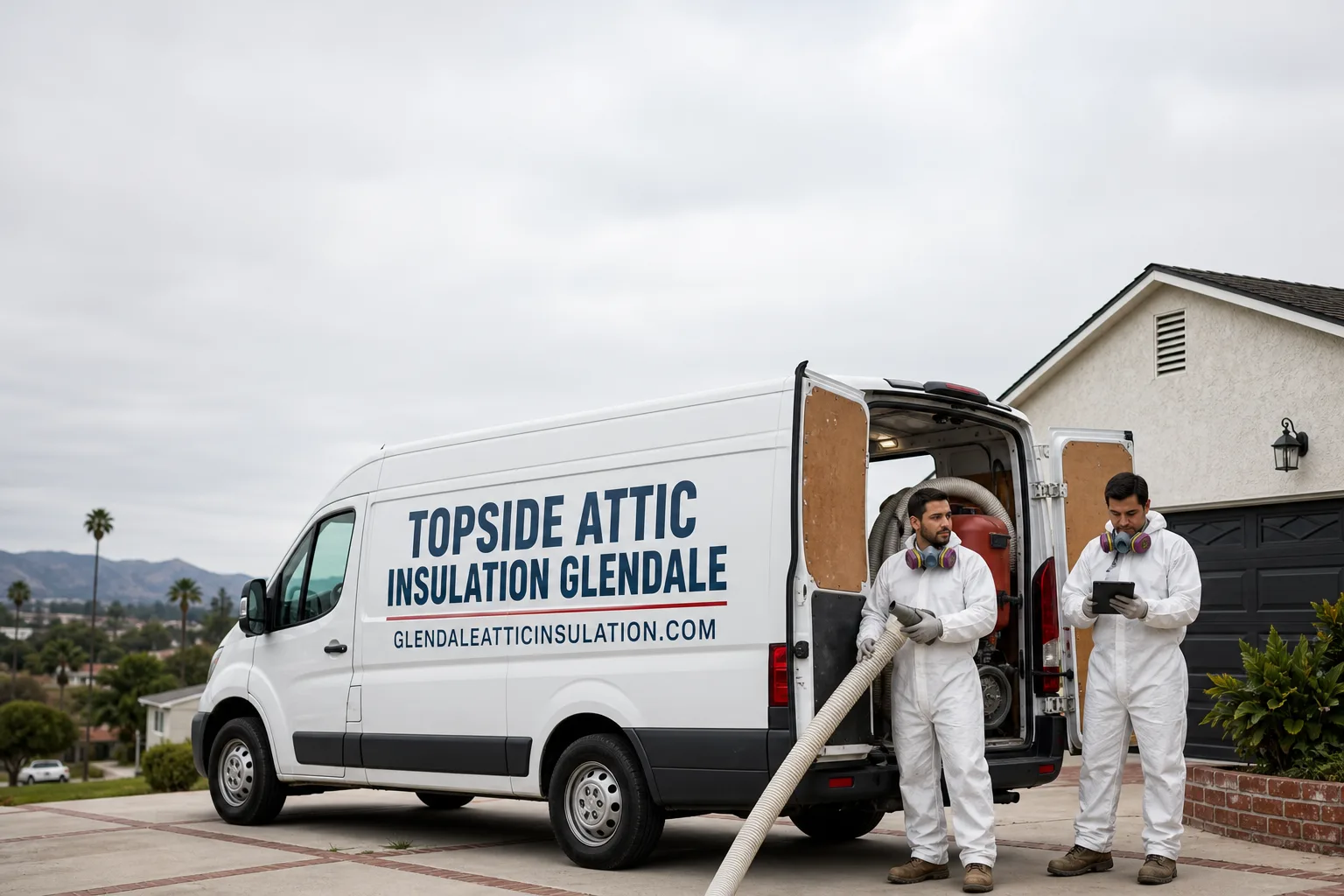
How Much Does Wall Insulation Cost in Glendale?
Wall insulation in Glendale, CA typically costs between $1,800 and $6,500 for a whole-home project, with most single-family homes in the 1,400-2,200 sq ft range landing between $2,400 and $4,800 depending on material choice and whether air sealing is done first. Blown-in wall insulation runs $1.80-$3.20 per square foot of wall area, while spray foam comes in at $3.50-$7.00 per square foot installed. These are Glendale market figures for 2026 – not national averages – and they account for local labor rates and the older housing stock you find in neighborhoods like Montrose, Verdugo Woodlands, and Adams Hill.
Wall Insulation Cost Breakdown (2026)
The table below reflects what Glendale homeowners are actually paying in 2026. Prices are per square foot of wall cavity area (not floor area), and they include labor, material, and standard cleanup. Air sealing of top plates and penetrations is listed separately because it should always be priced that way – it is a distinct scope of work that happens before insulation goes in, and any quote that bundles them without separating them is worth reading carefully.
| Material / Method | Cost per Sq Ft (Installed) | Typical Whole-Home Range (Glendale) | Best For |
|---|---|---|---|
| Blown-in fiberglass (retrofit) | $1.80 – $2.60 | $1,800 – $3,200 | Pre-1980 wood-frame homes with closed walls |
| Blown-in cellulose (retrofit) | $1.90 – $2.80 | $1,900 – $3,400 | Older Glendale bungalows; good thermal mass |
| Fiberglass batt (open wall) | $0.90 – $1.60 | $900 – $2,200 | Renovation or addition with exposed framing |
| Mineral wool (Rockwool) batt | $1.40 – $2.20 | $1,400 – $2,800 | Open walls; fire resistance a priority |
| Open-cell spray foam | $3.50 – $5.00 | $3,500 – $6,000 | Open walls; air sealing built into install |
| Closed-cell spray foam | $5.00 – $7.00 | $5,000 – $8,500 | Moisture control; very high R-value per inch |
| Attic air sealing (prerequisite) | $0.30 – $0.60 per sq ft (attic floor) | $400 – $900 | Required before any attic-adjacent wall work |
| Dense-pack cellulose (retrofit) | $2.20 – $3.20 | $2,200 – $4,000 | Reducing air movement inside wall cavities |
A few things move these numbers significantly. Homes in Glendale’s hillside zones – Chevy Chase Canyon, the Rossmoyne area, Grand View – tend to run 10-15% higher because access is tighter, trucks can’t always stage close to the structure, and some of those lots require hand-carrying equipment. Homes with stucco exteriors (very common in this city) add drilling cost to retrofit projects; expect $0.20-$0.40 per square foot more for exterior drill-and-fill work compared to interior access. And homes built before 1978 that haven’t been tested for lead paint add a mandatory lead-safe work practice surcharge, typically $300-$600 for the job.
One more line item worth knowing: if your walls have no insulation at all – common in the pre-1960 Craftsman bungalows you find in Glendale’s historic zones – the starting blower-door number tends to be high, which means air sealing the top plates and bottom plates before insulation goes in isn’t optional if you want the numbers to actually move. At Envelope Insulation Co., air sealing is done before insulation on every applicable job. That sequence matters more than the brand of material.
What Affects Wall Insulation Pricing in Glendale
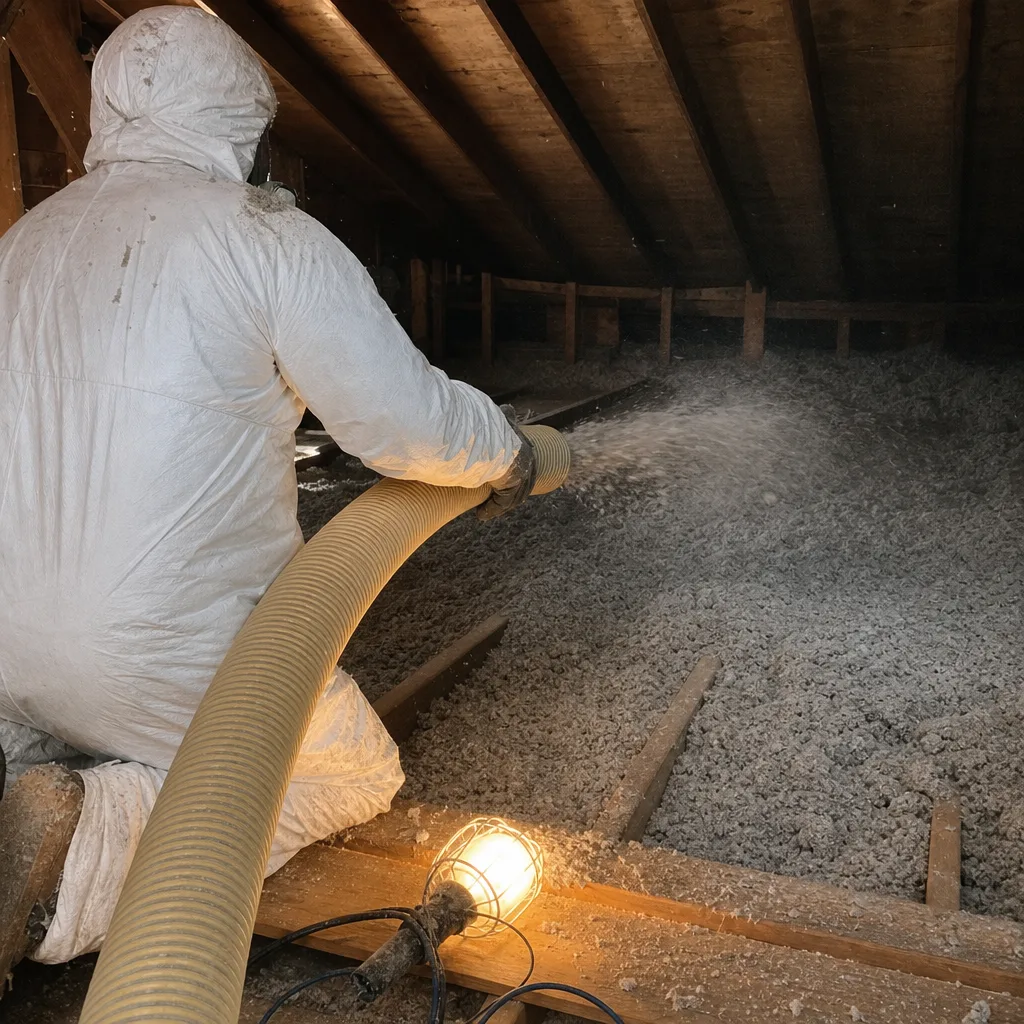
- Wall access method (open vs. closed): If your walls are already open for a remodel, batt installation costs roughly half what a retrofit blown-in job costs. Retrofit work requires drilling holes through drywall or stucco and then patching – those two steps add real labor time and material cost. Most Glendale homeowners dealing with existing walls are looking at retrofit pricing.
- Home age and construction type: Glendale has a lot of housing stock from the 1920s-1960s, including wood-frame stucco bungalows and Spanish Revival homes in neighborhoods like Emerald Isle and Glenoaks Canyon. Walls in these homes often have non-standard stud spacing, partial blocking, or settled original insulation that needs to be assessed before a new material goes in. Non-standard framing adds 15-25% to labor time.
- Material selection: The spread between the cheapest option (fiberglass batt in an open wall) and the most expensive (closed-cell spray foam in a retrofit) is roughly 5x. Closed-cell foam delivers the highest R-value per inch – R-6 to R-7 per inch versus R-3.8 for blown fiberglass – which matters in a 2×4 wall where you have 3.5 inches of cavity depth to work with. In a 2×4 wall with no room to add exterior continuous insulation, closed-cell is sometimes the only way to hit Title 24 requirements for a permitted project.
- Local permit requirements: Glendale Building and Safety requires a permit for wall insulation work when it’s part of a permitted renovation or when exterior cladding is being disturbed. Standalone blown-in retrofit work done from the interior generally doesn’t require a permit, but if you’re adding insulation as part of a room addition or full remodel, the Title 24 compliance paperwork adds $200-$500 to the project cost. Wes Okafor reviews permit requirements during the estimate so there are no surprises in the written price.
- Lead paint and asbestos testing: Homes built before 1978 in Glendale may require lead-safe work practices under California’s RRP rules when disturbing painted surfaces. If the home was built before 1980 and has never been tested, budget for testing ($150-$300) and, if lead is found, lead-safe containment and cleanup practices that add to the project cost. This isn’t a contractor markup – it’s a state requirement, and any contractor who skips it is creating liability for the homeowner.
- Blower-door testing and documentation: Some homeowners book wall insulation as a standalone project. Others book it as part of a full building-envelope assessment that includes a blower-door test before and after the work. The test itself – a pressurization reading that shows in one number how much air the building envelope is losing – costs $300-$500 as a standalone service. On applicable jobs at Envelope Insulation Co., before-and-after blower-door numbers are published as part of the job documentation so the homeowner can see what the work actually did, not just what it cost.
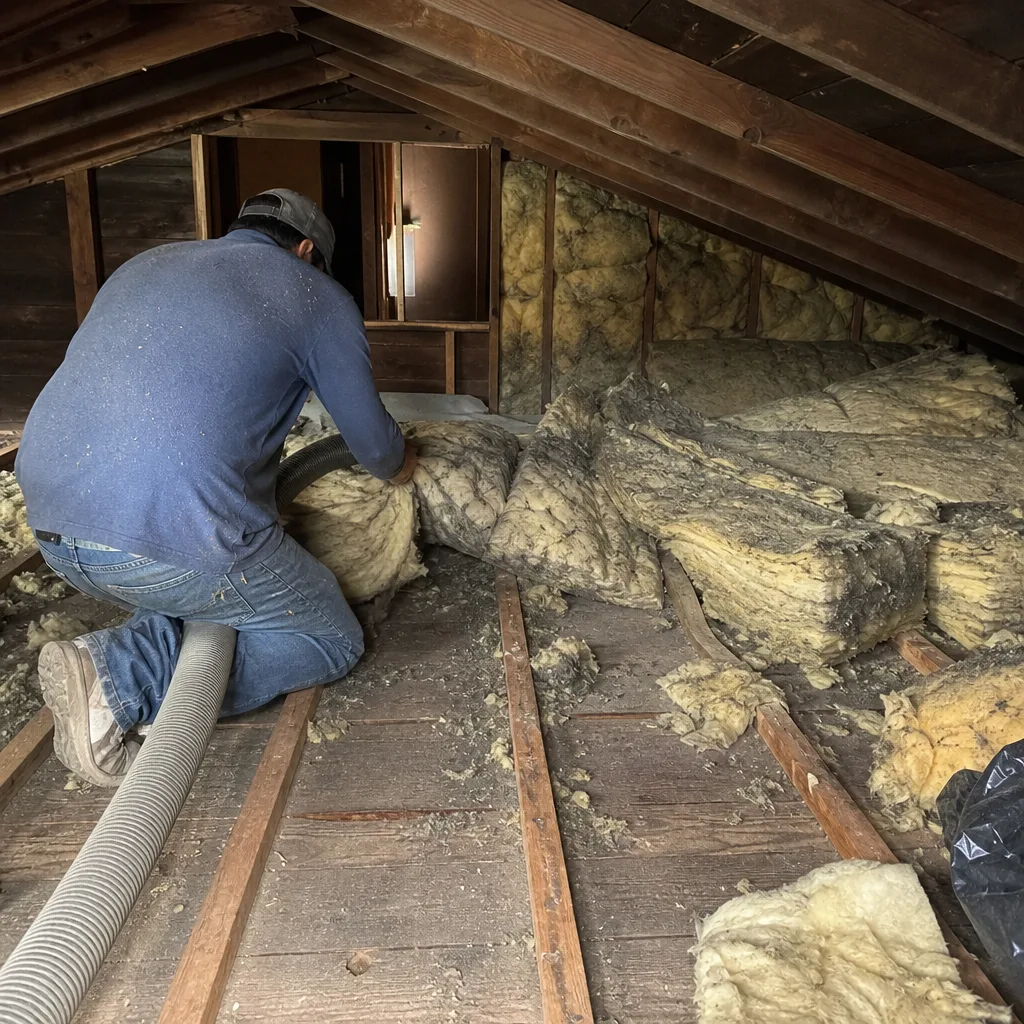 Before
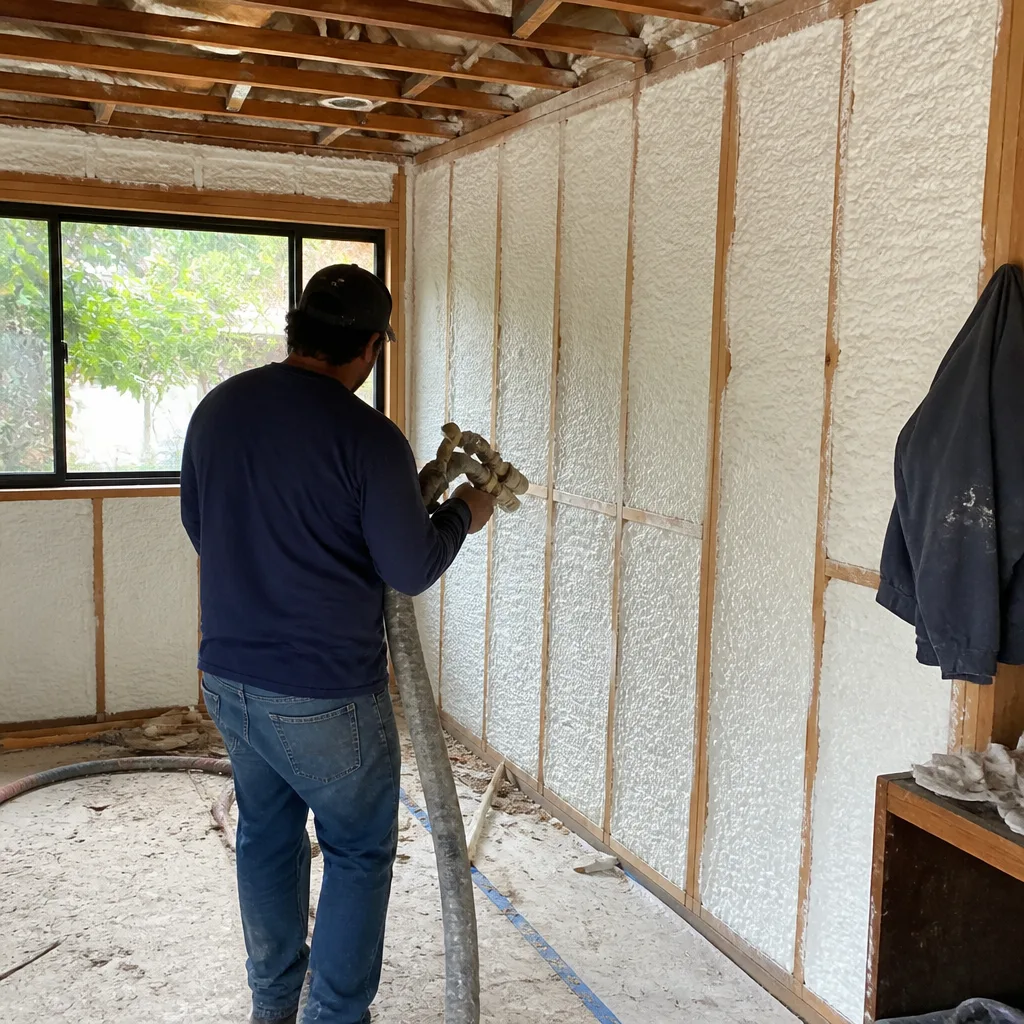 After
AfterGlendale-Specific Factors Worth Knowing
Glendale sits in a basin ringed by the Verdugo Mountains and the San Rafael Hills. That geography creates a microclimate that’s measurably different from coastal LA: summers run hotter (100°F days in the Crescenta Valley are not rare), and cold drafts off the hillsides in winter are a legitimate comfort issue, not just an energy-bill concern. Homes in the Montrose-La Crescenta area regularly show blower-door readings of 3,500-5,000 CFM50 before any work is done, which tells you the walls and attic are both leaking significant conditioned air. Adding insulation to a wall that’s still leaking at the top plate is like filling a bathtub with the drain open – you get some benefit, but not what the job should deliver.
Stucco construction is the dominant exterior finish in Glendale. For a blown-in retrofit, that means drilling 1.5-inch holes through the stucco at regular intervals, filling each cavity under pressure, and then plugging and patching each hole. Done correctly, the patches are nearly invisible after painting. Done carelessly, they’re obvious for years. Ask to see photos of completed stucco patch work before hiring anyone for this job. Under the Haven Standard, a Documented Photo Record is included on every Envelope Insulation Co. visit – you see what the wall looked like before the holes were drilled, during the fill, and after the patches are done.
Glendale also has a meaningful number of post-war tract homes in neighborhoods like Vineyard and Brockmont where the original insulation was fiberglass batt installed without any air sealing. In those homes, the batt has often shifted or compressed over 40-50 years and is delivering R-7 or less where R-13 was intended. Dense-pack cellulose is often the right call in those situations because it fills gaps the original batt left behind and significantly reduces air movement inside the cavity.
How to Save on Wall Insulation in Glendale
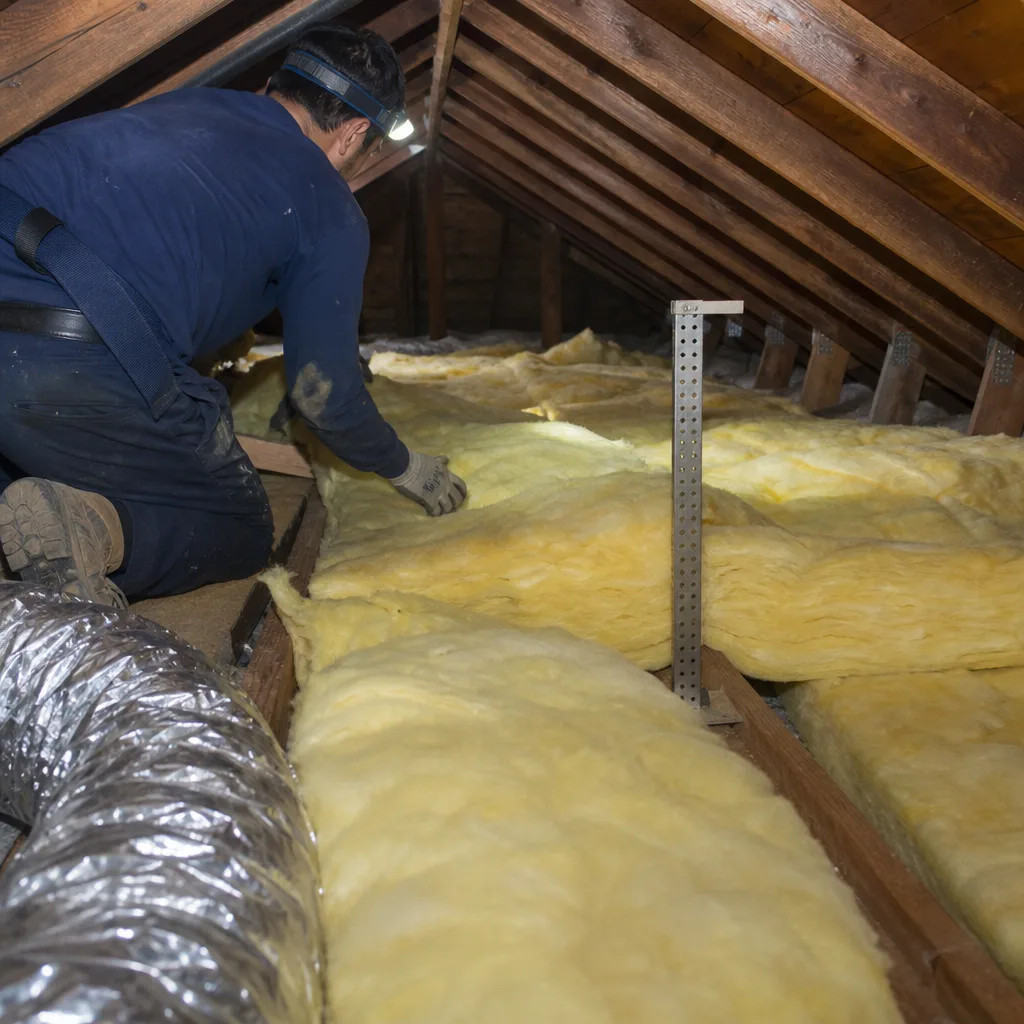
The biggest single way to reduce cost is to time wall insulation with other work that requires open walls. If you’re already pulling permits for a kitchen expansion, a bathroom remodel, or an ADU in the back, the framing is exposed and batt installation is a fraction of what retrofit blown-in costs. This is the scenario where Rockwool or fiberglass batts from Johns Manville or Owens Corning make the most economic sense – open cavity, straightforward install, no drilling or patching.
A few other practical ways to get more from the budget:
- Start with a blower-door test before committing to wall insulation. In some Glendale homes, the attic is responsible for 60-70% of the total air leakage. Insulating the walls first and leaving the attic for later means the energy performance improvement is smaller than expected. A blower-door test – a pressurization reading that shows in one number how much air the building envelope is losing – costs $300-$500 and tells you where the work will have the most impact per dollar spent.
- Check SoCal Gas and LADWP incentives. As of 2026, SoCal Gas offers rebates for qualifying insulation upgrades in existing homes. LADWP has a separate residential efficiency program. The rebate amounts change, but they have historically offset $200-$800 of project cost for Glendale homeowners who document their existing and post-installation R-values. Ask for the documentation you need to file – the written scope and the blower-door numbers from Envelope Insulation Co. are exactly what these programs want to see.
- Get a second opinion on any written estimate you already have. Envelope Insulation Co. offers a free second opinion on any written estimate – bring us the competing quote and we’ll read it with you, line by line. This isn’t a sales tactic; it’s a check on whether the scope is right. A low bid that skips air sealing before blown-in installation is a low bid on a smaller scope, not a better deal.
- Don’t skip air sealing to cut cost. It seems counterintuitive, but adding wall insulation over air leaks delivers maybe 40-60% of the energy performance you’d get with proper sequencing. Air sealing first, then insulation – in that order – is the only way to actually move the blower-door number.
- Ask for a flat written price before any work starts. Under Haven Standard Clause 1, every Envelope Insulation Co. project begins with a written price, a written scope, and a written warranty. Hourly-rate bids for insulation work create cost uncertainty. A flat price means you know exactly what you’re paying before a single hole is drilled.
For a free estimate on our Wall Insulation services in Glendale, call (213) 474-3828. A live person answers – not a voicemail – and a written price comes before any work starts.
Wall Insulation Materials: What We Use and Why
Envelope Insulation Co. sources from Owens Corning, Johns Manville, Knauf, Rockwool, CertainTeed, Icynene, Demilec, and GreenFiber. No proprietary product lock-in means the material recommendation on your job is based on your wall’s geometry and your performance goals, not on what a distributor relationship pushes us toward.
For retrofit blown-in work in Glendale’s older housing stock, GreenFiber cellulose and Knauf blown fiberglass are the most common choices. Cellulose has better thermal mass – it holds heat longer and releases it more slowly – which helps in Glendale’s swing between hot afternoons and cooler nights. Blown fiberglass settles less over time and is slightly less sensitive to moisture, which matters in wall cavities where the exterior is stucco over a vapor-permeable weather barrier.
For open-wall work, Rockwool batts are worth the premium in Glendale homes where fire resistance is a concern. The Verdugo and San Rafael hillside zones carry real wildfire risk, and Rockwool’s non-combustible mineral fiber holds up in ways fiberglass doesn’t. It also has better sound attenuation – a meaningful benefit in neighborhoods near the 134 or Glendale Freeway.
Spray foam – Icynene open-cell or Demilec closed-cell depending on the application – makes sense in specific scenarios: a 2×4 wall where you need maximum R-value in limited depth, or an area with chronic moisture infiltration where closed-cell’s vapor barrier properties address the source problem rather than covering it up. Spray foam applied inside walls by unqualified installers is a difficult situation to correct later, so this is one place where the installer’s experience with the material matters as much as the material itself.
Open-Wall vs. Retrofit Blown-In: Which Makes Sense for Your Glendale Home?
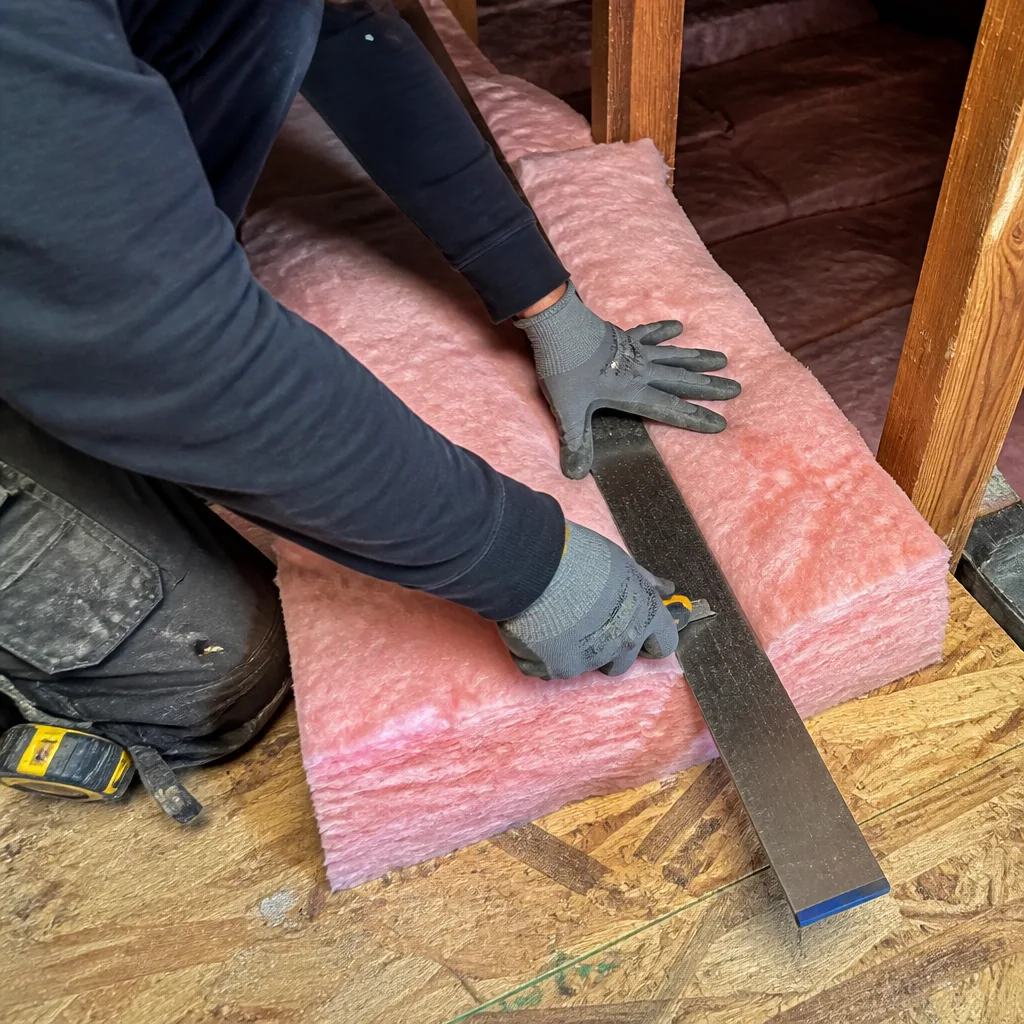
The honest answer is that open-wall installation is almost always better from a pure performance standpoint – a batt installed in a cavity with the framing visible fills more completely than a blown-in fill through a 1.5-inch hole. But most Glendale homeowners aren’t mid-renovation. They have finished walls and they want to add insulation without rebuilding the interior.
Dense-pack blown-in is the right answer for most of those situations. The technique – filling the cavity under pressure at 3.5 lbs per cubic foot density or higher – limits air movement inside the cavity and doesn’t leave the voids that a loose fill can settle into over time. It requires a trained installer with the right equipment; the difference between a properly dense-packed cavity and an under-packed one isn’t visible through drywall, which is why the photo documentation matters.
If you’re already opening walls for a remodel, shift the insulation conversation to happen before the drywall goes back up. It’s a fraction of the cost to install batts in open framing compared to drilling retrofit later. On a typical Glendale kitchen remodel where three exterior walls are opened, adding Rockwool or Johns Manville fiberglass batts at the same time typically adds $400-$900 to the project – a fraction of what the same walls would cost to retrofit in five years.
You can read more about the full range of options on our Wall Insulation in Glendale service page, or visit our home page for the complete list of building-envelope services Envelope Insulation Co. offers in the area.
What the Job Process Looks Like
The first step is a written price. Wes Okafor or a member of the Envelope Insulation Co. team visits the home, assesses the wall construction (stud spacing, existing insulation condition, exterior finish type, access options), identifies any air sealing work that needs to happen first, and produces a flat written price with a written scope before anything else happens. No work starts without it.
On the install day, a background-checked, uniformed technician shows up in a named appointment window – you get a text when they’re on the way, with the technician’s name. Air sealing of any top plates, bottom plates, and penetrations is completed before insulation goes in. For retrofit blown-in, this typically means sealing from the attic above before drilling wall cavities, so the air barrier is continuous from the ceiling plane down.
After installation, every cavity fill is photo-documented. For projects that include a blower-door test, the post-installation reading is taken and recorded alongside the pre-installation number so you can see what changed. That documentation – the photos, the scope, the blower-door readings if applicable, the written warranty – is the record you walk away with. Under the Haven Standard, this isn’t optional and it isn’t available on request; it comes with the job.
The 365-Day Done Right Promise applies from the day the job closes. If something isn’t right – a cavity that wasn’t filled completely, a patch that cracked, a blower-door number that didn’t move the way the scope said it would – we make it right. That’s in writing before work starts.
FAQs: Wall Insulation Cost in Glendale, CA
How much does wall insulation cost in Glendale, CA in 2026?
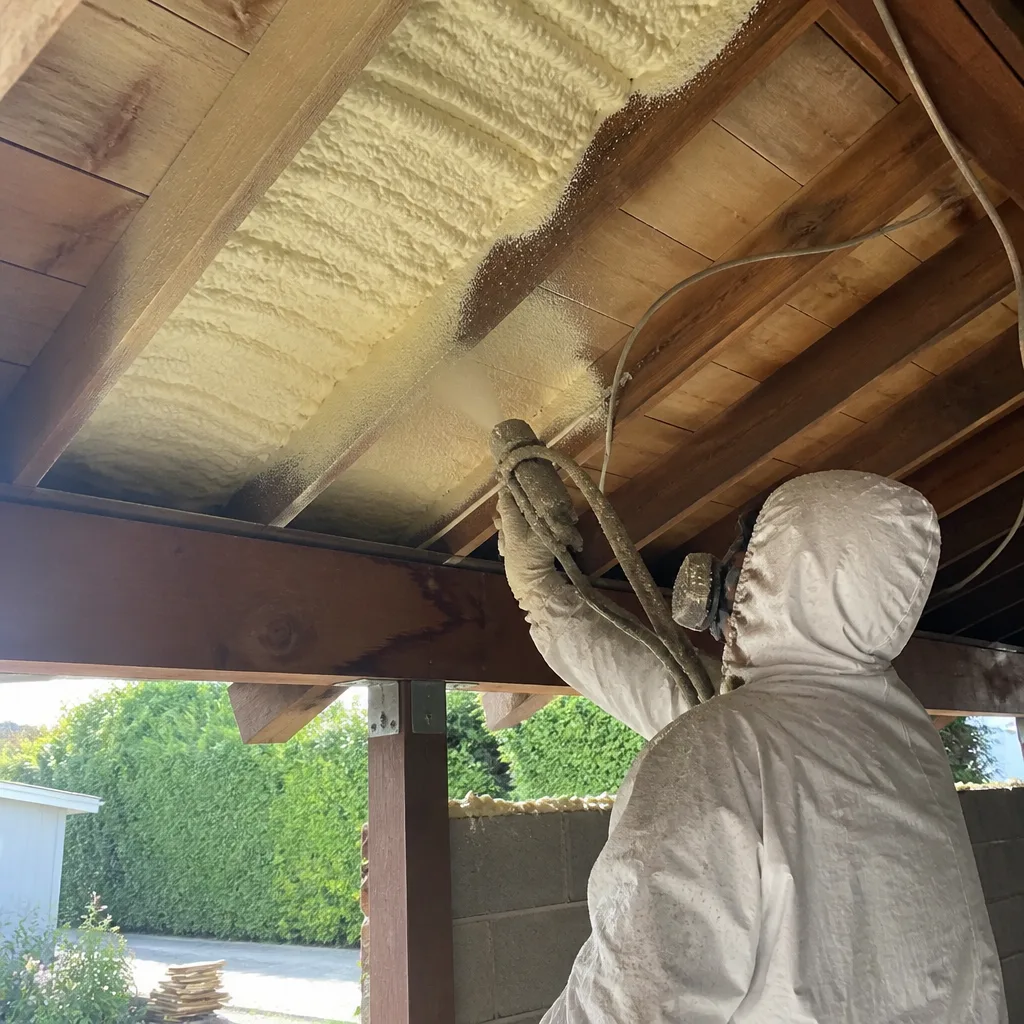
Most Glendale homeowners pay between $1,800 and $6,500 for wall insulation, with the majority of whole-home retrofit projects in the $2,400-$4,800 range. Blown-in cellulose or fiberglass is the most common retrofit choice and runs $1.90-$2.80 per square foot installed. Spray foam – the highest-performing option in a limited-depth wall cavity – runs $3.50-$7.00 per square foot depending on whether open-cell or closed-cell is used. For an exact number on your home, call (213) 474-3828 – the estimate is free and comes with a written price before any work starts.
Is it worth insulating walls in a Glendale home that already has some insulation?
It depends on what’s there and how it was installed. Many pre-1980 Glendale homes have original fiberglass batts that have settled to R-7 or lower over decades – below California’s current Title 24 recommendations for climate zone 9, which covers most of Glendale. Dense-pack blown-in can be added over degraded batt material in many cases. A blower-door test before the decision helps quantify how much air is actually moving through the walls versus the attic, which tells you where the money is better spent. If walls are the primary leak source, upgrading pays. If the attic is the main problem, start there.
How long does wall insulation installation take in Glendale?
A retrofit blown-in job on a typical 1,600-2,000 sq ft Glendale single-story home takes one full day, sometimes two if the home has extensive stucco exterior work requiring careful drill-and-patch staging. Open-wall batt installation during a remodel is faster – usually half a day for the same square footage. Air sealing work done prior to insulation adds 2-4 hours depending on the number of penetrations and top-plate conditions found in the attic.
Do I need a permit for wall insulation in Glendale?
For a standalone retrofit blown-in project done through interior access only, Glendale Building and Safety generally does not require a permit. If wall insulation is part of a permitted renovation, if you’re disturbing exterior cladding, or if the project triggers Title 24 compliance review, a permit is required. Any Glendale project involving a room addition or full gut remodel will need the insulation documented as part of the energy compliance package. The written scope produced before every Envelope Insulation Co. job identifies permit requirements up front – there are no surprises in the final invoice.
What’s the difference between blown-in and spray foam for Glendale walls?
Blown-in cellulose or fiberglass delivers R-13 to R-15 in a standard 2×4 wall cavity at $1.90-$2.80 per square foot installed – a solid thermal barrier at a predictable cost. Closed-cell spray foam delivers R-21 to R-24 in the same 3.5-inch cavity at $5.00-$7.00 per square foot, and it also acts as an air barrier and vapor retarder in one layer. In Glendale’s climate zone 9, closed-cell foam makes the most sense when you can’t add exterior continuous insulation and need maximum R-value per inch, or when moisture control is a documented problem. Open-cell foam at $3.50-$5.00 per square foot is a middle option: better air sealing than blown-in, lower moisture resistance than closed-cell. For most Glendale retrofit projects, blown-in dense-pack is the practical answer. For open-wall new construction or remodel work where budget allows, Rockwool or closed-cell foam are worth the comparison.
Can wall insulation be added without removing the drywall?
Yes – this is exactly what retrofit blown-in installation is. Holes are drilled at regular intervals (typically every 16-24 inches on stud center), the cavity is filled under pressure, and the holes are plugged and patched. In stucco homes – the most common exterior in Glendale – drilling is done from the exterior through the stucco, or from the interior through the drywall, depending on which access point makes more sense for that wall. Both approaches work; exterior drilling avoids interior disruption but requires careful stucco patch work. A photo record of the holes before and after patching is part of the documentation included on every Envelope Insulation Co. job.
Written by Wes Okafor, Owner at Envelope Insulation Co. (operating as Topside Attic Insulation Glendale), serving Glendale, CA since 2016.
Pricing reflects the Glendale market as of 2026. Topside Attic Insulation Glendale offers free estimates – call (213) 474-3828.
What Our Customers Say
"They air-sealed the attic floor before insulating and showed me the blower-door number before and after. The upstairs is finally the same temperature as downstairs."
- Marisol D."Turned up on time, protected the hallway, and the written scope matched what was actually done."
- Bruno S."The winter gas bill dropped by about a third. They had estimated a quarter, so they under-promised."
- Genevieve R.