
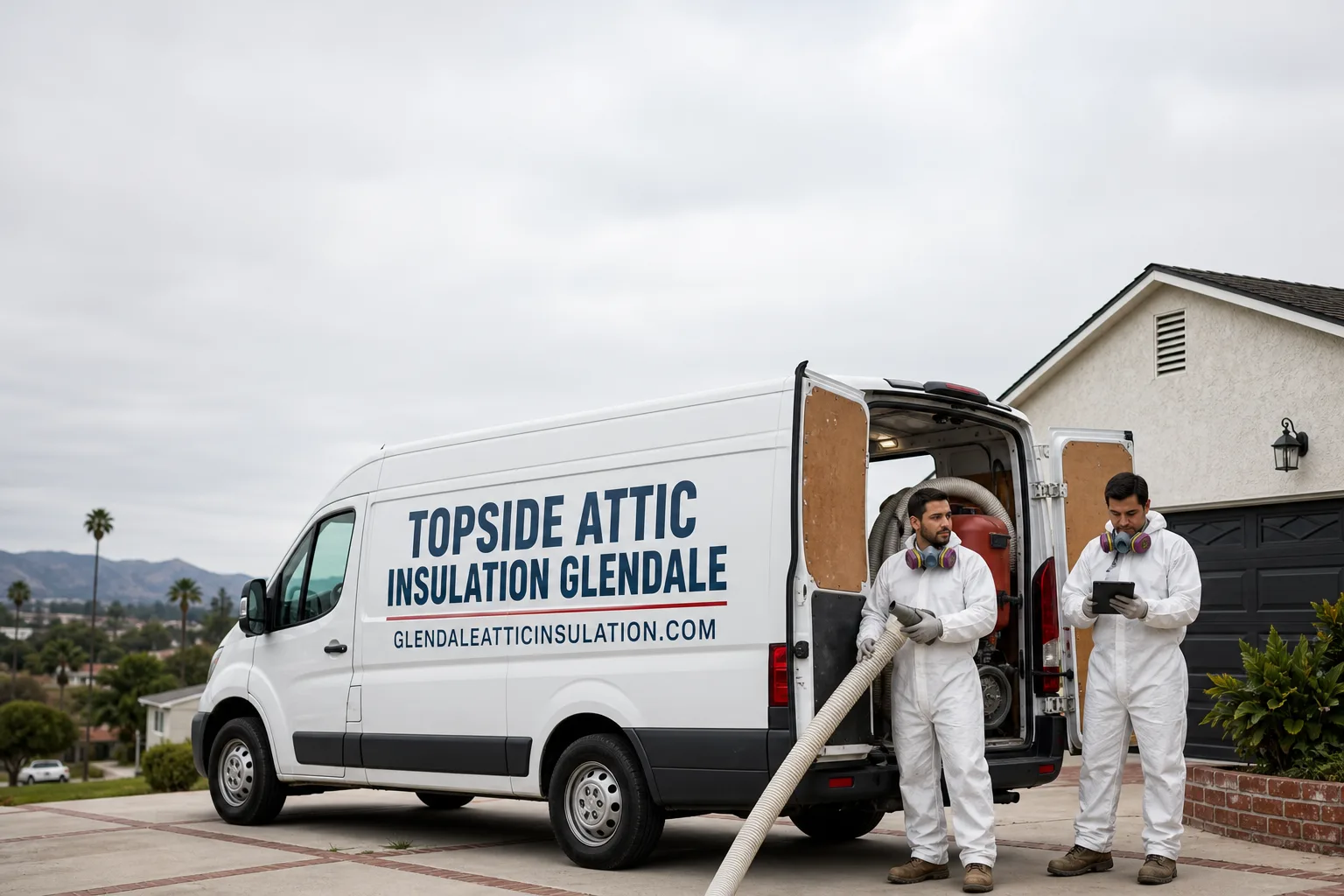
How Much Does Attic Air Sealing Cost in Glendale, CA?
Attic Air Sealing services in Glendale, CA typically cost between $950 and $2,800 for a single-family home, with most jobs landing between $1,200 and $1,900 depending on attic square footage, the number of penetrations, and whether the attic has been previously insulated. Most jobs are completed in a single day. If you are also adding blown-in insulation afterward, the air sealing portion is usually quoted as a separate line item in the written scope – that transparency matters, because it is the only way to know what you are actually paying for.
Attic Air Sealing Cost Breakdown (2026)
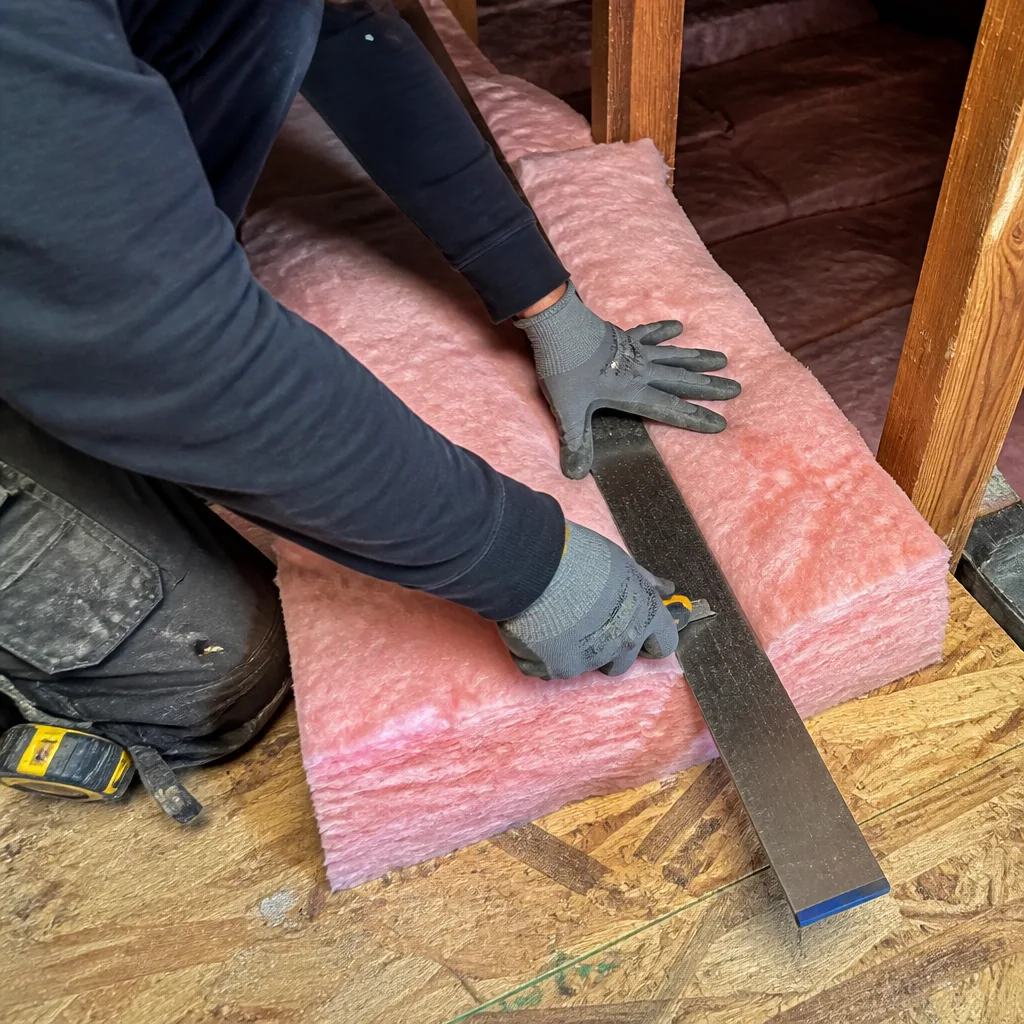
Attic air sealing in Glendale costs what it does because it is labor-intensive detail work: a technician lying on attic joists, applying two-part spray foam and fire-rated caulk to dozens or hundreds of small gaps, top plates, plumbing chases, and recessed light cans – one by one. The square footage of your attic sets the baseline. Everything else adjusts the number up or down from there.
The table below reflects what Envelope Insulation Co. sees on actual jobs in Glendale’s housing stock in 2026. Older homes in Rossmoyne, Verdugo Woodlands, and the Historic Preservation Overlay Zone corridors near Adams Hill tend to land toward the higher end because their framing systems leave more gaps at top plates and mechanical penetrations. Newer construction in areas like Montecito Park skews lower because the rough-in work is tighter.
| Scope of Work | Typical Price Range (Glendale, CA 2026) |
|---|---|
| Small attic – up to 800 sq ft (air sealing only) | $950 – $1,350 |
| Mid-size attic – 800 to 1,400 sq ft (air sealing only) | $1,350 – $1,900 |
| Large attic – 1,400 to 2,200 sq ft (air sealing only) | $1,900 – $2,800 |
| Air sealing + blown-in insulation (mid-size attic, combined) | $2,600 – $4,200 |
| Air sealing + radiant barrier (mid-size attic, combined) | $2,800 – $4,500 |
| Air sealing on attic with prior insulation removal required | Add $400 – $900 to base price |
| Two-part spray foam at top plates and chases (materials upcharge) | Add $200 – $450 depending on linear footage |
| Blower-door test – a pressurization reading that shows, in one number, how much air the building envelope is losing – before and after | $150 – $350 (included with eligible jobs at Envelope) |
A written price before any work starts is Haven Standard Clause 1 – no estimates are delivered verbally, and the flat price, written scope, and written warranty arrive before anyone lifts a tool. That means the numbers above are the conversation starters; the number on your written quote is what you pay.
What the Price Includes – and What It Doesn’t
A properly quoted air sealing job should spell out: top-plate sealing across all framing bays, penetrations for plumbing vents and electrical conduit, recessed light cans (air-sealed with IC-rated covers or foam gaskets), attic hatch or pull-down stair surrounds, and any HVAC chases or dropped soffits open to the attic cavity. If a quote doesn’t list these items as line items, ask why – a missing penetration is just a relocated leak.
What the base price generally does not include: insulation installation, attic cleaning or rodent proofing, HVAC duct sealing (a separate trade scope), or permit fees. Glendale does not require a permit for attic air sealing alone, but certain energy upgrade projects that modify the building envelope under Title 24 may trigger documentation requirements for permit-on-file work. We flag those during the written estimate, not after the crew arrives.
What Affects Attic Air Sealing Pricing in Glendale
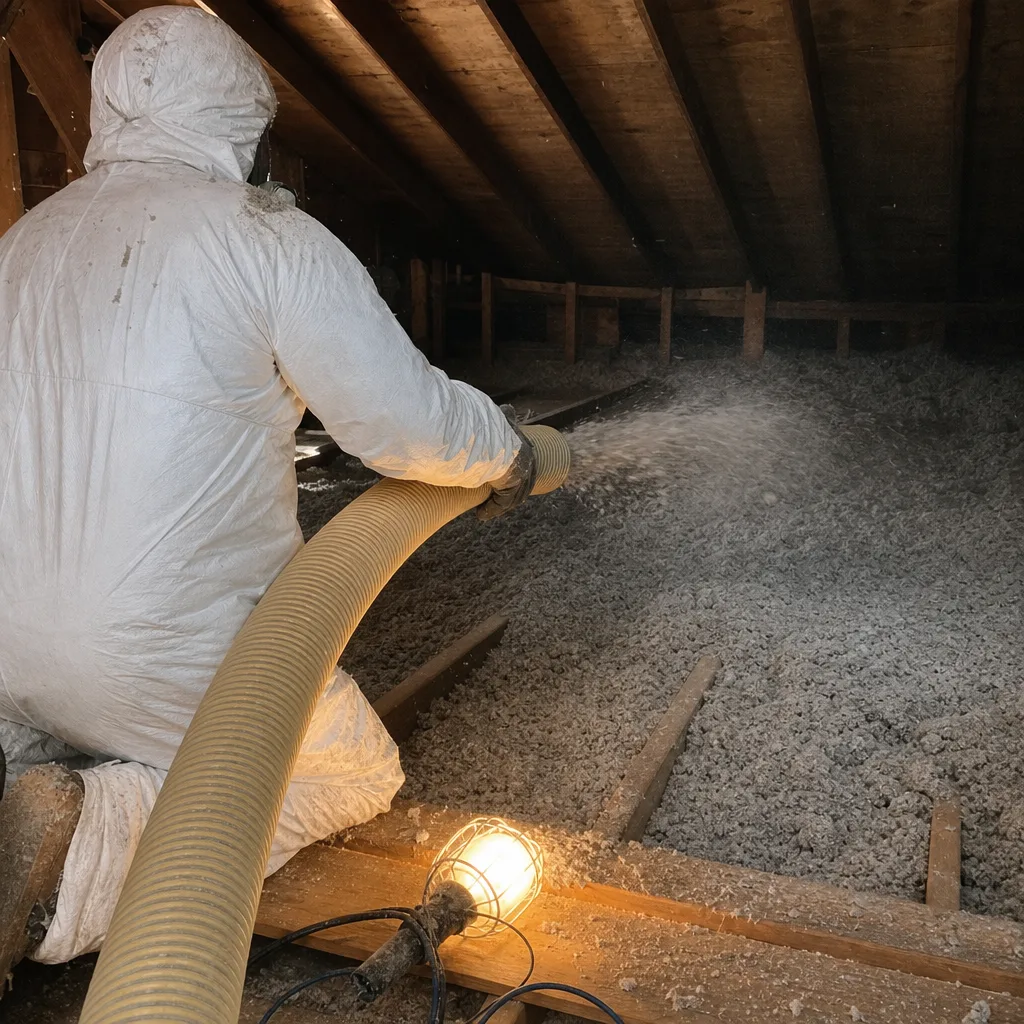
- Attic square footage and configuration: A straightforward open attic over a 1,200 sq ft ranch house in Glenoaks Canyon moves faster than a chopped-up hip-roof attic over a 1950s bungalow in Glendale’s Brockmont area, where low-pitch sections force technicians to work on their stomachs in confined spaces. Complex geometry adds time; time adds cost.
- Number and type of penetrations: Recessed can lights – especially the older non-airtight type common in Glendale homes built between 1960 and 1990 – are the single biggest labor variable. A 1,000 sq ft attic with 8 cans takes substantially longer than one with none. Each can requires cleaning, an airtight cover or foam gasket rated for contact with insulation, and a perimeter seal. Homes in Chevy Chase Canyon and Country Club frequently have 20 or more cans.
- Existing insulation depth: If the attic floor is already covered with 10 to 14 inches of fiberglass batts or blown-in cellulose, the technician has to move and replace it section by section to reach the framing below. That adds one to three hours depending on coverage, which shows up as a line item in the written scope rather than a surprise on the final invoice.
- Attic access quality: A full-size hatch or pull-down stair with at least 24 inches of clearance is standard. Glendale’s older Spanish Colonial Revival homes on streets like Kenneth Road and Grandview Avenue sometimes have original 14-inch square hatch cutouts, which restrict what equipment can be staged in the attic and how many technicians can work simultaneously. Tight access adds time. We note it during the walkthrough, not mid-job.
- Glendale’s climate and thermal stack effect: Glendale sits in a thermal bowl flanked by the Verdugo Mountains and the San Gabriel foothills. Summer attic temperatures routinely exceed 150 degrees Fahrenheit. That sustained heat drives a stronger stack effect – the tendency for pressurized hot attic air to push down through gaps into conditioned living space – than you’d see in a coastal Los Angeles neighborhood like Playa del Rey. Higher stack pressure means unsealed gaps have a larger energy penalty here, and it also means the post-sealing blower-door improvement tends to be measurably larger on Glendale homes than on flat-geography jobs in the basin.
- Material specification: Two-part closed-cell spray foam at framing penetrations costs more than acoustical sealant or latex caulk, but it adheres better to the concrete block and stucco-framed construction common in Glendale’s mid-century housing stock, and it doesn’t shrink seasonally. The written quote will specify which material is used where – Envelope sources from Icynene, Demilec, Owens Corning, and GreenFiber, with no proprietary product requirement.
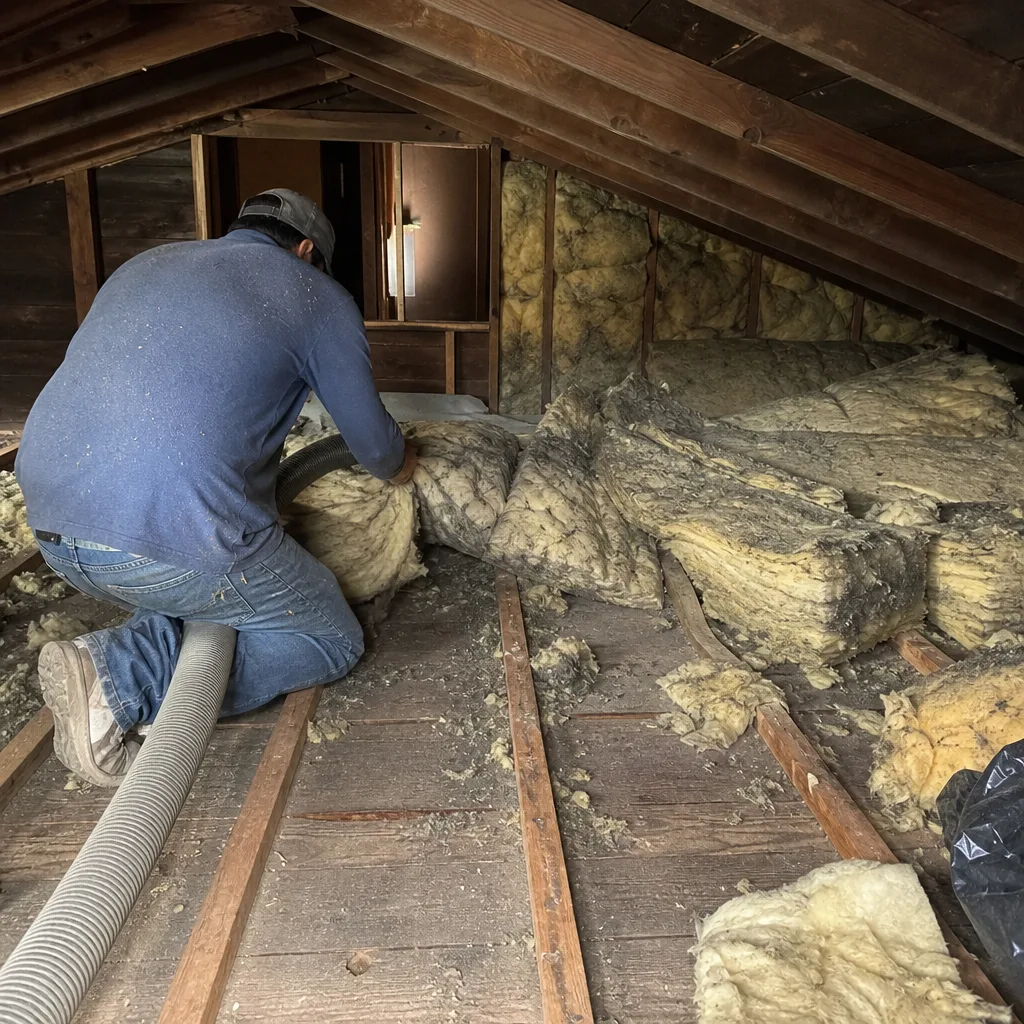 Before
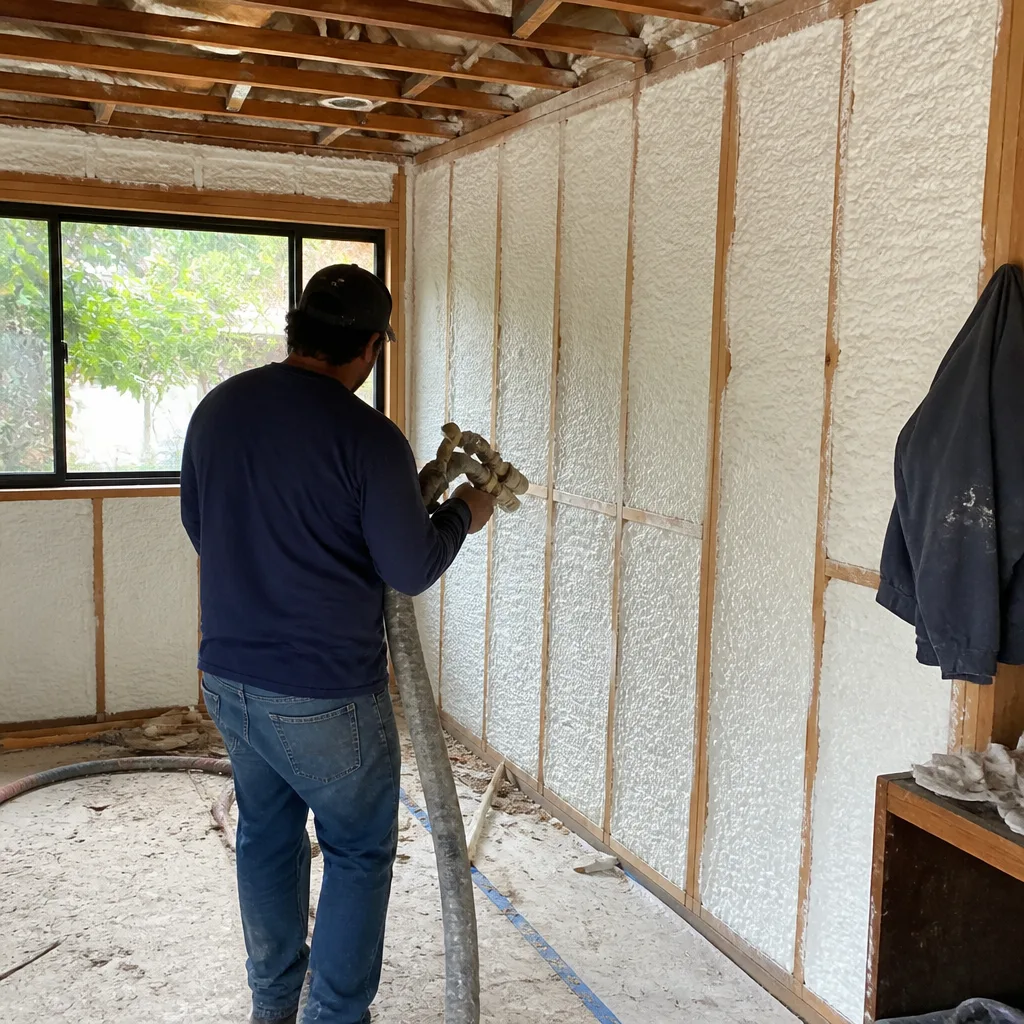 After
AfterHow to Save on Attic Air Sealing in Glendale
Claim Every Rebate Before the Job Starts
Southern California Edison and SoCalGas both offer weatherization rebates for Glendale homeowners who complete qualifying air sealing work. As of 2026, SCE’s Home Energy Efficiency program offers rebates that can offset $200 to $500 of the project cost depending on the verified reduction in air changes per hour – which is exactly what a before-and-after blower-door test documents. The rebate application requires the post-work measurement, so any contractor who doesn’t provide blower-door numbers is effectively leaving your rebate money on the table. Ask for that measurement in writing before signing anything.
The Los Angeles County Property Assessed Clean Energy (PACE) program – administered through providers like Ygrene and HERO – allows qualified homeowners to finance energy improvements through their property tax bill with no upfront cost. Air sealing qualifies. That doesn’t make it free, but it does mean a $1,600 job doesn’t have to be a $1,600 check written today.
Bundle Air Sealing with Insulation in One Scope
Scheduling air sealing and blown-in insulation as a single job almost always costs less than scheduling them separately. The mobilization cost – travel, setup, equipment staging – is absorbed once instead of twice. At Envelope, the written scope will show both as separate line items so you can see what each piece costs, but the total is typically 10 to 15 percent lower than two separate invoices would produce. On a $2,200 combined job, that’s $220 to $330 in real savings.
Get a Second Opinion on Any Written Estimate
Envelope offers a free second opinion on any written estimate from another contractor. Bring the quote; we’ll read it with you and identify whether the scope covers what it should – top plates, penetrations, chases, hatch surround – or whether line items are missing that will show up as gaps in performance. This isn’t a sales pitch; it’s a scope review. A $1,100 quote that excludes the recessed can lights isn’t cheaper than a $1,500 quote that includes them – it’s incomplete work at a lower price.
Don’t Delay After an Energy Audit Recommendation
If a home energy audit – a systematic assessment of where a building loses energy – has already flagged your attic air sealing as a priority, the audit report is often enough to start the estimate process without a redundant site visit charge. Envelope’s written estimates include a documented photo record of attic conditions, which means you have baseline documentation whether you proceed with us or take the written scope elsewhere.
For pricing specific to your Glendale home, the fastest path is a site walkthrough rather than an over-the-phone guess. Call (213) 474-3828 and a live person will answer – no voicemail, no callback window. The estimate is free and the written price arrives before any work is scheduled.
Why Air Sealing Comes Before Insulation – Every Time
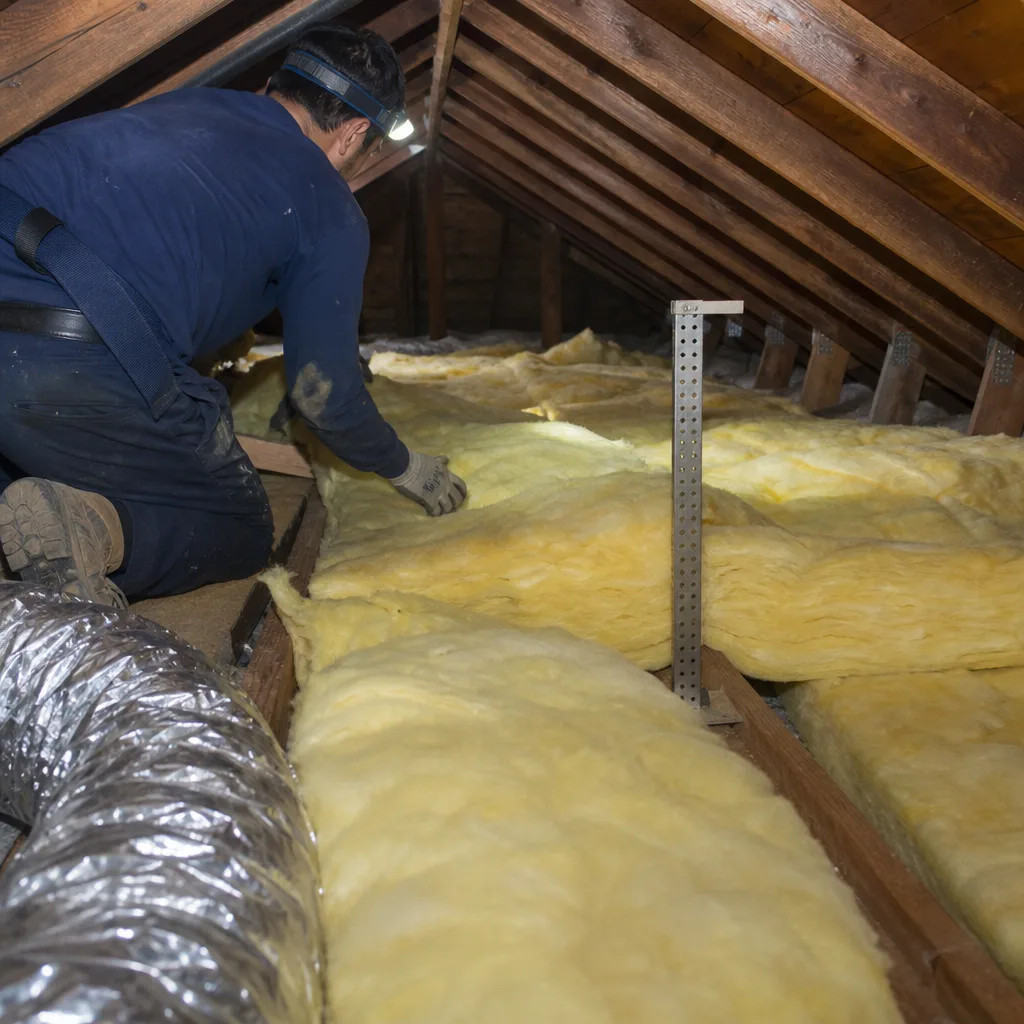
This point is worth its own section because it directly affects the price you should expect to pay and the result you should expect to get.
Insulation slows the movement of heat. Air sealing stops the movement of air. These are different problems, and the order in which they are addressed changes the outcome entirely. Blown-in cellulose or fiberglass at R-38 does very little to slow a 200 CFM air leak at an unsealed top plate, because the air bypasses the insulation through the gap rather than moving through it. A blower-door test on a well-insulated but unsealed Glendale attic will frequently show 3,500 to 5,000 CFM50 – meaning the home loses a volume of conditioned air equal to its entire interior roughly every two to three hours under normal pressure conditions.
Envelope will not blow insulation over an unsealed attic floor. Air sealing of top plates, can lights, and penetrations is completed first, documented with photos, and then the blower-door is run before insulation goes in. That sequence is how you get a post-sealing reading you can verify, and it’s what makes the before-and-after numbers meaningful rather than decorative.
On a Glendale job in the Woodbury neighborhood in early 2025, the pre-sealing blower-door read 4,800 CFM50. After sealing top plates across 22 framing bays, 14 recessed cans, three plumbing chases, and the HVAC drop soffit, the reading dropped to 2,300 CFM50 – a 52 percent reduction in measured air leakage before a single inch of insulation was added. The homeowner’s written closeout report showed both numbers, the photos of each sealed penetration, and the insulation R-value installed over the sealed attic floor. That is what a completed job looks like documented.
For a full description of how Attic Air Sealing in Glendale works from site walkthrough to written closeout, the service page covers the process in detail.
Glendale-Specific Considerations That Affect Your Quote
Title 24 and Local Permit Requirements
California’s Title 24 Building Energy Efficiency Standards apply to most permitted renovation work, but a standalone attic air sealing project in Glendale generally does not require a building permit. The work is classified as maintenance and weatherization rather than a structural or mechanical alteration. Where it can interact with permit requirements is when you’re doing a full attic renovation – insulation removal, new insulation, and air sealing together – as part of a larger remodel. In those cases, the general contractor’s permit may require a Title 24 compliance report, and the blower-door results from the air sealing phase become documentation for that report. Envelope flags this during the estimate, not after the permit is pulled.
Older Housing Stock in Glendale’s Historic Districts
A significant share of Glendale’s single-family housing was built between 1920 and 1960. Homes in Rossmoyne, Adams Hill, and the Kenneth Village corridor frequently feature: open-web truss framing with more gap surface area per square foot than modern stick framing; original plaster-on-lath ceiling assemblies that have developed cracks and separations at the top-plate line; and early electrical work routed through framing cavities in ways that create air pathways behind walls and into the attic. These homes are not harder to seal – but they take longer, and the written scope needs to account for the actual penetration count rather than an average. That’s another reason the site walkthrough matters before any number is committed to paper.
Fire-Rated Materials at Recessed Cans
California residential code requires that recessed light fixtures in insulated ceilings be either rated for insulation contact (IC-rated) or enclosed with a fire-rated cover that maintains clearance. In Glendale’s pre-1990 housing stock, a significant number of recessed fixtures are non-IC-rated – meaning the code-compliant air sealing approach is an airtight, fire-rated cover installed over the fixture before the insulation is installed over the cover. That cover is included in the written scope and the photo documentation. The cost is typically $18 to $35 per fixture for materials, included as a line item in the quote rather than surfaced after the job is underway.
FAQs – Attic Air Sealing Cost in Glendale, CA
How much does attic air sealing cost in Glendale?
Attic air sealing in Glendale costs between $950 and $2,800 for most single-family homes, with the majority of jobs falling between $1,200 and $1,900. The main variables are attic square footage, the number of recessed can lights, whether existing insulation needs to be moved, and the complexity of the framing. A written price for your specific home is generated after a free site walkthrough – call (213) 474-3828 to schedule it.
Is attic air sealing worth the cost in Glendale’s climate?
In Glendale’s climate, yes – measurably so. Because Glendale sits in a sheltered inland basin where summer attic temperatures regularly exceed 150 degrees Fahrenheit, the stack effect – the pressure differential that pushes hot attic air into conditioned space through unsealed gaps – is more pronounced than in coastal zip codes. A home with a pre-sealing blower-door reading of 4,500 CFM50 that drops to 2,200 CFM50 after sealing has reduced its conditioned-air loss by roughly half. Southern California Edison rebates tied to verified air leakage reduction can offset $200 to $500 of the project cost, shortening the payback period to three to six years depending on the home’s baseline leakage rate.
How long does attic air sealing take in a typical Glendale home?
Most attic air sealing jobs in a Glendale home with 1,000 to 1,400 square feet of attic space take four to seven hours, completed in a single visit. Homes with more than 20 recessed cans, complex hip-roof geometry, or existing insulation that needs to be staged and replaced may run eight to ten hours. The blower-door test – run before and after sealing – adds roughly 45 minutes. The written scope will include a realistic time estimate for the specific job before the crew is scheduled.
Can I combine attic air sealing and insulation installation in the same visit?
Yes, and it’s the recommended approach. Air sealing is completed first, the blower-door post-sealing reading is taken and recorded, and then insulation is installed over the sealed attic floor in the same day. Combining both in a single visit typically costs 10 to 15 percent less than scheduling them separately, because mobilization cost is absorbed once. The written quote will show both scopes as separate line items so the pricing for each is visible. Combined jobs for a mid-size Glendale attic typically run $2,600 to $4,200 depending on the insulation type and R-value target.
What does a blower-door test cost, and do I need one?
A standalone blower-door test – a pressurization reading that shows, in a single number (CFM50), how much air your building envelope is losing – typically costs $150 to $350 in the Glendale market. On eligible air sealing jobs, Envelope includes before-and-after blower-door readings as part of the documented closeout, so the cost is absorbed into the job rather than added separately. You don’t strictly need one to proceed with air sealing, but without it, there is no objective way to verify what the sealing work actually accomplished. It is also required documentation for most utility rebate applications through Southern California Edison and SoCalGas. For a free estimate that includes a blower-door assessment, call (213) 474-3828.
Does Glendale require a permit for attic air sealing?
A standalone attic air sealing project in Glendale generally does not require a building permit – the City of Glendale classifies it as weatherization and maintenance work. Where permit requirements can enter the picture is when air sealing is part of a larger permitted renovation scope, in which case the general contractor’s permit may require Title 24 documentation that references the post-sealing blower-door result. Envelope flags this during the estimate walkthrough. The written scope will note any documentation requirements relevant to your specific project.
What You Receive When the Job is Done
Under the Haven Standard, a completed air sealing job at Envelope closes with a documented record, not a verbal summary. Every Glendale homeowner receives:
- A written scope and written warranty delivered before work starts – Haven Standard Clause 1.
- A documented photo record of the attic before sealing, during the sealing process at each major penetration, and after completion.
- Before-and-after blower-door readings on applicable jobs – the CFM50 figure before sealing and after, so the performance improvement is a number rather than a claim.
- A materials summary showing which products were applied and where – no proprietary lock-in, no mystery materials.
- The 365-Day Done Right Promise in writing: if it’s not done right, we make it right.
That documentation is also what you need for utility rebate applications, for disclosure in a home sale, and for any future contractor who wants to understand what the attic has already had done. It travels with the house.
Wes Okafor and the team at Envelope Insulation Co. have completed this process on over 9,000 homes since 2016 – every one with a written price before work started and a documented record when the crew left. Glendale homeowners who want to see what that looks like in practice can reach the team at (213) 474-3828 – a live person answers, 24 hours a day.
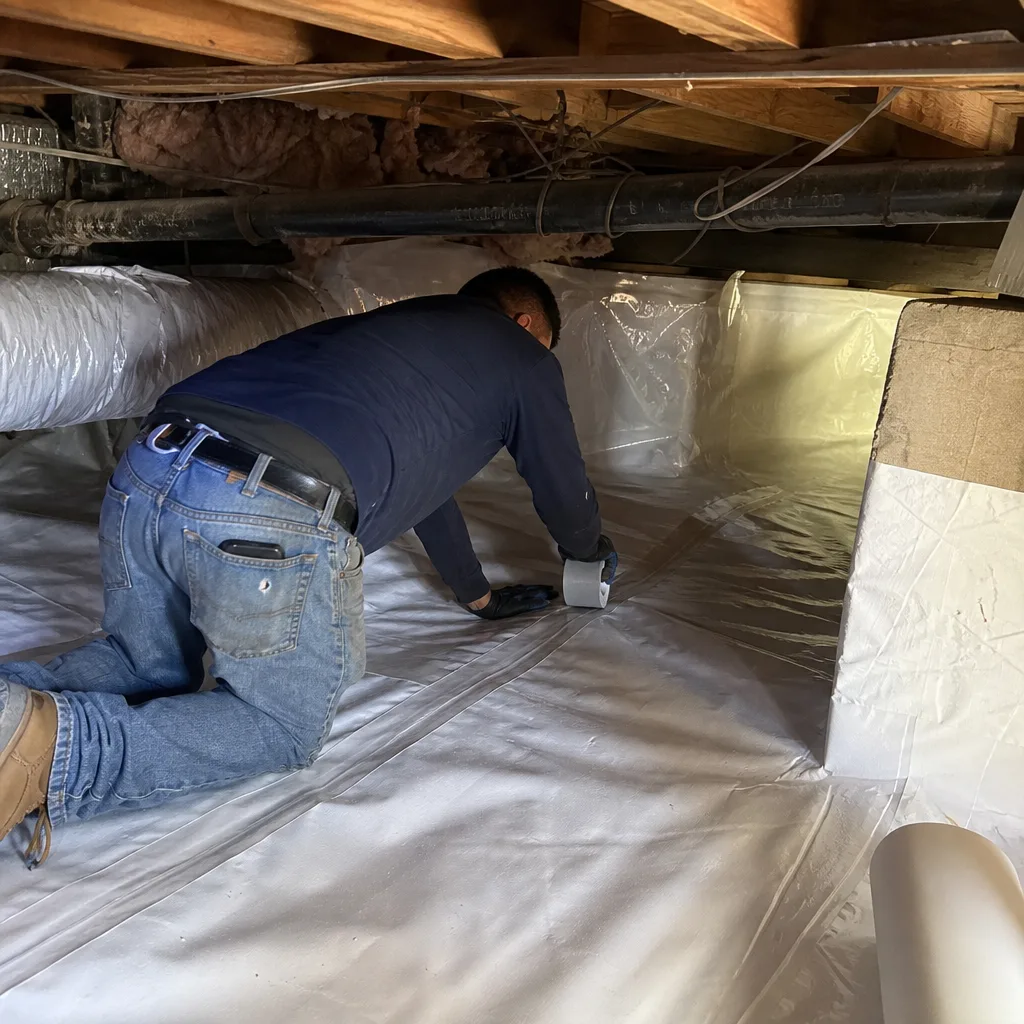
You can also learn more about the full scope of work on our home page, which covers Envelope’s complete building-envelope service line from attic insulation through crawl space encapsulation and home energy audits.
Key Takeaways
- Attic air sealing in Glendale costs $950 to $2,800 for most homes, with most mid-size jobs landing between $1,200 and $1,900.
- The biggest cost variables are attic square footage, recessed can light count, and whether existing insulation needs to be moved to access the framing below.
- Glendale’s inland thermal bowl and sustained attic heat make the stack-effect energy penalty larger here than in coastal LA neighborhoods – and the measurable improvement from air sealing correspondingly larger.
- SCE and SoCalGas offer rebates of $200 to $500 for verified air leakage reduction – but verification requires a before-and-after blower-door test, which Envelope includes on eligible jobs.
- Air sealing always comes before insulation – never the reverse. Any quote that sequences it differently is producing an unverifiable result.
- A written price before any work starts is not optional – it is how every Envelope job begins, no exceptions.
- The 365-Day Done Right Promise covers all completed work in writing.
Written by Wes Okafor, Owner at Envelope Insulation Co. (operating as Topside Attic Insulation Glendale), serving Glendale, CA since 2016. Pricing reflects the Glendale market as of 2026. Topside Attic Insulation Glendale offers free estimates – call (213) 474-3828.
What Our Customers Say
"Two other companies quoted to blow more insulation on top of what was there. These were the only ones who said the existing material had to come out first, and explained why."
- Clifford E."They photographed rodent damage in the old insulation that we had no idea about, and priced the exclusion work separately so we could decide."
- Harriet N."Crawl space encapsulation done properly. Photographs of the vapour barrier at every seam, and the damp smell in the hallway is gone."
- Ainsley P.