
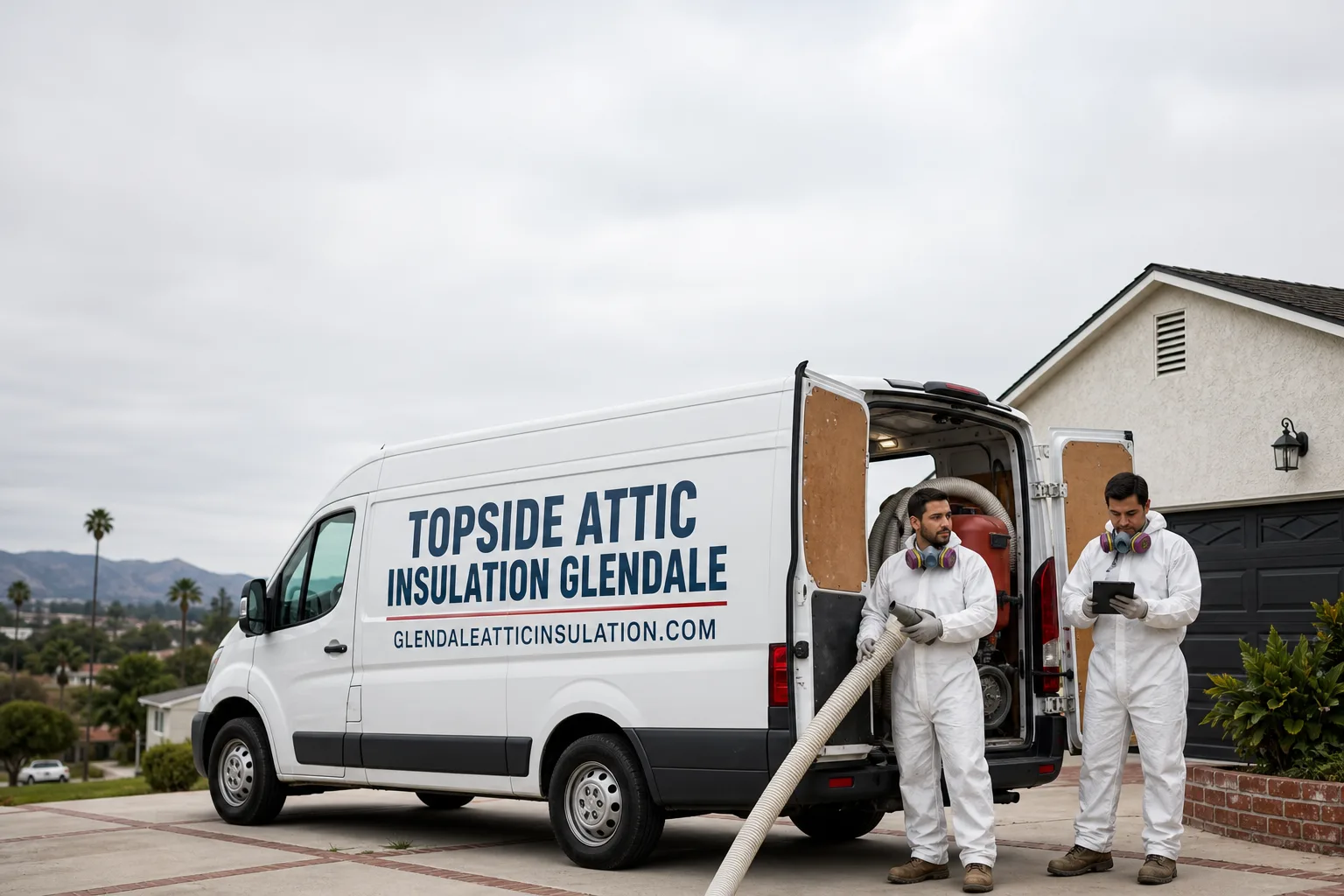
How Much Does Insulation Removal & Replacement Cost in Glendale?
Our Insulation Removal & Replacement services in Glendale, CA typically run between $1,800 and $5,500 for a standard single-story attic, depending on square footage, existing insulation type, and whether air sealing is completed before new material goes in. Most Glendale homeowners with a 1,200-to-1,800-square-foot attic land somewhere between $2,400 and $3,800 all-in. Every job at Envelope Insulation Co. starts with a written price before any work begins – no estimates given over the phone and then revised once a crew is on your roof.
Insulation Removal & Replacement Cost Breakdown (2026)
The table below reflects current pricing in the Glendale market. These are real ranges based on jobs completed in Glendale neighborhoods including Montrose, Adams Hill, Verdugo Woodlands, and the Crescenta Valley foothills. Your final written price will depend on the specifics documented during your on-site assessment.
| Service Component | Typical Price Range (Glendale, 2026) |
|---|---|
| Blown-in insulation removal (attic vacuum, per 1,000 sq ft) | $500 – $900 |
| Batt insulation removal (fiberglass or mineral wool, per 1,000 sq ft) | $400 – $750 |
| Old insulation disposal (bagging, haul-off, landfill fees) | $150 – $350 |
| Attic air sealing (top plates, can lights, penetrations – before new insulation) | $600 – $1,400 |
| Blown-in cellulose or fiberglass replacement (per 1,000 sq ft, to R-38) | $700 – $1,200 |
| Blown-in cellulose or fiberglass replacement (per 1,000 sq ft, to R-49) | $900 – $1,500 |
| Spray foam replacement (closed-cell, per 1,000 sq ft) | $1,800 – $3,200 |
| Radiant barrier installation added during replacement | $500 – $1,100 |
| Rodent proofing and attic cleaning (if contamination is present) | $400 – $1,200 |
| Blower-door test (before and after, documented) | Included on applicable jobs |
| Full removal and replacement (typical Glendale attic, 1,200-1,800 sq ft) | $2,400 – $5,500 |
A few things push that range in one direction or another. Attics in Glendale’s older hillside neighborhoods – think properties in Glenoaks Canyon or along the lower Verdugo hills – often have irregular joist spacing, knee walls, and multiple HVAC penetrations that slow removal and air-sealing work. That adds labor time, and labor time adds cost. Conversely, a straightforward 1,400-square-foot ranch-style home on the Glendale flatlands with no rodent contamination and easily accessible decking can come in at the lower end of the range. The material you choose for replacement matters significantly: blown-in cellulose from GreenFiber costs considerably less per square foot than closed-cell spray foam from Icynene or Demilec, and the right choice depends on your specific attic geometry and thermal targets – not on which product has the highest margin.
Air sealing deserves its own line because it is often the component that separates a job that performs from one that just looks like it performs. Envelope Insulation Co. will not blow new insulation over an unsealed attic floor. The air sealing of top plates, recessed can lights, and any penetrations is completed first – this is a hard operational rule, not an upsell. In Glendale’s climate zone 10, skipping that step can mean the new insulation never delivers its rated R-value because conditioned air is still escaping through gaps before the insulation even has a chance to slow it. The before-and-after blower-door numbers on applicable jobs document exactly how much that sealing step changed the building’s performance – typically a 30-to-50 percent reduction in air changes per hour on homes where the old insulation had deteriorated and gaps had been left open for years.
What Affects Insulation Removal & Replacement Pricing in Glendale
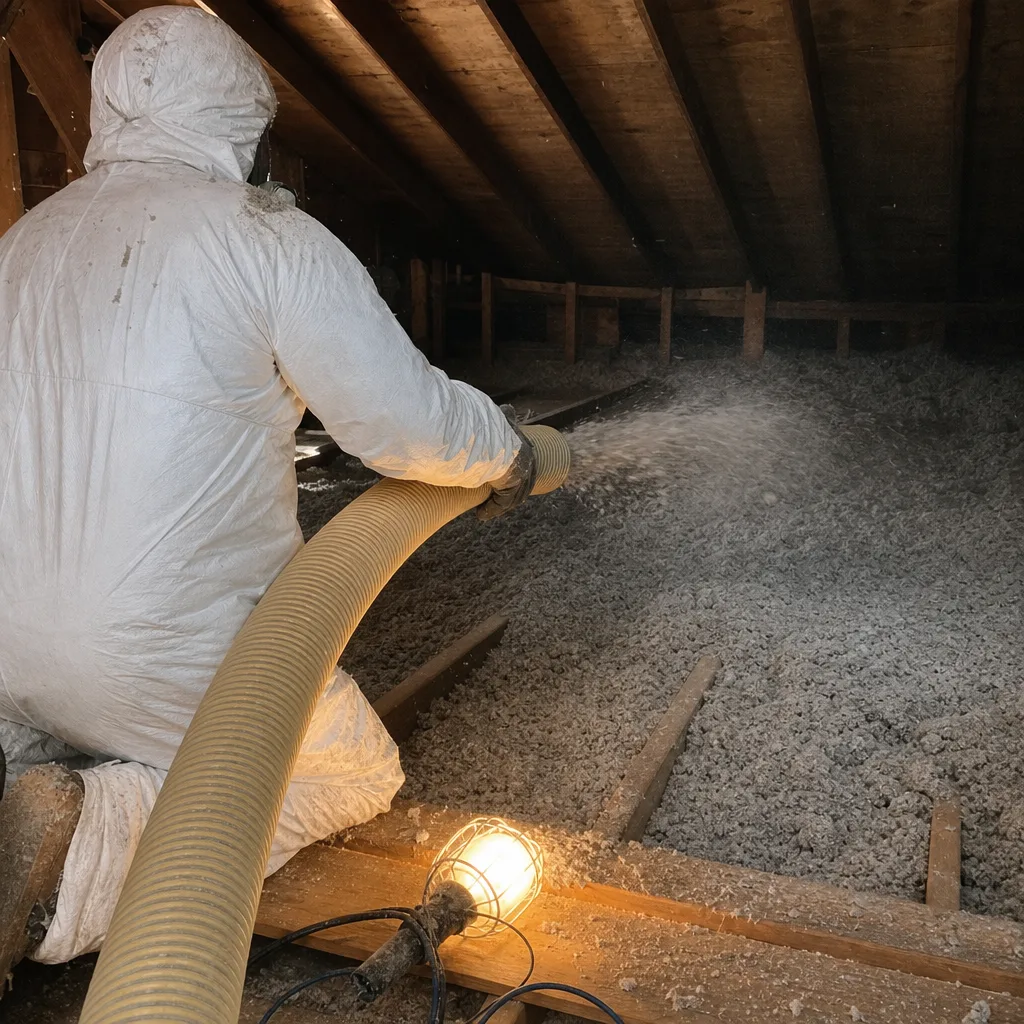
- Attic square footage and access: A 1,000-square-foot attic with a standard scuttle hatch takes more crew time to vacuum out than the same footage with a full pull-down stair. Many Glendale homes built between 1940 and 1965 have tight hatch openings that slow equipment setup – this is factored into your written price before any work starts.
- Existing insulation type and condition: Blown-in vermiculite (occasionally found in Glendale homes built before 1980) requires testing for asbestos before any removal. Standard fiberglass batt and blown-in cellulose removal is priced differently from contaminated material that requires encapsulation and special disposal under California regulations. If contamination is suspected, we document it and walk you through what that means for the project scope before any pricing is finalized.
- Rodent activity or moisture damage: Glendale’s proximity to the Verdugo Mountains means roof rat and squirrel pressure is real – particularly in Montrose, La Crescenta, and the neighborhoods along Foothill Boulevard near the foothills. When insulation has been compressed, tunneled through, or soiled, the removal cost increases because the material is denser and the attic typically needs cleaning and sanitizing before new insulation goes in. Rodent proofing – sealing the entry points – is completed before new insulation is installed.
- Target R-value for replacement: California’s Title 24 energy code requires R-38 minimum in climate zone 10 (which covers most of Glendale). Many customers choose R-49 for better long-term performance, particularly given Glendale’s summer heat load – daytime highs regularly hit 95-100°F in July and August, and an under-insulated attic is fighting that heat all day. The difference between R-38 and R-49 in blown-in cellulose is roughly $200-$400 for a 1,500-square-foot attic.
- Replacement material selection: Blown-in cellulose (GreenFiber) and blown-in fiberglass (Owens Corning, Johns Manville, Knauf) are the most cost-effective options for flat attic floors. Spray foam (Icynene, Demilec) makes sense for unvented attic assemblies or when the roof deck rather than the attic floor is being insulated – it costs more per square foot but solves a different problem. We explain the trade-offs in writing before you decide.
- Air sealing scope: A 1960s Glendale home with original can lights and no attic blocking between living space and attic will have more penetrations to seal than a 2010 build. The air-sealing line item in your quote reflects what we actually found during the assessment – not a flat fee applied to every job regardless of condition.
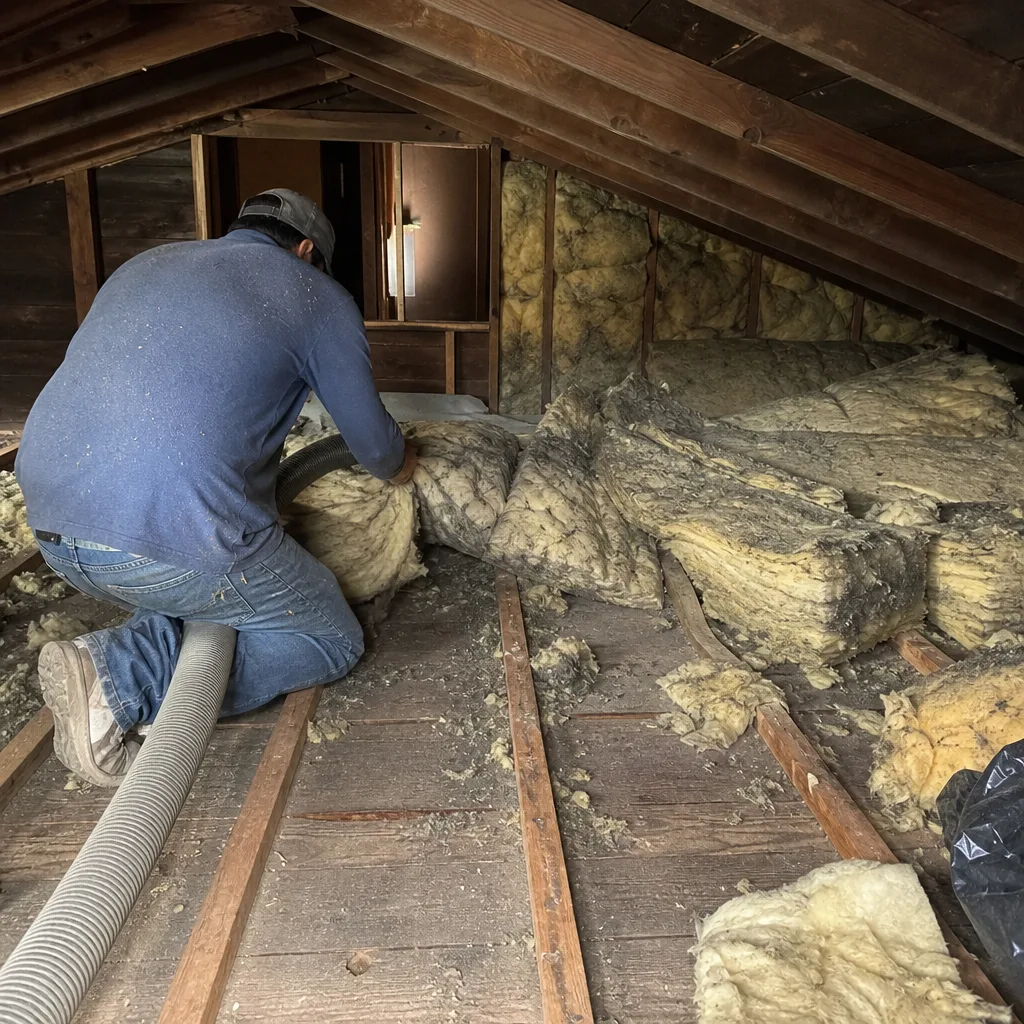 Before
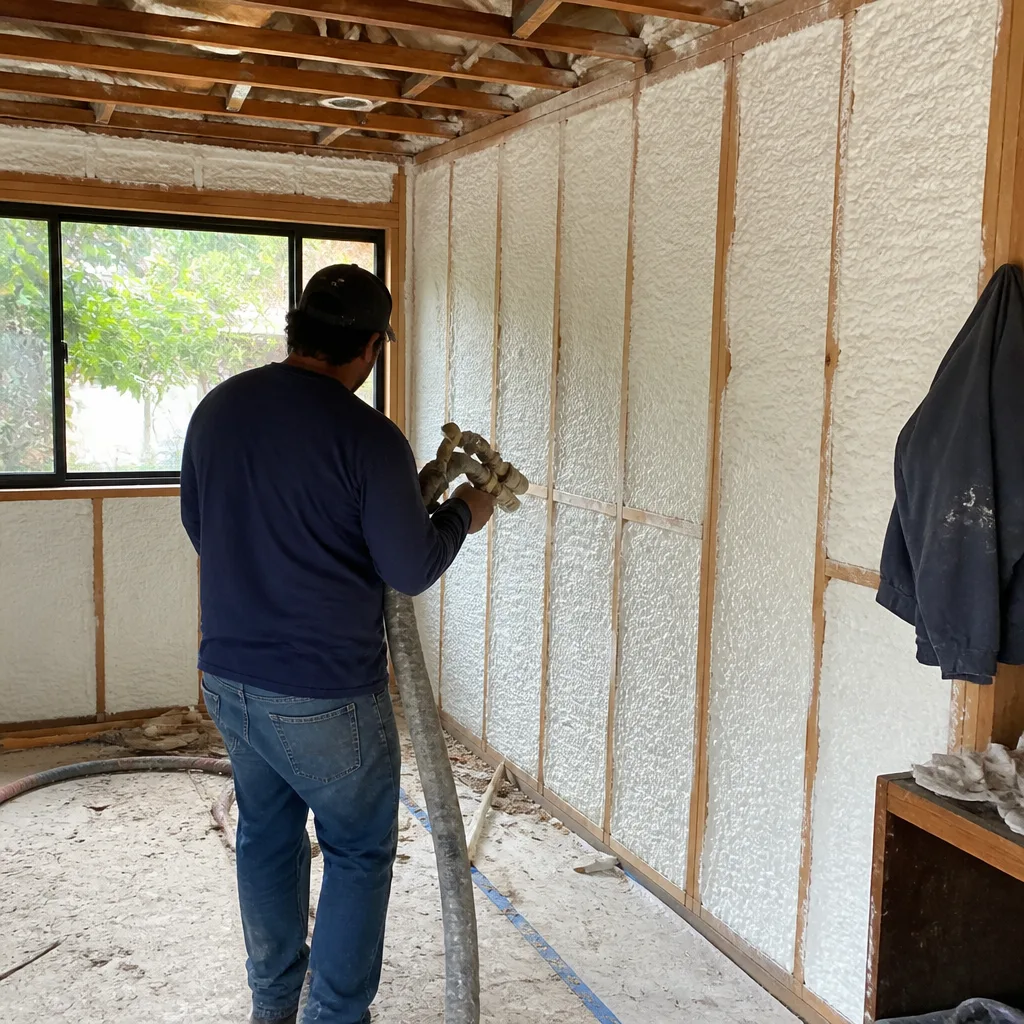 After
AfterHow to Save on Insulation Removal & Replacement in Glendale
The most direct way to reduce the total cost of an insulation removal and replacement project is to get an accurate scope before committing to anything. A vague verbal estimate followed by a revised number once the crew is on-site is one of the most common complaints in this category of work. Under the Haven Standard, the price Envelope Insulation Co. gives you is written, flat, and includes a written scope before anyone lifts a tool – which means there is no mechanism for scope creep to inflate your final invoice.
A few specific things worth knowing for Glendale homeowners:
- Check for utility rebates before scheduling: Southern California Edison and SoCalGas both offer insulation upgrade rebates for qualifying Glendale homes. The rebate amount depends on the R-value improvement and your current baseline. It doesn’t cover removal costs, but it can offset a meaningful portion of the replacement material and labor. We can tell you during the assessment whether your project is likely to qualify.
- Combine work when the attic is already open: If rodent proofing, attic cleaning, or a radiant barrier installation is something you’ve been putting off, scheduling it during the same visit as removal and replacement costs less than returning for a second job. The setup and access time is already priced into the removal – adding a radiant barrier during replacement, for example, typically adds $500-$900 rather than the $800-$1,400 it would cost as a standalone project.
- Get a second opinion on any written estimate you already have: Envelope Insulation Co. offers a free second opinion on any written estimate – we will read a competing quote with you, explain what the line items mean, and tell you if anything looks out of scope or underspecified. This is part of the Haven Standard and has no strings attached.
- Don’t skip air sealing to lower the bid: Some contractors will quote removal and replacement without an air-sealing component to give you a lower number. In climate zone 10, that decision typically shows up in your energy bills for the next decade. A correctly sealed and insulated attic in Glendale can reduce annual cooling and heating costs by 15-25 percent depending on the starting condition – the air-sealing cost pays for itself relatively quickly in a market where SoCal Edison rates are what they are.
- Ask what R-value your existing insulation was delivering before removal: This sounds obvious, but many homeowners don’t know that settled or compressed blown-in insulation may be performing at a fraction of its original R-value. Knowing the baseline helps you make an informed decision about replacement depth – you may find that R-49 makes more financial sense than R-38 given where you’re starting from.
To get a written price specific to your Glendale home’s attic, call (213) 474-3828. The estimate is free, it’s on-site, and it comes with a written scope – not a ballpark range given over the phone.
Glendale-Specific Factors That Affect Your Insulation Project
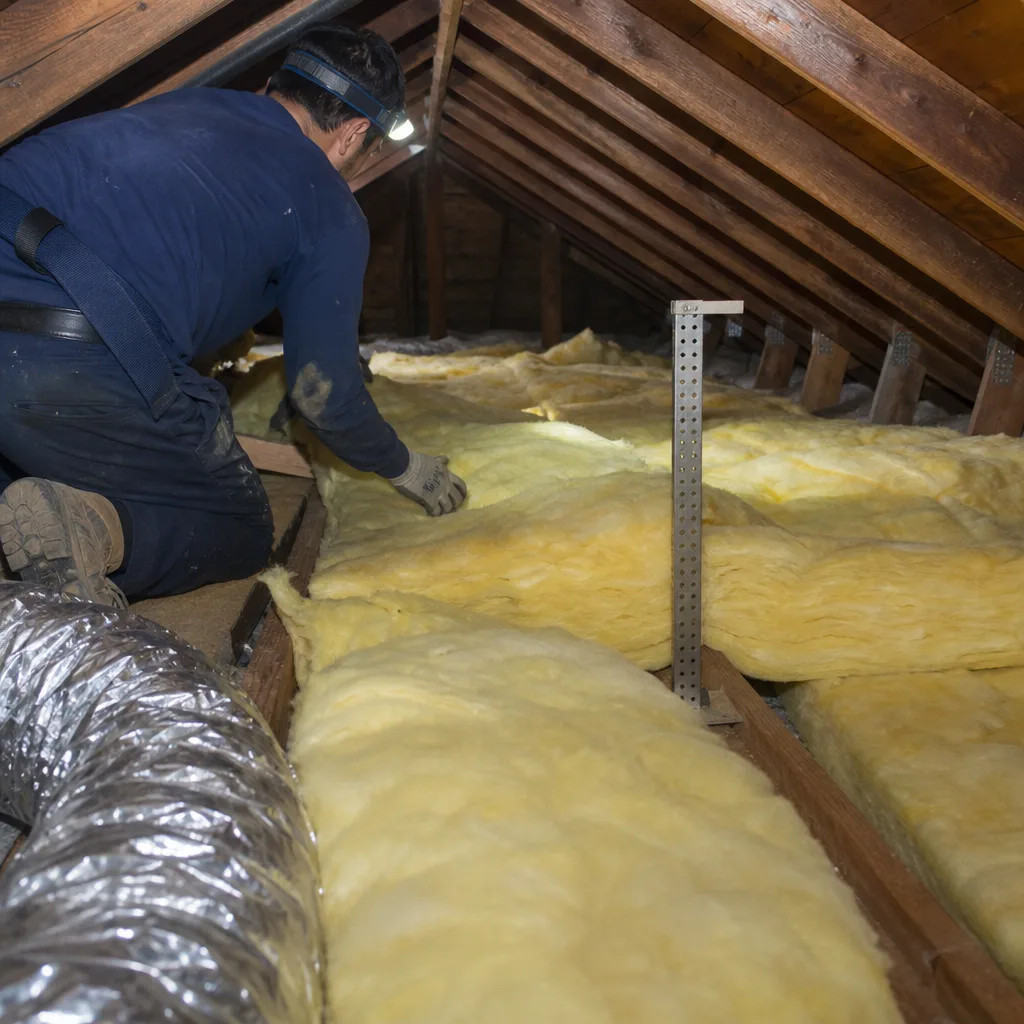
Glendale’s building stock is unusually varied for a mid-sized California city. The flatland neighborhoods east of Brand Boulevard – Rossmoyne, Pacific-Edison, and the areas around Kenneth Road – include a high concentration of homes built between 1925 and 1955, many of which have original attic insulation that was last touched before the 1973 energy crisis. These attics tend to have two or three inches of settled fiberglass or no insulation at all above the ceiling joists, combined with zero air sealing at the top plates. The removal job is straightforward; the air-sealing scope is often significant.
Up in the hillside neighborhoods, the picture changes. Properties in Verdugo Woodlands and the Chevy Chase Canyon area frequently have complex rooflines – hips, valleys, multiple dormers – and attic spaces that are partially inaccessible. In those cases, the removal and replacement quote will reflect what is actually reachable and document any areas that couldn’t be accessed, along with a recommendation for what to do about them. The Documented Photo Record that closes every Envelope Insulation Co. job shows the finished work, but it also shows any pre-existing conditions we couldn’t address – so you’re not left guessing about what the crew actually did.
Glendale also sits in California’s climate zone 10, which has a heating and cooling profile meaningfully different from coastal Los Angeles or the San Fernando Valley. Summer afternoons in the Glendale flatlands can reach 100°F or higher, and the heat load on an under-insulated attic floor is substantial. A blower-door test – a pressurization reading that shows, in one number, how much air your building envelope is losing – on a poorly insulated Glendale home often reads between 3,500 and 5,500 CFM50 before sealing. After a proper air-seal-first, insulate-second sequence, that number typically drops to 1,800-2,800 CFM50. That’s a documented, measurable result – not a claim about how much better the house will feel.
If you’re researching contractors for this project, the Insulation Removal & Replacement in Glendale service page covers scope, process, and what to expect on the day of the job. And if you want context on the full range of building-envelope work, the home page has the complete service line.
FAQs – Insulation Removal & Replacement Cost in Glendale
How much does insulation removal cost in Glendale, CA?
Insulation removal alone – vacuuming out the old material, bagging it, and hauling it off – runs $650 to $1,250 for a typical Glendale attic in the 1,200-to-1,800-square-foot range. Contaminated insulation (rodent soiling, moisture damage, or material requiring special disposal) adds $300 to $800 depending on the severity. That removal cost is separate from the air sealing and replacement material, which are their own line items. For a written price specific to your address, call (213) 474-3828 – the estimate is free and on-site.
What does insulation replacement cost per square foot in Glendale?
Blown-in cellulose or fiberglass replacement runs $0.70 to $1.20 per square foot for the material and installation, depending on the target R-value. At R-38 (the California Title 24 minimum for climate zone 10), you’re at the lower end; at R-49, the upper end. Spray foam replacement costs considerably more – $1.80 to $3.20 per square foot – and is the right choice for specific attic assemblies, not a universal upgrade. Those per-square-foot numbers don’t include removal or air sealing, which are priced separately based on actual site conditions.
Is it worth replacing old insulation in a Glendale home?
In most cases, yes – particularly for homes built before 1980. Glendale’s heat load in summer is real: attic temperatures regularly hit 140-150°F on July afternoons, and insulation that was originally installed to R-11 or R-19 has often settled to well below that. A full removal and replacement job that starts with proper air sealing typically reduces annual energy costs by 15-25 percent, which on a Glendale home with a typical SoCal Edison bill means the project can pay for itself in 5 to 9 years. The blower-door readings before and after document the actual performance change – you’re not taking anyone’s word for it.
How long does insulation removal and replacement take in Glendale?
Most single-story Glendale attics are completed in one day. A 1,500-square-foot attic with standard access typically takes 4 to 6 hours for removal and air sealing, with the new blown-in material installed in the same visit. Larger attics, complex hillside homes with irregular geometry, or jobs that include rodent proofing and attic cleaning may require a second day. The written scope you receive before work starts will tell you the expected timeline – not a range, a specific day count.
Does Glendale require a permit for insulation replacement?
Glendale’s Building & Safety Division does not require a permit for replacing like-for-like attic insulation in a residential property, provided no structural or HVAC work is involved. However, if the project includes changes to attic ventilation, modifications to HVAC equipment, or any spray foam application to the roof deck that alters the attic’s vented or unvented classification, a permit may be required. We document the scope of each job in writing before work starts – if the project scope triggers a permit requirement, that’s identified upfront, not discovered mid-job.
Can you get a same-day estimate for insulation removal in Glendale?
Scheduling typically runs 1 to 3 business days out for an on-site assessment in Glendale – same-day availability depends on the current schedule. A live person answers calls to (213) 474-3828 at any hour, so you’ll know when the next opening is rather than waiting for a callback. The estimate visit is free, and you’ll leave with a written price and scope – not a number you’ll need to follow up on.
What the Job Looks Like, Start to Finish
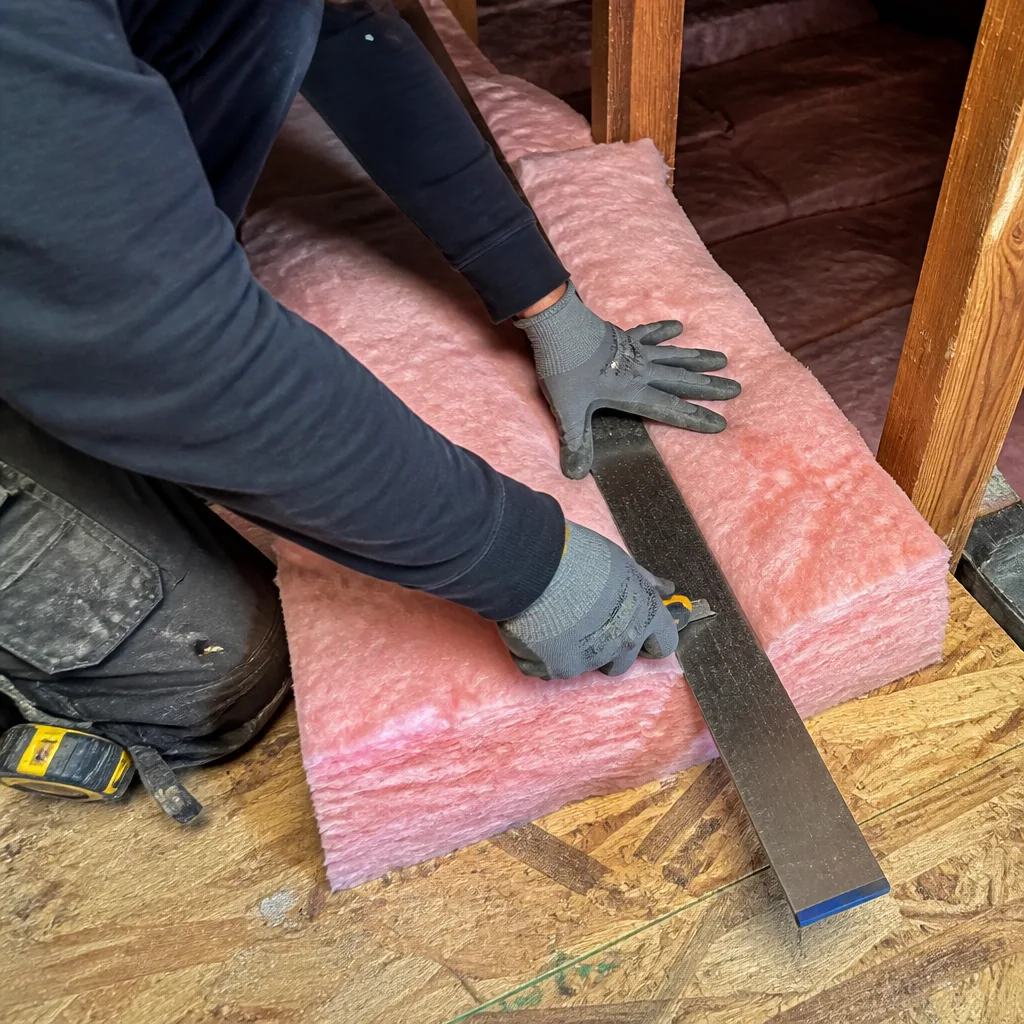
Homeowners who haven’t done this before sometimes wonder what they’re actually agreeing to when they schedule an insulation removal and replacement. Here’s the sequence on a standard Glendale job.
The assessment comes first. A technician accesses the attic, documents existing insulation depth and type, notes any contamination or moisture, identifies all penetrations that will need air sealing, and measures accessible square footage. That information produces a written price with a line-itemized scope – not a single number, but a breakdown by component. Under Haven Standard Clause 1, no work starts without a written price in your hands and a written scope you’ve agreed to. You’ll also get a written warranty before anyone lifts a tool.
On job day, removal comes first. The crew uses industrial vacuum equipment to extract the old insulation, bag it, and stage it for haul-off. Once the attic floor is clear, the air-sealing phase begins – this is where top plates, recessed light fixtures, HVAC penetrations, and any gaps in the ceiling plane are sealed with the appropriate material (typically fire-rated caulk, foam, or rigid blocking depending on the gap size and location). This step is non-negotiable at Envelope Insulation Co. and has been since 2016. Blowing new insulation over an unsealed attic floor is the most common reason insulation upgrades underperform.
After sealing, a blower-door test – where applicable – documents the air changes per hour in the sealed but not-yet-insulated condition. That gives a clean measurement of what the air sealing alone accomplished. Then the new insulation is installed, and a second blower-door test documents the final envelope performance. Both numbers go into the job record. The visit closes with a Documented Photo Record: photos of the pre-work condition, the air-sealing work, and the finished insulation depth at multiple points in the attic. That record is delivered to you – not stored in a folder you’d have to request.
The 365-Day Done Right Promise covers the completed work. If something isn’t right – a section that settled faster than expected, a sealing detail that failed – we make it right. That promise is backed by the written warranty delivered before work started, not by a verbal reassurance after the truck leaves.
Since 2016, Wes Okafor and the team at Envelope Insulation Co. have completed this sequence on more than 9,000 homes. Every one of them started with a written price and ended with a documented record.
Comparing Your Options: Repair vs. Full Replacement
Not every Glendale attic needs a full removal. If the existing insulation is clean, dry, uncompressed, and performing at or near its original R-value, topping it off (adding blown-in material over what’s there) is a legitimate and less expensive option – typically $600 to $1,200 for a standard attic, plus air sealing if that hasn’t been done. But topping off makes sense only when the existing material isn’t contaminated, isn’t acting as a reservoir for moisture or allergens, and isn’t so compressed that new material added on top can’t achieve a clean contact with the attic floor.
In Glendale, the cases where full removal is clearly the right call include:
- Attics with evidence of rodent activity – urine, droppings, nesting material embedded in the insulation. The insulation itself becomes a contamination source and needs to come out before any new material goes in.
- Water-damaged insulation from a past roof leak. Wet cellulose or fiberglass holds moisture, compresses, and loses most of its R-value. Topping it off just buries the problem.
- Attics with vermiculite insulation installed before 1980. Vermiculite from the Libby, Montana source contains asbestos, and disturbing it requires testing and regulated disposal. This is not a DIY situation and not a situation where topping off is appropriate.
- Homes where the existing insulation is so settled and degraded that the air-sealing work would be obstructed by leaving it in place. If a technician can’t get clean access to the top plates and penetrations, the air sealing won’t be thorough – and that’s the step that actually determines how the envelope performs.
The assessment visit will tell you which category your attic falls into. That determination – and the reasoning behind it – will be in writing before you decide anything.
Key Takeaways
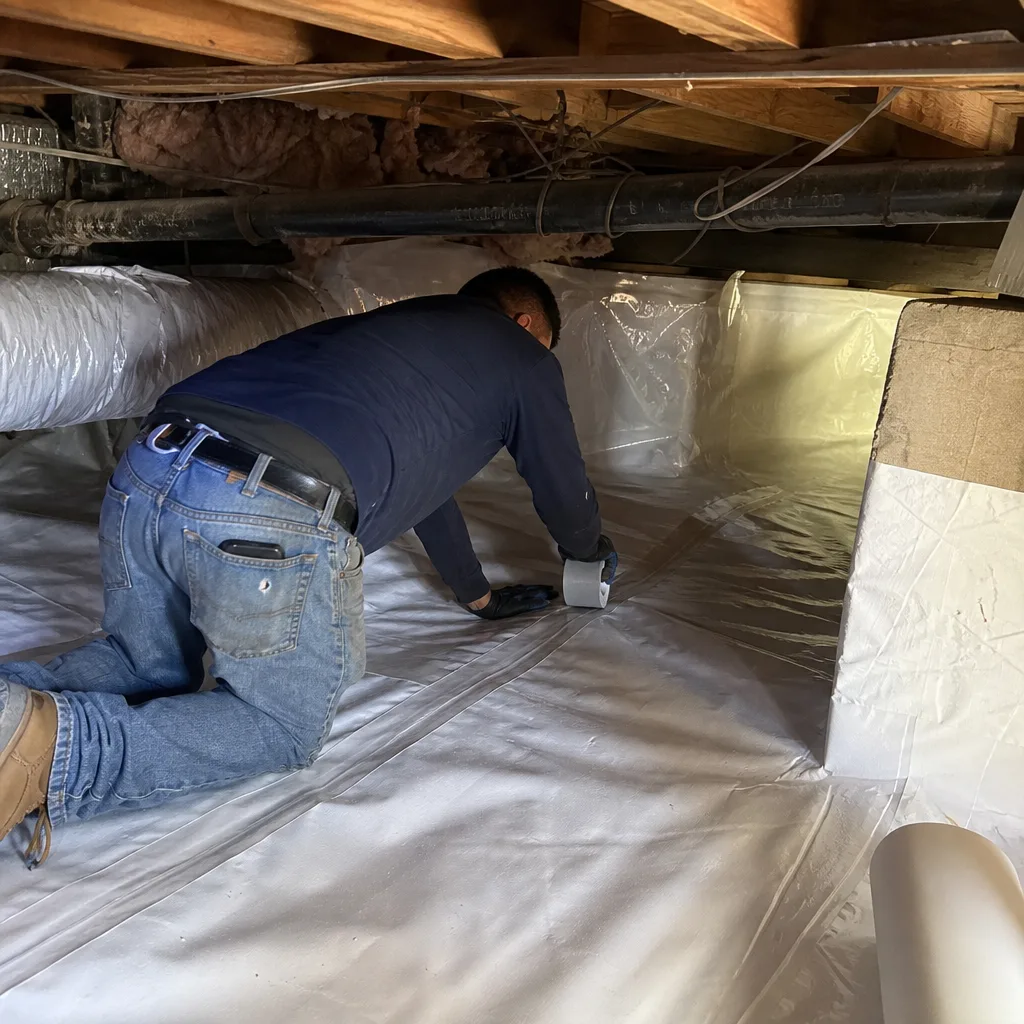
- Full insulation removal and replacement in Glendale costs $2,400 to $5,500 for a 1,200-to-1,800-square-foot attic in 2026.
- Removal alone runs $650 to $1,250; air sealing adds $600 to $1,400; blown-in replacement adds $700 to $1,500 depending on R-value target.
- California Title 24 requires R-38 minimum in Glendale’s climate zone 10; R-49 is the better long-term choice given summer heat loads.
- Air sealing before insulation is not optional – it’s the step that determines whether the new insulation delivers its rated performance.
- Before-and-after blower-door readings document the actual result of the air-sealing work on applicable jobs.
- Every job starts with a written price and scope; no work begins without both in your hands.
- Southern California Edison and SoCalGas offer insulation rebates for qualifying Glendale homes – ask about eligibility during the assessment.
- A free second opinion on any written estimate you already have is available – call (213) 474-3828.
Get a Written Price for Your Glendale Attic
If you’re ready to know what removal and replacement will cost for your specific home, the next step is an on-site assessment – not a phone estimate. A technician will access your attic, document what’s there, and produce a written price with a line-itemized scope. That price is flat; there’s no mechanism for it to change once you’ve agreed to it. The estimate visit costs nothing.
Wes Okafor and the Envelope Insulation Co. team have been doing this work in Glendale and the surrounding communities since 2016. Call (213) 474-3828 to schedule. A live person will answer.
Written by Wes Okafor, Owner at Envelope Insulation Co. (operating as Topside Attic Insulation Glendale), serving Glendale, CA since 2016.
Pricing reflects the Glendale market as of 2026. Topside Attic Insulation Glendale offers free estimates – call (213) 474-3828.
What Our Customers Say
"Two other companies quoted to blow more insulation on top of what was there. These were the only ones who said the existing material had to come out first, and explained why."
- Clifford E."They photographed rodent damage in the old insulation that we had no idea about, and priced the exclusion work separately so we could decide."
- Harriet N."Crawl space encapsulation done properly. Photographs of the vapour barrier at every seam, and the damp smell in the hallway is gone."
- Ainsley P.