
How Much Does Crawl Space Encapsulation & Vapor Barrier Cost in Glendale?
Crawl Space Encapsulation & Vapor Barrier services in Glendale, CA typically run between $3,200 and $8,500 for a standard single-family home, depending on square footage, access conditions, and whether moisture remediation or air sealing is included. A vapor barrier-only installation - a heavy-duty poly sheeting laid across the crawl space floor without full encapsulation - costs considerably less, usually $800 to $2,200. Most Glendale homeowners who contact us end up in the $4,000 to $6,500 range once conditions are properly assessed.
Those numbers are Glendale-specific. Labor rates here run 12-18% above the inland Inland Empire average, and many homes in neighborhoods like Montrose, Verdugo Woodlands, and the hills above Chevy Chase Canyon have access hatches that add crew time and affect final pricing. We’ll get into all of that below.
Crawl Space Encapsulation & Vapor Barrier Cost Breakdown (2026)
Encapsulation is not a single product - it’s a system. The table below breaks out the individual line items you’ll see on a written scope for a typical Glendale home with a 1,000-1,500 sq ft crawl space. Every price below reflects a written, flat price before any work starts - that’s Haven Standard Clause 1, and it applies to every job we do.
| Line Item | Typical Cost Range (Glendale, 2026) | Notes |
|---|---|---|
| Vapor barrier only (6-12 mil poly sheeting, floor only) | $800 - $2,200 | Floor coverage without wall lining or sealing. Adequate for mild moisture conditions. |
| Full crawl space encapsulation (20 mil liner, floor + walls + columns) | $3,200 - $8,500 | Includes taped seams, wall liner up to the sill plate, and pier wrapping. |
| Drainage matting (dimple mat under liner) | $300 - $700 | Needed when standing water or heavy condensation is present at floor level. |
| Crawl space air sealing (rim joists, penetrations) | $400 - $1,100 | Closed-cell spray foam applied to rim joists and utility penetrations before liner goes in. |
| Old insulation removal (fiberglass batts from floor joists) | $600 - $1,800 | Common in pre-1990 Glendale homes. Rodent-damaged batts require bagging and disposal. |
| Sanitation / antimicrobial treatment | $250 - $600 | Applied when mold spores or rodent waste are present before liner installation. |
| Crawl space vent sealing (converting to conditioned crawl) | $300 - $800 | Closing foundation vents is part of creating a sealed, conditioned crawl space. |
| Dehumidifier (supply and install) | $900 - $2,200 | Recommended when crawl space humidity consistently exceeds 60%. Sized to the space. |
| Access hatch upgrade or relocation | $200 - $500 | Older Glendale homes sometimes have hatches that restrict crew access or don’t seal properly. |
What a Typical Job in Glendale Looks Like at Each Price Point
$800 - $2,200: A vapor barrier-only job. Poly sheeting is laid across the crawl space floor, lapped at seams, and secured at the perimeter. This is appropriate for a relatively dry crawl space where the homeowner wants basic ground moisture control - common in Glendale’s flatter neighborhoods like Adams Hill where soil moisture is moderate. It does not seal the walls, does not address rim joists, and does not create a conditioned space. It’s a meaningful improvement, but it’s not encapsulation.
$3,200 - $5,500: Full encapsulation without significant remediation. A 20-mil liner covers the floor, walls up to the sill plate, and all piers. Seams are taped and sealed. Existing vents may be closed. Crawl Space Insulation at the rim joists gets a layer of closed-cell spray foam. This is the most common scope for homes in the Rossmoyne and Glenoaks Canyon areas where the homes are older but the crawl spaces are accessible and relatively clean.
$5,500 - $8,500+: Full encapsulation plus remediation, old insulation removal, sanitation, and a dehumidifier. This is the scope for homes in the Verdugo Hills or on the slopes above Brand Park where cool-season condensation is a real issue and pest intrusion has compromised existing batt insulation. When we open those access hatches, we sometimes find fiberglass batts hanging in strips, saturated and mouse-nested. That material has to come out before a liner goes in, and it adds both crew time and disposal cost.
Per-Square-Foot Reference
If your crawl space square footage is the main variable, here’s a working reference for Glendale:
- Vapor barrier only: $0.80 - $1.50 per sq ft
- Full encapsulation (liner, walls, air sealing): $3.00 - $5.50 per sq ft
- Full encapsulation with remediation and dehumidifier: $5.50 - $8.00+ per sq ft
These are installed costs - materials, labor, and disposal. They reflect Glendale labor rates as of early 2026.
What Affects Crawl Space Encapsulation & Vapor Barrier Pricing in Glendale
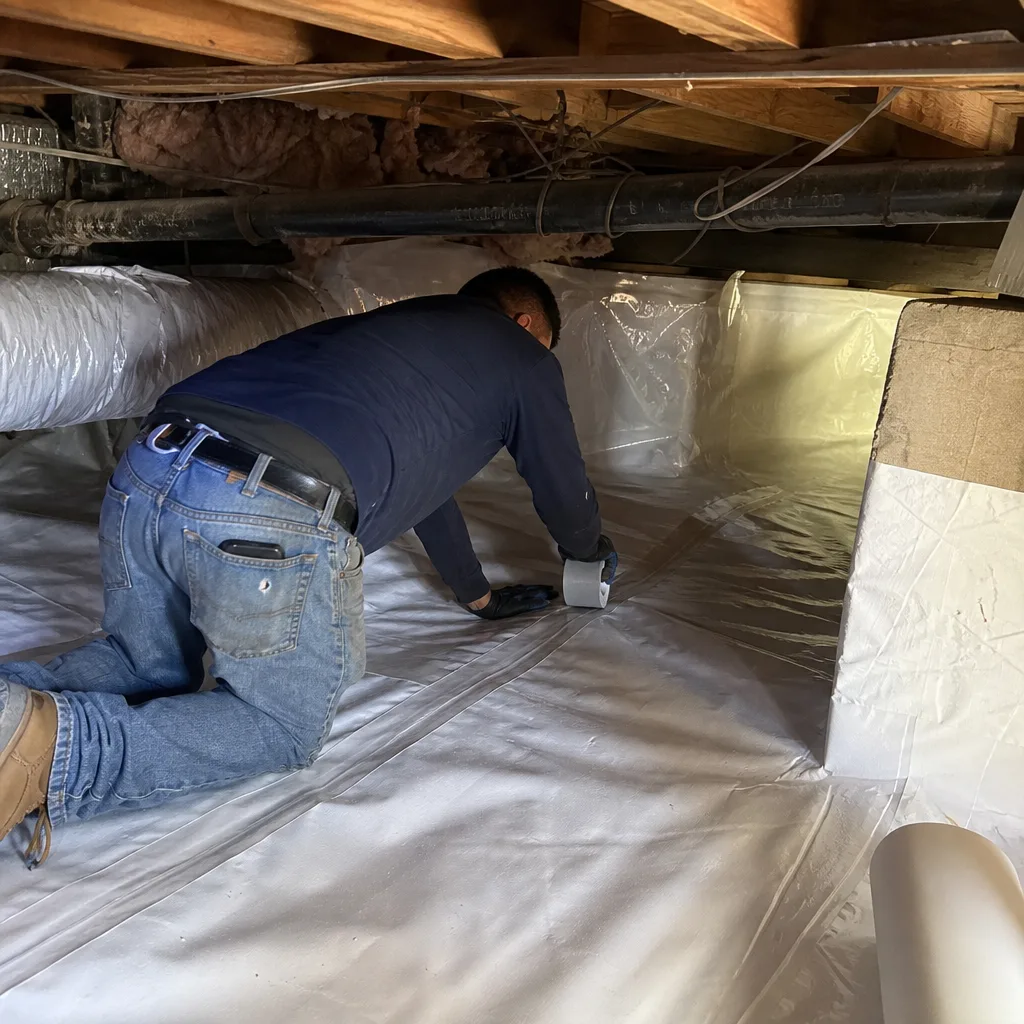
Two jobs with identical square footage can differ by $3,000 or more. Here’s what moves the number in either direction in the Glendale market specifically.
- Crawl space height and accessibility. The building code minimum for crawl space clearance is 18 inches, but a lot of Glendale’s pre-1960 stock was built well before those requirements were uniform. Crews working in a 14-inch clearance space take significantly longer to move materials and complete seam taping than those in a 36-inch accessible space. Tight-clearance jobs add $300 - $900 to labor alone.
- Liner thickness and grade. A 6-mil poly sheet is the minimum - it’s what you’d find on a job where price was the only consideration. A 20-mil reinforced liner with fabric scrim is substantially more durable and better at resisting punctures from sub-slab debris. The difference in material cost between a 6-mil and 20-mil liner on a 1,200 sq ft crawl space runs roughly $400 - $700. We use the grade appropriate to the site conditions and put the specification in writing before the job starts.
- Existing moisture damage and contamination. In Glendale’s hillside neighborhoods - Sparr Heights, the Montrose foothills, the upper Verdugo Road corridor - cool-season groundwater intrusion is common enough that many older homes have visible efflorescence on their stem walls and degraded insulation. Sanitation, antimicrobial treatment, and material disposal all add cost that a photo-only inspection (without physically entering the space) can miss. Our documented photo record on every visit captures what’s actually there so the written scope reflects reality.
- Whether the crawl space is vented or unvented. A vented crawl space follows traditional California code: foundation vents allow outside air to circulate and theoretically carry moisture away. An unvented (conditioned) crawl space seals those vents and treats the crawl space as part of the building’s thermal envelope. Converting from vented to unvented is more effective for moisture control in Glendale’s climate but requires vent sealing and typically triggers the need for a mechanical dehumidifier or supply air - adding $1,200 - $3,000 to the project total compared to a vented liner-only approach.
- Old insulation removal. Many Glendale homes built in the 1950s through 1980s have kraft-faced fiberglass batts stapled between floor joists. When those batts are rodent-damaged, wet, or compressed below useful R-value, they need to come out before a liner goes in. Removal runs $1.50 - $3.00 per sq ft depending on batt condition and access height. It’s one of the most common scope additions we find after entering the space for the first time.
- Rim joist and penetration air sealing. At Envelope Insulation Co., air sealing is not an optional add-on - it’s a prerequisite. We won’t lay a liner over an unsealed rim joist because the moisture and air infiltration problem doesn’t stop at the floor; it extends to the entire junction between the crawl space and the conditioned living area above. Closed-cell spray foam at the rim joist costs $400 - $1,100 depending on perimeter length and penetration count, and it’s included in the scope of any full encapsulation job we do.
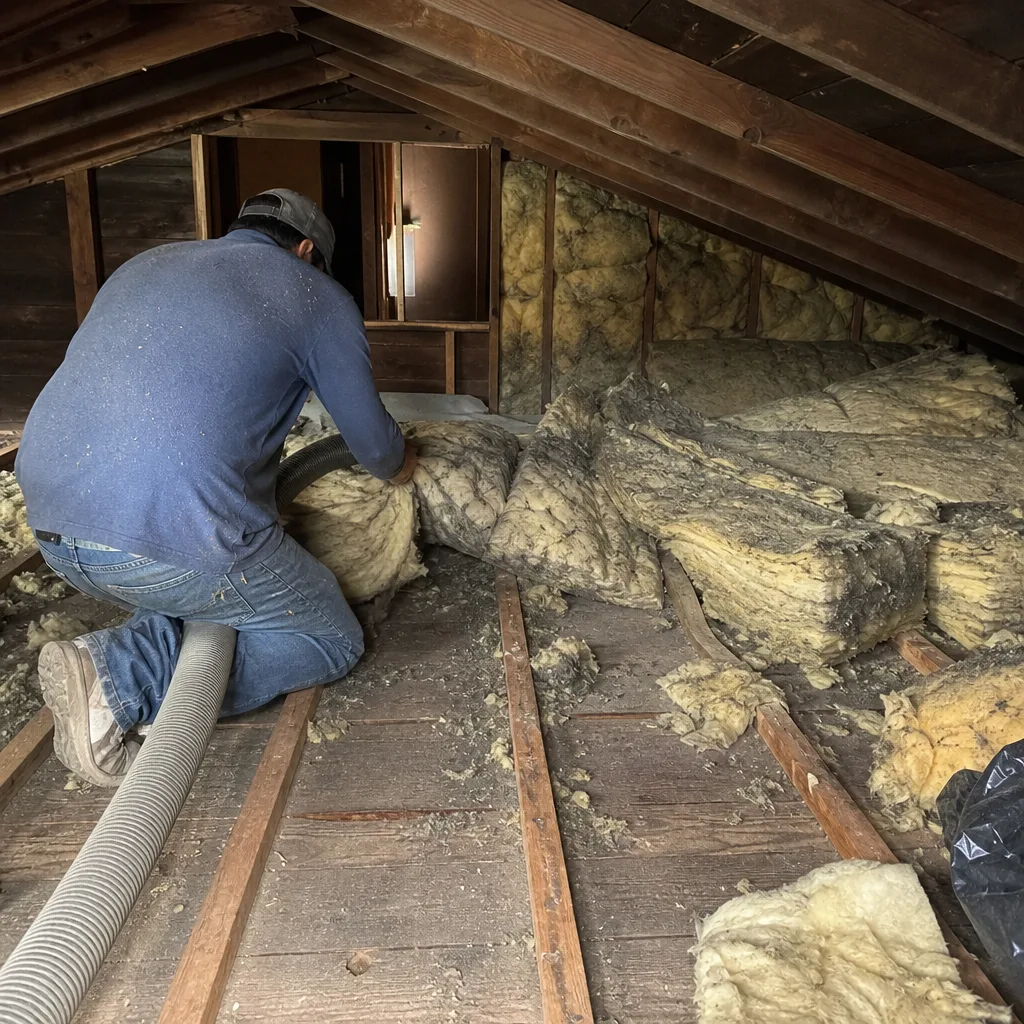 Before
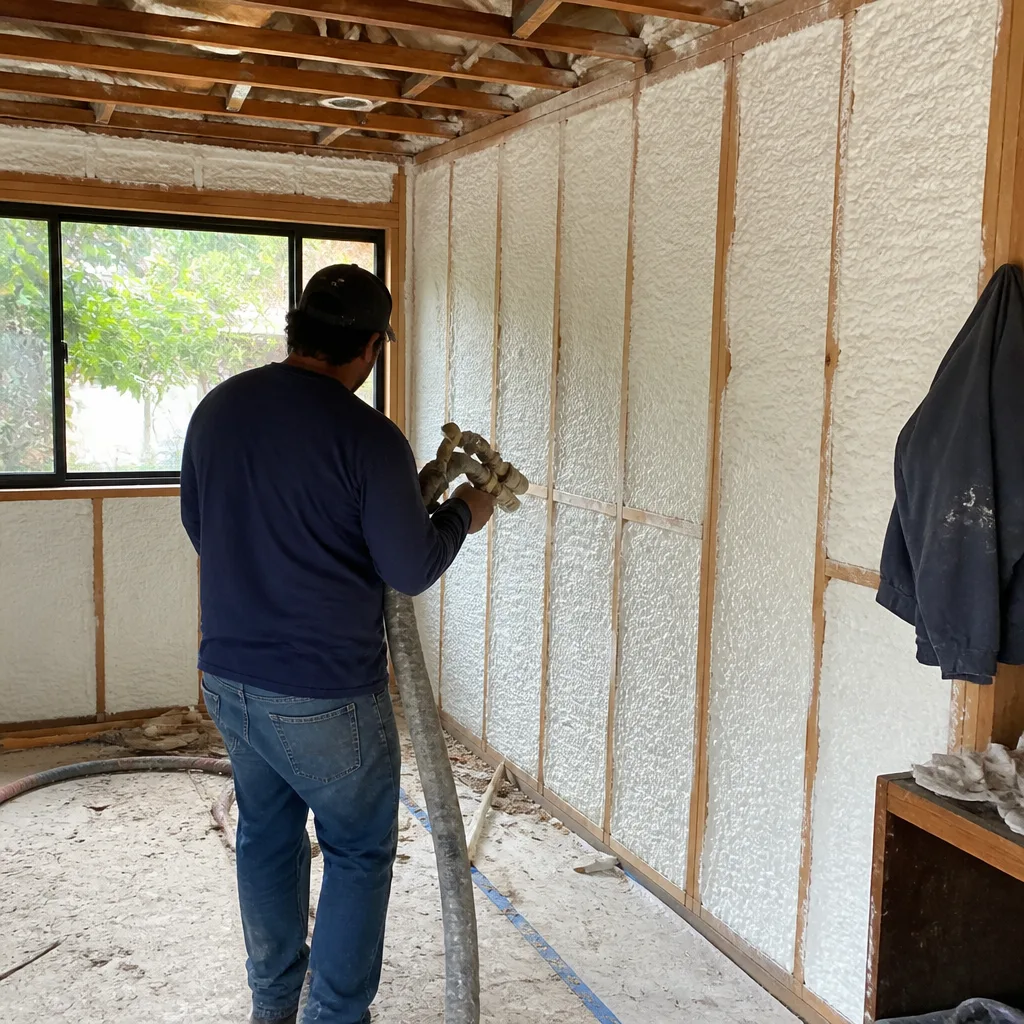 After
AfterGlendale-Specific Factors That Don’t Show Up on National Pricing Guides
National pricing aggregators quote crawl space encapsulation at $1,500 - $15,000 and call that useful information. It isn’t. Here’s what those guides don’t capture about Glendale specifically.
Hillside geology and seasonal moisture patterns. The San Gabriel Mountains rise directly northeast of Glendale, and the alluvial fan soils along the Verdugo Hills corridor stay damp well into late spring. Homes on streets like Briggs Avenue, Glenwood Road, and the upper portions of Mountain Street regularly see crawl space humidity above 70% from December through April. That level of seasonal moisture means a vapor barrier-only approach often fails within three to five years - the liner lifts at the seams and standing water pools on top of it. Full encapsulation with a dehumidifier is the scope that actually solves the problem in those locations.
Building permit requirements. Converting a vented crawl space to an unvented (conditioned) crawl space in Glendale falls under the Los Angeles County Residential Code, which Glendale has adopted with local amendments. Depending on scope, a building permit may be required - particularly if HVAC supply air is introduced into the crawl space. A vapor barrier-only job typically does not require a permit. We’ll tell you up front what the permit situation is for your specific scope, and that determination goes into your written price before any work starts.
Older access hatch sizes. Glendale has a large stock of 1940s and 1950s construction. The access hatches on those homes were often built to 16-by-20-inch interior dimensions or smaller, which makes it physically impossible to bring rigid foam board panels into the space and difficult to maneuver a 20-mil roll. In those situations, we may recommend an access hatch upgrade or a different liner approach - either way, we document what we found and price the right solution, not a workaround.
Vapor Barrier vs. Full Encapsulation: Which One Does Glendale Need?
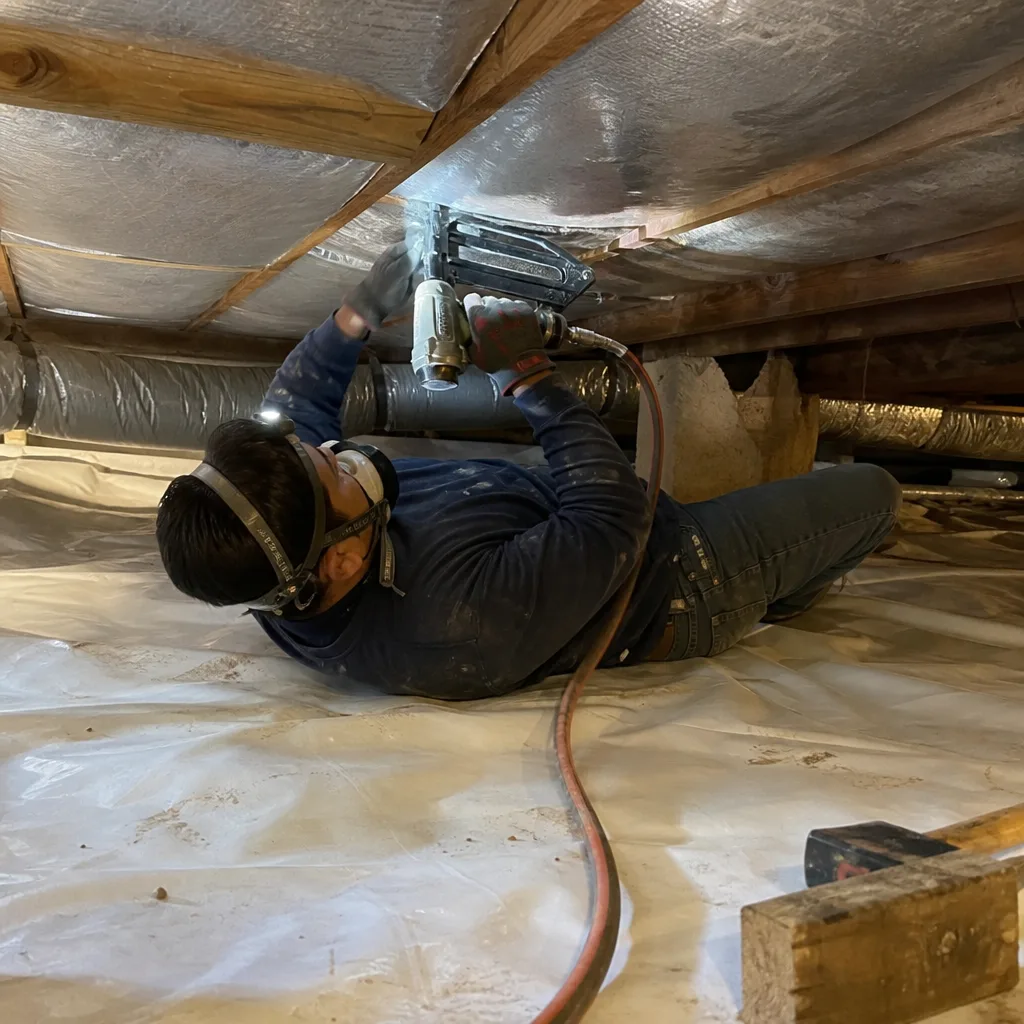
This is the question we get most often, and the honest answer depends on what’s actually happening in your crawl space.
A vapor barrier - typically 6 to 12 mil poly sheeting on the ground only - controls evaporation from the soil below the home. It’s the right call when: the crawl space is dry except for occasional light condensation, the space is well-ventilated, there’s no standing water history, and the existing insulation in the floor joists is intact. For Glendale homes on flat lots in neighborhoods like Pacific-Edison, Adams Square, or the flatter sections of Tropico, a vapor barrier is often sufficient.
Full encapsulation seals the floor, walls, columns, and rim joists with a continuous liner and closes the foundation vents to create a conditioned space. It’s the right call when: the space has moisture damage history, the existing insulation is degraded, the home sits on a sloped lot with seasonal soil moisture, or HVAC equipment is located in the crawl space (where uncontrolled humidity accelerates corrosion on equipment). Most of the service calls we get from homeowners in Montrose, Verdugo Woodlands, and Sparr Heights turn out to need full encapsulation rather than a vapor barrier once we’re actually inside and photographing the conditions.
The decision isn’t one we make remotely. Our documented photo record from the initial visit is what drives the written scope - and you see both before any work begins.
How to Save on Crawl Space Encapsulation & Vapor Barrier in Glendale
We’re not going to manufacture savings tips. Here’s what actually reduces cost without cutting corners on performance.
- Get a written scope before you agree to anything. The single most expensive mistake Glendale homeowners make is approving a verbal estimate, then finding out mid-job that “moisture remediation” or “old insulation removal” was extra. Under Haven Standard Clause 1, every scope we write is flat, written, and complete before a crew arrives. Bring that standard to every contractor you consider.
- Use our Free Second Opinion on any written estimate. If you’ve already received a written estimate from another contractor, bring it to us. We’ll read it with you, line by line, and tell you whether the scope matches what your crawl space actually needs. This service is free, and it’s not a sales call - it’s a scope review. Call (213) 474-3828 to schedule one.
- Don’t downgrade liner thickness to save money upfront. A 6-mil liner in a Glendale hillside crawl space often fails at the seams within 36 months. The replacement cost, including removing the old failed liner and re-prepping the substrate, typically exceeds what it would have cost to install a 20-mil liner the first time. We specify liner grade based on site conditions, not on what hits a target price point.
- Check for applicable utility rebates. Southern California Gas and LADWP occasionally offer rebates for energy efficiency improvements that include crawl space air sealing. Rebate programs change year to year, but it’s worth checking SCG’s current residential rebate schedule before finalizing the scope. We can tell you which line items on the written scope may qualify.
- Combine with related work when the crew is already on site. If you’re also due for attic insulation removal, blown-in insulation, or attic air sealing, bundling that work with crawl space encapsulation reduces the fixed cost of crew mobilization and can meaningfully lower the per-job overhead. We can scope both in a single visit.
- Address access issues before the appointment. If you know your crawl space access hatch is undersized or obstructed, letting us know in advance allows us to plan the right crew and equipment. Unexpected access problems on the day of work add time, and time adds cost.
What Envelope Insulation Co. Does Differently in Glendale
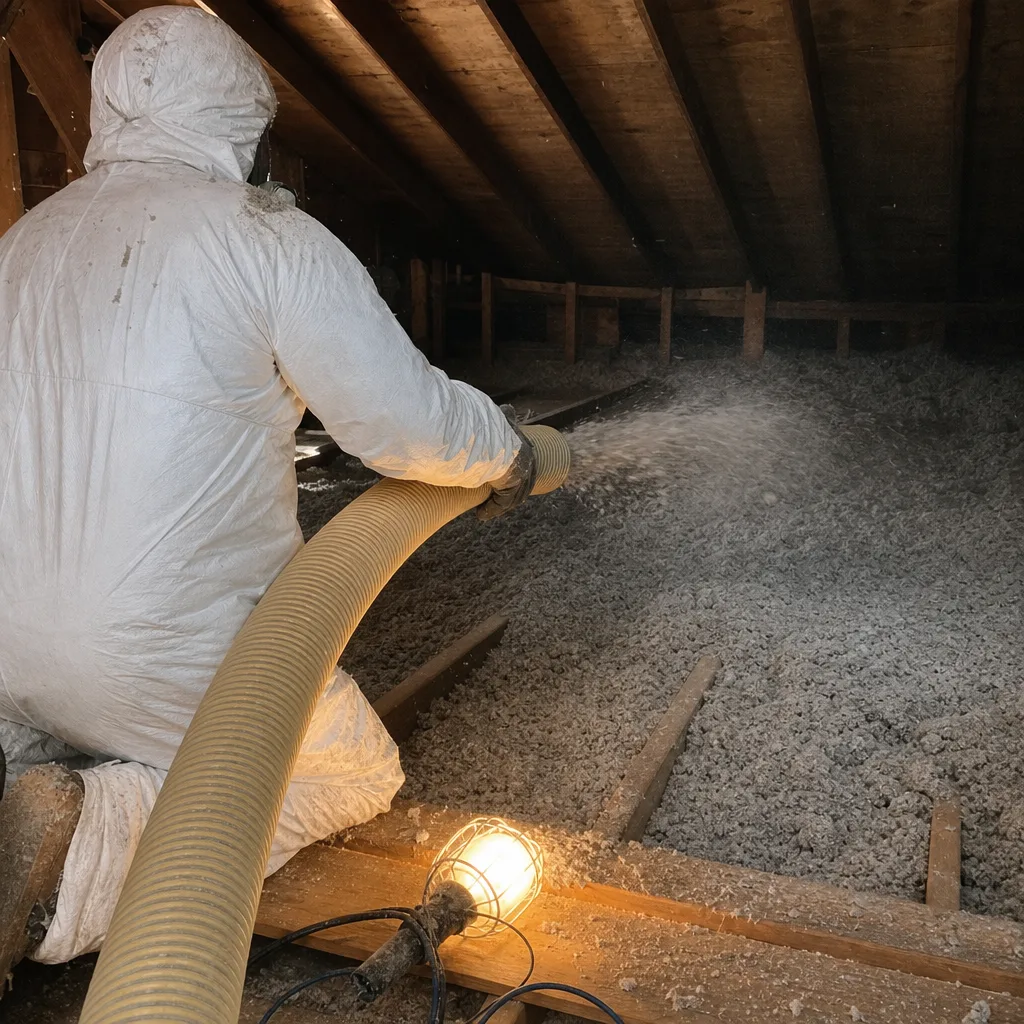
Wes Okafor has run Envelope Insulation Co. since 2016, and the operating principle hasn’t changed: air sealing comes before insulation, always. That’s not a marketing position - it’s a trade sequence. If you seal the thermal boundary without sealing the air boundary first, you’re locking moisture pathways into the structure. In a crawl space, that means the liner goes over a properly sealed rim joist, not just over whatever is there.
Since 2016, we’ve completed work in more than 9,000 homes across the Glendale area and surrounding communities. Every single one started with a written price and ended with a documented photo record. On applicable jobs, we provide before-and-after blower-door readings - a pressurization measurement that puts a single number on how much air the building envelope was losing before and after the work. You can verify what you paid for. That’s the only kind of proof we’re willing to offer.
The 365-Day Done Right Promise applies to every job. If something isn’t right within 365 days of completion, we make it right. That commitment is in writing before anyone lifts a tool, and it’s backed by a written warranty you receive as part of the job close-out documentation.
Background-checked, uniformed technicians show up named and on time. You get a text when they’re on the way. Calls are answered by a live person - not a voicemail system, not a callback queue that operates on business days. If you call (213) 474-3828 at any hour, a person answers.
For a full picture of what’s included in a Glendale encapsulation job, visit our Crawl Space Encapsulation & Vapor Barrier in Glendale service page, or return to our home page to see the full building-envelope service line.
FAQs – Crawl Space Encapsulation & Vapor Barrier Cost in Glendale
How much does crawl space encapsulation cost in Glendale, CA in 2026?
Full crawl space encapsulation in Glendale runs $3,200 to $8,500 for most single-family homes, with the majority of jobs landing between $4,000 and $6,500 once site conditions are factored in. Vapor barrier-only installations cost considerably less, typically $800 to $2,200. The range is wide because Glendale’s housing stock is diverse: a flat-lot 1970s ranch in Tropico with a clean, accessible crawl space costs meaningfully less than a 1940s hillside home in Verdugo Woodlands with low clearance, damaged batts, and seasonal moisture intrusion. Call (213) 474-3828 for a free written estimate specific to your home’s conditions.
Is a vapor barrier the same as encapsulation?
No. A vapor barrier is a single layer of poly sheeting laid on the crawl space floor to slow moisture evaporation from the soil. Encapsulation is a full system: a heavier-grade liner (typically 20 mil) that covers the floor, all foundation walls up to the sill plate, and any structural piers, with taped and sealed seams, closed foundation vents, and air sealing at the rim joist. A vapor barrier costs $800 to $2,200; full encapsulation runs $3,200 to $8,500. For Glendale homes on hillside lots or with any moisture history, vapor barrier-only installations frequently fail at the seams within a few years. We’ll tell you which scope your space actually needs after we’re inside it, and you’ll have that recommendation in writing before any work begins.
How long does crawl space encapsulation last in Glendale?
A properly installed 20-mil reinforced liner in a sealed, dehumidified crawl space typically lasts 20 years or more. A 6-mil vapor barrier in a vented crawl space on a Glendale hillside lot – where seasonal soil moisture is consistently high – often shows seam failure and pooling within 3 to 5 years. Liner longevity is directly tied to thickness, seam quality, and whether the crawl space environment is controlled after installation. Our 365-Day Done Right Promise covers the installation for the first year; beyond that, the liner manufacturer’s warranty applies to the materials themselves. We document the installation with photos so you have a baseline record if questions arise later.
Does crawl space encapsulation require a permit in Glendale?
A standard vapor barrier installation or liner-only encapsulation typically does not require a permit in Glendale. Converting a vented crawl space to an unvented (conditioned) crawl space – particularly when HVAC supply air is introduced – may require a building permit under the Los Angeles County Residential Code, which Glendale has adopted with local amendments. The written scope we provide before any work starts will include a clear statement of the permit situation for your specific job. We don’t leave that question open.
Can I just install a vapor barrier myself to save money?
Technically, yes – a homeowner can purchase 6-mil poly sheeting and lay it across a crawl space floor. The practical barriers are physical: most Glendale crawl spaces require working prone in low clearance, cutting and overlapping poly around piers and obstructions, and securing the perimeter without creating gaps where soil moisture can bypass the liner. A DIY installation that leaves unsealed seams or lifted edges at the perimeter doesn’t solve the moisture problem – it just moves it. For a vapor barrier-only job in a clean, accessible space, that’s a reasonable risk to evaluate. For full encapsulation with rim joist air sealing, we’d strongly recommend a professional installation. Call (213) 474-3828 and we can walk you through exactly what your crawl space needs before you decide anything.
What is the difference between a conditioned and a vented crawl space in California?
A vented crawl space relies on foundation vents to circulate outside air and theoretically remove moisture. California’s coastal and near-coastal climate – including Glendale’s – means that outside air from November through April often carries more humidity than the air inside the crawl space, so venting can actually introduce moisture rather than remove it. A conditioned crawl space seals those vents, lines the floor and walls with a continuous vapor barrier, and either supplies conditioned air from the HVAC system or installs a dedicated dehumidifier to maintain humidity below 60%. The conditioned approach is more expensive upfront by $1,200 to $3,000 compared to a vented liner-only job, but it’s substantially more effective for Glendale homes on sloped lots where seasonal groundwater creates persistent moisture problems. Glendale’s building code permits both approaches, with conditions; we’ll specify which is appropriate for your home in the written scope.
Key Takeaways
- Vapor barrier only in Glendale: $800 - $2,200
- Full crawl space encapsulation: $3,200 - $8,500, most jobs land at $4,000 - $6,500
- Per sq ft installed: $0.80 - $1.50 (vapor barrier) or $3.00 - $8.00+ (full encapsulation with remediation)
- Hillside Glendale neighborhoods (Montrose, Verdugo Woodlands, Sparr Heights) frequently require full encapsulation plus a dehumidifier due to seasonal soil moisture
- Liner thickness matters: a 6-mil barrier often fails within 3-5 years in moisture-prone Glendale crawl spaces; 20-mil reinforced liners are standard on our jobs
- Air sealing at the rim joist is a prerequisite, not an add-on, on every full encapsulation job we complete
- Every job starts with a flat written price and ends with a documented photo record
- The 365-Day Done Right Promise applies to all completed work
Get a Written Price for Your Glendale Crawl Space
The estimates above give you a working range, but crawl spaces vary enough that the number that matters is the one specific to your home’s square footage, access conditions, moisture history, and current liner status. We provide free written estimates, and the price we put in writing is the price you pay – no scope creep, no mid-job revisions unless you add work.
Wes Okafor and the team at Envelope Insulation Co. have been writing flat prices and documenting the results in Glendale since 2016. If you have a written estimate from another contractor, bring it – we’ll read it with you at no charge and tell you whether the scope matches what your crawl space actually needs.
Call (213) 474-3828 to schedule your free estimate. A live person answers every call.
Written by Wes Okafor, Owner at Envelope Insulation Co. (operating as Topside Attic Insulation Glendale), serving Glendale, CA since 2016. Pricing reflects the Glendale market as of 2026. Topside Attic Insulation Glendale offers free estimates – call (213) 474-3828.
What Our Customers Say
"They photographed rodent damage in the old insulation that we had no idea about, and priced the exclusion work separately so we could decide."
- Harriet N."Crawl space encapsulation done properly. Photographs of the vapour barrier at every seam, and the damp smell in the hallway is gone."
- Ainsley P."They air-sealed the attic floor before insulating and showed me the blower-door number before and after. The upstairs is finally the same temperature as downstairs."
- Marisol D.