
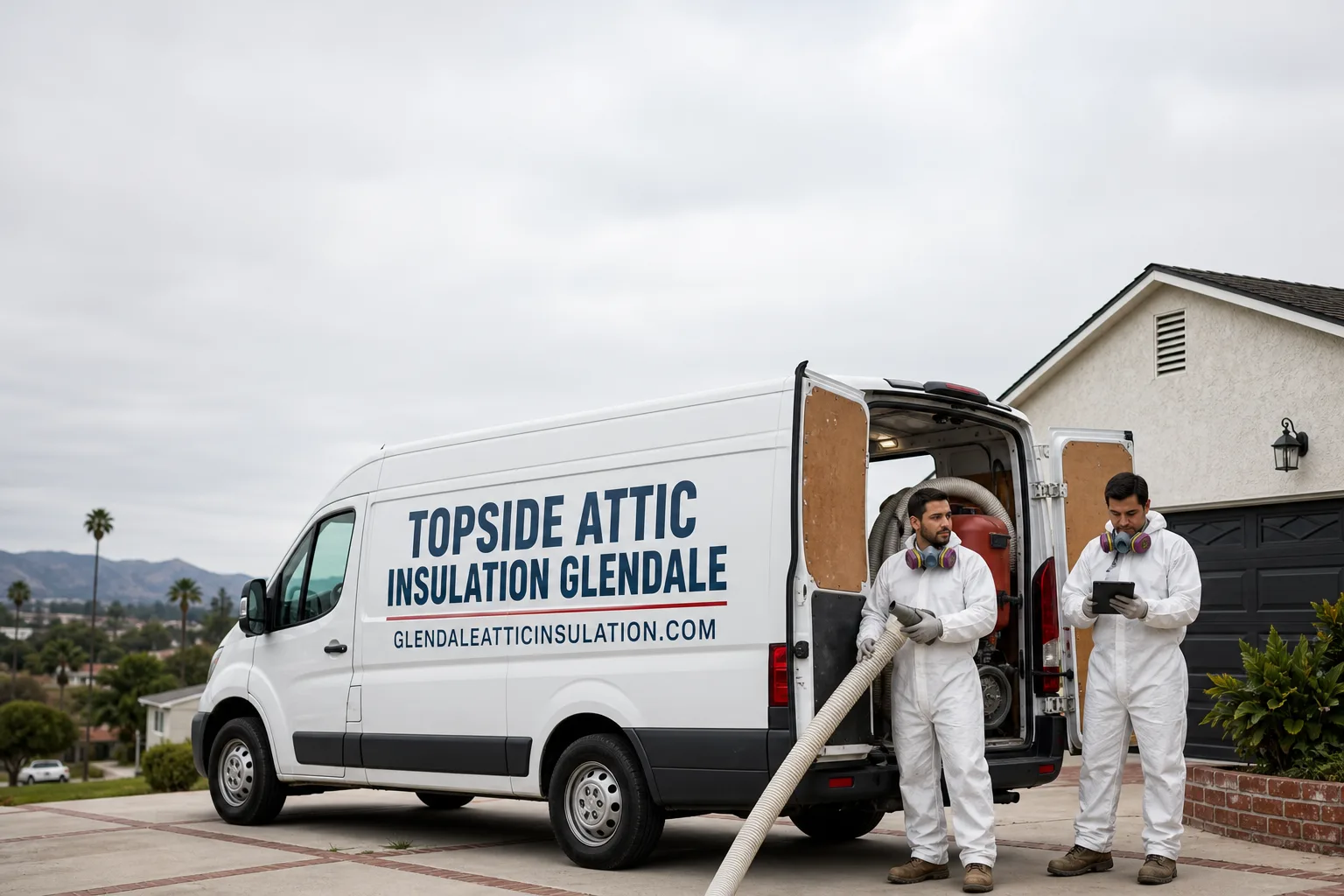
Fast, Reliable Spray Foam Insulation Across San Gabriel
Spray foam insulation in San Gabriel typically runs $2,800-$6,500 for most residential jobs, with same-week scheduling available and crews dispatched from our Los Angeles office. We’re familiar with the stucco bungalows along Las Tunas Drive, the ranch homes near the San Gabriel Mission district, and the patchwork additions that leave so many rooms 10-15°F hotter than the rest of the house. If you’re tired of closing off the back bedroom every July, call us at (213) 474-3828. We’ll send a technician who knows what to look for in San Gabriel’s specific building stock, measure the actual air leakage with a blower-door test, and give you a written price before anyone lifts a tool.
Why Topside Attic Insulation Glendale Is San Gabriel’s Preferred Spray Foam Insulation Company
We’ve sealed and insulated over 9,000 homes since 2016, and a significant share of them sit in the San Gabriel Valley’s inland heat basin where the San Gabriel Mountains trap radiant heat and summer temperatures routinely exceed 100°F. San Gabriel homeowners find us because their neighbors recommended us after we fixed a room that wouldn’t cool, or because they read our three-star reviews alongside our five-star ones and saw that we respond to criticism with a documented fix.
Our response time to San Gabriel is typically same-day or next-day for estimates, with crews carrying materials from Owens Corning, Johns Manville, and Demilec so we don’t waste a week ordering stock. Every job closes with a Documented Photo Record and, on applicable work, before-and-after blower-door numbers that show exactly how much conditioned air your home was losing. Under Haven Standard: Have it in writing - that means a written scope, a written price, and a written warranty before anyone starts.
Our Spray Foam Insulation Services in San Gabriel
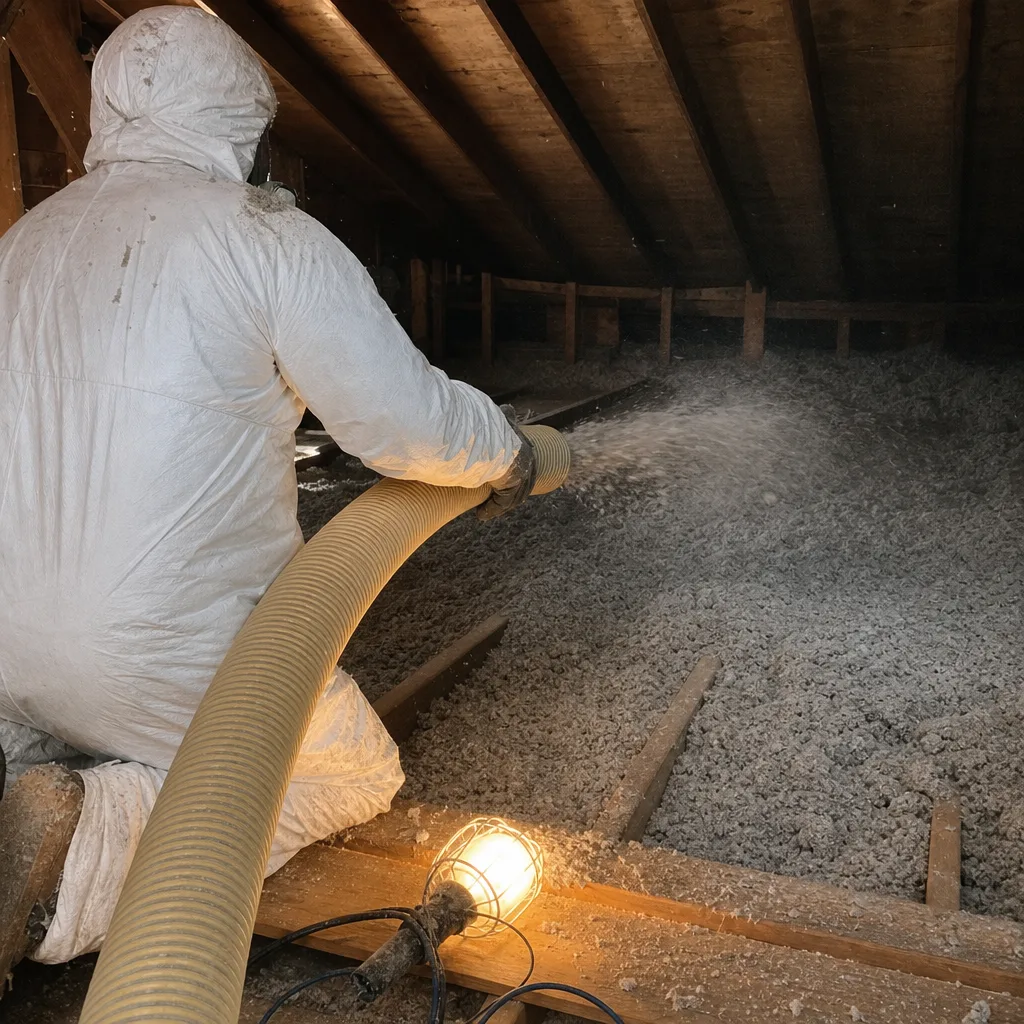
Closed-Cell Spray Foam
Closed-cell spray foam is our primary recommendation for San Gabriel’s 1940s-1960s stucco bungalows and ranch homes. At roughly R-6.5 per inch, it delivers the highest R-value per inch of any insulation we install, which matters when you’re working with the shallow wall cavities common in post-WWII construction. The rigid structure also adds shear strength to older framing. We source closed-cell products from Demilec and Johns Manville, and we never apply it over stucco walls showing moisture intrusion or efflorescence - a common failure mode in San Gabriel homes where previous owners patched cracks without addressing the water source. On 100-105°F summer days, we control pass thickness to prevent blistering and poor adhesion.
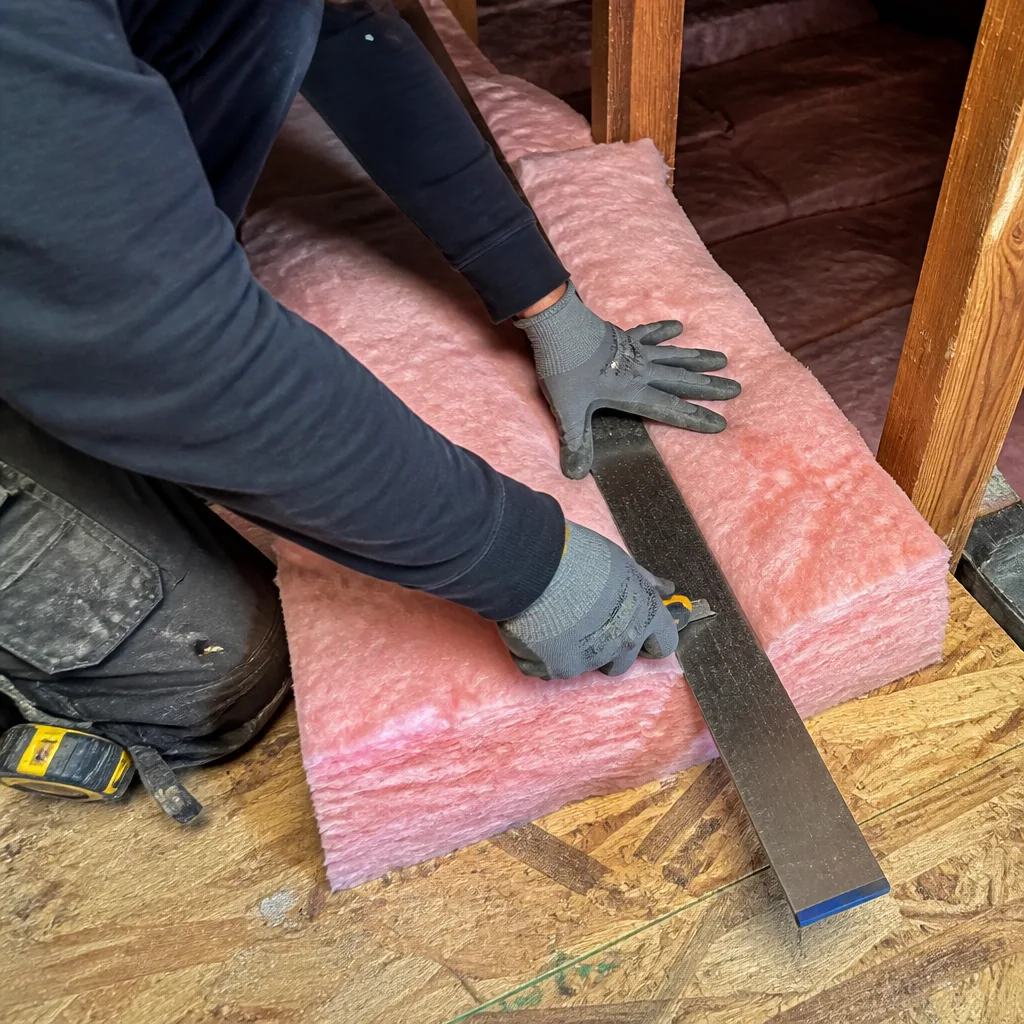
Open-Cell Spray Foam
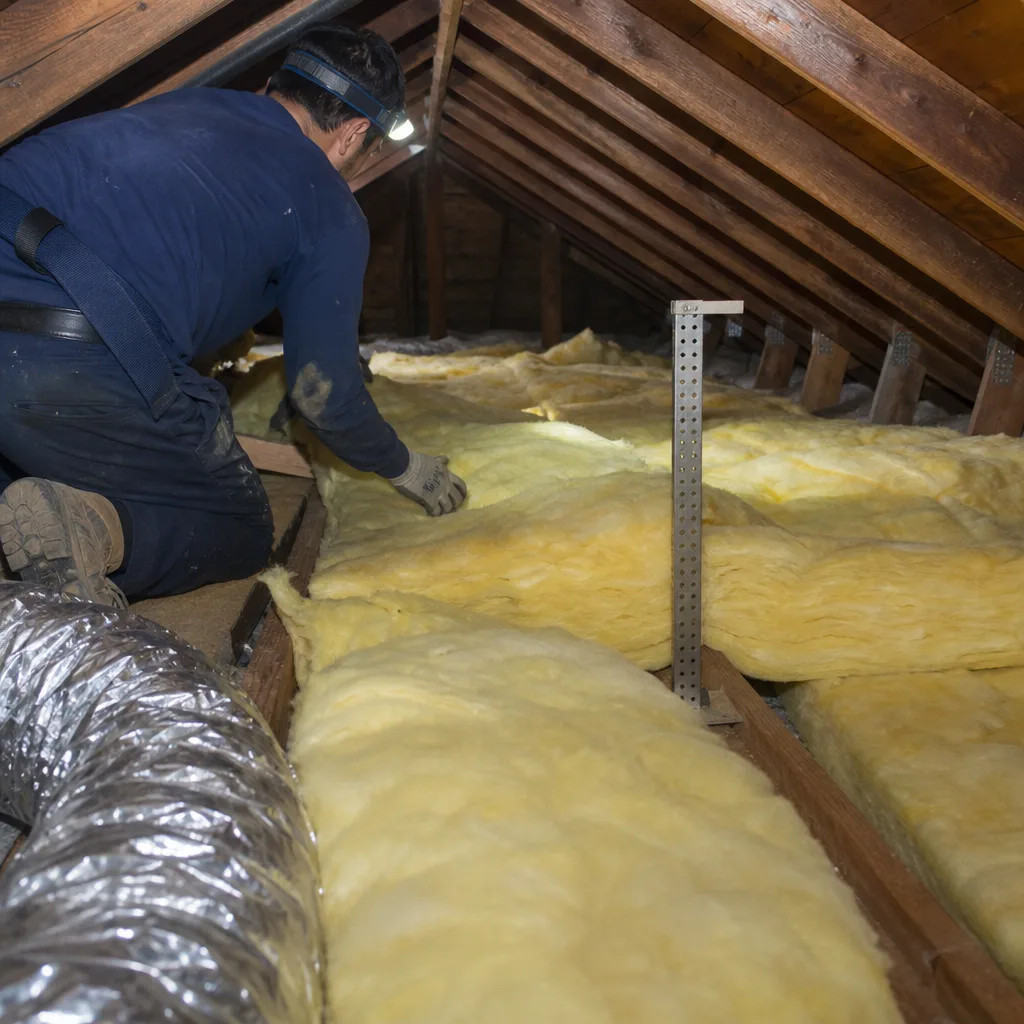
Open-cell spray foam runs about R-3.6 per inch and costs less per board foot than closed-cell, making it practical for large attic applications in San Gabriel homes with adequate cavity depth. It’s vapor-permeable, so it won’t trap moisture in walls that still need to dry. We use open-cell from Owens Corning for attic floors and roof decks where the assembly can accommodate the thicker application. Not the right choice for every San Gabriel home, but the right choice for some - and we’ll tell you which after we inspect.
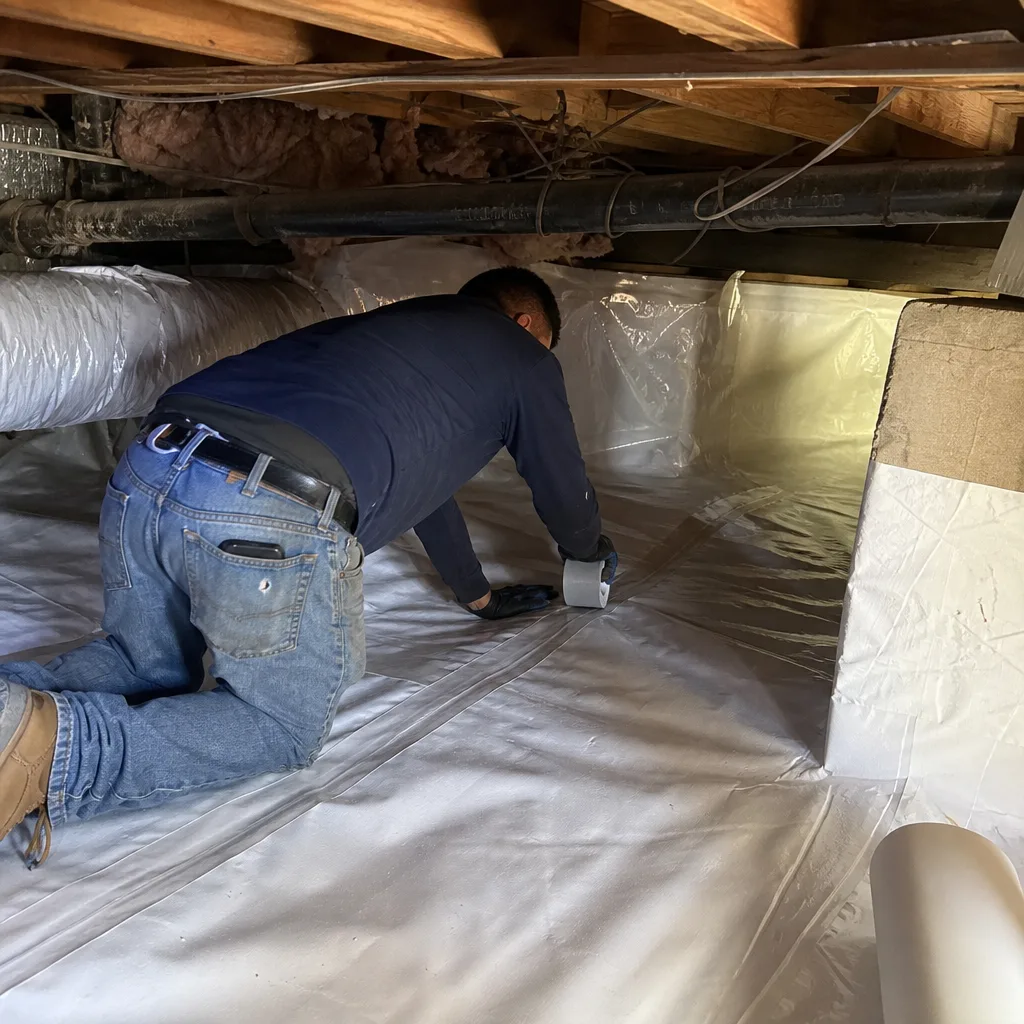
Rim Joist Spray Foam
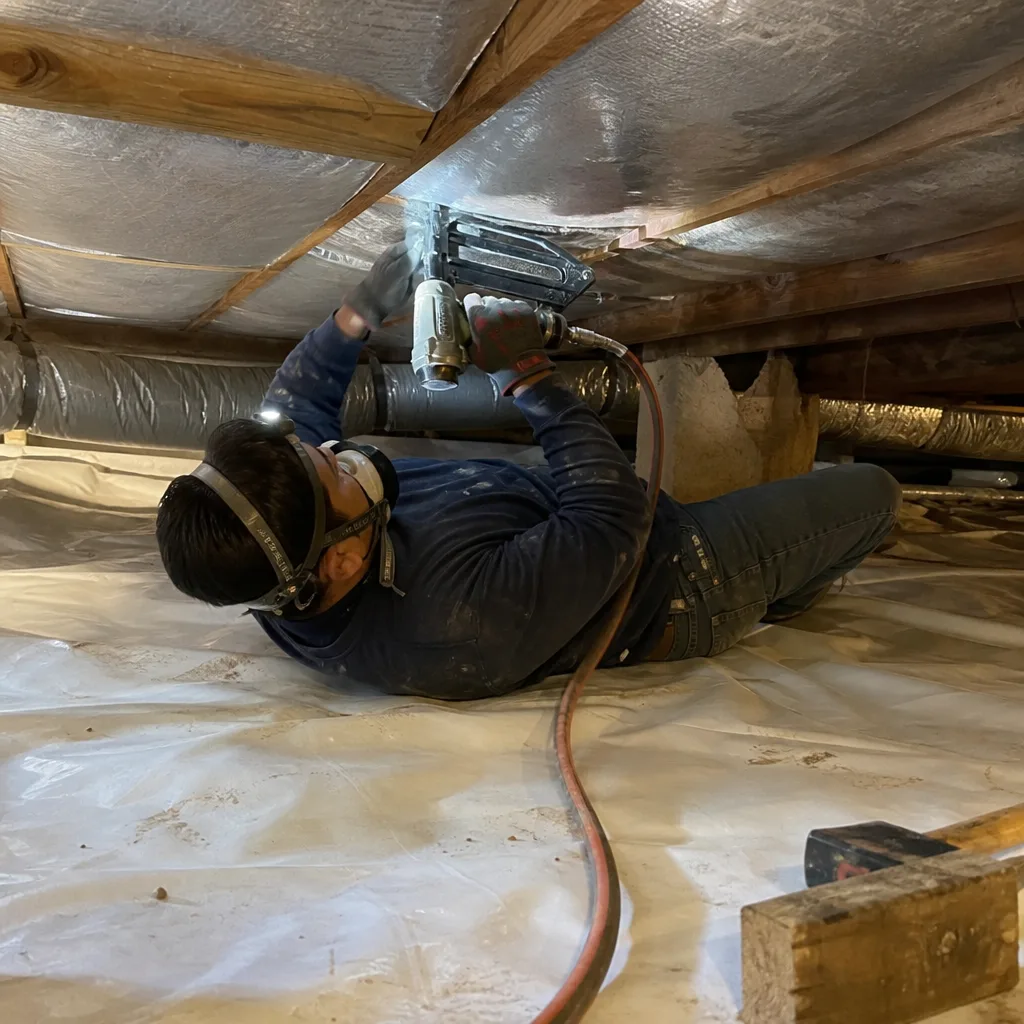
The rim joist - the perimeter band where your foundation meets your first floor - is often the leakiest part of a San Gabriel home’s thermal envelope, especially in bungalows with raised foundations common near Mission Drive and Del Mar Avenue. Cold air pours in through unsealed rim joists in winter; in summer, hot, humid air enters and meets your air-conditioned floor. We seal rim joists with closed-cell spray foam after verifying that the sill plate and surrounding wood are dry and sound. This is non-negotiable work in our process: we seal first, then insulate, in that order.
Garage Ceiling Spray Foam
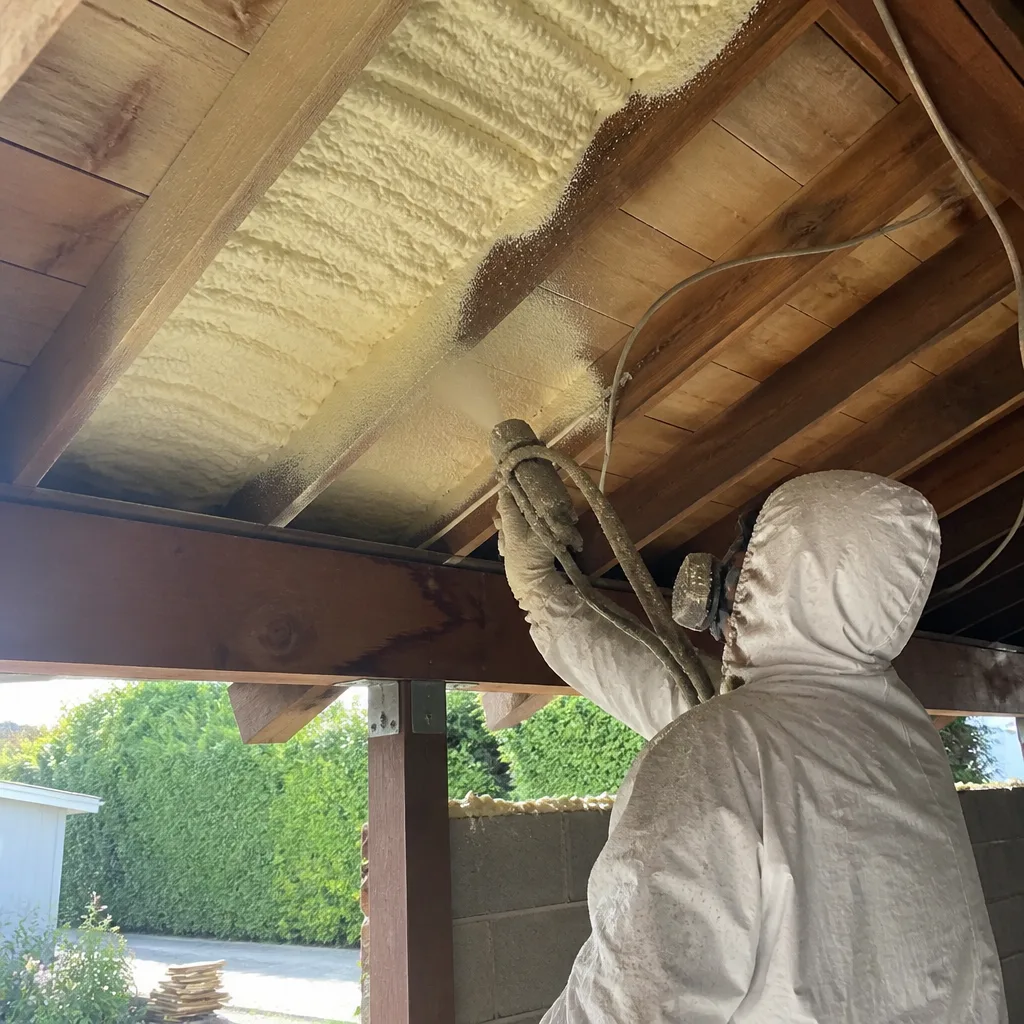
San Gabriel’s multigenerational households have converted garages to living space more frequently than almost anywhere in Los Angeles County. A garage ceiling beneath a hot attic in this climate can radiate heat downward at 120°F or more, making converted rooms unbearable even with a mini-split running constantly. We spray closed-cell foam on garage ceilings to create a thermal barrier, then verify with a blower-door test that the new living space isn’t pulling attic air through recessed lights or unsealed penetrations. If your converted garage in San Gabriel still runs 15°F hotter than the main house, the ceiling is usually where the problem starts.
Spray Foam Roof Deck
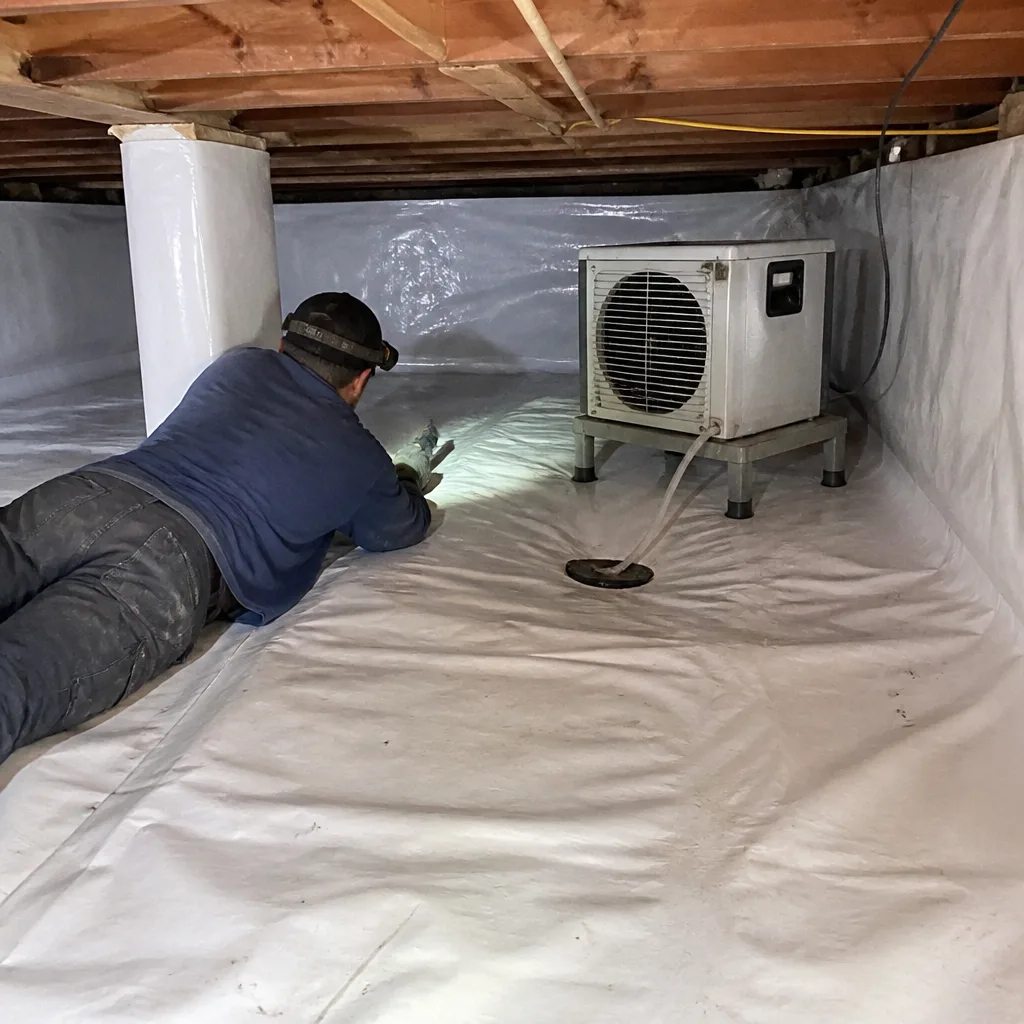
For homeowners in San Gabriel considering a full roof replacement, spraying foam directly to the roof deck creates an unvented conditioned attic that eliminates the 150°F attic temperatures common in this inland heat basin. The HVAC equipment lives in conditioned space, duct losses drop dramatically, and storage items don’t melt. We coordinate this work with your roofing contractor and document every square foot with photos.
What happens when you call
- 1
A real person answersNo phone trees - you reach a local pro.
- 2
You get an upfront price rangeHonest numbers before anyone is dispatched.
- 3
A background-checked tech heads outLicensed & insured, dispatched right away.
- 4
You approve before work beginsNothing starts until you say go.
 Before
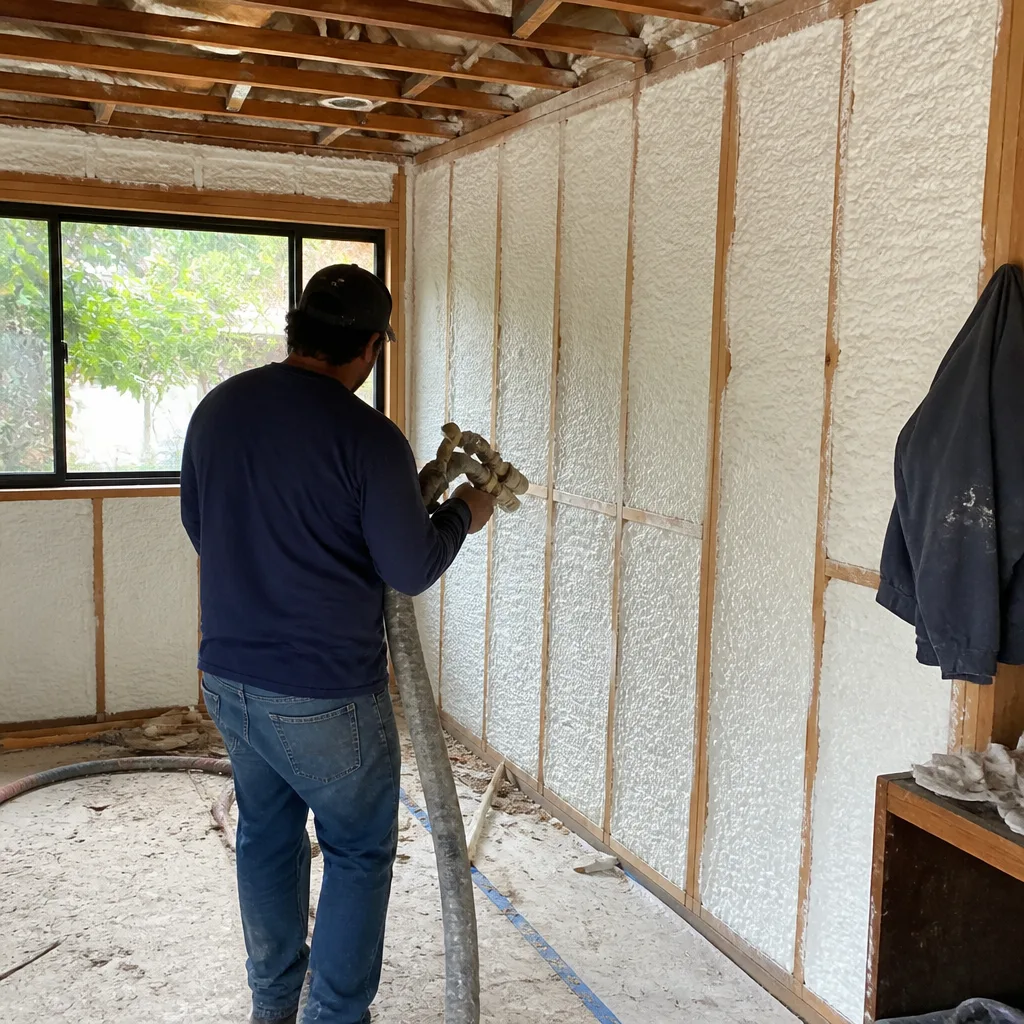 After
AfterTrusted Brands We Service in San Gabriel
We stock spray foam systems from Demilec, Johns Manville, and Owens Corning - no proprietary lock-in, no single-source products. For San Gabriel homeowners, this means we match the material to the specific assembly: Demilec’s heat-rise formulations for summer roof deck work, Johns Manville closed-cell for stucco wall retrofits where R-value per inch matters, Owens Corning open-cell for deep attic applications. Our crews carry inventory for common job sizes, so we’re not waiting on a delivery truck while your attic sits open. Every product spec sheet goes in your job folder, and every batch number is recorded under Haven Standard documentation.
Common Spray Foam Insulation Problems We See in San Gabriel Homes
- Moisture-trapped stucco walls. Spray foam applied over 1940s-60s stucco that already has hidden moisture intrusion or efflorescence will delaminate within two to three years, trapping dampness against the wood framing. We probe the stucco with a moisture meter before any foam touches the wall.
- Uninsulated addition cavities. Contractors working older blocks near the San Gabriel Mission district and along Las Tunas Drive regularly discover that 1970s-80s room additions were drywalled directly against the original exterior stucco wall with no insulation placed in the new framing cavity. The room runs 10-15°F hotter, and the homeowner can’t explain why.
- Thermal bridges at addition junctions. Even when the addition itself is insulated, the gap between the original exterior stucco and new framing often gets missed, creating a continuous thermal bridge that bypasses the new insulation entirely.
- Summer installation failures. Closed-cell foam applied too thickly in one pass on 100-105°F San Gabriel summer days can blister, lose adhesion, and off-gas blowing agent for weeks. We stage passes and monitor substrate temperature.
Pricing for Spray Foam Insulation in San Gabriel, CA
Most spray foam insulation jobs in San Gabriel fall between these ranges:
- Open-cell attic floor (1,200 sq ft): $2,800-$4,200
- Closed-cell wall cavities (typical 3-bedroom stucco bungalow): $4,500-$7,200
- Rim joist sealing (raised foundation): $1,800-$3,400
- Garage ceiling conversion: $2,200-$4,800
- Roof deck (conditioned attic, full spray): $5,500-$9,500
What moves the number: cavity depth, accessibility, whether we need to remove existing insulation or drywall first, and whether the blower-door test reveals hidden air leaks that need sealing before foam goes in. We give you a written price before any work starts - that’s Haven Standard Clause 1 - and we offer a Free Second Opinion on any competing written estimate. Call (213) 474-3828 for an exact quote; estimates are free.
We Also Serve Cities Near San Gabriel
Our crews work throughout the San Gabriel Valley, including San Gabriel, Alhambra, Pasadena, El Monte, and South Pasadena. Dispatch and scheduling are coordinated from our Los Angeles office, but the technician who arrives at your door knows these stucco envelopes and patchwork additions from direct experience. If you’re in a neighboring city and dealing with the same inland heat basin problems, the same process applies: written price first, documented result last.
Serving San Gabriel, CA - Our Local Coverage Area
We’re based in the San Gabriel area and know this community well. Use the map below to see our service coverage - if you’re nearby, we can almost certainly help.
FAQs - Spray Foam Insulation in San Gabriel
The hot room was likely added in the 1970s or 1980s and drywalled directly against the original exterior stucco with no insulation in the new framing cavity. Attic insulation doesn’t fix a wall that was never insulated to begin with. We remove the drywall, apply closed-cell spray foam to the back of the stucco and the new framing, then seal the rim joists; the room typically tracks within 2°F of the main house afterward. Call (213) 474-3828 and we’ll confirm with a thermal camera scan - estimates are free.
Closed-cell spray foam is usually the right choice for San Gabriel’s 1950s stucco homes because the shallow wall cavities need maximum R-value per inch, and the rigid foam adds structural integrity to aging framing. We source closed-cell from Demilec and Johns Manville, and we never install it over stucco showing moisture intrusion. For attic floors with adequate depth, open-cell from Owens Corning can work at lower cost. The exact recommendation comes after we inspect your specific assembly.
Yes, and garage ceiling spray foam is often the single most effective intervention for converted garage spaces in San Gabriel. The ceiling beneath a 150°F attic radiates heat downward; closed-cell foam on that ceiling creates a thermal barrier that stops the radiative load. We also seal the rim joists and any penetrations, then verify with a blower-door test that the space isn’t pulling unconditioned air. Most converted garages we treat in San Gabriel drop from 15°F hotter than the main house to within 3°F.
San Gabriel’s 100-105°F summer days can raise stucco substrate temperatures above the manufacturer’s recommended application range, which risks poor adhesion, blistering, and extended off-gassing of the blowing agent. We schedule exterior wall work for morning hours when possible, monitor substrate temperature with infrared guns, and stage closed-cell passes rather than shooting maximum thickness in one lift. This is standard practice for our crews working the inland San Gabriel Valley; it’s not standard everywhere.
Yes, if your San Gabriel home has a raised foundation and unsealed rim joists. Attic insulation doesn’t stop the stack effect from pulling air through the rim joist band; in summer, that means hot, humid air enters at the foundation and rises through your walls. We seal rim joists with closed-cell spray foam after verifying dry conditions, and we document the before-and-after blower-door reduction so you can see the exact improvement. Most San Gabriel bungalows we test show 15-25% of total air leakage coming through the rim joist alone.
Written by Wes Okafor, Owner at Topside Attic Insulation Glendale, serving San Gabriel since 2016 under The Haven Standard.